
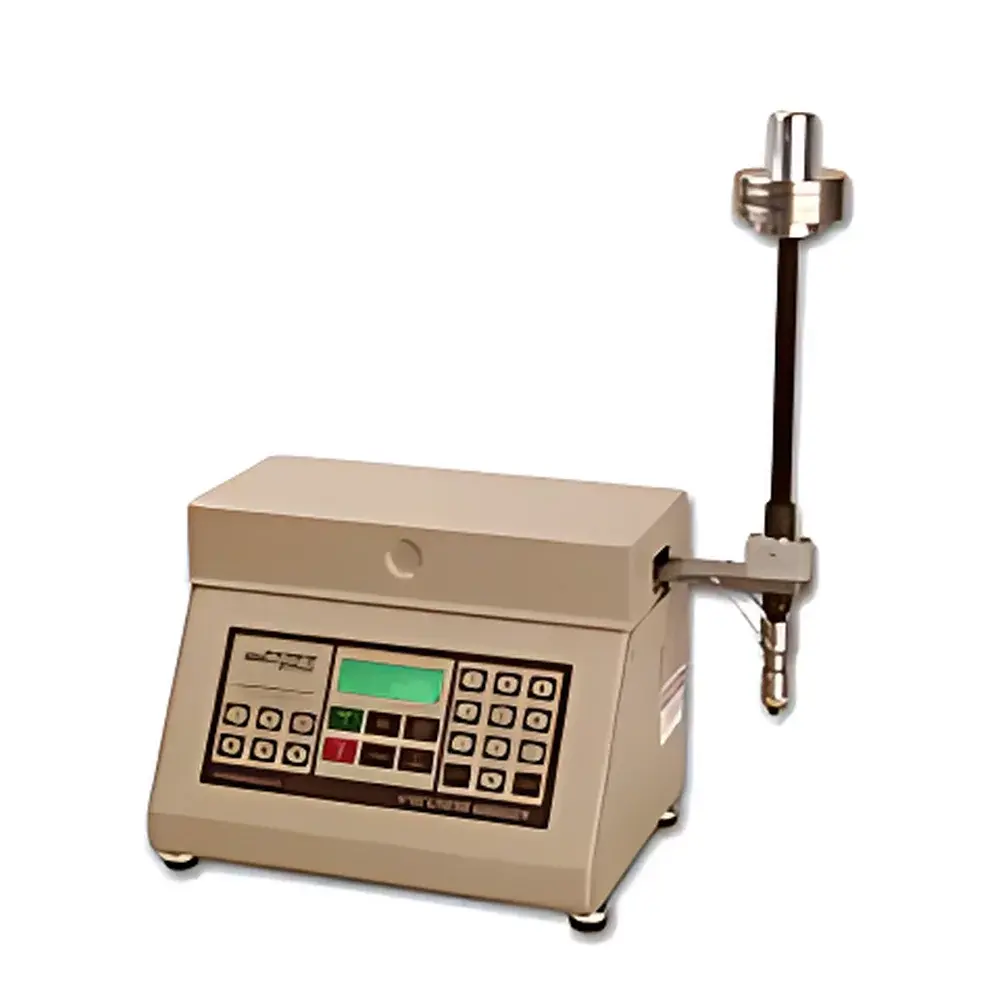
Taber 5750 Linear Abrasion Tester
| Brand | Taber |
|---|---|
| Origin | USA |
| Model | 5750 |
| Compliance | ASTM D6279, ASTM D2197, ASTM D5178, ASTM F1319, ISO 105-X12, ISO 9352, ISO 5470-1, EN ISO 2677-010, AATCC Method 8, JIS K7204, DIN 53754 |
| Load Range | 250 g (standard), configurable with optional weights |
| Stroke Length | Adjustable linear travel |
| Speed | Programmable reciprocating motion |
| Sample Mounting | Flat or contoured surfaces via floating stylus mechanism |
| Abrasive Media Compatibility | CS-10F rubber eraser tips, H-18 silicon carbide abrasive points, S-14 polishing papers, and custom media per application requirement |
Overview
The Taber 5750 Linear Abrasion Tester is an engineered precision instrument designed for controlled, repeatable evaluation of surface resistance to mechanical wear under linear reciprocating motion. Unlike rotary abrasion testers, the 5750 employs a patented floating stylus mechanism that maintains consistent normal force contact while accommodating surface topography—whether planar, curved, or irregular—without manual adjustment. This design enables true simulation of real-world usage conditions such as finger swiping, coin rubbing, stylus dragging, or cloth wiping. The tester operates on the principle of controlled linear oscillation: a motor-driven carriage moves a vertically loaded abrasive stylus across the specimen in a straight-line path, with precisely defined stroke length, cycle count, speed, and applied load. Its architecture conforms to fundamental tribological testing paradigms where tangential shear stress, interfacial adhesion, and material displacement are quantified through standardized endpoint assessment (e.g., visual rating, gloss loss, color transfer, or mass loss). As a Class I physical property testing system, it delivers high reproducibility across laboratories when operated within defined environmental controls (23 ± 2 °C, 50 ± 5% RH) per ISO/IEC 17025 guidelines.
Key Features
- Floating stylus assembly with self-aligning pivot point ensures constant normal force application regardless of sample curvature or minor height variation.
- Programmable linear motion control: adjustable stroke length (10–100 mm), speed (1–120 cycles/min), and cycle count (1–999,999) via intuitive front-panel interface.
- Modular weight loading system supports standard 250 g masses; optional calibrated weights (100 g to 1,000 g) enable compliance with diverse test protocols requiring specific contact pressure.
- Interchangeable abrasive media holders accept industry-standard stylus types including CS-10F (rubber eraser), H-18 (silicon carbide), S-14 (aluminum oxide paper), and custom-fabricated tips for proprietary applications.
- Robust aluminum frame with vibration-dampening base minimizes external influence on test repeatability; CE-compliant electromagnetic compatibility and thermal management ensure stable long-duration operation.
- Integrated safety interlock prevents actuation unless sample stage is fully secured and protective guard is closed—meeting EN 61000-6-2 and OSHA 1910.212 requirements.
Sample Compatibility & Compliance
The Taber 5750 accommodates specimens up to 150 mm × 150 mm × 50 mm (W × L × H), with clamping fixtures supporting rigid flat panels, molded automotive trim, cylindrical grips, and flexible textile substrates. Its floating stylus eliminates the need for vacuum chucks or adhesive mounting for most non-porous materials. The system meets or exceeds performance criteria outlined in over 25 international standards—including ASTM D6279 (mar resistance of high-gloss coatings), ASTM D2197 (coating adhesion by scrape abrasion), ISO 105-X12 (colorfastness to rubbing), and EN ISO 2677-010 (crocking resistance)—making it suitable for GLP-compliant quality control labs and R&D environments subject to FDA 21 CFR Part 11 audit readiness when paired with validated software. All standard configurations include traceable calibration documentation aligned with NIST-traceable reference standards.
Software & Data Management
While the base Taber 5750 operates via standalone hardware controls, optional Taber WinTest™ software (v5.2+) provides full digital test method configuration, real-time parameter logging, automated pass/fail threshold evaluation, and PDF report generation compliant with ISO/IEC 17025 Clause 7.8.2. Data export supports CSV, XML, and SQL formats for integration into LIMS platforms. Audit trail functionality records user ID, timestamp, parameter changes, and result modifications—fully satisfying FDA 21 CFR Part 11 electronic record requirements when deployed with appropriate system validation protocols. Firmware updates are delivered via secure HTTPS portal with SHA-256 integrity verification.
Applications
The Taber 5750 serves critical roles in product development and conformance verification across multiple sectors: evaluating mar resistance of automotive interior finishes (dashboard, center console); assessing scratch durability of consumer electronics housings (smartphones, wearables); quantifying crocking resistance of printed textiles and floor coverings; validating alcohol-wipe resilience of medical device overlays; measuring scuff resistance of coated optical lenses; and determining coin-scratch performance of credit card magnetic stripes. It is routinely employed by Tier-1 automotive suppliers, OEM paint laboratories, packaging converters, and regulatory testing bodies conducting third-party certification per UL 746C, IEC 60601-1, and MIL-STD-810H Method 509.5.
FAQ
What types of abrasive media are compatible with the Taber 5750?
Standard media include CS-10F rubber eraser tips (for soft-surface mar testing), H-18 silicon carbide points (for aggressive abrasion), and S-14 aluminum oxide abrasive papers (for controlled material removal). Custom stylus geometries and composite media can be fabricated upon request.
Can the Taber 5750 perform tests per ASTM D3884?
Yes—the instrument satisfies all mechanical and procedural requirements of ASTM D3884 (Standard Test Method for Abrasion Resistance of Textile Fabrics), provided appropriate stylus selection, load configuration, and endpoint evaluation methodology are applied.
Is calibration traceable to national standards?
All factory calibration certificates reference NIST-traceable reference masses and displacement gauges, with uncertainty budgets reported per ISO/IEC 17025 Annex A. Field recalibration kits and certified technician services are available globally.
Does the system support GLP/GMP documentation workflows?
When used with Taber WinTest™ and configured per site-specific validation protocols, the system supports full audit trail capture, electronic signatures, and 21 CFR Part 11–compliant data archiving.
What maintenance is required for long-term operational stability?
Routine maintenance includes biweekly stylus alignment verification, monthly lubrication of linear guide rails with ISO VG 32 synthetic oil, and annual verification of motor encoder resolution and load cell linearity by authorized service personnel.



