
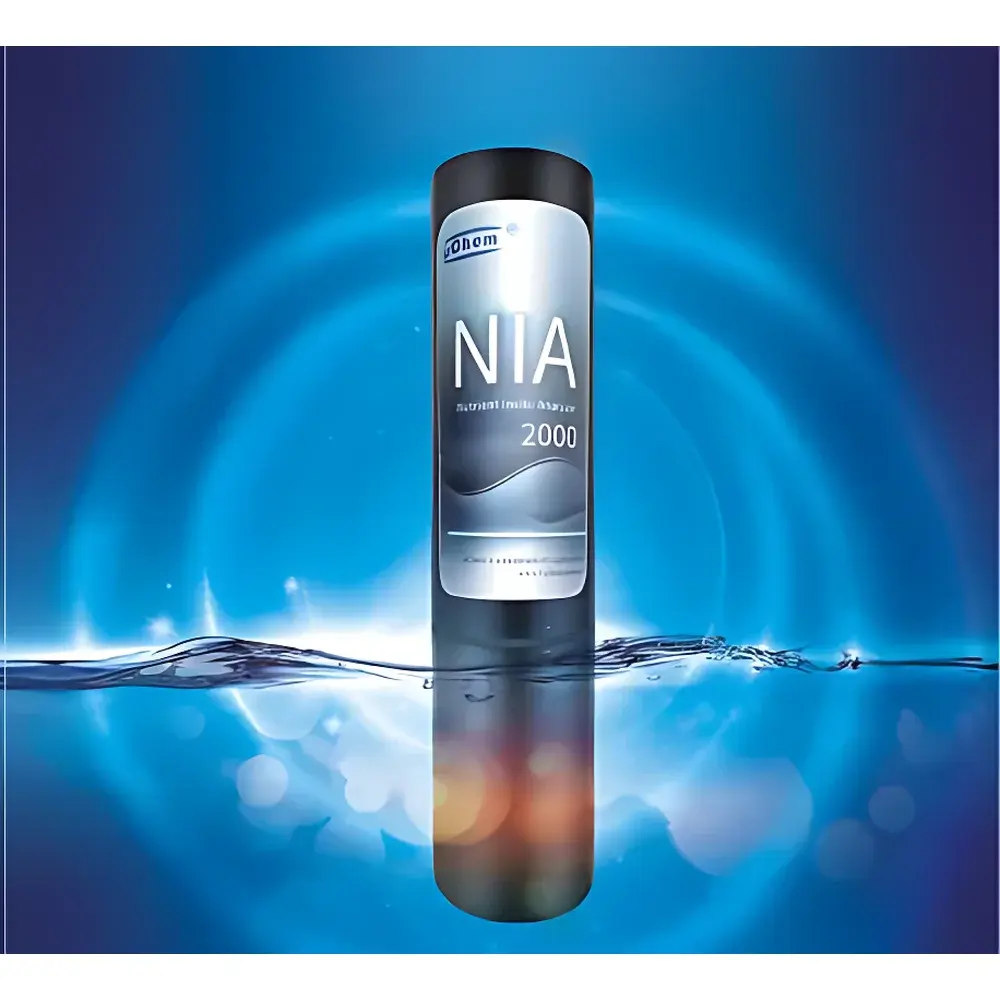
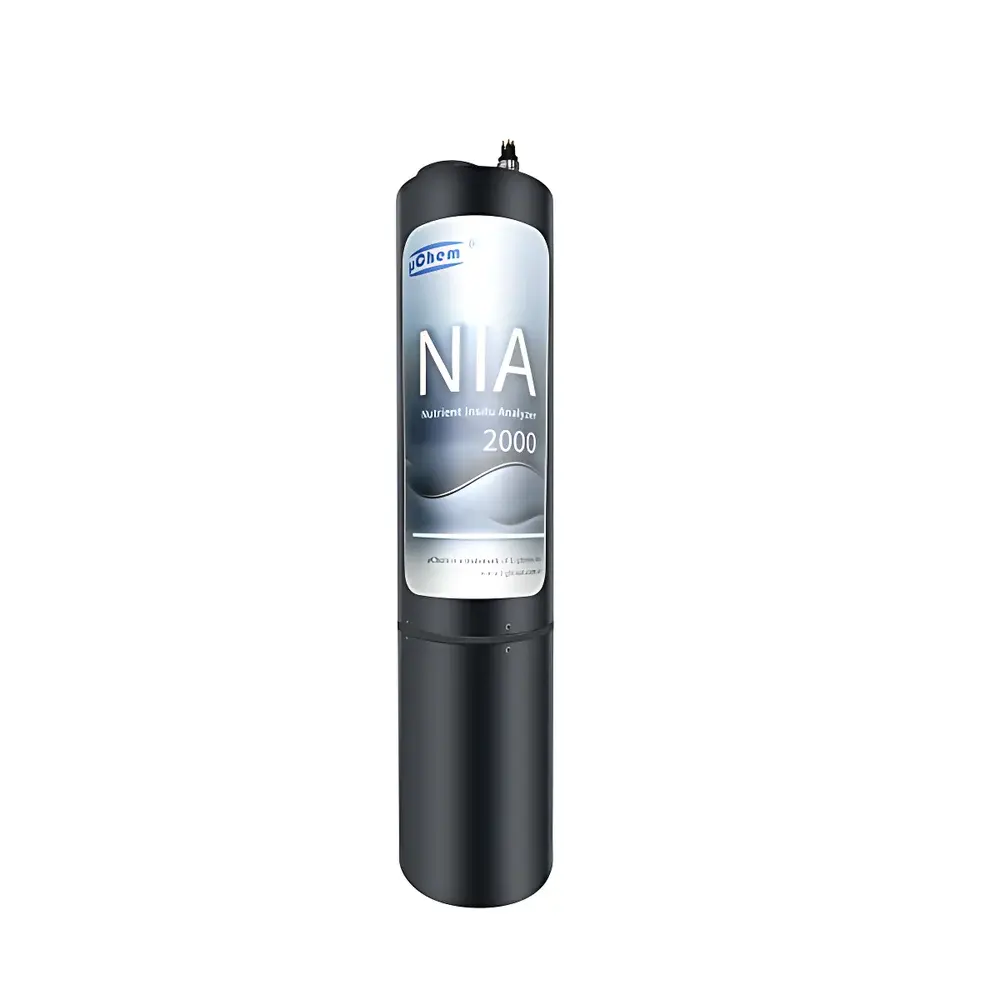
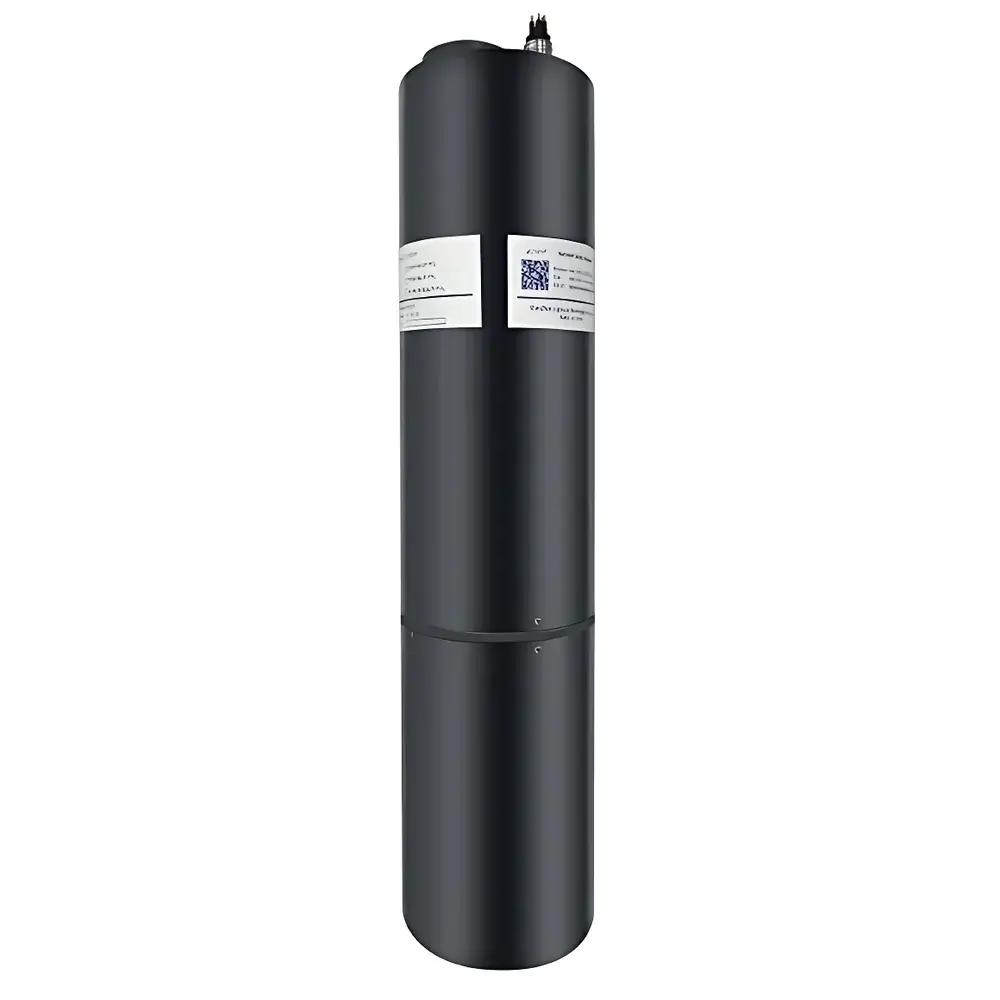
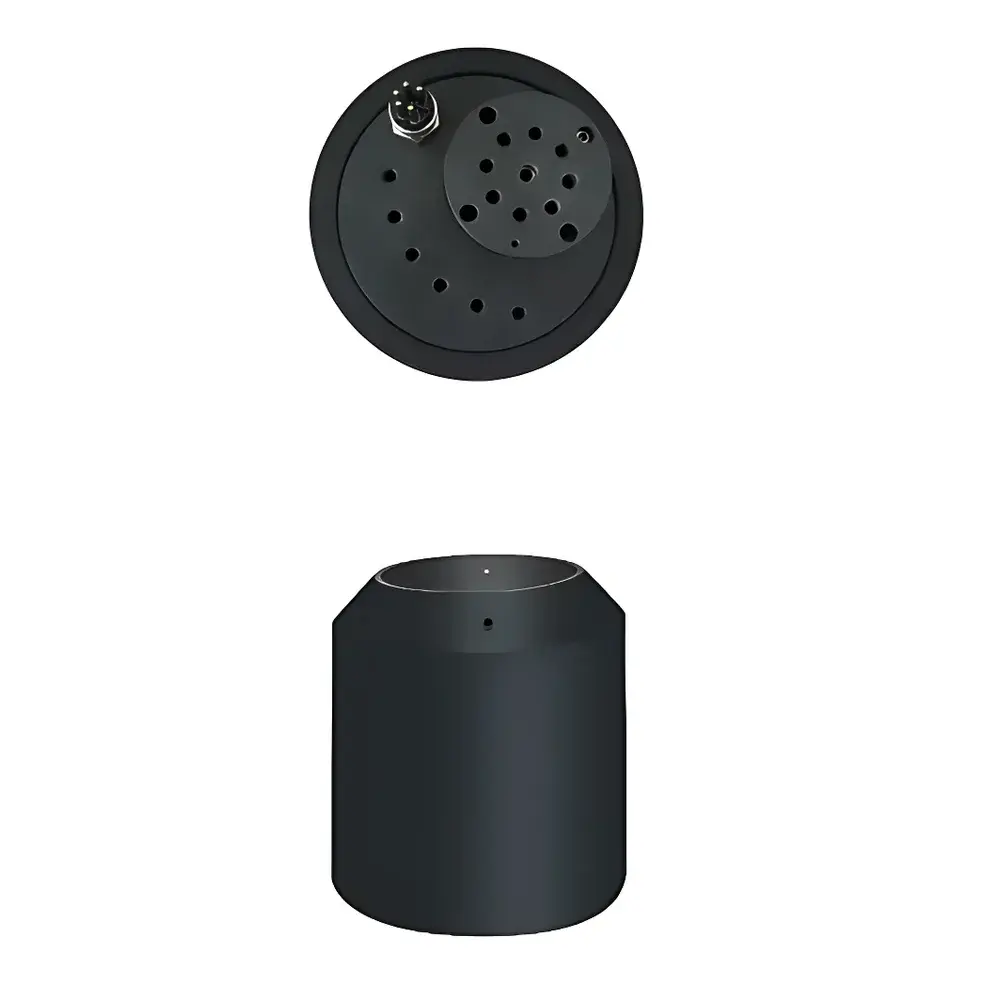
μChem NIA 2000 In Situ Total Nitrogen and Total Phosphorus Analyzer
| Origin | Shenzhen, China |
|---|---|
| Manufacturer Type | Authorized Distributor |
| Origin Category | Domestic (China) |
| Model | μChem NIA 2000 |
| Price Range | USD 28,000 – 35,000 |
| Measured Parameters | Total Nitrogen (TN), Total Phosphorus (TP) |
| Instrument Type | Online Analyzer |
| Measurement Principle | Spectrophotometry (UV-Vis) |
| Detection Limit | 0.001 mg/L |
| Accuracy | ±3% of reading |
| Resolution | 0.001 mg/L |
| Power Consumption | 8 W (operational), 1.2 W (standby) |
Overview
The μChem NIA 2000 is a field-deployable, in situ total nitrogen (TN) and total phosphorus (TP) analyzer engineered for continuous, unattended water quality monitoring in diverse aquatic environments—including rivers, lakes, reservoirs, estuaries, coastal seawater, wastewater effluents, and groundwater wells. Unlike conventional flow-through or wet-chemistry sensors relying on continuous reagent injection and complex manifold plumbing, the NIA 2000 implements a discrete, segmented chemical analysis architecture based on precise syringe-driven sampling and integrated flow-cell spectrophotometry. Its measurement principle conforms to standardized spectrophotometric methodologies aligned with ISO 11908:2017 (water quality — determination of total phosphorus — ammonium molybdate spectrophotometric method) and ISO 11909:2017 (water quality — determination of total nitrogen — persulfate digestion followed by spectrophotometric detection). The system performs full on-board digestion (for TN and TP), reagent addition, timed reaction incubation, and optical quantification—mimicking laboratory-grade manual procedures while eliminating human intervention and operator variability.
Key Features
- Discrete Sample Introduction System: High-precision micro-syringe pump enables volumetric sampling down to 0.1 µL, ensuring exceptional reproducibility and minimizing reagent consumption by up to 60% versus continuous-flow analyzers.
- Integrated Flow-Cell Photometer: Dual-wavelength LED light source (e.g., 410 nm and 660 nm) with thermally stabilized optics provides high optical coupling efficiency, low power draw, and immunity to ambient light interference.
- Modular Multi-Parameter Configuration: Supports customizable sensor modules—users may select combinations including TN, TP, NH₃-N, PO₄³⁻, NO₃⁻, NO₂⁻, and Cr(VI)—all sharing the same core fluidic and optical platform.
- Ruggedized Monocoque Housing: Cylindrical, fully sealed enclosure rated IP68 for submersion up to 10 m; constructed from marine-grade stainless steel and UV-stabilized polymer; designed for long-term deployment without routine calibration drift.
- Ultra-Low Power Architecture: Operates at 8 W during active analysis and reduces to 1.2 W in standby mode—enabling solar-battery hybrid operation in remote stations or buoy-mounted deployments.
- Adaptive Method Optimization: Firmware allows real-time adjustment of sample volume, reagent ratio, digestion time, and optical integration time—facilitating dynamic range optimization per site-specific matrix conditions (e.g., high-turbidity freshwater vs. low-nutrient seawater).
Sample Compatibility & Compliance
The NIA 2000 is validated for use with raw surface water, treated drinking water, municipal and industrial wastewater, brackish estuarine samples (up to 35 ppt salinity), and groundwater. It meets functional requirements for regulatory compliance monitoring under EPA Method 365.4 (phosphate) and EPA Method 353.2 (total nitrogen), and supports audit-ready data generation compliant with GLP and GMP frameworks. All onboard digestion and colorimetric protocols are traceable to certified reference materials (CRMs) from NIST and LGC. The system logs full method metadata—including reagent lot numbers, digestion temperature profiles, and photometric baseline corrections—to support 21 CFR Part 11–compliant electronic records when integrated with validated data acquisition software.
Software & Data Management
The instrument operates via embedded Linux-based firmware with Modbus TCP, RS-485, and optional 4G LTE telemetry interfaces. Local configuration and diagnostics are accessible through a web-based GUI (HTTPS-secured) or CLI over SSH. Raw absorbance spectra, reaction kinetics curves, and QC flagging (e.g., turbidity interference alerts, reagent depletion warnings) are stored onboard for ≥30 days. Synchronized timestamping (NTP-supported) ensures traceability across distributed sensor networks. Export formats include CSV, JSON, and SDI-12-compatible payloads—compatible with SCADA platforms such as Ignition, Wonderware, and WaterOneFlow. Optional cloud synchronization enables automated report generation aligned with ISO 55000 asset management standards.
Applications
- Real-time eutrophication assessment in oligotrophic lakes and reservoirs
- Wastewater treatment plant (WWTP) effluent compliance monitoring per EU Urban Wastewater Treatment Directive limits
- Coastal nutrient loading studies supporting UNESCO IOC Harmful Algal Bloom (HAB) early-warning systems
- Groundwater nitrate plume tracking in agricultural catchments (aligned with EU Nitrates Directive)
- Integration into autonomous monitoring buoys, riverbank trend stations, and AUV-deployed sensor packages
- Emergency response scenarios requiring rapid deployment for post-spill or post-flooding nutrient surge characterization
FAQ
Does the NIA 2000 require daily manual maintenance?
No—routine maintenance intervals are specified at 90 days under typical freshwater conditions, with full reagent cartridge replacement and optical window cleaning required only quarterly.
Can it operate autonomously for extended periods without external power?
Yes—when paired with a 50 Ah LiFePO₄ battery and 40 W solar panel, the system sustains >6 months of continuous operation in temperate climates.
Is method validation documentation available for regulatory submission?
Yes—each unit ships with a Certificate of Conformance, factory performance verification report (per ISO/IEC 17025), and application notes demonstrating recovery rates across matrix-matched CRMs.
How is interference from suspended solids or colored dissolved organic matter (CDOM) managed?
The system incorporates dual-wavelength correction algorithms and optional inline filtration (5 µm polyethersulfone) to mitigate scattering and spectral overlap effects.
What cybersecurity protocols are implemented?
Firmware includes TLS 1.2 encryption, role-based user authentication, secure boot, and automatic security patching via signed OTA updates.







