
LangCheng Ocean Buoy Automatic Monitoring System
| Origin | Guangdong, China |
|---|---|
| Manufacturer Type | Authorized Distributor |
| Origin Category | Domestic (China-made) |
| Model | LangCheng Ocean Buoy Automatic Monitoring System |
| Pricing | Available Upon Request |
Overview
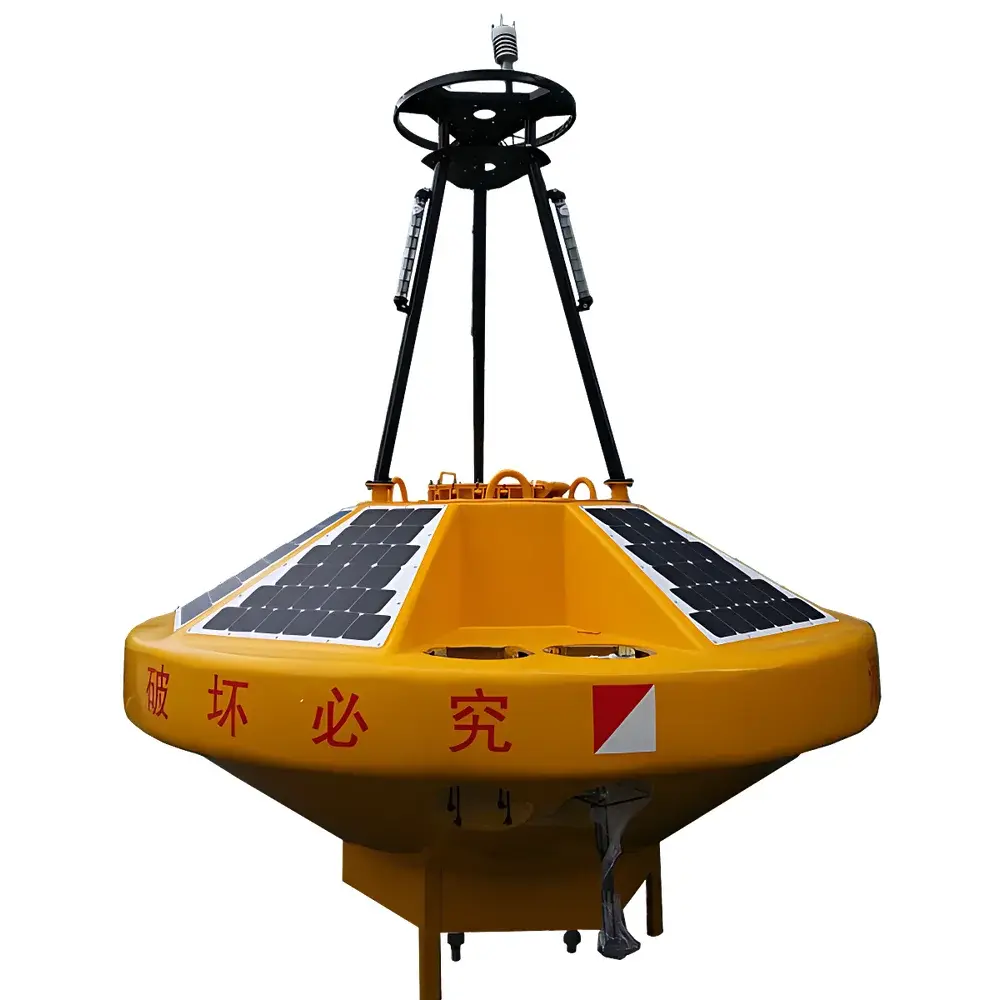
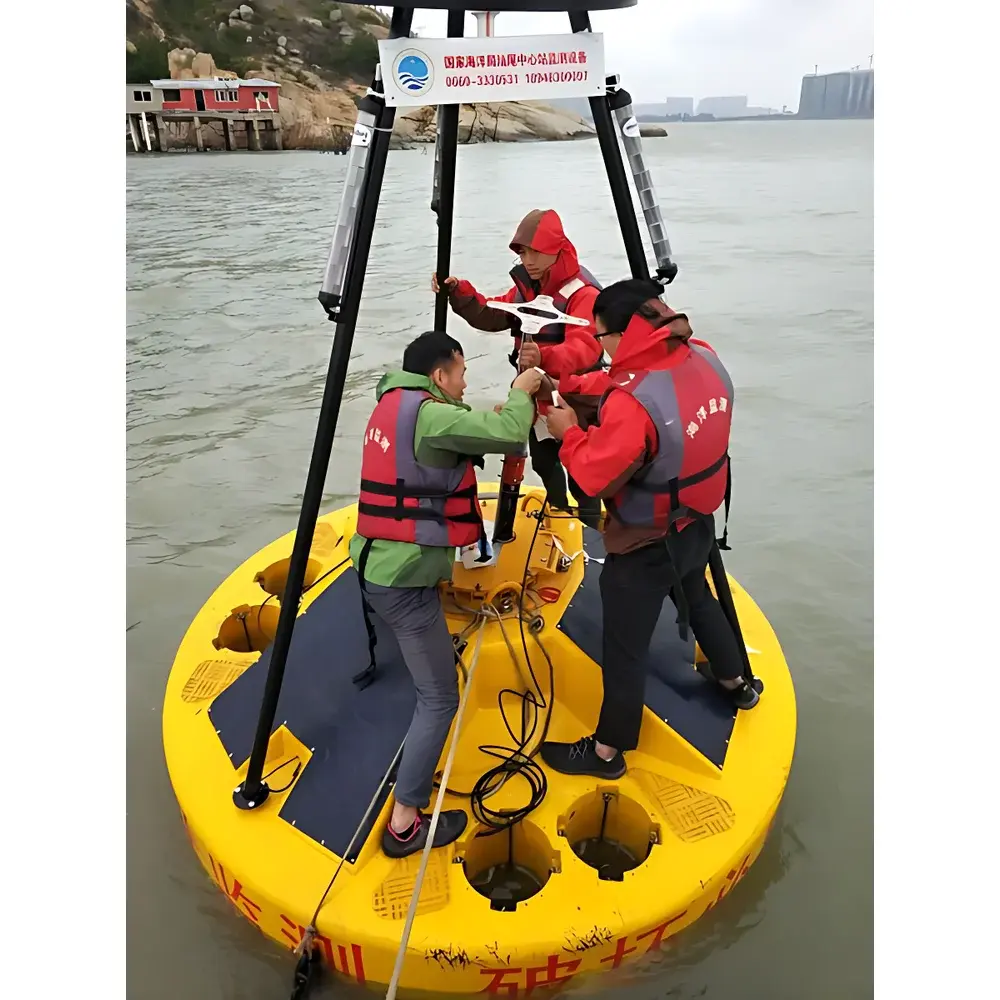
The LangCheng Ocean Buoy Automatic Monitoring System is a field-deployable, multi-parameter marine environmental observation platform engineered for long-term, unattended operation in coastal and offshore waters. Built upon the Couette flow principle for water current profiling and optical/electrochemical transduction for water quality sensing, the system integrates physical, chemical, and radiological measurement modalities within a single buoy-based architecture. Its core design addresses the operational challenges of remote marine environments—including power autonomy, corrosion resistance, anti-fouling sensor interfaces, and dual-mode telemetry resilience—making it suitable for regulatory compliance monitoring, ecological baseline studies, and hazard early-warning applications under IMO, IOC-UNESCO, and national maritime environmental protection frameworks.
Key Features
- Modular sensor payload architecture supporting concurrent real-time acquisition of meteorological (wind speed/direction, air temperature/humidity, atmospheric pressure, solar radiation), hydrological (sea surface temperature, conductivity, salinity, turbidity, dissolved oxygen, pH, ORP), nutrient (nitrate, phosphate, silicate), radiological (gamma dose rate), and oil-spill detection (fluorescence-based hydrocarbon sensing) parameters
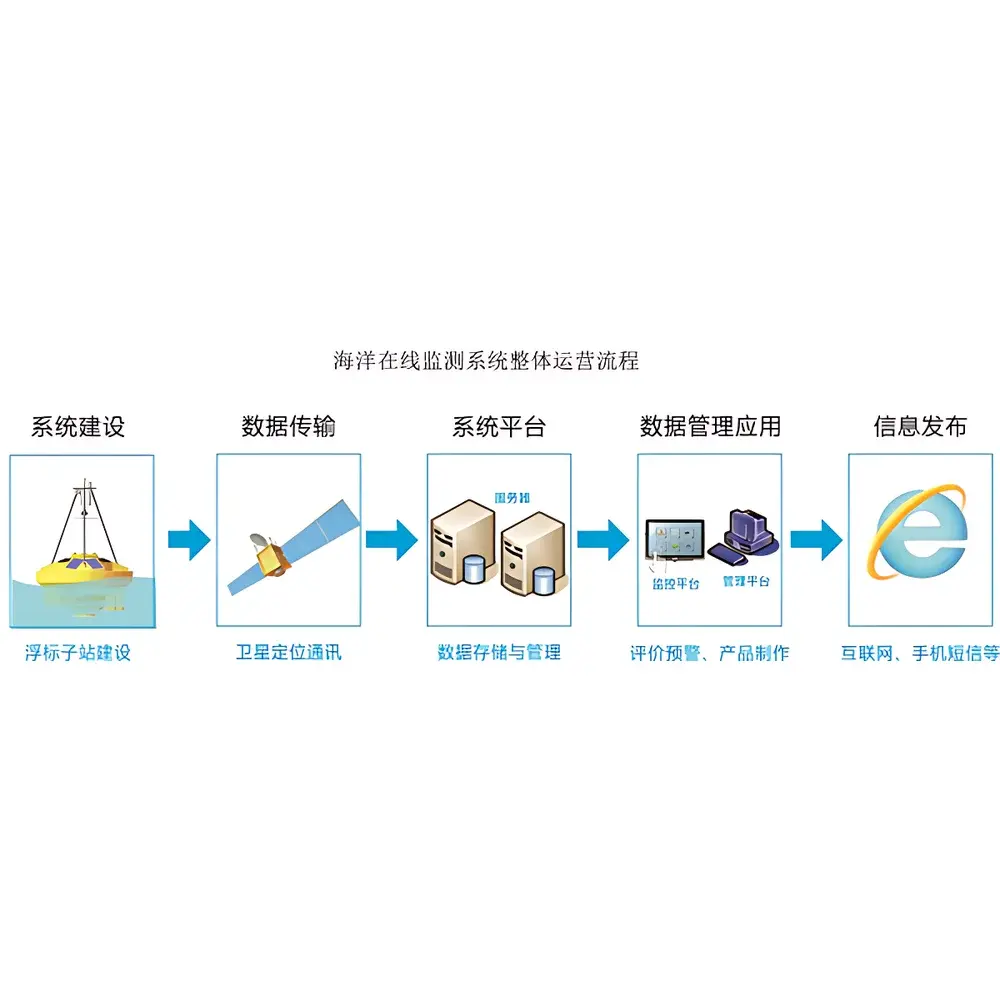
- Dual-path telemetry redundancy: GPRS/CDMA cellular networks combined with BeiDou satellite positioning and short-message service (SMS) transmission—ensuring data continuity during terrestrial network outages or extreme weather events
- GPS/BeiDou hybrid geolocation with sub-5 m horizontal accuracy and time-synchronized timestamping compliant with IEC 61850-10 event logging standards
- Marine-grade 316L stainless steel and UV-stabilized polyethylene buoy hull rated for >12 months deployment in Class II–III seawater per ISO 9223 corrosion categories
- Integrated power management: solar-charged lithium iron phosphate (LiFePO₄) battery bank with low-power sleep/wake cycling and intelligent sensor duty cycling to extend operational life beyond 18 months between maintenance cycles
Sample Compatibility & Compliance
The system is validated for continuous immersion in saline water (0–40 psu), suspended particulate matter (SPM) concentrations up to 100 mg/L, and wave heights ≤4 m (significant wave height, Hs). Sensor calibration traceability follows ISO/IEC 17025-accredited procedures where applicable; dissolved oxygen and pH sensors are certified to ASTM D888 and ASTM D1293, respectively. The platform meets China’s HJ 91.2–2022 technical specification for marine environmental monitoring buoys and aligns with international interoperability protocols including OGC SensorML and NetCDF-CF metadata conventions. Data integrity safeguards include end-to-end SHA-256 checksum verification and write-once archival storage to support GLP-compliant audit trails.
Software & Data Management
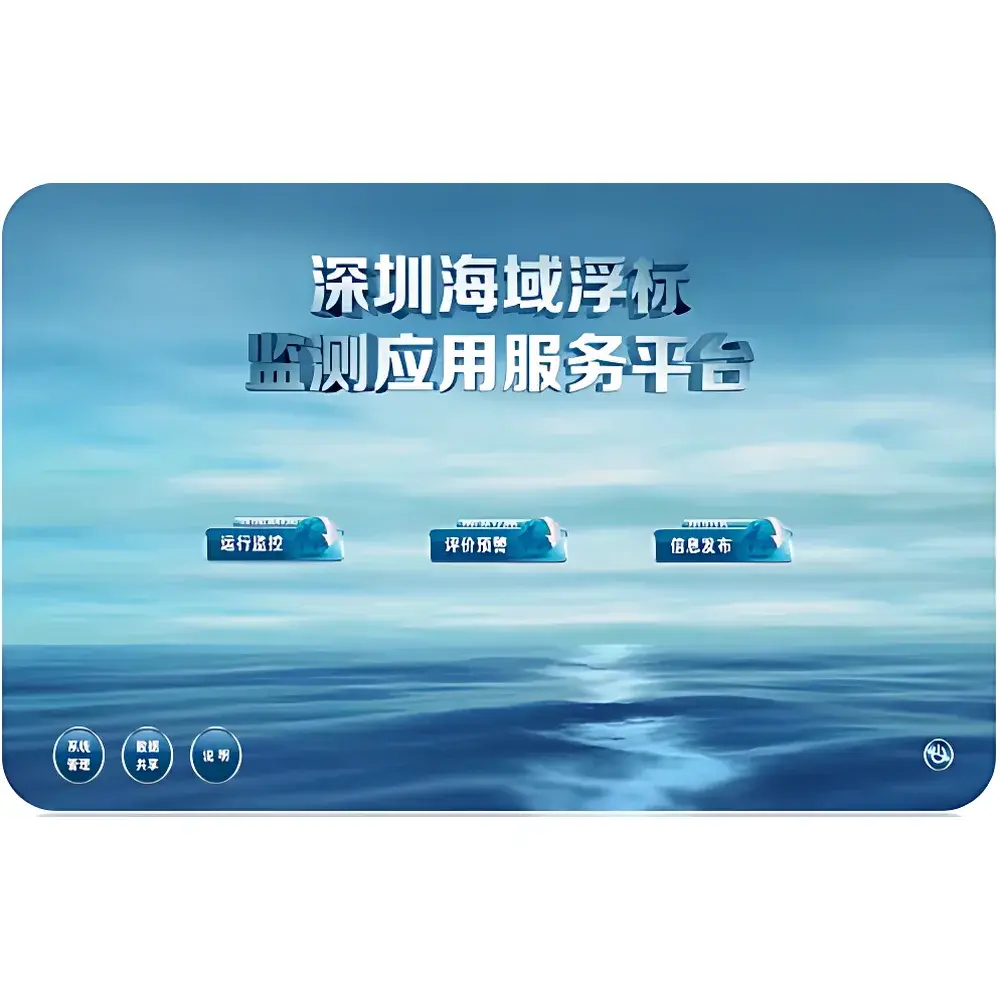
The LangCheng Monitoring Application Service Platform is a secure, role-based web application built on PostgreSQL with TimescaleDB time-series extension. It provides automated ingestion, QC flagging (using WMO-recommended gross error detection thresholds), gap-filling interpolation (linear and seasonal-trend adjusted), statistical aggregation (hourly/daily/monthly medians, percentiles, anomaly indices), and GIS-integrated visualization via Leaflet and Plotly.js. All user actions—including data export, report generation, and alarm threshold modification—are logged with immutable timestamps and operator identifiers in accordance with FDA 21 CFR Part 11 electronic record requirements. API endpoints support integration with national marine data centers (e.g., NMDIS) and third-party modeling tools (ROMS, FVCOM) via RESTful JSON and OGC SOS 2.0.
Applications
- Regulatory marine water quality assessment under national marine functional zoning plans and MARPOL Annex IV/V compliance tracking
- Early warning of harmful algal blooms (HABs) through real-time chlorophyll-a, nutrient, and temperature anomaly correlation
- Post-spill forensic analysis using temporal-spatial hydrocarbon concentration gradients and drift modeling inputs
- Long-term trend analysis of eutrophication indicators (DIN:DIP ratios, Secchi depth decay rates) across estuarine gradients
- Validation and ground-truthing of satellite-derived ocean color products (e.g., Sentinel-3 OLCI, MODIS-Aqua)
- Supporting Integrated Coastal Zone Management (ICZM) decision-making through standardized KPI dashboards (e.g., Eutrophication Index, Ecological Quality Ratio)
FAQ
Is the system compatible with international data exchange standards such as IOOS or EMODnet?
Yes—the platform exports data in CF-compliant NetCDF format and supports OGC SOS 2.0 GetObservation requests, enabling direct ingestion into IOOS Catalog and EMODnet Chemistry portals.
What is the typical deployment duration without maintenance?
Under average offshore conditions (moderate biofouling, wind speeds <15 m/s), scheduled maintenance intervals are every 12–18 months; sensor cleaning and battery replacement are the primary service requirements.
Can the buoy be integrated with existing coastal radar or AIS networks?
Yes—via optional NMEA 0183/2000 interface modules, the system can synchronize positional telemetry with VTS radar overlays and broadcast AIS-compatible status messages.
Does the software platform support automated alerting via email or SMS?
Yes—threshold-based alerts (configurable per parameter and location) are dispatched via SMTP and SMPP gateways with delivery confirmation logging.
Are calibration certificates provided with each sensor module?
Each factory-calibrated sensor ships with a NIST-traceable certificate indicating calibration date, reference standards used, uncertainty budgets, and stability verification over 72-hour hold tests.







