
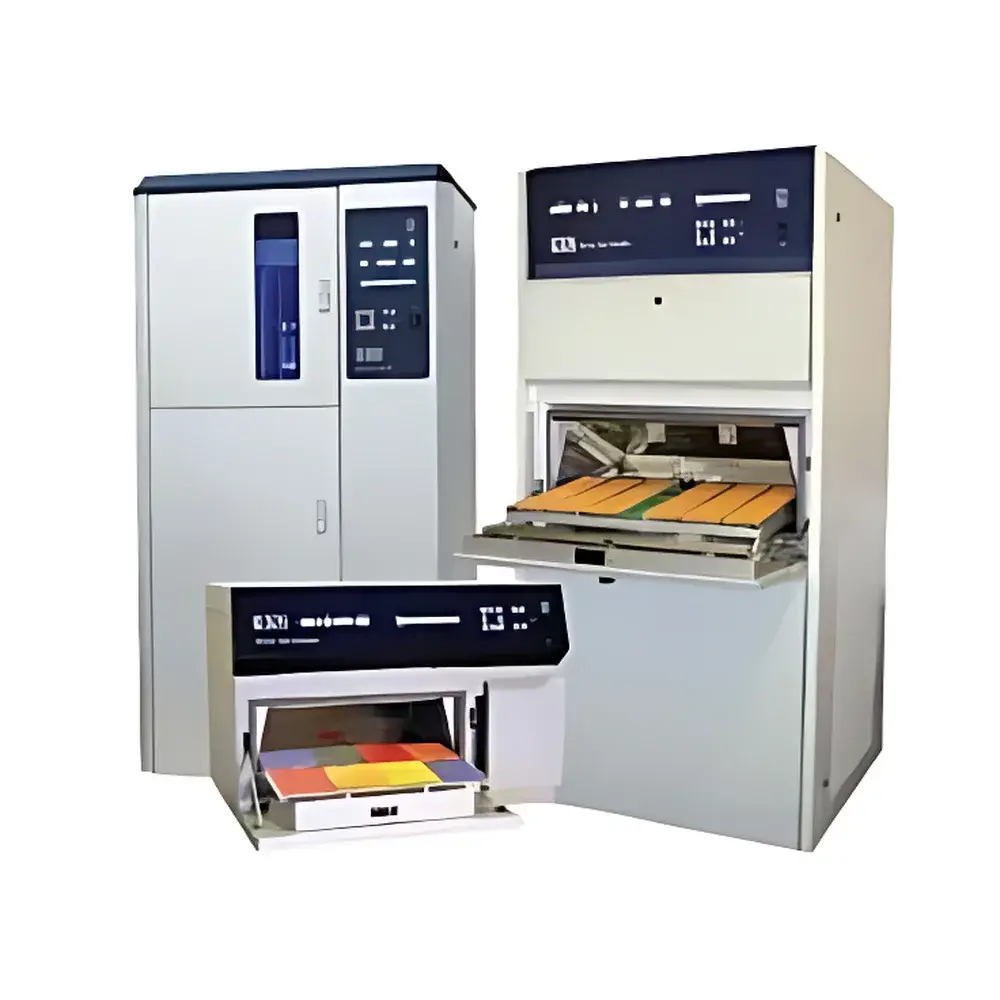
Q-LAB Q-SUN Xe-1-BC Xenon Arc Weathering Test Chamber
| Brand | Q-LAB |
|---|---|
| Origin | USA |
| Model | Q-SUN Xe-1-BC |
| Xenon Lamp Power | 1800 W |
| Cooling System | Integrated Refrigerated Chiller |
| Sample Tray Dimensions | 251 mm × 457 mm |
| Max Sample Capacity | 15 × 51 mm × 102 mm specimens |
| Lamp Type | Air-Cooled Single Xenon Arc Lamp |
| Lamp Lifetime | ~1500 hours |
| Irradiance Control | SOLAR EYE® Spectral Radiometer (340 nm, 420 nm, or TUV) |
| Temperature Sensing | Black Panel Thermometer (standard), Optional Air Temperature Sensor |
| Filter Options | Daylight-Q/B, Window Glass-Q, Window IR-Q |
| Compliance | ASTM G155, ISO 4892-2, SAE J2527, AATCC TM16, ISO 11341, IEC 60068-2-9 |
Overview
The Q-LAB Q-SUN Xe-1-BC Xenon Arc Weathering Test Chamber is an entry-level, benchtop-scale accelerated weathering instrument engineered for precision simulation of full-spectrum solar radiation—including UV, visible, and near-infrared wavelengths—under controlled temperature and humidity conditions. It employs a single air-cooled 1800 W xenon arc lamp with spectral output closely matching terrestrial sunlight, enabling high-fidelity photodegradation testing for materials sensitive to photochemical, thermal, and hygrothermal stressors. Unlike water-cooled systems, the Xe-1-BC’s air-cooled lamp architecture reduces infrastructure requirements, operational complexity, and long-term maintenance overhead while maintaining radiometric stability and repeatability across extended test cycles. Its integrated refrigerated chiller extends operational temperature control down to 19 °C black panel temperature—critical for evaluating thermally labile formulations such as pharmaceuticals, cosmetics, and polymer-based medical devices where non-photochemical degradation must be minimized during exposure.
Key Features
- Full-spectrum xenon arc illumination calibrated to match natural sunlight (290–800 nm), with optional optical filters to simulate direct sunlight (Daylight-Q/B), window-filtered sunlight (Window Glass-Q), or infrared-enhanced indoor exposure (Window IR-Q)
- Integrated refrigeration system enabling black panel temperature control from 19 °C to 103 °C—optimized for low-temperature photostability testing per ICH Q1B and USP <1208>
- SOLAR EYE® irradiance monitoring and feedback control at user-selectable wavelengths: 340 nm (UV-B dominant), 420 nm (visible edge), or TUV (300–400 nm integrated UV)
- Standard black panel thermometer (BPT) with optional air temperature sensor; both support traceable calibration via Q-LAB CT202 reference thermometers
- Modular slide-out sample tray (251 mm × 457 mm) accommodating up to fifteen 51 mm × 102 mm specimens—or irregular 3D parts using custom fixtures
- Self-diagnostic firmware with real-time fault logging, service alerts, and Ethernet-enabled remote data export compliant with GLP/GMP audit trail requirements
- Patented AUTOCAL® system for rapid, in-situ irradiance sensor calibration using CR20 reference radiometers—no disassembly required
- Plug-and-play installation: operates within standard laboratory environments (no dedicated HVAC or chilled water supply needed)
Sample Compatibility & Compliance
The Q-SUN Xe-1-BC accommodates flat, curved, and three-dimensional samples—including coated substrates, textiles, packaging films, ophthalmic lenses, and topical dosage forms—without requiring complex mounting hardware. Its horizontal sample plane ensures uniform irradiance distribution and eliminates shadowing artifacts common in vertical chamber designs. The system meets core international standards for accelerated weathering validation, including ASTM G155 (practice for operating xenon arc apparatus), ISO 4892-2 (plastics—exposure to laboratory light sources), SAE J2527 (automotive interior materials), AATCC TM16 (textile colorfastness), and ISO 11341 (paints and varnishes). For regulated industries, its firmware supports 21 CFR Part 11-compliant electronic records when paired with validated LIMS integration, and all calibration procedures align with ISO/IEC 17025 metrological traceability requirements.
Software & Data Management
The Xe-1-BC operates via an embedded touchscreen interface with intuitive menu navigation and preloaded test method templates (e.g., ASTM D4329, ISO 105-B02). Real-time irradiance, black panel temperature, chamber humidity (when equipped with optional RH sensor), and elapsed exposure time are logged at user-defined intervals and exported via Ethernet to CSV or XML formats. Audit trails record operator login events, parameter changes, calibration actions, and system faults—supporting GLP and GMP documentation workflows. Calibration certificates for CR20 radiometers and CT202 thermometers are issued by Q-LAB’s A2LA-accredited calibration laboratory, with annual recalibration recommended to maintain measurement uncertainty below ±3% for irradiance and ±0.5 °C for temperature.
Applications
This chamber is routinely deployed in QC laboratories for photostability assessment of active pharmaceutical ingredients (APIs) and final drug products per ICH Q5C guidelines; in cosmetic R&D for UV-induced pigment degradation and emulsion phase separation studies; in automotive supply chains for dashboard material fade resistance; and in academic polymer science for mechanistic studies of photo-oxidative chain scission. Its low thermal inertia and precise black panel control make it particularly suitable for comparative studies where Arrhenius-based acceleration factors must remain decoupled from non-radiative heating effects.
FAQ
What irradiance levels does the Q-SUN Xe-1-BC support?
It maintains user-selected irradiance setpoints at 340 nm (0.35–1.50 W/m²), 420 nm (0.70–3.20 W/m²), or TUV (15–60 W/m²), with stability better than ±5% over 1,000-hour lamp life.
Is humidity control available on the Xe-1-BC model?
Humidity capability is optional and requires factory-installed RH sensor and humidification module; standard configuration operates at ambient lab humidity only.
How often must the xenon lamp be replaced?
Lamp replacement is recommended after approximately 1,500 hours of operation or when irradiance output falls below 90% of initial calibration value—monitored automatically via SOLAR EYE® diagnostics.
Can the Xe-1-BC be used for outdoor durability forecasting?
Yes—when combined with appropriate spectral filters and irradiance setpoints, it generates acceleration factors ranging from 5× to 12× relative to natural Florida exposure, validated against Q-LAB’s global field correlation database.
Does the system support multi-user access with role-based permissions?
No—the embedded controller supports single-operator mode only; enterprise-level user management requires integration with third-party LIMS or SCADA platforms via Modbus TCP or HTTP API.



