
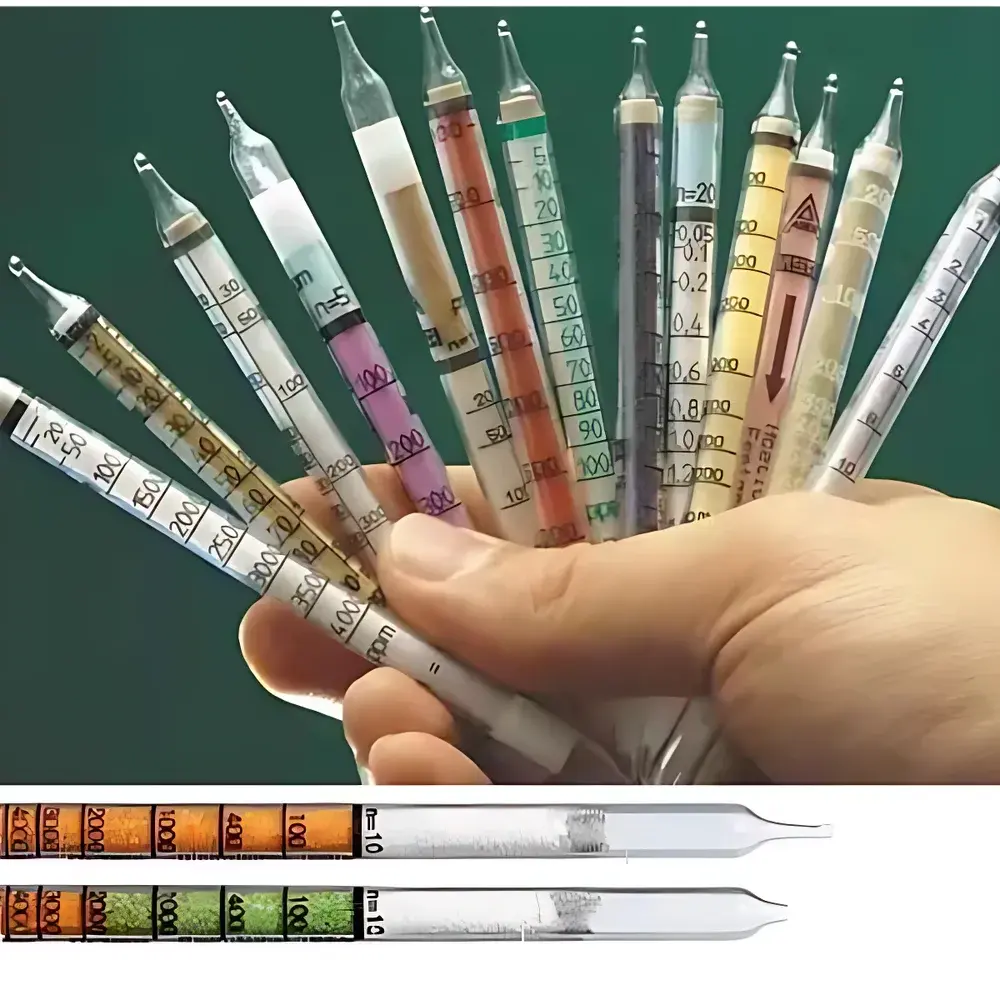
Northchem 250S Methanethiol (Methyl Mercaptan) Gas Detection Tube
| Brand | Guangming Physical Chemistry |
|---|---|
| Origin | Beijing, China |
| Model | 250S |
| Detection Range | 0.21–100 ppm |
| Resolution | 0.1 ppm |
| Principle | Colorimetric Reaction with Pre-impregnated Reagent |
| Required Accessories | AP-20 Hand Pump (sold separately) |
| Compliance | Designed for field use per ISO 8573-1 (air quality), ASTM D679 (standard practice for colorimetric gas detection tubes), and OSHA 29 CFR 1910.1200 (Hazard Communication) |
Overview
The Northchem 250S Methanethiol (Methyl Mercaptan) Gas Detection Tube is a single-use, colorimetric direct-reading device engineered for rapid, on-site quantification of methanethiol (CH₃SH) in ambient or workplace air. Methanethiol—a volatile sulfur compound with a characteristic rotten-cabbage odor—is commonly emitted during pulp and paper manufacturing, wastewater treatment, petroleum refining, and chemical synthesis. Occupational exposure poses risks including olfactory fatigue, respiratory irritation, and central nervous system effects; therefore, real-time monitoring is critical for compliance with permissible exposure limits (PELs) such as OSHA’s 10 ppm (TWA) and ACGIH’s 0.5 ppm (TLV-TWA). The 250S tube operates on the principle of diffusion-controlled, stoichiometric reaction between methanethiol and a proprietary solid-phase reagent (typically lead acetate or copper salt-based chromogenic system) immobilized along the inner wall of calibrated glass tubing. Upon manual aspiration using the AP-20 dual-stroke hand pump, sampled air passes through the tube, inducing a sharp, irreversible color front that advances proportionally to analyte concentration. The endpoint is read directly from the engraved scale (0.1 ppm resolution) at the leading edge of the color change—eliminating need for instrumentation, power sources, or calibration gases.
Key Features
- Direct-reading scale calibrated for methanethiol across a linear dynamic range of 0.21–100 ppm, traceable to NIST-traceable reference standards
- Pre-filled, factory-sealed glass tube with inert desiccant barrier to ensure shelf life stability (24 months unopened, stored at 15–25°C)
- No external power, batteries, or ignition sources required—fully intrinsically safe for Zone 0/1 hazardous area use per IEC 60079-0
- Single-step operation: insert tube into AP-20 pump, draw specified volume (100 mL standard stroke), read color front position within 30 seconds
- Interference-tested against common co-emitted compounds including H₂S (up to 50 ppm), SO₂ (up to 20 ppm), and NH₃ (up to 100 ppm); minimal cross-sensitivity confirmed per ASTM D679 Annex A3
- CE-marked and compliant with EU Directive 2014/68/EU (PED) for pressure equipment used in sampling systems
Sample Compatibility & Compliance
The 250S tube is validated for use in ambient air, stack effluents (diluted to 85% RH), high-particulate, or strongly oxidizing environments without optional particulate pre-filters (e.g., Northchem PF-1). Each lot undergoes batch certification per ISO/IEC 17025-accredited procedures, including accuracy verification (±15% of true value at mid-range), precision assessment (RSD ≤8% across n=10 replicates), and shelf-life validation. Documentation supports GLP-compliant recordkeeping: lot-specific Certificate of Analysis (CoA), expiration date, and reagent lot traceability are printed on tube packaging. The method aligns with EPA Method IP-1A (screening-level field analysis) and is referenced in ISO 16000-23 for indoor air quality assessment of volatile organic sulfur compounds.
Software & Data Management
As a passive, analog measurement system, the 250S requires no software integration or digital interface. However, Northchem provides a free downloadable Excel-based Field Log Template (v2.1) supporting structured entry of sample ID, location, time/date, operator ID, tube lot number, pump strokes, observed reading, environmental conditions (T, RH), and calculated concentration. This template auto-generates audit-ready PDF reports compliant with ISO 17025 clause 7.8.2 (reporting of results) and includes embedded metadata fields for 21 CFR Part 11–compatible electronic signatures when used with validated e-signature platforms. All raw data remain under user control—no cloud upload, telemetry, or vendor-hosted databases.
Applications
- Routine leak detection at sulfur recovery units, biogas scrubbers, and amine regenerators in refineries and petrochemical plants
- Emergency response screening during transportation incidents involving methyl mercaptan cargo (UN 1064)
- Verification of abatement system performance (e.g., thermal oxidizers, activated carbon beds) via upstream/downstream paired sampling
- Worker exposure assessment during maintenance activities in confined spaces per OSHA 1910.146
- QA/QC checks for odor control additives in municipal wastewater headworks and lift stations
- Educational demonstrations of gas-phase stoichiometry and diffusion kinetics in university environmental engineering labs
FAQ
What is the recommended sampling volume for the 250S tube?
A single full stroke of the AP-20 hand pump delivers 100 mL of air. For concentrations below 1 ppm, two consecutive strokes (200 mL total) may be used to improve visual endpoint definition.
Can the 250S tube be reused after sampling?
No. The reagent reaction is irreversible and quantitative; each tube is designed for single-use only. Reuse compromises accuracy and violates ISO 8573-1 Clause 6.2.2.
How should expired tubes be disposed?
Dispose as hazardous chemical waste per local regulations (EPA D008 for lead-containing residues); do not incinerate or discard in general trash.
Is temperature correction required during field use?
Yes. Readings must be corrected using the temperature compensation chart provided in the Instruction Manual (IM-250S Rev. 4) when ambient temperature deviates from 23 ± 2°C.
Does the 250S meet FDA requirements for workplace air monitoring in pharmaceutical manufacturing?
While not FDA-cleared as a medical device, its use satisfies FDA Guidance for Industry: Control of Nitrosamine Impurities (2021) Appendix B for ambient sulfur compound screening in API synthesis areas, provided documented SOPs and calibration traceability are maintained.







