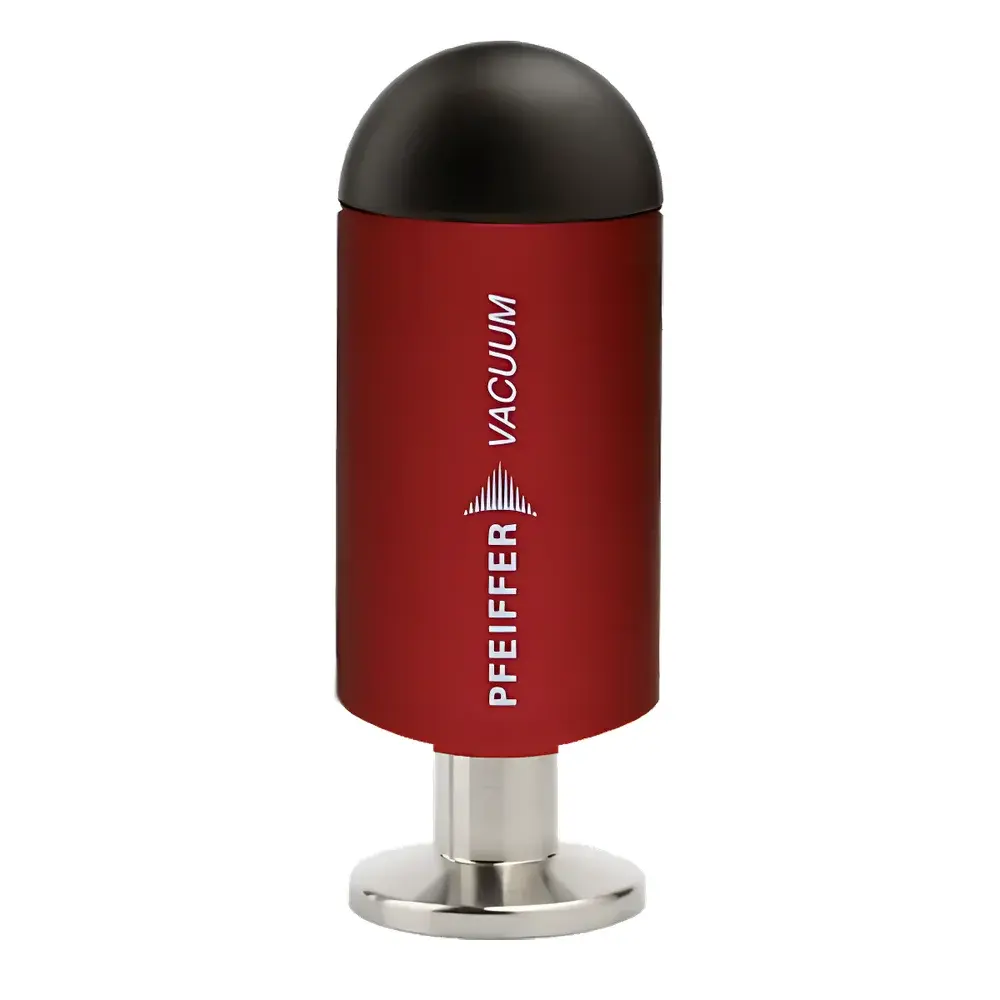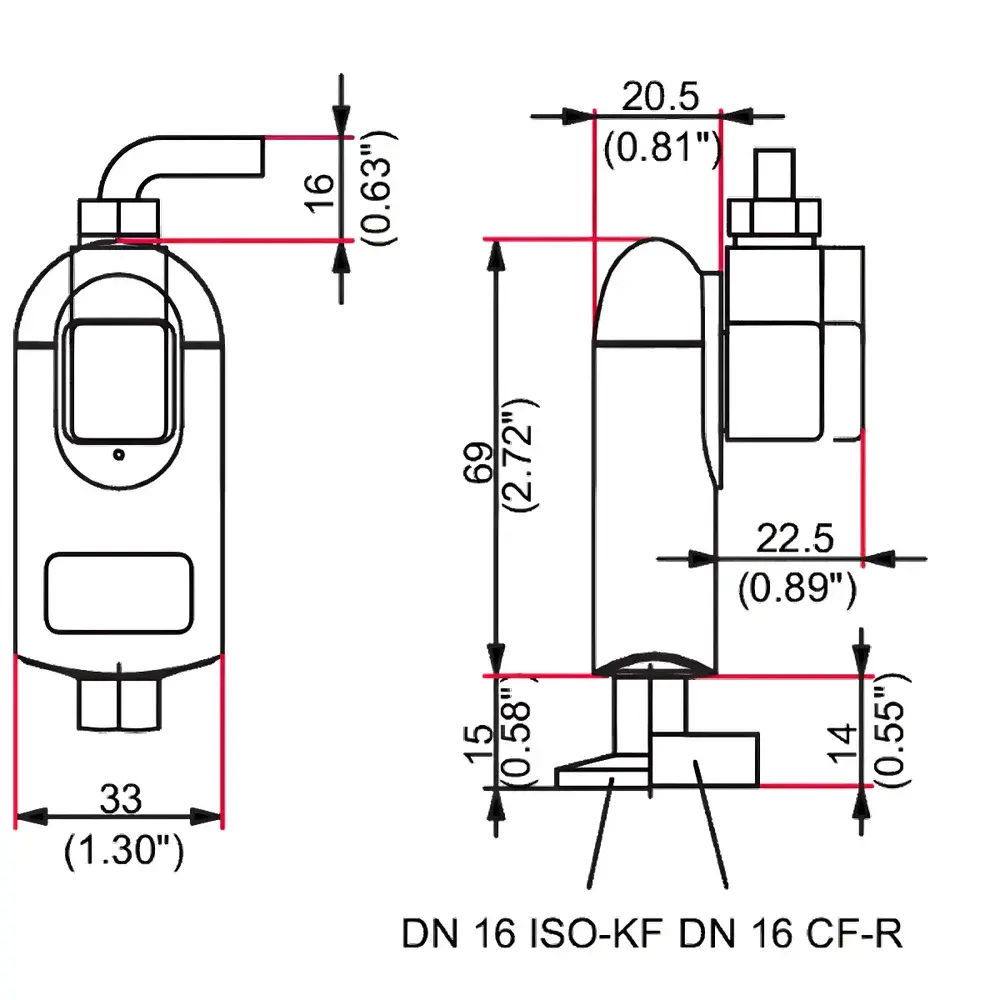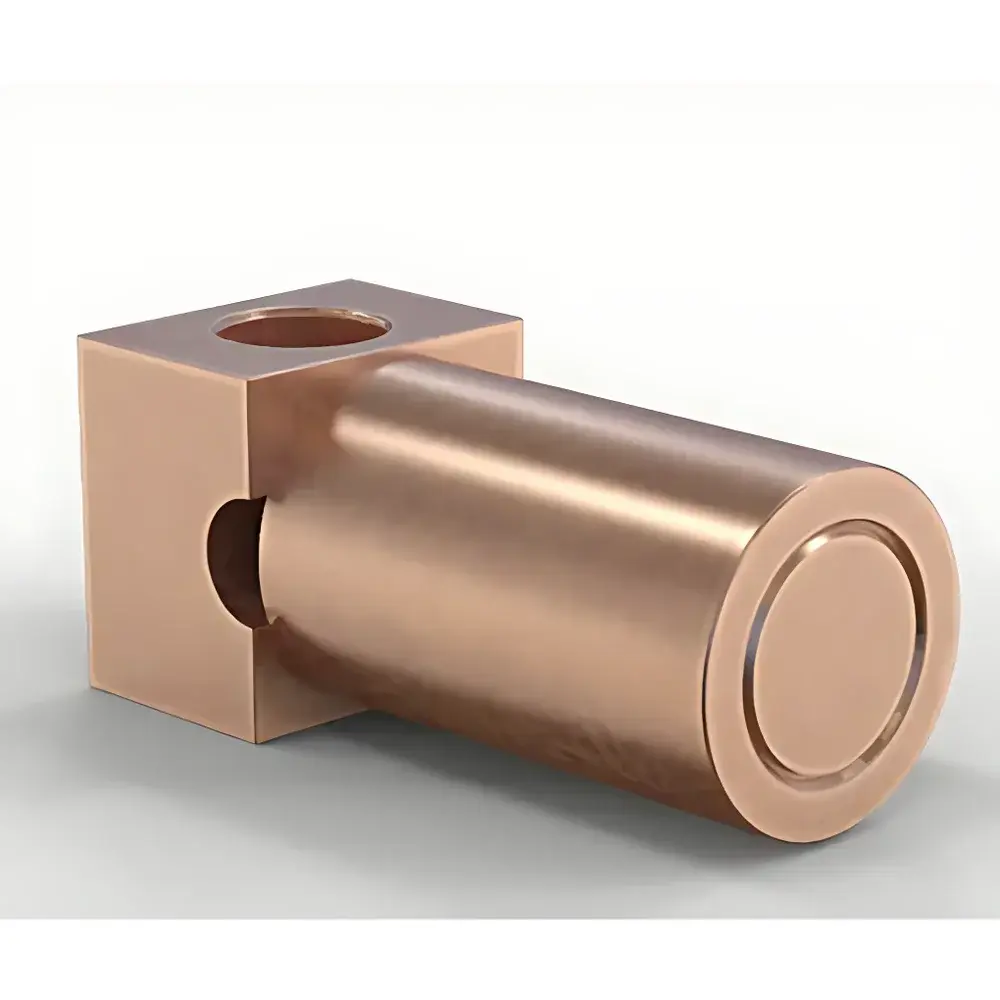
Lake Shore RX-102B-RS Ultra-Low-Temperature Resistance Temperature Detector (RTD) Sensor
| Brand | Lake Shore |
|---|---|
| Origin | USA |
| Manufacturer Status | Authorized Distributor |
| Product Origin | Imported |
| Model | RX-102B-RS |
| Price | Upon Request |
Overview
The Lake Shore RX-102B-RS is a precision resistance temperature detector (RTD) engineered for reliable, high-fidelity thermometry in ultra-low-temperature cryogenic systems—specifically designed to operate continuously and stably from 5 mK up to 40 K. As dilution refrigerators routinely achieve base temperatures below 10 mK, conventional temperature sensors face fundamental limitations in sensitivity, self-heating, and calibration traceability. The RX-102B-RS addresses these challenges through a rigorously optimized ruthenium oxide (RuOx) sensing element, hermetically sealed in a low-thermal-mass, radiation-shielded package. Its measurement principle relies on the well-characterized, monotonic, and highly reproducible resistive response of RuOx at millikelvin temperatures—a property validated against primary thermometric standards and aligned with the International Temperature Scale (ITS-90) extrapolation protocols. When paired with the Lake Shore Model 372 AC resistance bridge and temperature controller, the RX-102B-RS forms a fully integrated, low-noise, low-power thermometry chain capable of sub-millikelvin resolution and robust operation in demanding quantum computing, quantum transport, and condensed matter physics experiments.
Key Features
- Calibrated down to 10 mK—with extrapolated reference points extended to 5 mK for advanced low-temperature characterization
- Radiation-shielded housing minimizes photon-induced heating, critical for thermal isolation in dilution refrigerator mixing chambers
- Enhanced thermal anchoring via improved mechanical packaging ensures rapid thermal equilibration and reduced thermal lag
- Optimized excitation protocol: 20 µV (0.05–0.1 K), 63 µV (0.1–1.2 K), ≤10 mV above 1 K—ensuring minimal Joule heating while preserving signal-to-noise ratio
- Typical power dissipation of 7.5 × 10⁻⁸ W at 4.2 K, enabling stable measurements in ultra-low-heat-capacity environments
- Thermal time constant of 0.5 s at 4.2 K and 2.5 s at 77 K—supporting both dynamic thermal profiling and steady-state monitoring
- Long-term stability verified at ±30 mK over extended periods at 4.2 K under controlled cryogenic conditions
Sample Compatibility & Compliance
The RX-102B-RS is compatible with standard cryogenic mounting configurations—including epoxy bonding, indium soldering, and spring-loaded thermal clamping—and is routinely deployed in in situ positions within dilution refrigerator mixing chambers, adiabatic demagnetization refrigerators (ADR), and custom He-3/He-4 cryostats. It is not recommended for use in magnetic fields exceeding 0.5 T due to potential magnetoresistive interference in the RuOx element. While the sensor itself does not carry formal ISO/IEC 17025 certification, its calibration data are traceable to NIST-referenced fixed points and generated in accordance with ASTM E220-22 (Standard Test Method for Calibration of Thermocouples by Comparison Techniques) and IEC 60751:2022 (Industrial platinum resistance thermometers and platinum temperature sensors). Calibration certificates include uncertainty budgets compliant with GUM (Guide to the Expression of Uncertainty in Measurement) principles and support GLP/GMP audit requirements when integrated into regulated research workflows.
Software & Data Management
Native integration with Lake Shore’s CryoSoft™ software suite enables automated calibration curve loading, real-time resistance-to-temperature conversion using user-selected interpolation schemes (e.g., cubic spline, polynomial fit), and seamless logging of time-stamped temperature data with metadata tagging (e.g., sensor ID, calibration date, excitation mode). The Model 372 bridge supports IEEE-488.2 (GPIB), RS-232, and Ethernet interfaces, allowing programmable control via Python (PyVISA), LabVIEW, or MATLAB. All temperature readings include built-in error flags for open-circuit detection, excessive noise, and out-of-range excitation—ensuring data integrity during unattended operation. Audit trails and electronic signatures are configurable to meet FDA 21 CFR Part 11 requirements for laboratories operating under regulated quality systems.
Applications
- Temperature monitoring and feedback control in dilution refrigerators operating below 10 mK
- In-situ thermometry for superconducting qubit characterization and coherence time mapping
- Thermal mapping of cold stages in scanning tunneling microscopy (STM) and atomic force microscopy (AFM) cryostats
- Calibration reference for secondary thermometers in national metrology institutes
- Low-temperature validation of thermal interface materials and heat switch performance
- Time-resolved thermal response studies in topological insulator and heavy-fermion systems
FAQ
What is the lowest temperature at which the RX-102B-RS is calibrated?
The sensor is factory-calibrated to 10 mK; extrapolated reference points are provided down to 5 mK for users requiring characterization in that regime.
Can the RX-102B-RS be used in high magnetic fields?
No—it is not recommended for use in magnetic fields above 0.5 T due to magnetoresistive effects that compromise accuracy.
How is self-heating minimized during operation?
Through optimized low-excitation voltage protocols, radiation shielding, and a low-thermal-mass package design that limits dissipated power to 7.5 × 10⁻⁸ W at 4.2 K.
Is calibration traceable to international standards?
Yes—calibrations are performed against NIST-traceable references and documented per GUM-compliant uncertainty analysis.
What software tools support data acquisition and analysis?
CryoSoft™, PyVISA, LabVIEW drivers, and MATLAB instrument control toolboxes are fully supported.