
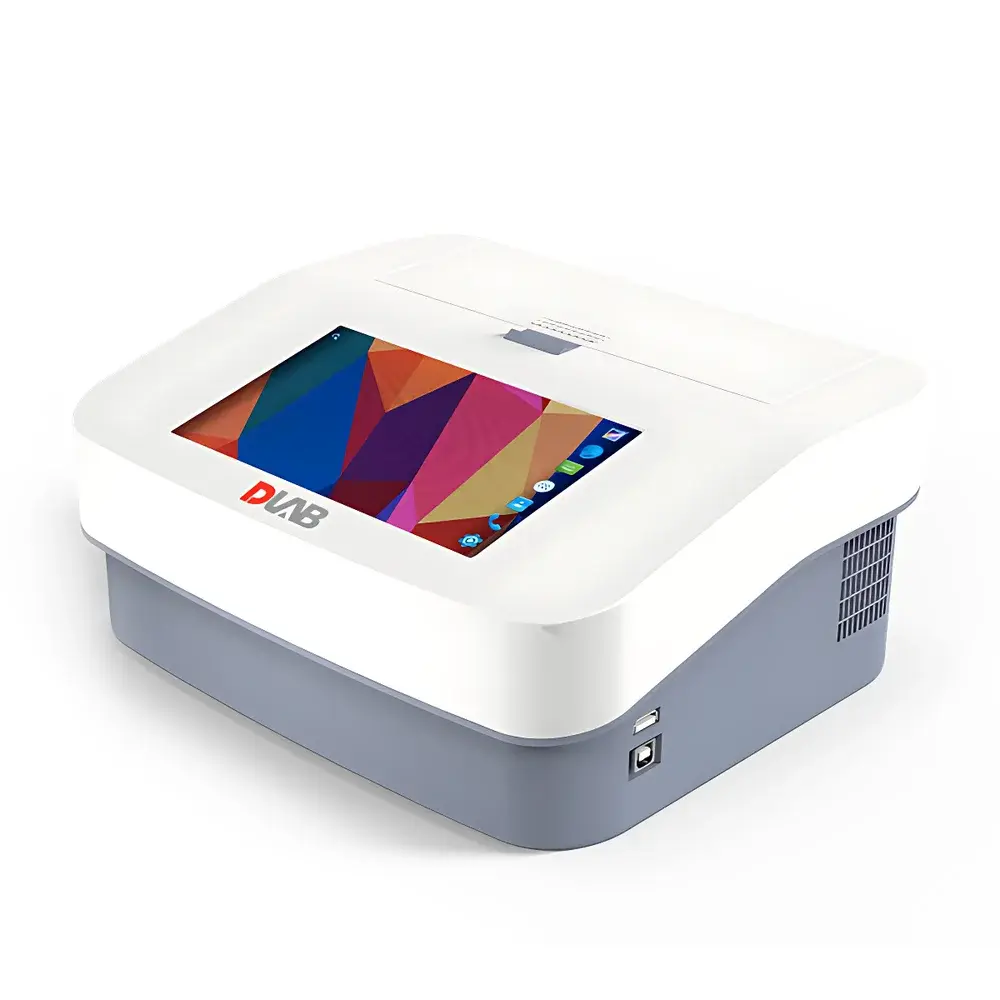
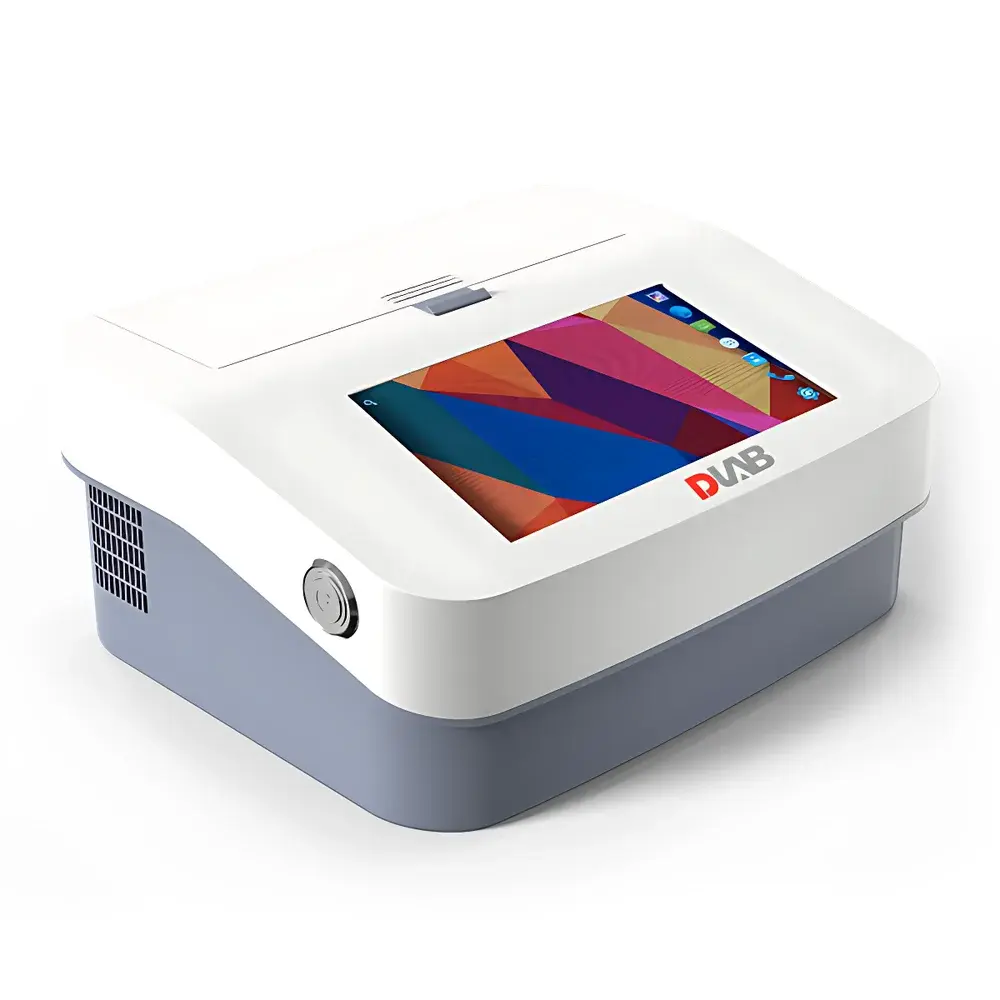
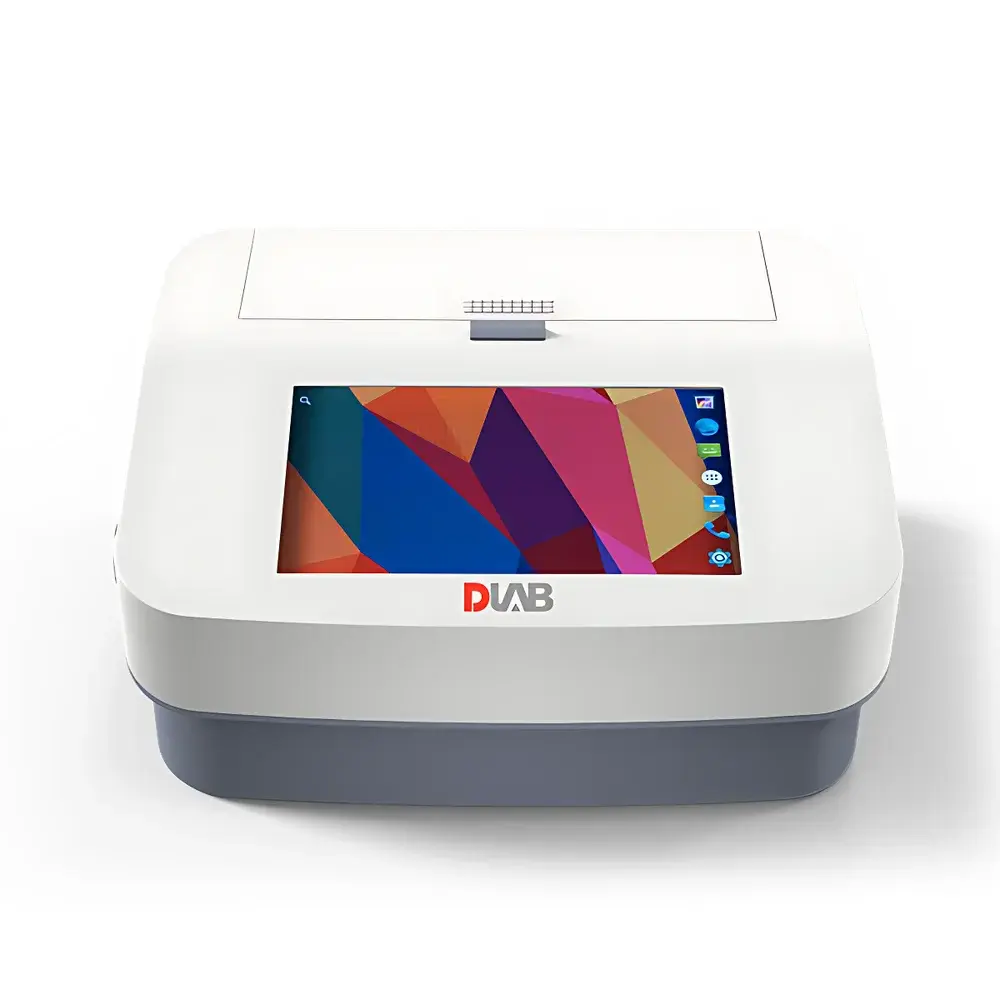
DLAB Accurate 16-T Real-Time Fluorescence Quantitative PCR System
| Brand | DLAB |
|---|---|
| Origin | Beijing, China |
| Manufacturer | Yes |
| Instrument Type | Real-Time Fluorescence Quantitative PCR System |
| Sample Throughput | 16-well (2×8 configuration) |
| Max Heating/Cooling Rate | 6.0°C/s |
| Temperature Accuracy | ±0.2°C |
| Well-to-Well Temperature Uniformity | ±0.2°C @ 60°C |
| Excitation Source | Monochromatic High-Efficiency LED |
| Detection Device | High-Precision MPPC (Silicon Photomultiplier) |
| Scanning Mode | Linear Fast Well-by-Well Scan |
| Fluorescence Channels | Dual-Channel Standard (FAM/SYBR & VIC/HEX) |
| Sensitivity | Single-Copy Gene Detection |
| Dynamic Range | 10 orders of magnitude |
| Analysis Modes | Ct Value Analysis, Absolute Quantification |
| Reaction Volume | 10–50 µL |
| Compatible Vessels | 0.2 mL transparent single tubes or 8-tube strips |
| Power Input | 100–240 V AC |
| Dimensions (W×D×H) | 225 × 270 × 132 mm |
| Weight | 4 kg |
Overview
The DLAB Accurate 16-T is a compact, standalone real-time fluorescence quantitative PCR system engineered for precision nucleic acid amplification and detection under field-deployable or resource-constrained laboratory conditions. Based on the fundamental principles of polymerase chain reaction kinetics and dual-wavelength fluorescence resonance energy transfer (FRET), the instrument employs a Peltier-based thermal cycling module to deliver rapid, reproducible temperature transitions—critical for high-fidelity amplification across diverse template types. Its integrated optical architecture utilizes monochromatic LEDs as excitation sources and high-gain silicon photomultipliers (MPPCs) for low-noise, high-sensitivity fluorescence signal acquisition. The system supports both endpoint and real-time monitoring of amplicon accumulation via threshold cycle (Ct) determination, enabling absolute quantification through standard curve calibration or comparative ΔΔCt analysis. Designed for compliance with core molecular diagnostics workflows, the Accurate 16-T operates without external computers, making it suitable for point-of-need applications in clinical screening, food pathogen testing, environmental DNA surveillance, and academic research.
Key Features
- Compact form factor (225 × 270 × 132 mm) and lightweight construction (4 kg) enable benchtop, mobile, or vehicle-mounted deployment.
- 7-inch capacitive color touchscreen interface provides intuitive navigation, protocol setup, real-time curve visualization, and on-device data review—no PC required.
- Peltier-driven thermal control achieves a maximum ramp rate of 6.0°C/s and maintains temperature accuracy within ±0.2°C at 60°C and ±0.3°C at 95°C, ensuring stringent thermal uniformity across all 16 wells.
- Linear fast well-by-well scanning enables full 16-well fluorescence readout in ≤1 second per cycle, minimizing inter-cycle delay and preserving kinetic fidelity.
- Dual-channel configuration (FAM/SYBR + VIC/HEX) is standard; optional quad-channel upgrade adds ROX and CY5 detection for multiplexed assays requiring ≥4 targets.
- USB 2.0 port allows direct export of raw fluorescence data (.csv), amplification plots (.png), and experiment metadata without proprietary software dependencies.
Sample Compatibility & Compliance
The Accurate 16-T accepts standard 0.2 mL transparent single tubes and 8-tube strips, accommodating reaction volumes from 10 to 50 µL. Its thermal block geometry is optimized for consistent heat transfer across heterogeneous sample viscosities and evaporation-prone formulations. While not certified under IVD regulatory frameworks (e.g., FDA 510(k), CE-IVD), the system adheres to essential performance benchmarks aligned with ISO 13485-aligned manufacturing practices and supports GLP-compliant documentation when used with validated reagents and protocols. Temperature calibration traceability follows internal SOPs compliant with ISO/IEC 17025 principles for laboratory equipment verification. For regulated environments, users are advised to perform in-house installation qualification (IQ), operational qualification (OQ), and performance qualification (PQ) prior to routine use.
Software & Data Management
All data acquisition, analysis, and reporting occur natively on the embedded Linux-based OS. The instrument firmware implements Ct calculation using adaptive baseline determination and sigmoidal curve fitting algorithms. Exported .csv files contain time-stamped fluorescence intensity values per channel per cycle, compatible with third-party analysis tools including R/qPCR, LinRegPCR, and Excel-based custom macros. Audit trail functionality logs user actions (e.g., protocol edits, run starts/stops, parameter changes) with timestamps—supporting basic 21 CFR Part 11 readiness when paired with institutional electronic signature policies. No cloud connectivity or remote access capabilities are included, preserving data sovereignty and minimizing cybersecurity exposure.
Applications
- Clinical microbiology: Rapid detection and quantification of viral load (e.g., SARS-CoV-2, HIV, HBV) and bacterial pathogens (e.g., Salmonella, Listeria) in nasopharyngeal swabs or stool samples.
- Food safety: Screening for genetically modified organism (GMO) markers, allergen DNA traces, and spoilage-associated microbes in raw and processed commodities.
- Environmental monitoring: Quantitative assessment of microbial community markers (e.g., 16S rRNA, functional genes) in water, soil, and air filtration matrices.
- Academic research: Gene expression profiling (RT-qPCR), miRNA quantification, CRISPR editing efficiency validation, and SNP genotyping via hydrolysis probe assays.
- Field diagnostics: Mobile biosurveillance during outbreak response, veterinary point-of-care testing, and agricultural biosecurity assessments.
FAQ
Is the Accurate 16-T compatible with standard qPCR master mixes and probe chemistries?
Yes—it supports SYBR Green I, TaqMan hydrolysis probes, molecular beacons, and scorpions without hardware modification.
Can the instrument perform melt curve analysis?
Yes, post-amplification high-resolution melt (HRM) analysis is supported in both dual- and quad-channel modes.
What is the minimum detectable copy number for DNA templates?
Under optimal assay conditions, the system reliably detects single-copy genomic targets with ≤5% CV in Ct values across replicates.
Does the device support external triggering or integration into automated workflows?
No—it operates as a closed, self-contained unit with no API, Ethernet, or GPIO interfaces for external control.
How often does the optical system require recalibration?
DLAB recommends annual optical verification using supplied reference dyes; no user-serviceable alignment components are present.



