
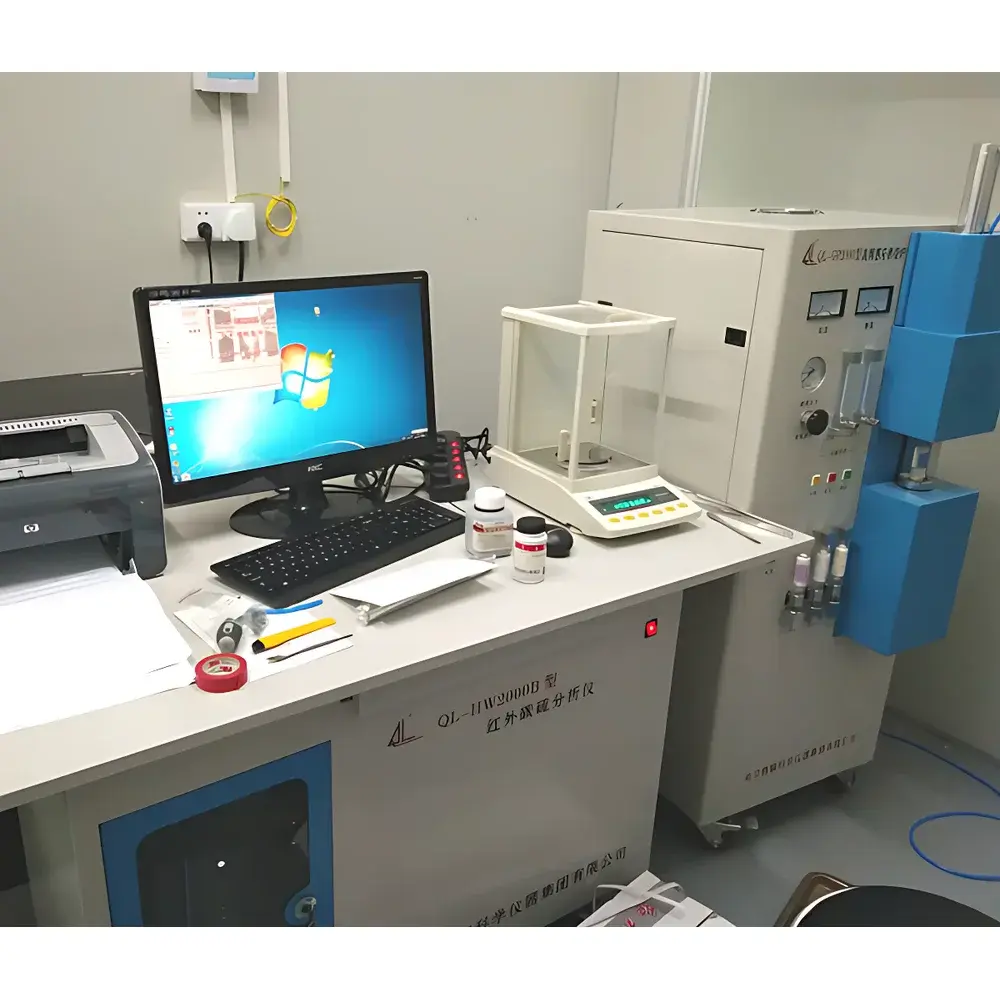
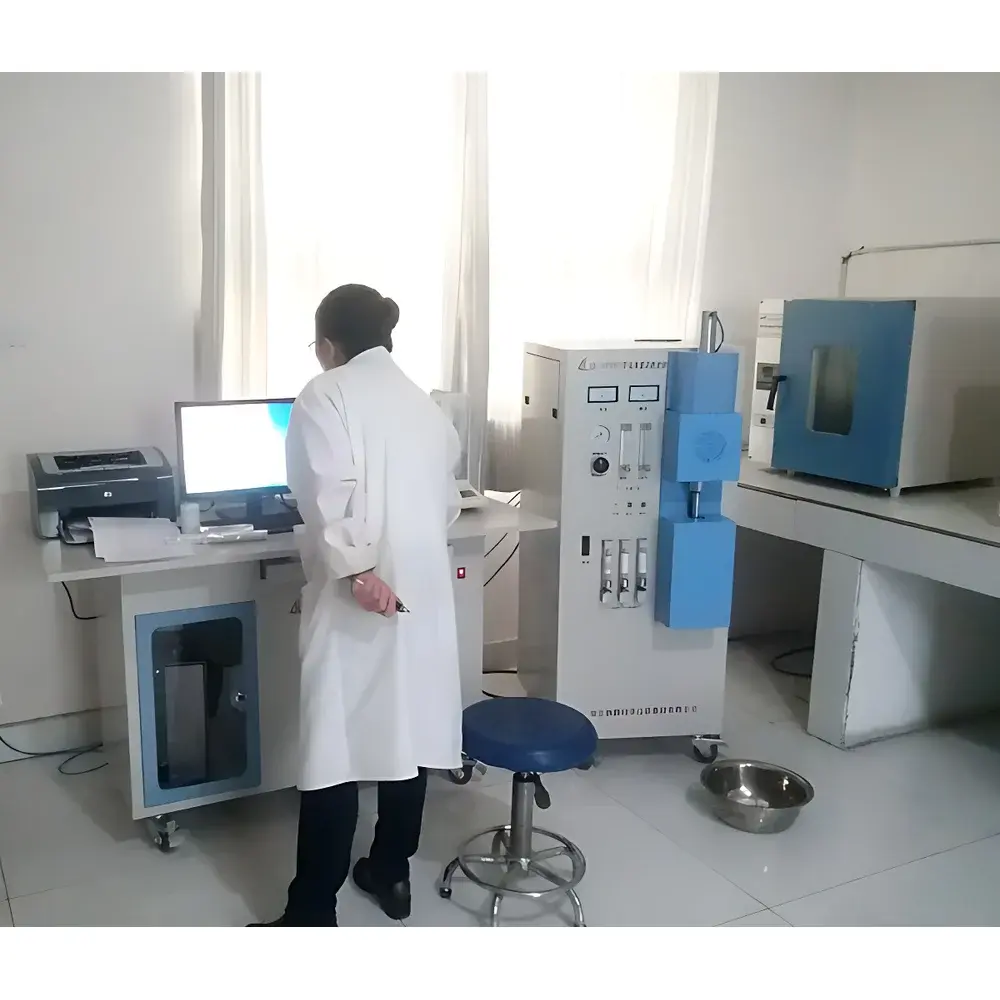
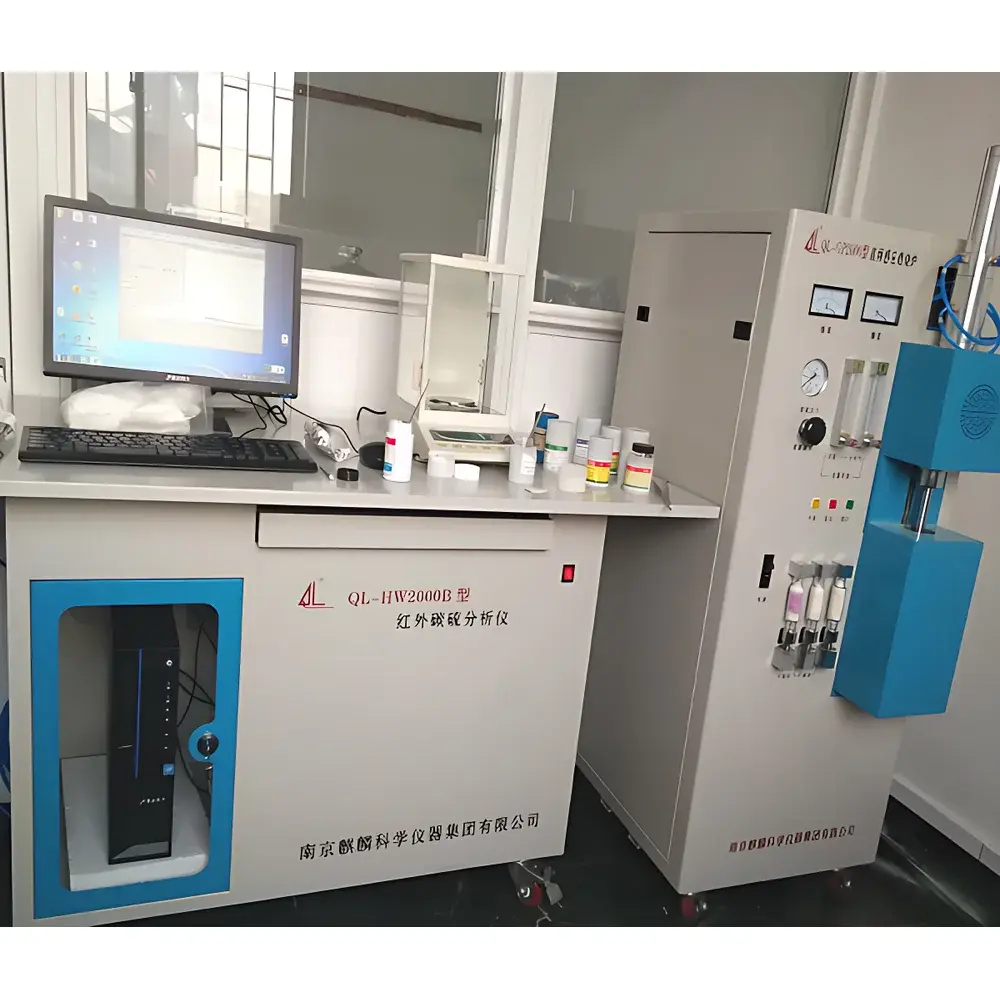
QL-HW2000BA High-Frequency Infrared Carbon-Sulfur Analyzer
| Brand | QL |
|---|---|
| Origin | Jiangsu, China |
| Manufacturer Type | Authorized Distributor |
| Country of Origin | China |
| Model | HW2000BA |
| Measurement Principle | Non-Dispersive Infrared (NDIR) Absorption |
| Heating System | 2.5 kVA High-Frequency Induction Furnace (18–20 MHz) |
| Carbon Range | 0.0001–99.999 wt% |
| Sulfur Range | 0.0001–99.999 wt% |
| Sensitivity | 0.1 ppm (reading-based) |
| Precision | Carbon RSD ≤ 0.5%, Sulfur RSD ≤ 1.0% |
| Analysis Time | 25–60 s (adjustable |
| typical | ~35 s) |
| Compliance | GB/T 20123–2006 / ISO 15350:2000 |
| Balance Integration | 0–120 g capacity, 0.1 mg readability |
Overview
The QL-HW2000BA High-Frequency Infrared Carbon-Sulfur Analyzer is a dual-channel, microprocessor-controlled elemental analyzer engineered for precise quantification of total carbon (C) and sulfur (S) in solid conductive and semi-conductive materials. It operates on the principle of non-dispersive infrared (NDIR) absorption spectroscopy: following high-frequency induction combustion, evolved CO2 and SO2 gases are swept through temperature- and pressure-stabilized optical cells. At characteristic wavelengths—4.26 µm for CO2 and 7.4 µm for SO2—these gases absorb infrared radiation proportionally to their concentration. The instrument employs high-stability platinum infrared sources, aviation-grade synchronous modulation motors (rated for >100,000 hours), gold-plated gas cells with minimal photon adsorption, and narrow-band interference filters to eliminate spectral cross-talk—particularly critical for high-carbon matrices where SO2 signal integrity must be preserved. The dual-C detection cell option enables automatic range switching between ultra-trace (ppm-level) and high-percentage (up to 99.999%) measurements without manual recalibration.
Key Features
- Dual-CPU architecture with real-time data acquisition at 4 Hz sampling rate for enhanced signal fidelity and noise rejection
- Industrial-grade modular power supply with EMI/RFI shielding, ensuring stable operation in shared laboratory environments
- High-frequency induction furnace (2.5 kVA, 18–20 MHz) with RF-controlled thermal ramping for reproducible sample combustion and minimized graphite crucible carryover
- Thermopile-based pyroelectric detectors operating in linear response mode, calibrated against NIST-traceable standards for both low- and high-concentration regimes
- Integrated mass flow control system with solenoid valves rated for ≥100,000 actuation cycles, enabling precise carrier gas (O2) delivery and purge timing
- Temperature-, pressure-, and flow-compensated optical path design to maintain measurement consistency across ambient fluctuations
Sample Compatibility & Compliance
The QL-HW2000BA is validated for use with ferrous and non-ferrous matrices including carbon steels, stainless steels, cast irons, superalloys, rare-earth metals, cementitious materials, coal/coke, mineral ores, catalysts, and organic polymers. Sample preparation requires standard analytical-grade graphite crucibles and tungsten or tin accelerants, per ASTM E1019 and ISO 15350 protocols. All carbon and sulfur measurements comply with GB/T 20123–2006 (equivalent to ISO 15350:2000) for solid metallic materials. The system supports GLP-compliant audit trails when interfaced with compliant LIMS platforms, and its firmware architecture permits configuration locking and user-access tiering to meet basic 21 CFR Part 11 readiness requirements for electronic records.
Software & Data Management
Control and analysis are executed via embedded firmware and optional Windows-based QL-Analyzer Suite v4.x. The software provides real-time spectral monitoring, automatic baseline correction, peak integration with manual override, and multi-point calibration curve management (linear, quadratic, or cubic). Raw detector voltage traces, gas flow profiles, and furnace temperature logs are timestamped and exportable in CSV or XML format. Reports include full metadata: sample ID, operator, balance reading, combustion parameters, raw absorbance values, and statistical validation (RSD, recovery %). Data archiving supports network-mapped drives and encrypted USB backup. Optional OPC UA interface enables integration into MES or centralized QA/QC dashboards.
Applications
This analyzer serves quality control laboratories in metallurgical production (e.g., foundries, steel mills), geological survey institutes, catalyst R&D centers, and third-party testing facilities. Typical use cases include: verification of specification compliance for AISI/SAE grades (e.g., C in 1045 steel, S in 316L stainless); rapid screening of slag composition in EAF operations; certification of low-sulfur feedstocks for hydrogenation catalysts; quantification of residual carbon in refractory ceramics; and validation of desulfurization efficiency in coal-fired power plant fly ash. Its wide dynamic range eliminates the need for dilution or re-analysis when handling heterogeneous scrap batches or high-purity specialty alloys.
FAQ
What sample mass is recommended for optimal precision?
Typical sample weight ranges from 0.2 to 1.0 g, depending on expected C/S content and matrix density. A 0.5 g aliquot is standard for steels and cast irons.
Is external calibration required before each batch?
No—calibration curves remain stable for ≥200 analyses under controlled lab conditions. Daily verification with certified reference materials (CRMs) such as NIST SRM 1261a or BCS CRM 392 is recommended.
Can the instrument analyze non-conductive samples like polymers or ceramics?
Yes, when combined with appropriate fluxes (e.g., tin oxide + copper oxide mixtures) and optimized combustion parameters to ensure complete oxidation and gas release.
What maintenance intervals are advised for the infrared detection system?
Optical components require annual inspection and cleaning by authorized service personnel. The high-frequency furnace coil and crucible holder should be inspected after every 500 analyses.
Does the system support remote diagnostics or firmware updates?
Firmware updates are performed via secure USB transfer; remote diagnostic access is available through optional QL-RemoteLink module with TLS-encrypted session management.





