
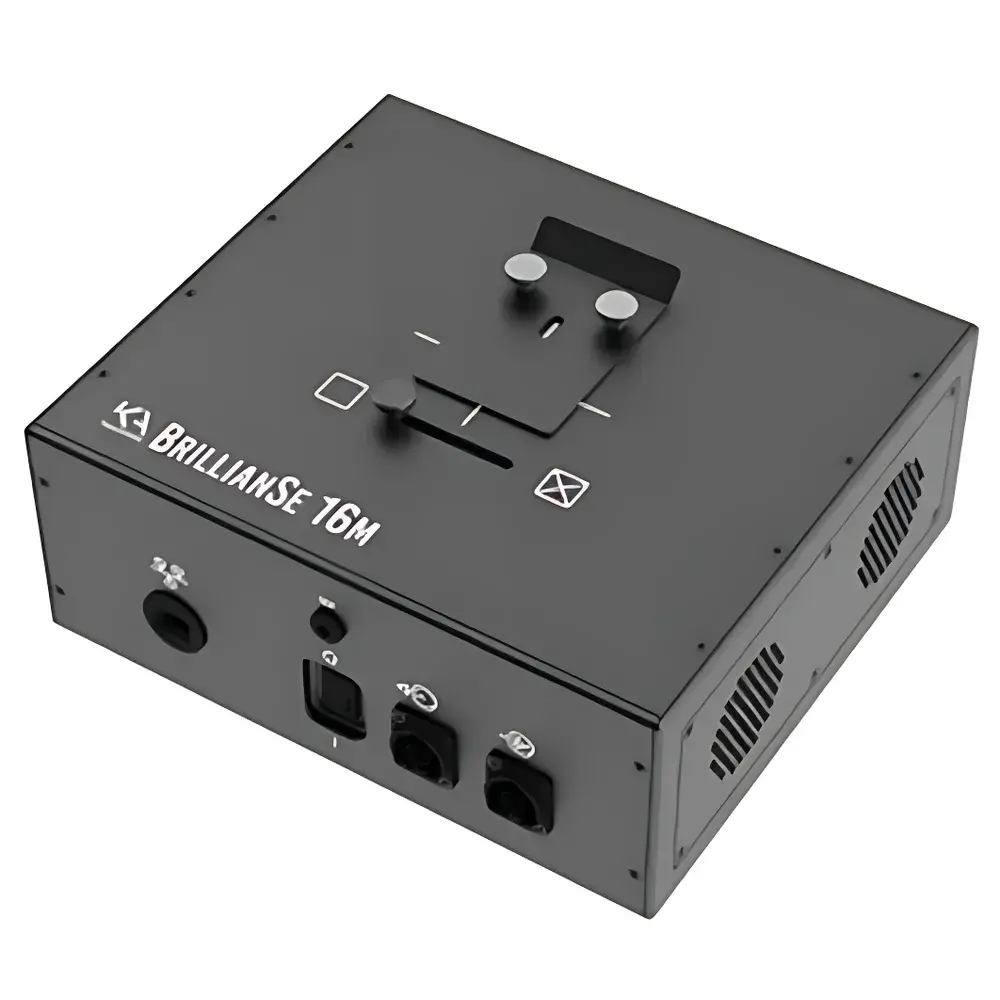
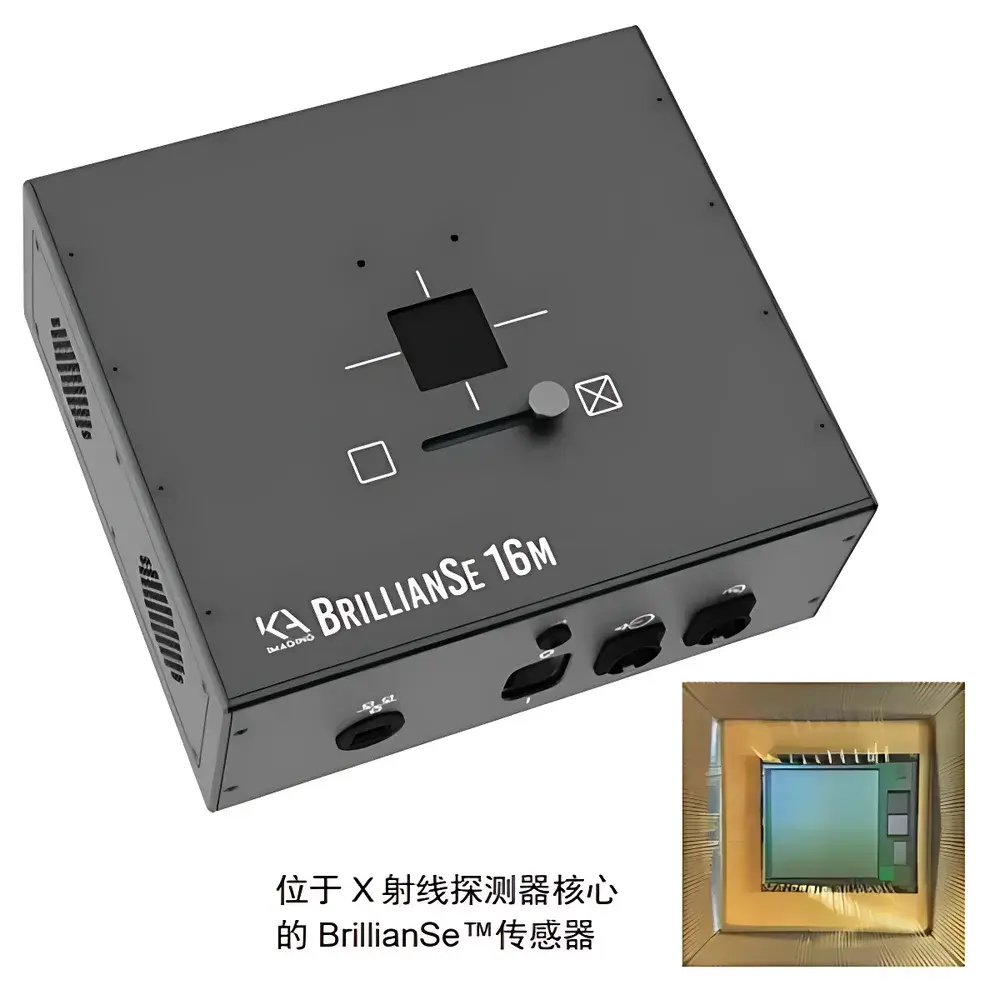
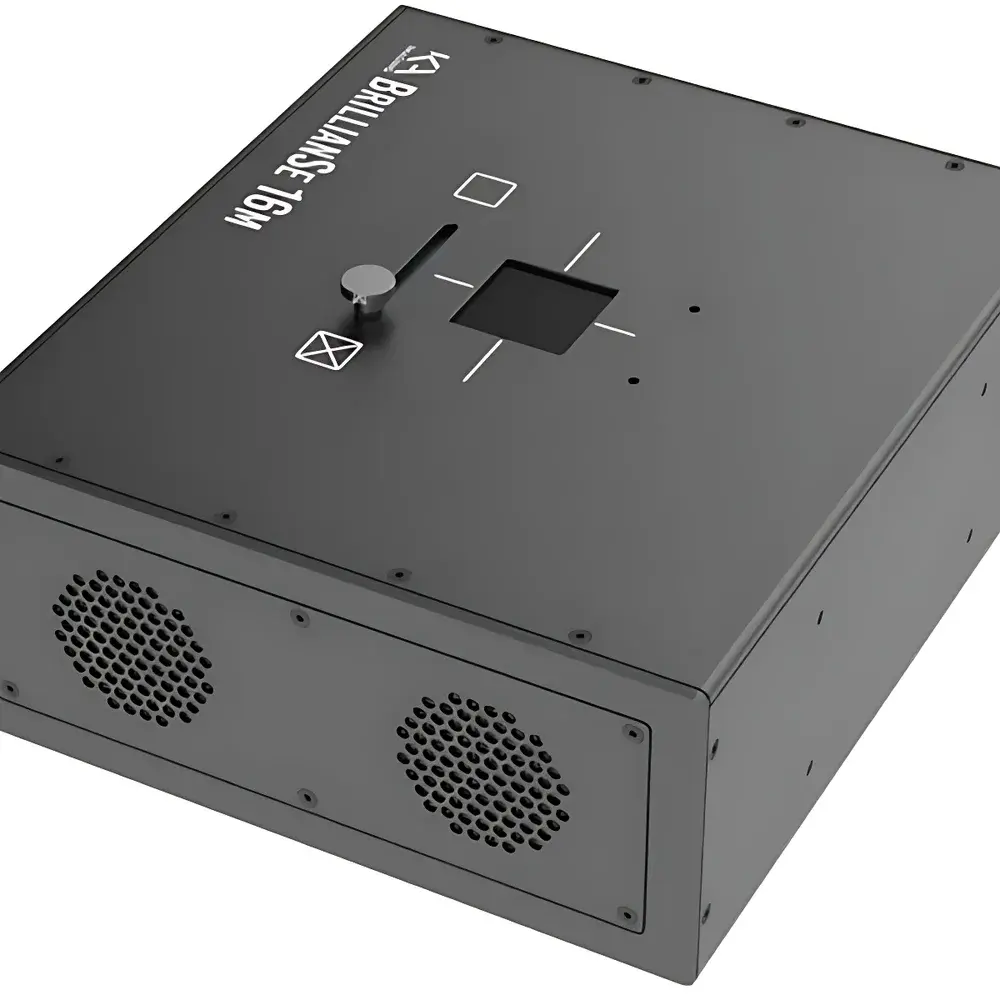
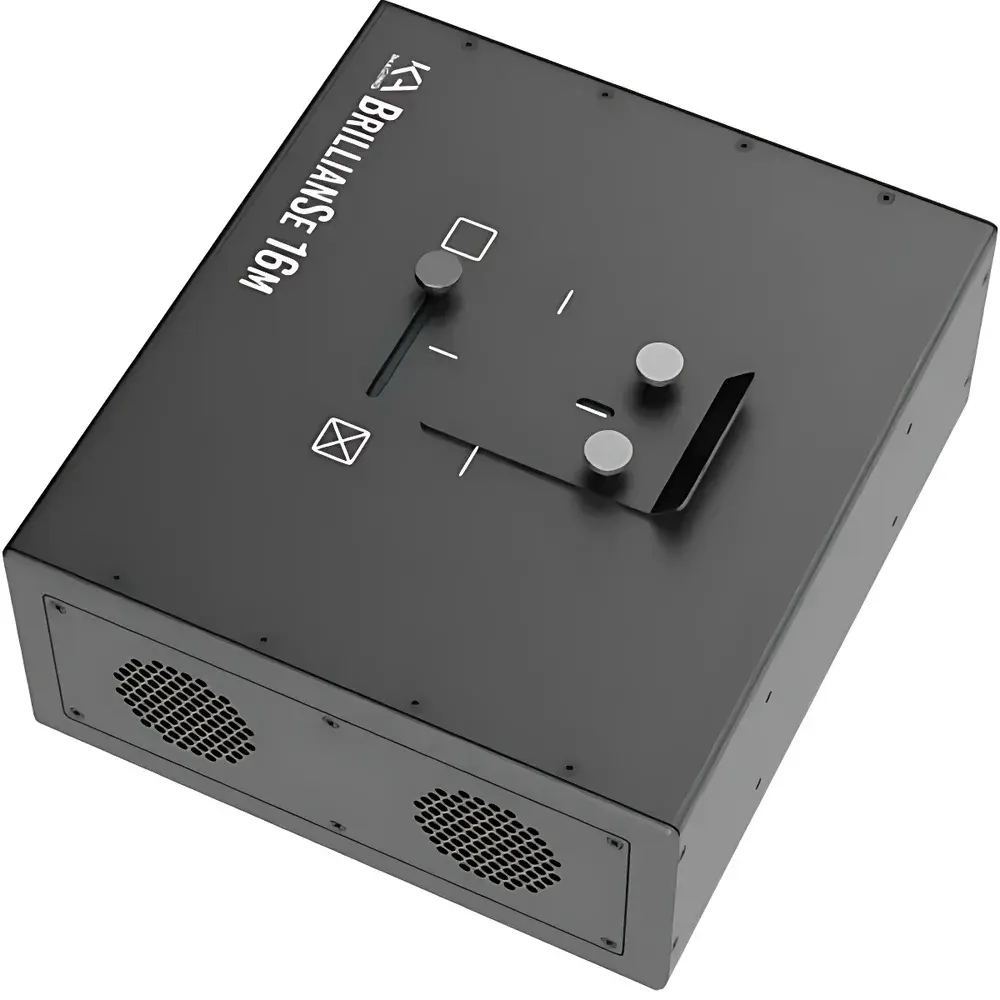
KA Imaging BrillianSe High-Resolution Amorphous Selenium X-ray Detector
| Brand | KA Imaging |
|---|---|
| Origin | Canada |
| Manufacturer Type | Authorized Distributor |
| Origin Category | Imported |
| Model | BrillianSe |
| Quotation | Upon Request |
| Detector Type | High-Resolution CMOS Semiconductor Chip |
| Scanning Method | Translation-Rotation (TR) |
| Accuracy | Micron-Level |
| X-ray Energy Range | Up to 120 kV |
| Spatial Resolution | Up to 5.6 µm (0.1 MTF at 90 cycles/mm) |
| Dimensions | 269 mm × 245 mm × 117 mm (L × W × H) |
Overview
The KA Imaging BrillianSe High-Resolution Amorphous Selenium X-ray Detector is a direct-conversion, hybrid a-Se/CMOS imaging sensor engineered for high-fidelity, low-dose X-ray radiography and micro-computed tomography (micro-CT) applications. Unlike indirect scintillator-based detectors—where X-ray photons are first converted to visible light before being captured by a photodiode array—the BrillianSe detector utilizes a thick, high-Z amorphous selenium (a-Se) photoconductor layer to directly convert incident X-ray photons into electron-hole pairs. These charges are collected with near-unity efficiency by an underlying low-noise, 16-megapixel CMOS active pixel sensor (APS) featuring 8 µm pitch pixels and 100% fill factor. This architecture eliminates optical cross-talk and resolution loss associated with light spread in phosphor screens, enabling intrinsic spatial resolution limited only by pixel geometry and charge diffusion—critical for phase-contrast and propagation-based imaging at synchrotron and laboratory-scale hard X-ray sources.
Key Features
- Direct X-ray-to-charge conversion using high-gain, high-stopping-power amorphous selenium (a-Se) photoconductor
- 16 million pixel (4096 × 4096) CMOS APS readout with 8 µm pixel pitch and full-frame global shutter
- Measured spatial resolution of ≤5.6 µm (0.1 MTF at 90 cycles/mm), validated using JIMA test patterns at 21 keV and TR-scanned micro-CT phantoms
- High detective quantum efficiency (DQE): 36% at 10 cycles/mm under 60 kVp (2 mm Al filtration), among the highest reported for direct-conversion detectors in this energy range
- Point spread function (PSF) of 1.1 pixels—enabling robust edge preservation in absorption and phase-contrast reconstructions
- Operational energy range up to 120 kV, supporting both lab-based micro-CT and synchrotron beamline integration
- Compact form factor (269 × 245 × 117 mm) compatible with standard TR (translation-rotation) micro-CT gantries and custom optical benches
Sample Compatibility & Compliance
The BrillianSe detector is optimized for non-destructive evaluation (NDE) and quantitative microstructural analysis of low-atomic-number (low-Z) materials—including polymer composites (e.g., Kevlar), biological tissues (e.g., brain scaffolds, seed embryos), pharmaceutical dosage forms (capsules, tablets), lightweight concrete aggregates, and microelectronics (TSVs, MEMS). Its high DQE at low flux enables dose-sensitive applications such as protein crystallography and time-resolved tomography. The system complies with IEC 62220-1-1 for medical-grade detector performance characterization and supports GLP/GMP-aligned data acquisition workflows when integrated with validated CT reconstruction pipelines. While not certified for clinical diagnostic use, its metrological traceability and stable gain/offset calibration meet ASTM E2737 and ISO 15732 standards for industrial CT system qualification.
Software & Data Management
BrillianSe operates via KA Imaging’s SDK and third-party-compatible GenICam-compliant drivers, enabling seamless integration with commercial CT reconstruction platforms (e.g., Octopus, Dragonfly, VGStudio MAX) and open-source frameworks (Tomopy, ASTRA). Raw frame data is acquired in 16-bit TIFF or HDF5 format with embedded metadata (exposure time, kV, filtration, temperature). The detector firmware supports hardware-level flat-field correction, pixel defect mapping, and real-time gain stabilization—reducing post-processing overhead. Audit trails, user access logs, and parameter versioning are supported through optional integration with LIMS or ELN systems compliant with FDA 21 CFR Part 11 requirements.
Applications
- Propagation-based phase-contrast micro-CT for enhanced contrast in soft-tissue-equivalent and low-density composite materials
- High-energy (>50 keV) Bragg coherent diffraction imaging (BCDI) and ptychography at synchrotron facilities
- Reverse engineering of precision components via sub-10 µm geometric fidelity CT reconstruction
- GD&T validation and dimensional metrology per ASME Y14.5 and ISO 1101 standards
- In-line process monitoring of additive manufacturing builds and ceramic sintering
- Fundamental failure analysis—e.g., void detection in encapsulated electronics, crack propagation in dental biomaterials, and porosity quantification in aerospace alloys
FAQ
Does the BrillianSe detector support phase-contrast imaging without grating interferometry?
Yes. Its high spatial coherence preservation and low PSF enable propagation-based phase retrieval using single-distance or multi-distance methods—eliminating the need for mechanical gratings.
What is the maximum frame rate achievable at full resolution?
At 16-bit depth and full 4096 × 4096 resolution, the sustained frame rate is 1.2 fps; binning modes (2×2, 4×4) increase throughput while preserving DQE advantage.
Is temperature stabilization required during operation?
The detector includes active thermal regulation (±0.1 °C) to minimize dark current drift and ensure long-exposure stability—critical for low-flux synchrotron applications.
Can BrillianSe be retrofitted into existing micro-CT systems?
Yes. It interfaces via Camera Link HS or CoaXPress 2.0 and provides mechanical mounting templates compatible with common TR-stage geometries (e.g., Nikon XT, Zeiss Versa, Skyscan 2214).
How is calibration traceability maintained across operating voltages and energies?
Each unit ships with NIST-traceable gain/offset maps and MTF/PSF characterization reports measured at 21, 60, and 120 kV—validated per ISO 15732 Annex B protocols.
Related Products



