
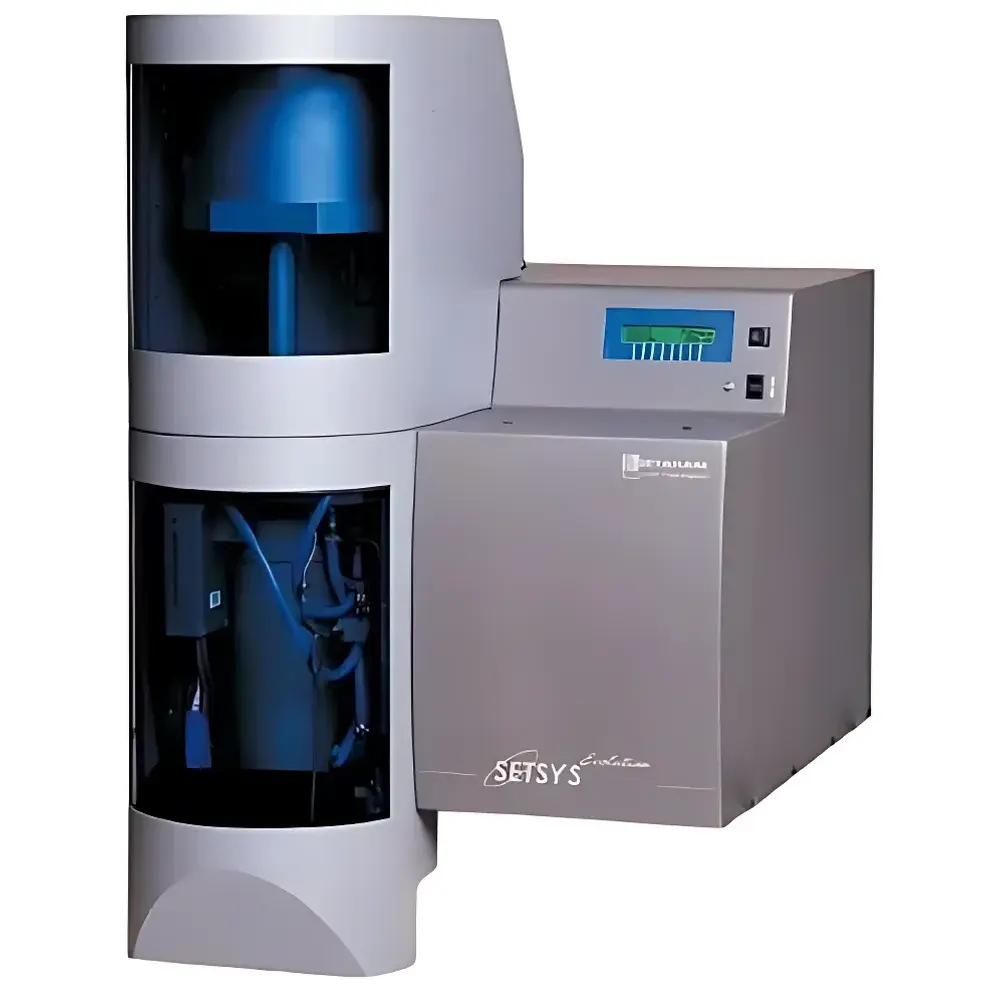
SETARAM Setsys STA 2400°C High-Temperature Simultaneous Thermal Analyzer
| Brand | SETARAM |
|---|---|
| Origin | France |
| Model | Setsys STA 2400°C |
| Temperature Range | –150 to 2400 °C |
| Heating Rate | 0.01–100 K/min |
| Max. Sample Mass | 35 g (standard), 100 g (high-capacity option) |
| TG Resolution | 0.002 µg / 0.02 µg |
| TG Baseline Repeatability | <10 µg (RT to 1750 °C) |
| DSC Resolution | 1 µW |
| DTA Resolution | 0.4 µW |
| Atmosphere Control | Inert, oxidizing, reducing, steam, corrosive gases (static/dynamic) |
| Gas Configuration | 3 carrier + 1 auxiliary/reactive gas lines with MFCs and solenoid valves |
| Vacuum Level | ≤10⁻⁴ mbar |
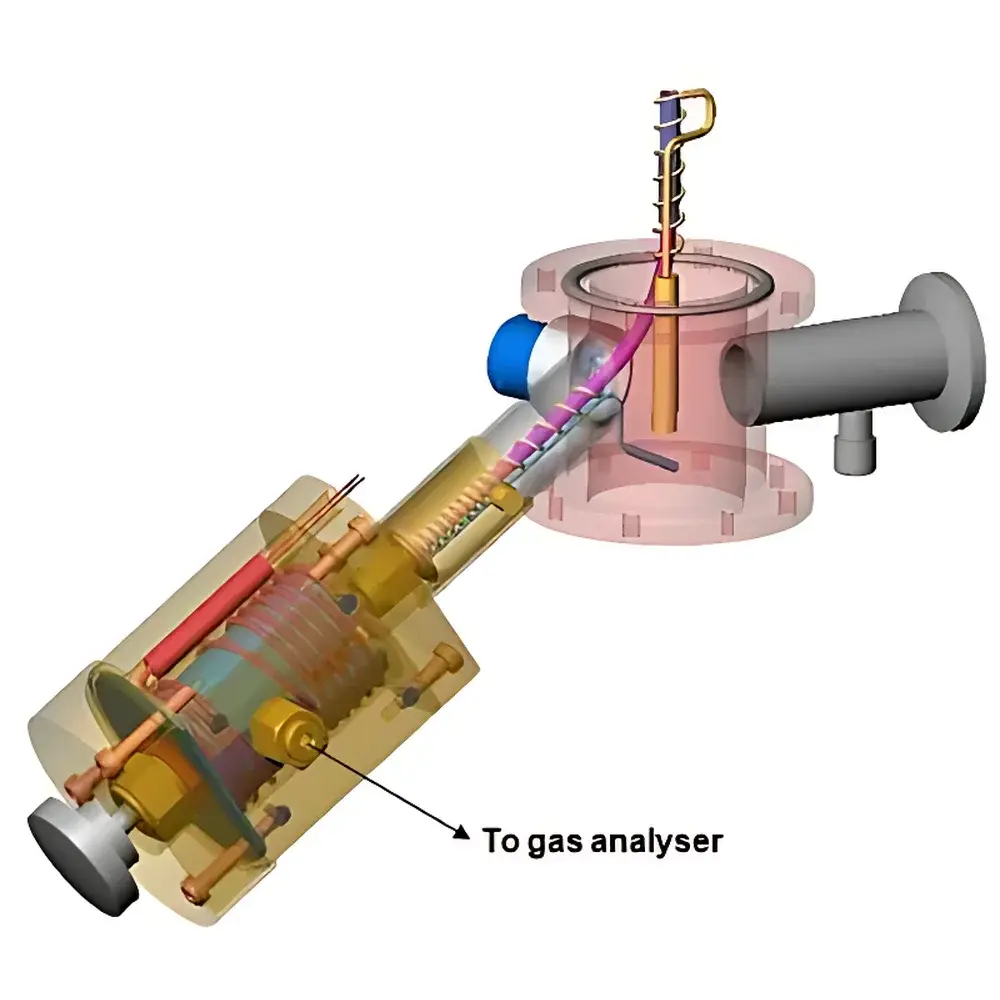
| EGA Compatibility | Direct coupling ports for MS, FT-IR, GC |
Overview
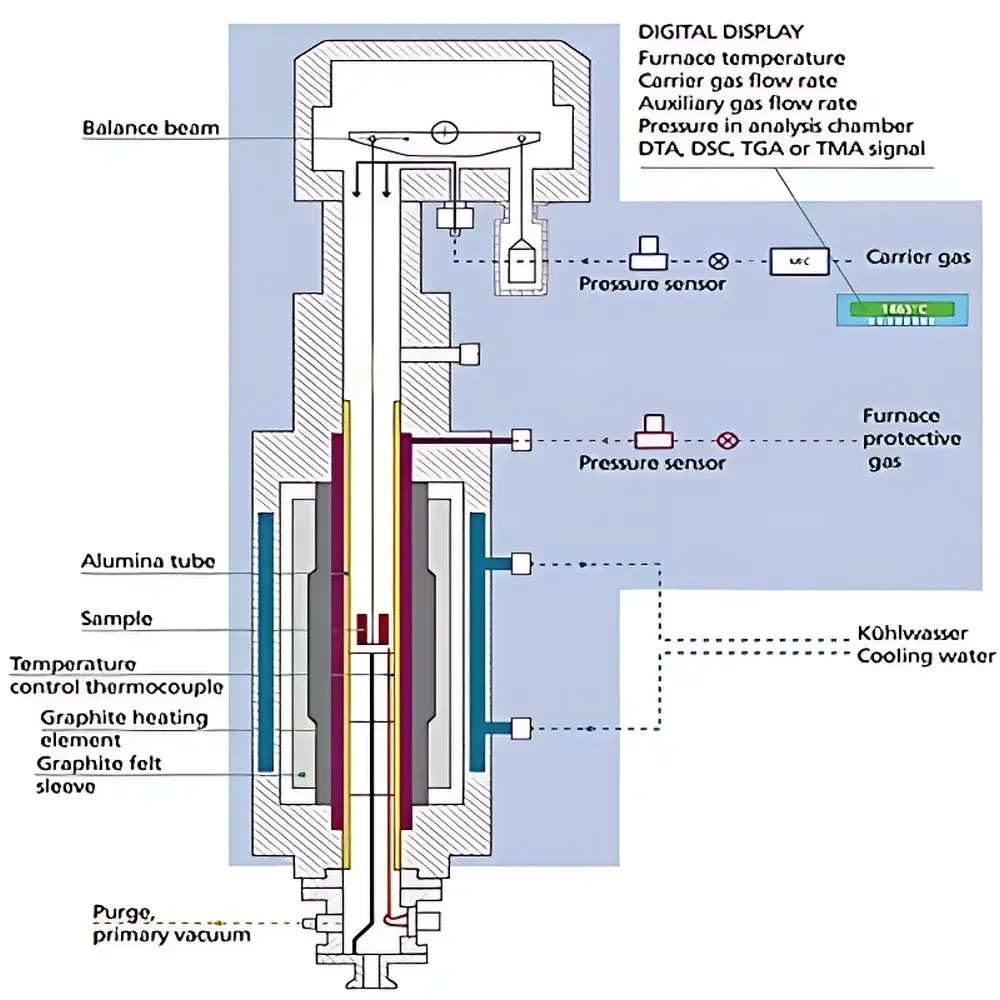
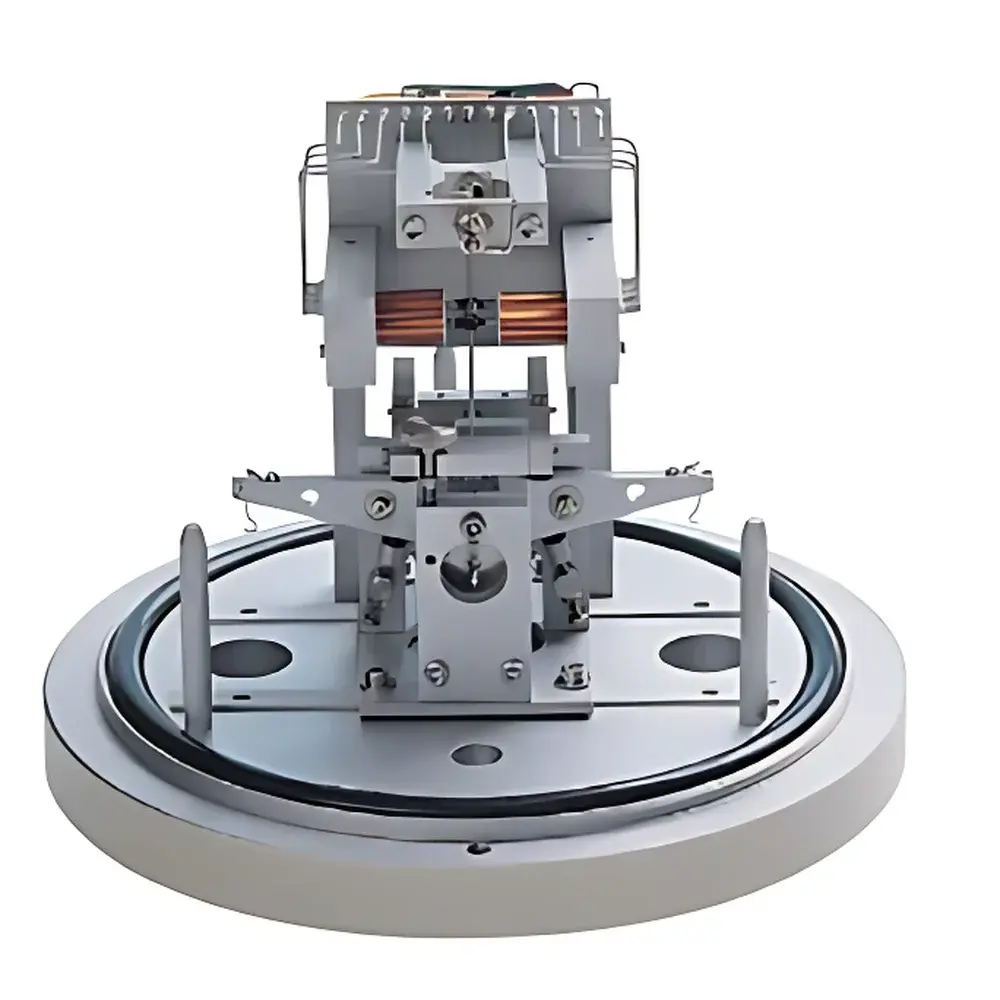
The SETARAM Setsys STA 2400°C is a high-performance simultaneous thermal analyzer engineered for precision thermogravimetric analysis (TGA) and differential thermal analysis (DTA) or differential scanning calorimetry (DSC) across an unprecedented temperature range—from cryogenic conditions at –150 °C up to ultra-high temperatures of 2400 °C. Its core architecture integrates a single monolithic graphite furnace with integrated water-cooling, enabling stable operation in the critical 1800–2400 °C regime where conventional systems fail. The instrument employs a top-loading, suspension-type microbalance—designed specifically for high-temperature stability—with optical displacement sensing and plug-and-play transducer interfaces. This configuration minimizes thermal drift and mechanical interference, delivering exceptional baseline fidelity and long-term reproducibility under aggressive atmospheres including pure H₂, wet air, SO₂, NH₃, and Cl₂. As a flagship platform in SETARAM’s Evolution series, the Setsys STA is not merely a thermal analyzer but a modular research infrastructure capable of seamless integration with evolved gas analysis (EGA) subsystems and environmental control modules.
Key Features
- Single-furnace design covering –150 to 2400 °C without hardware exchange—eliminating calibration discontinuities and thermal lag between ranges.
- Suspension-mounted high-resolution microbalance with dual sensitivity modes (0.002 µg and 0.02 µg), optimized for both trace mass loss detection and high-mass ceramic/metal samples.
- Triple-junction DTA sensor with matched thermocouple pairs ensures superior signal-to-noise ratio and thermal sensitivity over conventional single-pair configurations.
- Corrosion-resistant sensor housings and quartz/glass-ceramic sample holders rated for continuous exposure to steam, hydrogen sulfide, ammonia, and halogen-containing atmospheres.
- Integrated water-cooled furnace jacket maintains structural integrity and thermal homogeneity above 1600 °C, supporting extended dwell times at peak temperature without degradation.
- Four-channel gas management system with mass flow controllers (MFCs), programmable solenoid valves, and software-synchronized blending—enabling precise reactive gas dosing (e.g., stepwise O₂/H₂ mixtures) during dynamic experiments.
- Dedicated hydrogen safety interlock module compliant with IEC 60079-10-1 and ATEX Zone 1 requirements, including real-time H₂ concentration monitoring, automatic purge sequencing, and emergency venting.
Sample Compatibility & Compliance
The Setsys STA accommodates diverse sample geometries—including powders, sintered pellets, wires, and crucibles—within standard L = 20 mm × φ = 10 mm dimensions or optional high-capacity configurations (up to 100 g). It supports ASTM E1131, ISO 11358, and USP for thermal stability profiling, as well as ISO 13927 for oxidation kinetics in metallic alloys. Its vacuum-tight construction (<10⁻⁴ mbar) and chemically inert internal pathways meet GLP/GMP documentation standards, including full audit trails for method parameters, gas flow logs, and temperature ramp profiles per FDA 21 CFR Part 11. All firmware and acquisition software are validated for use in regulated environments requiring IQ/OQ/PQ protocols.
Software & Data Management
Thermal Analysis Workbench (TAW) v5.x provides unified control of thermal, gas, and EGA subsystems via a deterministic real-time kernel. It supports automated method sequencing, multi-step isothermal holds with feedback-controlled gas switching, and synchronized data acquisition from up to four external instruments (e.g., QMS, FT-IR, GC-MS). Raw datasets include embedded metadata (operator ID, calibration certificate IDs, atmospheric composition timestamps) and are exportable in ASTM E1981-compliant .tdf format. Batch processing tools enable comparative kinetic modeling using Ozawa-Flynn-Wall, Kissinger-Akahira-Sunose, or advanced model-fitting algorithms within the integrated Kinetics Neo module.
Applications
- Oxidation and hot-corrosion resistance evaluation of Ni-based superalloys and refractory metals under simulated turbine exhaust conditions (O₂–H₂O–SO₂).
- Decomposition kinetics of advanced ceramics (e.g., SiC, ZrB₂, UO₂) for nuclear fuel cycle research.
- Catalyst deactivation studies under realistic feedstock compositions, including sulfur-poisoning and coke formation quantification.
- Thermal stability mapping of MOFs and COFs under controlled humidity (via Wetsys interface) and variable redox potentials.
- High-temperature phase transformation analysis in multicomponent oxide systems relevant to solid oxide fuel cell (SOFC) electrolyte development.
- Quantitative evolved gas speciation during pyrolysis of carbon composites or battery cathode materials using hyphenated TGA-FTIR or TGA-QMS workflows.
FAQ
What is the maximum recommended dwell time at 2400 °C?
Continuous operation at 2400 °C is supported for up to 60 minutes with active water cooling and inert purge; extended durations require customized furnace shielding and pre-conditioned graphite components.
Can the system operate under full vacuum while introducing reactive gases?
Yes—the vacuum chamber features differential pressure isolation and sequential gas introduction via leak-tight MFC-controlled inlet lines, enabling controlled partial-pressure reactions down to 10⁻³ mbar base pressure.
Is calibration traceable to national standards?
All temperature and mass calibrations are performed using NIST-traceable reference materials (e.g., Ni Curie point, Al₂O₃ decomposition, CuO reduction) and documented per ISO/IEC 17025 requirements.
Does the system support custom crucible materials such as tungsten or molybdenum?
Yes—custom high-melting-point crucible mounts are available with thermal expansion compensation and are qualified for use up to 2200 °C in reducing atmospheres.
How is data integrity ensured during long-duration experiments (>72 h)?
TAW implements cyclic memory buffering, automatic disk mirroring, and CRC-32 checksum validation on every acquired data packet—ensuring zero data loss even during unexpected power interruption or network dropout.



