
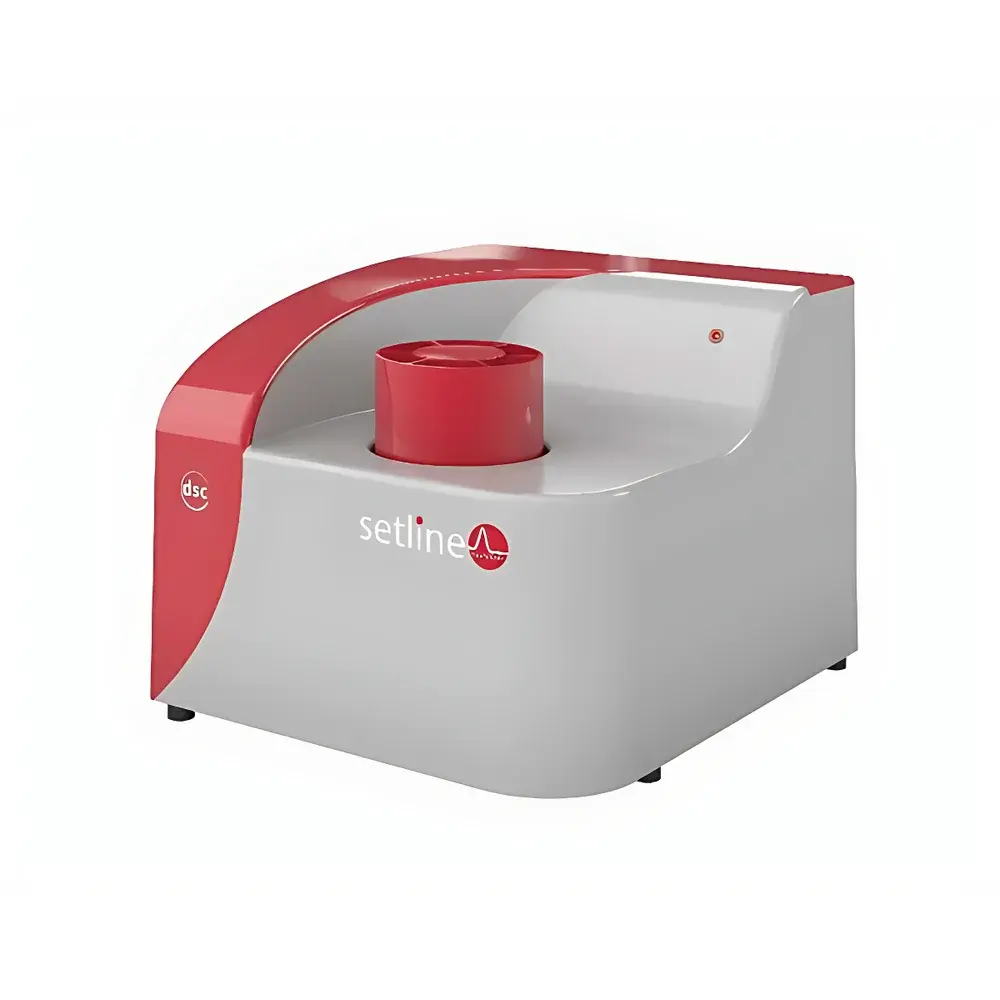
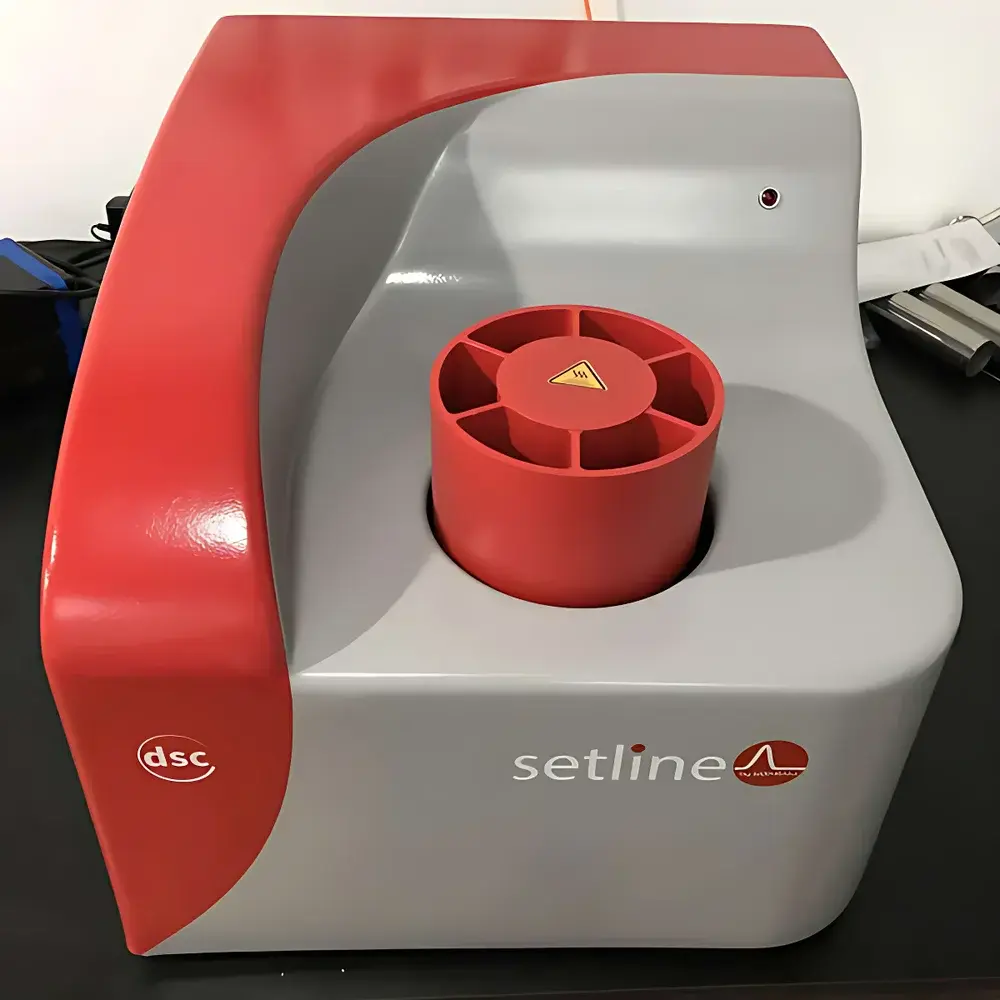
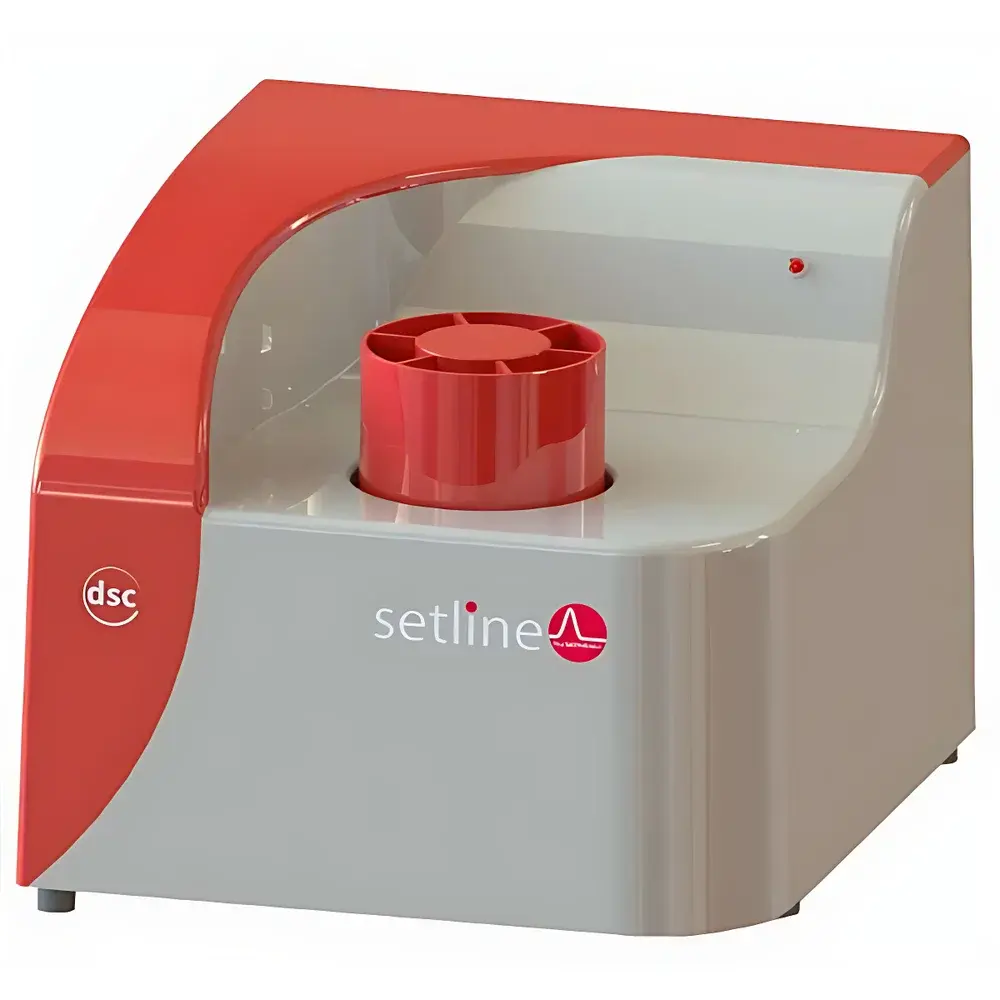
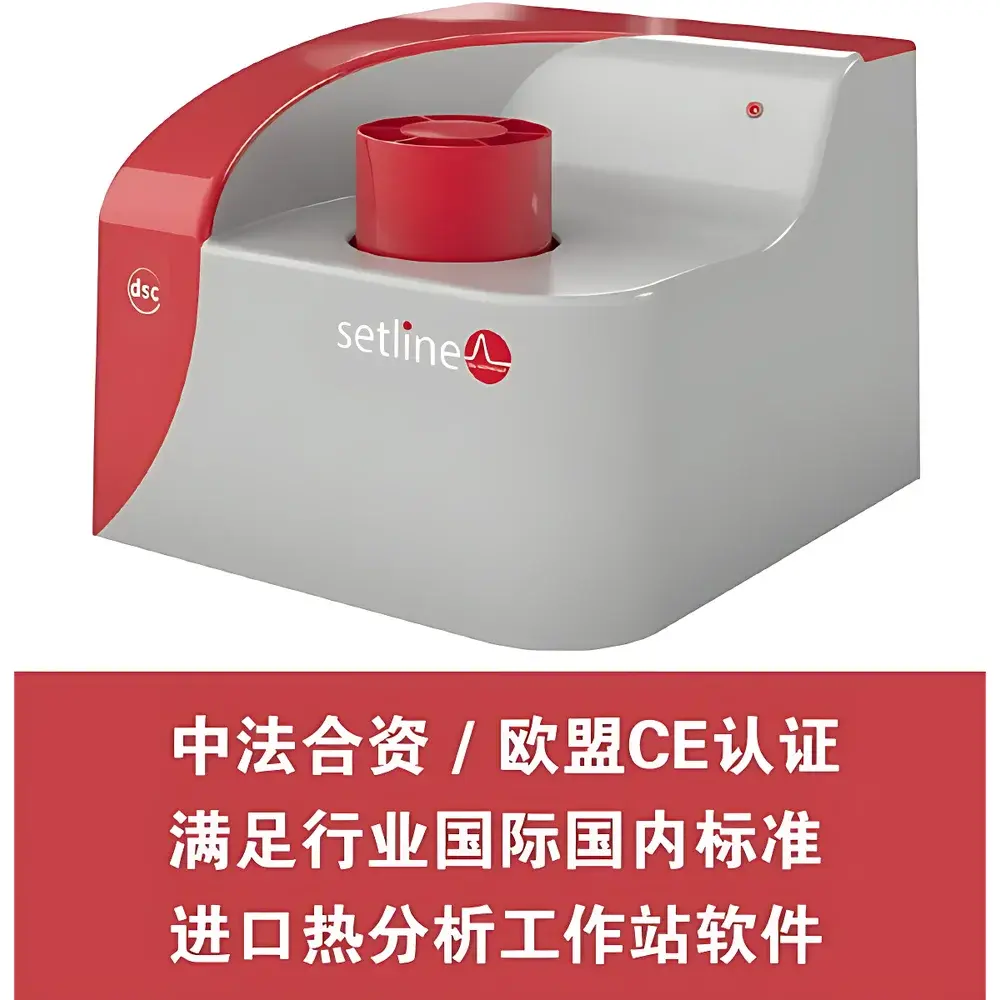
Setline-dsc Differential Scanning Calorimeter by SETARAM
| Brand | SETARAM |
|---|---|
| Origin | Beijing, China (assembled with French-imported core components) |
| Model | Setline-dsc |
| Temperature Range | –170 to 700 °C |
| Temperature Accuracy | ±0.1 °C (vs. certified metal standards) |
| Heating/Cooling Rate | 0.01–100 K/min |
Overview
The Setline-dsc Differential Scanning Calorimeter (DSC) is a high-precision thermal analysis instrument engineered for quantitative measurement of heat flow differences between a sample and an inert reference as a function of temperature or time. Based on the power-compensation principle—where independent heaters maintain equal temperatures in sample and reference positions while compensating for differential heat absorption—the Setline-dsc delivers robust thermodynamic data under controlled atmospheres and programmable thermal profiles. Designed for demanding academic, industrial R&D, and QC environments, it supports standardized methodologies aligned with ISO 11357, ASTM E794, ASTM E1356, and USP for polymer characterization, pharmaceutical stability assessment, food science, and catalytic reaction kinetics. Its modular architecture integrates a silver furnace (99.99% purity), platinum-heating elements, and a low-thermal-mass constantan-based sensor capable of stable operation up to 800 °C—ensuring fidelity across the full –170 °C to 700 °C operating range.
Key Features
- High-fidelity thermal control: PID-regulated dual-channel heating system with ±0.01 °C setpoint stability and automatic overtemperature protection
- Ultra-low thermal inertia furnace: High-purity silver furnace body minimizes lag and enhances dynamic response during rapid heating/cooling ramps (0.01–100 K/min)
- Robust sensor platform: Custom-engineered constantan DSC sensor with sub-microgram thermal mass, optimized for sensitivity (<0.1 µW), repeatability (<0.2%), and long-term baseline stability
- Modular gas handling: Dual independent mass-flow-controlled inlet system; optional integration of MFCs, pressure regulators, and multi-gas mixing modules for reactive or inert atmospheres (N₂, O₂, Ar, H₂/N₂ blends)
- Cryogenic compatibility: Supports liquid nitrogen cooling accessories—including portable LN₂ dewar, mechanical refrigeration units, and purge-cooling modules—for extended low-temperature capability down to –170 °C
- Digital signal integrity: 24-bit ADC controller with isolated analog front-end, eliminating crosstalk and improving signal-to-noise ratio by >3% versus legacy architectures
Sample Compatibility & Compliance
The Setline-dsc accommodates standard alumina, gold, platinum, and stainless-steel crucibles (including hermetic and high-pressure variants), enabling analysis of solids, powders, gels, and small-volume liquids. It meets GLP-compliant data integrity requirements through audit-trail-enabled software logging, electronic signatures (per FDA 21 CFR Part 11 readiness), and traceable calibration protocols. All critical components—including thermocouples, DSC sensors, heating circuits, and CPU boards—are manufactured at SETARAM’s Lyon facility and documented via EU customs declarations and freight manifests. Final assembly and validation occur at Kep BoYuan (Wuxi) under strict adherence to ISO 9001 and IEC 61010-1 safety standards. The instrument is certified CE-marked and conforms to EN 61326-1 (EMC) and EN 61010-1 (electrical safety).
Software & Data Management
The Setline-dsc operates exclusively with Calisto v5.x—a Windows-native thermal analysis workstation developed jointly by SETARAM and KEP Technologies. Calisto implements intelligent baseline algorithms, including seven distinct heat-flow baseline selection models (tangent, linear, polynomial, spline, and deconvolution-assisted), automated peak detection, and iterative curve fitting for kinetic modeling (e.g., Ozawa-Flynn-Wall, Kissinger, Friedman methods). Raw data are stored in vendor-neutral .tdms format, supporting export to ASCII, CSV, and universal thermal analysis interchange formats (TAIF). Built-in auto-calibration routines use NIST-traceable indium, zinc, and tin standards to concurrently correct temperature offset and enthalpy sensitivity—reducing operator dependency and maintaining metrological traceability across extended service intervals.
Applications
The Setline-dsc serves as a primary tool for quantitative thermal property determination across regulated and research-intensive domains. In polymer science, it determines melting point (Tm), crystallinity, glass transition (Tg), oxidative induction time (OIT), and cure kinetics per ISO 2554 and ASTM D3418. In pharmaceutical development, it supports polymorph screening, excipient compatibility studies, and degradation pathway analysis under ICH Q1A–Q5E guidelines. Catalysis researchers apply it to quantify reduction enthalpies and activation energies—e.g., Cu–Cr oxide reduction in H₂/N₂ mixtures—as demonstrated in validated lab protocols (AN118, AN143). Additional use cases include food matrix stability (starch gelatinization, fat crystallization), rubber vulcanization profiling, coating crosslink density assessment, and metallurgical phase mapping of eutectic alloys.
FAQ
What standards does the Setline-dsc comply with for pharmaceutical applications?
It supports method development and validation per USP , ICH Q5E, and FDA guidance on thermal analytical method transfer—particularly for solid-state characterization and stability-indicating assays.
Can the instrument perform simultaneous DSC–TGA coupling?
No—the Setline-dsc is a dedicated DSC platform. For simultaneous thermal analysis, users should consider SETARAM’s SETSYS Evolution or LABSYS EVO STA-DSC systems.
Is remote diagnostics supported?
Yes—Calisto includes secure remote access capability via encrypted VNC tunneling, enabling real-time technical support and preventive maintenance alerts without compromising network security.
How often must the sensor be recalibrated?
Temperature and enthalpy calibration is recommended before each critical study series or at minimum every 3 months using certified reference materials; the auto-calibration module reduces manual intervention time by >70%.
Does the system meet GMP documentation requirements?
All Calisto-generated reports include full metadata (user ID, timestamp, instrument ID, calibration status, environmental logs), electronic signature fields, and revision-controlled audit trails—fully compliant with Annex 11 and ALCOA+ principles.



