
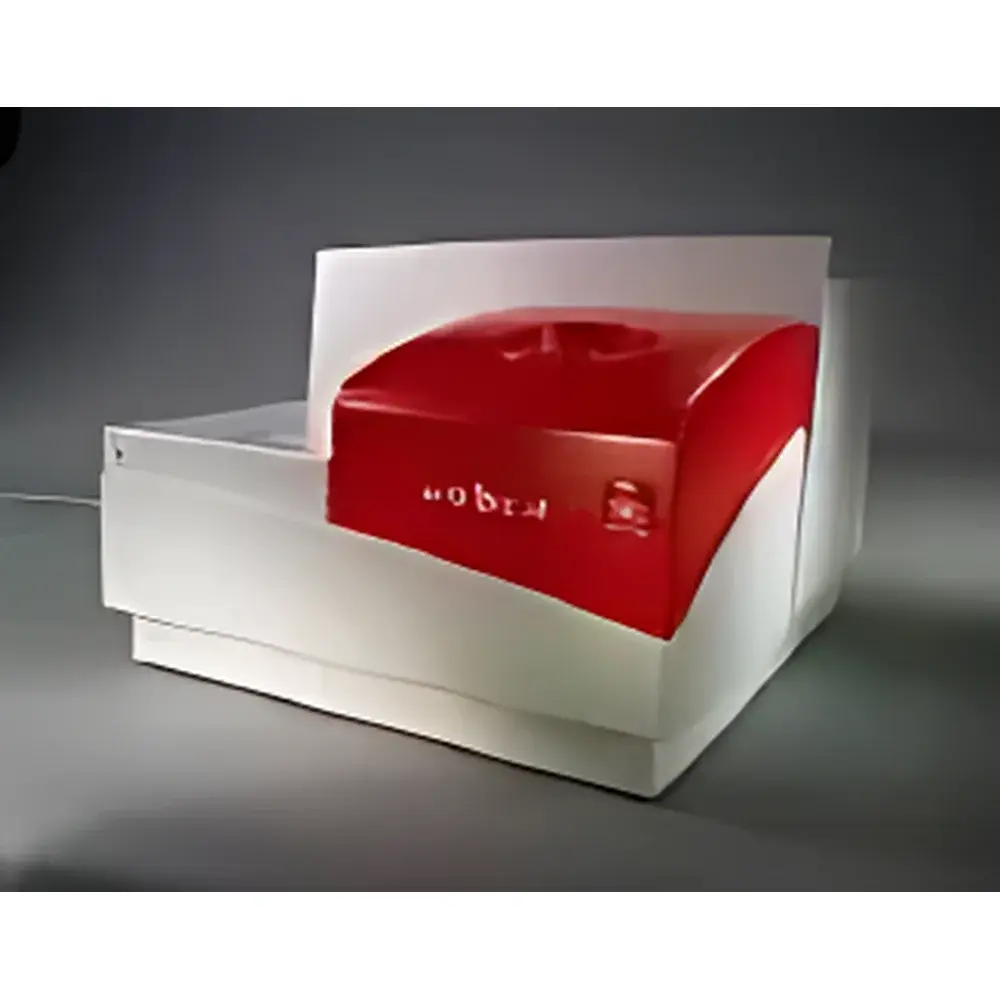
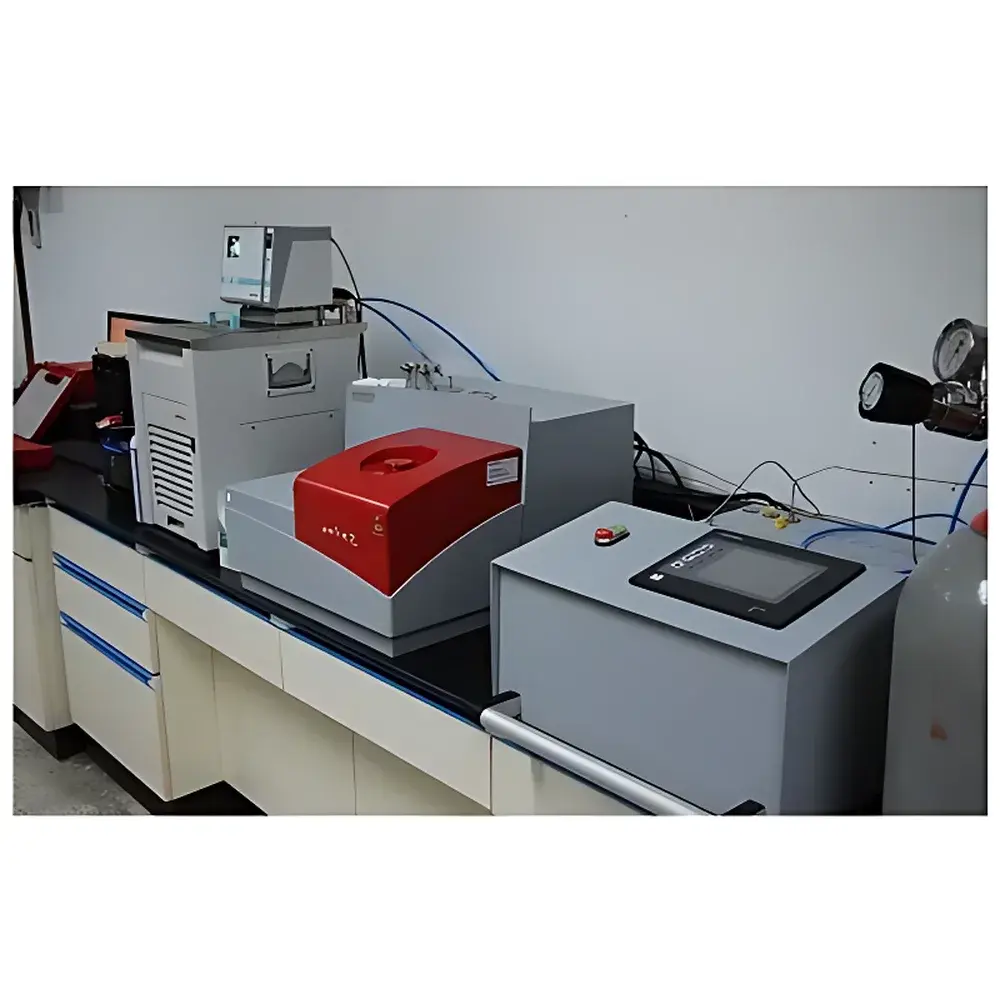
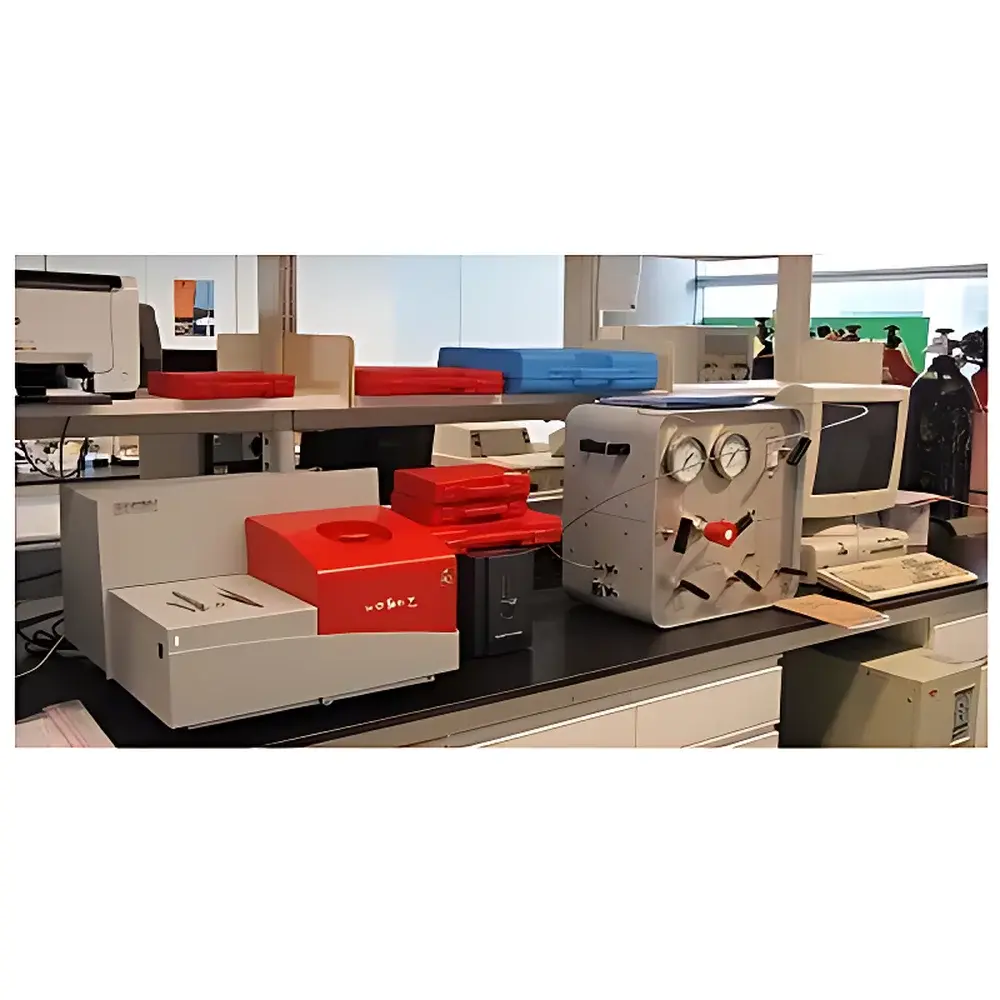
SETARAM MICRO DSC7 High-Sensitivity Isothermal Titration and Differential Scanning Calorimeter
| Brand | SETARAM |
|---|---|
| Origin | France |
| Model | MICRO DSC7 |
| Temperature Range | −45 °C to 120 °C |
| Temperature Accuracy | ±0.1 °C |
| Heating/Cooling Rate | 0.001–2 K/min |
| Sample Cell Volume | 450 µL (intermittent mode) |
| Baseline Noise (RMS) | 0.4 µW |
| Minimum Detectable Heat Flow | 0.002 µW |
| Maximum Controllable Pressure | 1000 bar |
Overview
The SETARAM MICRO DSC7 is a high-sensitivity, third-generation differential scanning calorimeter engineered for precise thermodynamic characterization of small-volume samples under tightly controlled isothermal or dynamic temperature conditions. Operating on the principle of heat-flux differential scanning calorimetry (DSC), it measures minute heat absorption or release associated with phase transitions, conformational changes, binding events, and chemical reactions. Unlike conventional DSC systems, the MICRO DSC7 integrates active Peltier-based cooling capable of reaching −45 °C without external cryogens—enabling low-temperature studies critical for protein cold denaturation, clathrate hydrate formation, and cryopreservation kinetics. Its dual-mode architecture supports both high-resolution scanning (0.001–2 K/min) and extended isothermal titration calorimetry (ITC)-compatible operation, making it uniquely suited for quantitative analysis of weak interactions (Kd = 10−3–106 M) in biological macromolecules and colloidal systems.
Key Features
- Integrated cryogenic Peltier stage delivering stable, programmable operation from −45 °C to 120 °C with ±0.1 °C absolute accuracy and sub-millikelvin thermal stability over 24 h
- Ultra-low-noise microcalorimetric sensor with RMS baseline noise of 0.4 µW and resolution down to 0.002 µW—optimized for sub-milligram sample masses (typically 10–500 µL)
- Intermittent-cell design (450 µL nominal volume) enabling rapid cell exchange, minimal cross-contamination, and compatibility with viscous, particulate, or gas-saturated samples
- Pressure-resilient cell housing rated to 1000 bar, supporting in situ high-pressure DSC studies of gas hydrates, supercritical fluid interactions, and cement hydration under confinement
- Modular thermal shielding and active vibration damping for operation in standard laboratory environments without dedicated acoustic or thermal isolation rooms
Sample Compatibility & Compliance
The MICRO DSC7 accommodates diverse sample physical states—including aqueous solutions, lyophilized powders, hydrogels, emulsions, suspensions, and semi-crystalline polymers—without requiring derivatization or encapsulation. Its inert Hastelloy® sample cell construction resists corrosion from aggressive buffers (e.g., low-pH citrate, high-salt Tris-HCl), organic solvents, and reactive gases (CO2, CH4, H2S). Instrument compliance aligns with key regulatory frameworks: raw data files include embedded audit trails meeting FDA 21 CFR Part 11 requirements; thermal calibration protocols follow ISO 11357-1 and ASTM E1269; and pressure-controlled experiments conform to ISO 17892-12 for geotechnical thermal analysis. All firmware and calibration records are timestamped, user-authenticated, and exportable in CSV/JSON formats for GLP/GMP documentation.
Software & Data Management
Control and analysis are performed via SETARAM’s CALISTO software suite (v6.4+), a Windows-native application supporting real-time visualization, multi-step method programming, and automated baseline subtraction using Savitzky-Golay convolution. The software implements model-free kinetic analysis (e.g., Ozawa-Flynn-Wall, Kissinger-Akahira-Sunose) for activation energy determination and integrates with third-party tools (OriginLab, MATLAB) via COM/ActiveX interfaces. Raw heat-flow and temperature time-series data are stored in vendor-neutral HDF5 containers, preserving metadata (operator ID, instrument serial, calibration certificate hash, environmental log). Audit logs record every parameter change, cell insertion event, and data export action—fully traceable for internal QA review or external regulatory inspection.
Applications
- Biopharmaceutical Development: Quantification of protein thermal unfolding enthalpy (ΔH), aggregation onset temperature (Tagg), and excipient stabilization effects across formulation matrices
- Food Science: Gelation kinetics of pectin and κ-carrageenan, lipid crystallization polymorphism in cocoa butter analogs, and freeze-thaw stability of dairy emulsions
- Energy Materials: Dissociation thermodynamics of methane clathrates, CO2 capture solvent regeneration cycles, and thermal behavior of molten salt battery electrolytes
- Construction Chemistry: Hydration enthalpy profiling of Portland cement blends, pozzolanic reaction kinetics in alkali-activated materials, and moisture-induced swelling in clay-rich geopolymers
- Environmental Geochemistry: Phase transition mapping of permafrost soil organics, ice nucleation efficiency of atmospheric aerosols, and thermal hysteresis in cryosol pore networks
FAQ
Can the MICRO DSC7 perform true isothermal titration calorimetry (ITC)?
No—it is not an ITC instrument. However, its ultra-low-noise DSC platform supports “pseudo-ITC” protocols via sequential injection into the sample cell under isothermal hold, enabling binding stoichiometry and affinity estimation where traditional ITC sensitivity is insufficient.
Is calibration traceable to national standards?
Yes. Temperature calibration uses NIST-traceable indium, tin, and zinc reference materials; heat-flow calibration employs certified electrical calibration units (ECUs) verified annually by SETARAM’s ISO/IEC 17025-accredited service lab.
What maintenance is required for long-term pressure operation?
The 1000 bar pressure module requires biannual inspection of O-ring integrity and hydraulic oil level; full pressure certification is recommended every 24 months per ISO 15848-2 leak-testing protocol.
Does the system support automation for unattended overnight runs?
Yes—integrated autosampler compatibility (optional SETARAM AS-200) enables up to 48 sequential sample analyses with automatic cell cleaning, temperature equilibration, and method recall.
How is data integrity ensured during power interruption?
The instrument features non-volatile memory buffering: all active scan data is mirrored to onboard flash storage at 100 Hz; upon recovery, CALISTO resumes acquisition from the last valid timestamp without data loss.



