
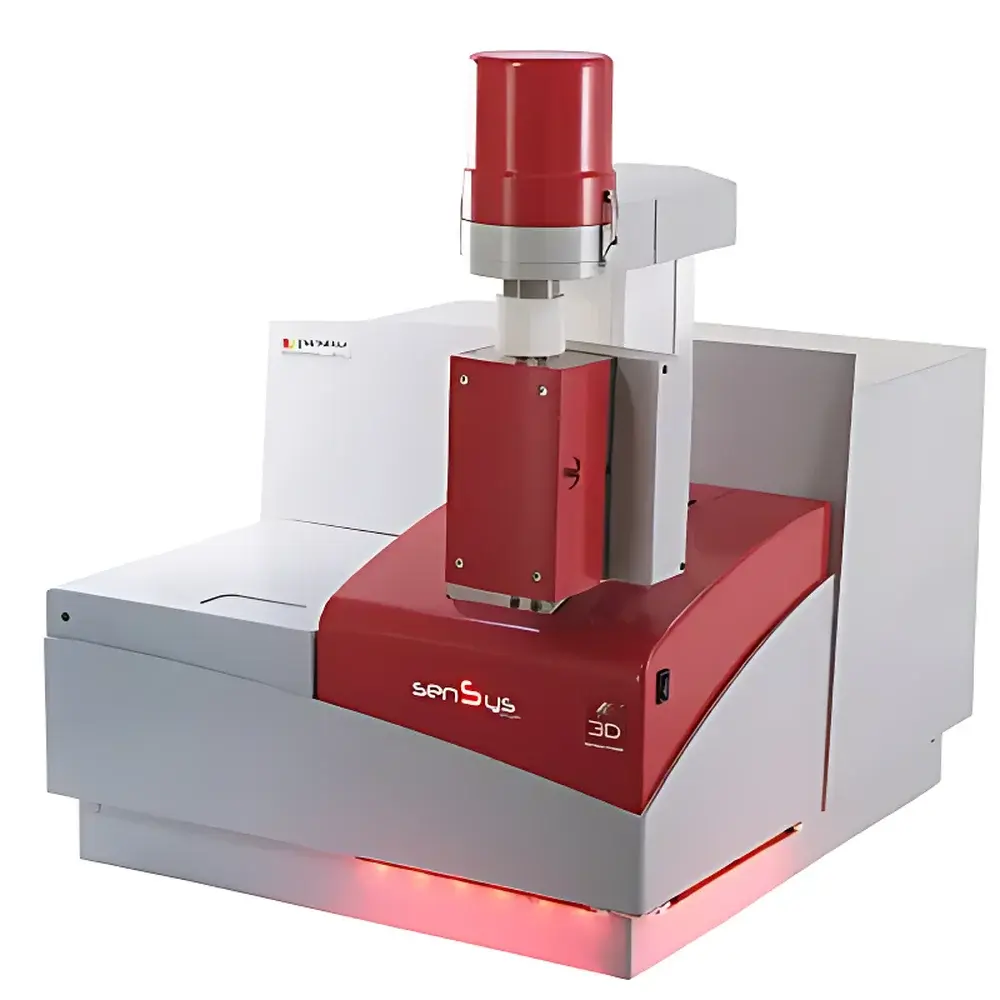
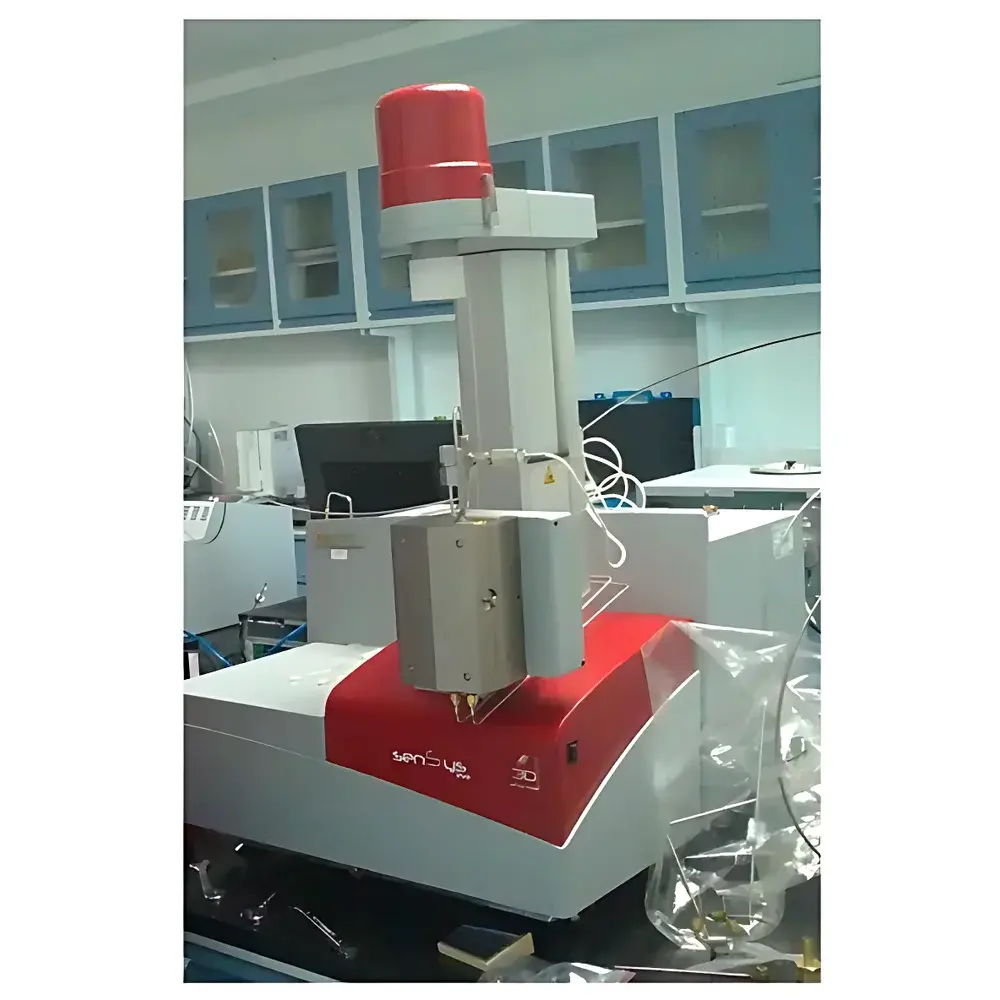
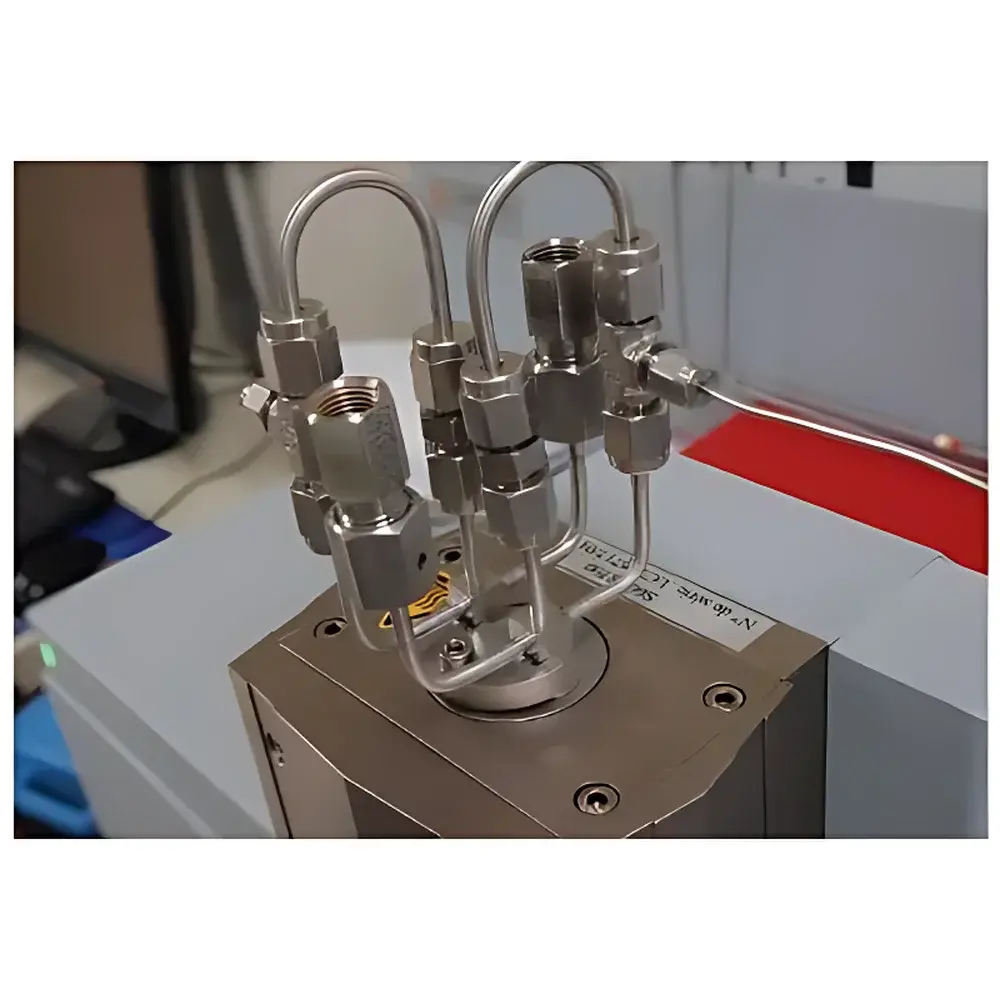
SETARAM Sensys DSC High-Pressure Calvet Microcalorimeter
| Brand | SETARAM |
|---|---|
| Origin | France |
| Model | Sensys DSC High-Pressure Calvet Microcalorimeter |
| Temperature Range | −120 to +830 °C |
| Temperature Accuracy | ±0.1 °C |
| Heating/Cooling Rate | 0.01–30 K/min |
| Maximum Pressure | 500 bar at 600 °C |
| Pressure Monitoring Limit | 400 bar at 600 °C |
| DSC Sample Volume | up to 320 μL |
| DSC Detection Limit | 5 μW |
| DSC Resolution | 0.4 μW |
| TGA Max Sample Mass | 35 g |
| TGA Resolution | 0.03 μg |
| Gas Lines | 3 carrier + 1 reactive/auxiliary |
| Atmosphere Compatibility | Oxidizing, reducing (H₂, CO), corrosive (H₂S, NH₃), steam |
| Auto-sampler Capacity | 48 positions |
| Software | Calisto v5.x with Cp measurement module |
Overview
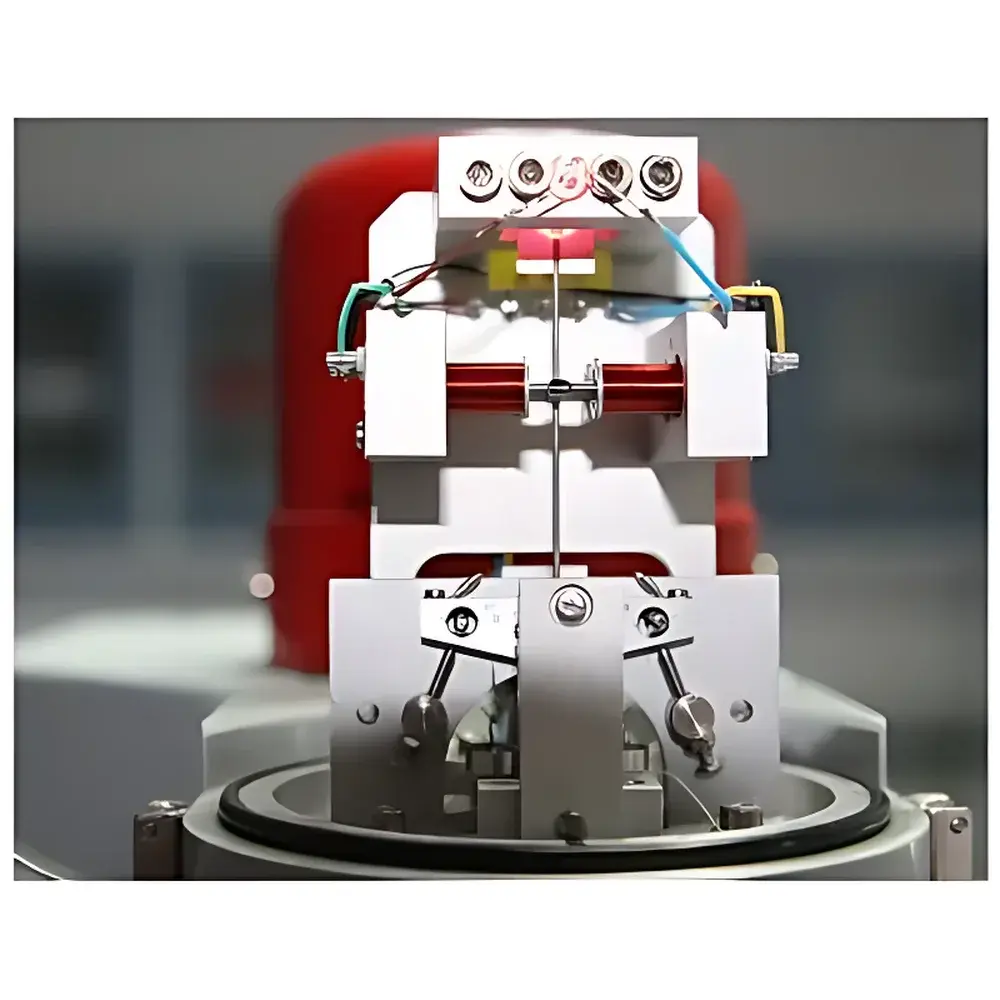
The SETARAM Sensys DSC is a high-pressure Calvet-type differential scanning calorimeter engineered for precision thermodynamic characterization under extreme thermal and pressure conditions. Unlike conventional heat-flux or power-compensated DSC systems, the Sensys DSC implements SETARAM’s proprietary three-dimensional Calvet sensor architecture—comprising concentric cylindrical thermopiles surrounding the sample and reference cells. This geometry enables near-isotropic heat flow detection with >94% thermal efficiency, delivering exceptional baseline stability, high signal-to-noise ratio, and quantitative enthalpy accuracy (±1% for Cp measurements) across its full operating range. Designed for rigorous laboratory environments, the instrument supports controlled atmospheres—including reducing (H₂, CO), oxidizing (O₂, air), and highly corrosive media (H₂S, NH₃, saturated steam)—while maintaining metrological integrity up to 500 bar and 600 °C. Its integrated vertical-toploader thermobalance (TGA) module allows simultaneous thermogravimetric analysis, enabling true TG-DSC coupling without signal crosstalk or mechanical compromise.
Key Features
- Calvet 3D sensor technology for absolute heat flow measurement with minimal thermal lag and superior reproducibility
- Extended temperature range from −120 °C to +830 °C, with programmable heating/cooling rates from 0.01 to 30 K/min
- High-pressure capability: sample containment up to 500 bar at 600 °C; real-time pressure monitoring up to 400 bar
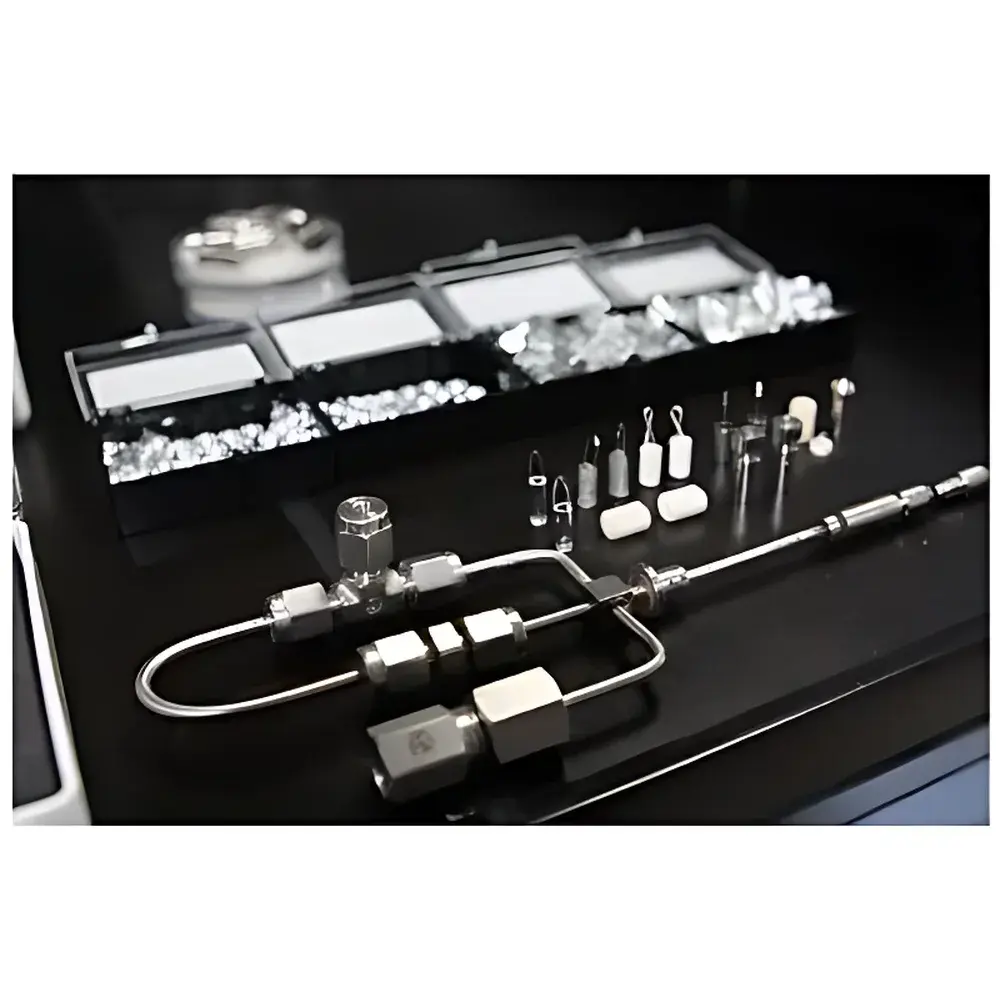
- Large-volume DSC crucibles (up to 320 μL) compatible with heterogeneous, viscous, or gas-evolving samples
- Dual-gas delivery system: three independently controlled carrier gas lines plus one dedicated reactive or auxiliary line
- Vertical furnace design with top-loading microbalance (0.03 μg resolution, 35 g max capacity) ensuring optimal buoyancy compensation during pressurized TGA
- 48-position automated sample changer with pressure-rated carousel and inert glovebox-integrated loading protocol
- Modular interface for hyphenated techniques: direct coupling to FTIR, GC-MS, or humidity control units via standardized vacuum-tight ports
Sample Compatibility & Compliance
The Sensys DSC accommodates diverse sample forms—including powders, gels, catalysts, pharmaceutical APIs, polymers, metal hydrides, and geological specimens—under chemically aggressive or high-purity conditions. Its corrosion-resistant Inconel® furnace liner, sapphire-view windows, and Hastelloy C-276 pressure vessels meet ASME BPVC Section VIII Div. 2 requirements for high-pressure instrumentation. The system complies with ISO 11357 (Plastics — DSC), ASTM E1269 (Heat Capacity Measurements), and USP (Thermal Analysis in Pharmaceutical Development). Full audit trail, electronic signature support, and 21 CFR Part 11–compliant data handling are embedded in Calisto software, satisfying GLP/GMP validation protocols for regulated QC labs.
Software & Data Management
Calisto v5.x serves as the unified control, acquisition, and analysis platform. It provides real-time visualization of heat flow, mass change, pressure, and temperature synchronized at 10 Hz sampling. Advanced modules include non-linear Cp calculation using quasi-isothermal step-scanning, kinetic modeling (e.g., Friedman, Ozawa-Flynn-Wall), and multi-step reaction deconvolution. All raw data are stored in vendor-neutral HDF5 format with embedded metadata (instrument configuration, gas composition, pressure setpoints, calibration history). Export options include ASTM E1970-compliant CSV, XML for LIMS integration, and PDF reports with digital signatures and version-controlled templates.
Applications
- Pharmaceutical Development: Polymorph screening under variable p–T conditions, eutectic point mapping, excipient compatibility testing, and forced degradation studies in humid or oxidative atmospheres
- Energy Materials: Quantitative hydrogen adsorption/desorption thermodynamics on MOFs or complex hydrides; catalytic reaction enthalpies under syngas or reformate mixtures
- Process Safety: Adiabatic decomposition onset detection, thermal runaway prediction (TMRad), and pressure rise kinetics in confined high-energy formulations
- Polymers & Composites: Glass transition (Tg) and cold crystallization behavior under elevated pressure; crosslinking enthalpy assessment in situ during cure cycles
- Geochemistry & Catalysis: Clay dehydration, mineral phase transitions, and supported metal catalyst redox energetics under simulated reservoir or reactor conditions
FAQ
What distinguishes Calvet DSC from conventional DSC technologies?
The Calvet principle measures total heat flow isotropically via a 3D thermopile array, eliminating baseline drift associated with asymmetric heat paths. This yields absolute enthalpy values without reference calibration, unlike heat-flux DSC which relies on empirical baseline subtraction.
Can the Sensys DSC perform Cp measurements directly?
Yes—Calisto includes a validated Cp module based on quasi-isothermal modulation, delivering ±1% accuracy traceable to NIST SRM 720 (sapphire) and certified by ISO 11357-4.
Is the system suitable for long-term stability testing under pressure?
With continuous pressure monitoring, redundant safety interlocks (burst disc, pressure relief valve, thermal cut-off), and real-time leak rate diagnostics (<1×10⁻⁸ mbar·L/s), the Sensys DSC is qualified for unattended 72-hr isothermal holds at 400 bar and 500 °C.
How is data integrity ensured during hyphenated analysis (e.g., DSC-FTIR)?
All auxiliary instruments synchronize via TTL triggers and shared timebase; spectral acquisition is time-stamped against DSC heat flow with sub-second alignment, preserving causality for reaction mechanism inference.



