

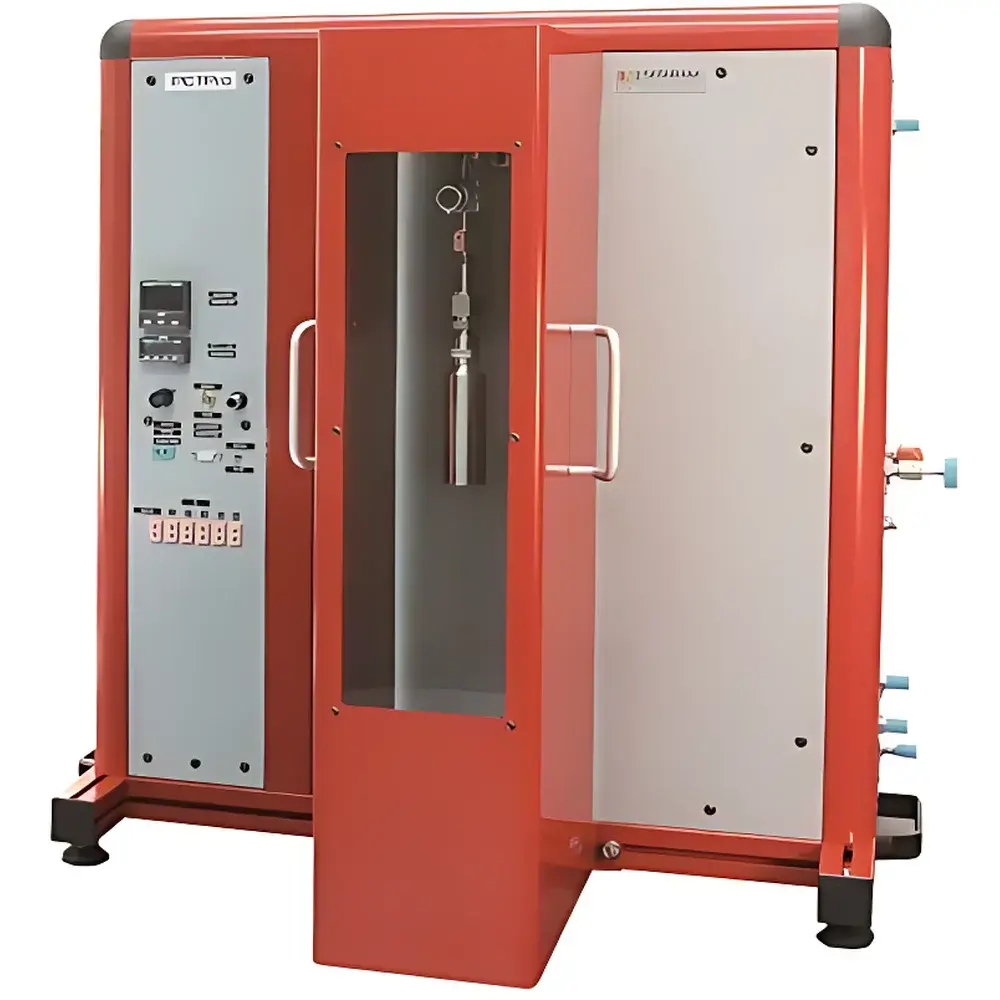
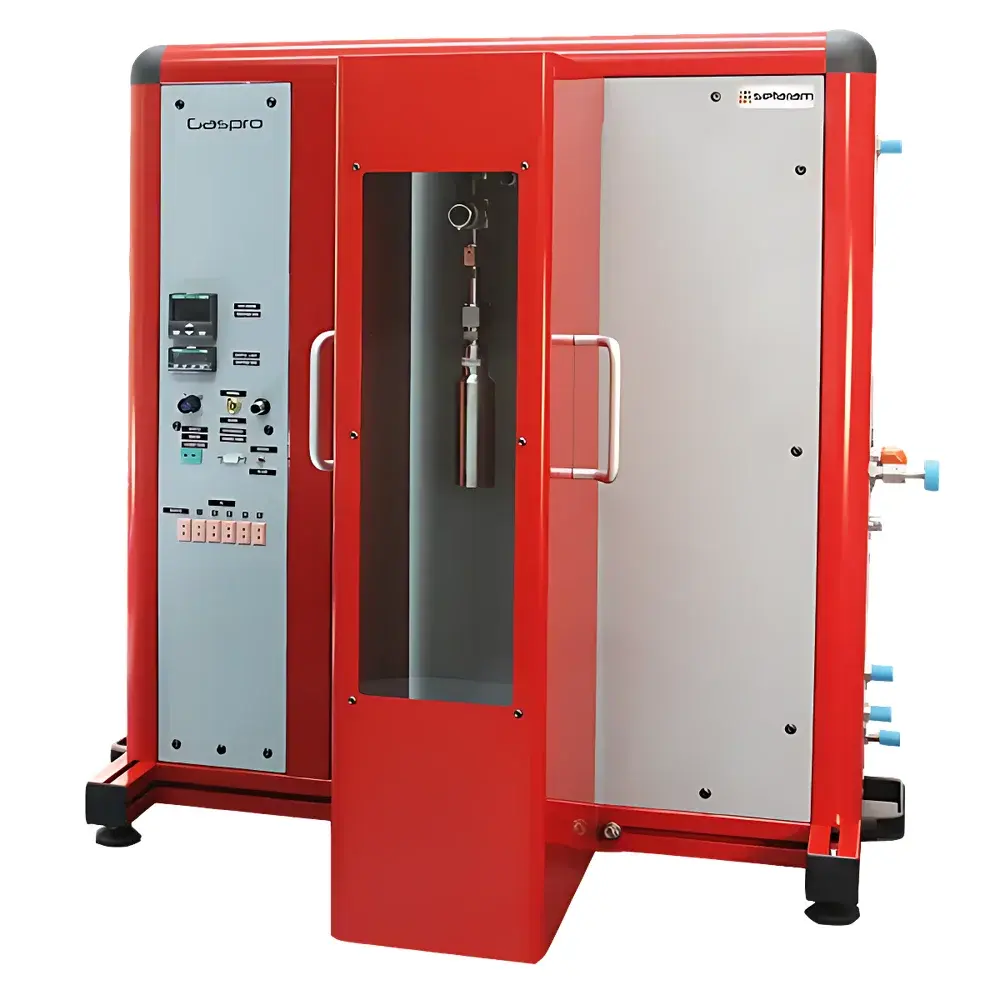
SETARAM GASPRO High Pressure Gas Adsorption Analyzer
| Brand | SETARAM |
|---|---|
| Origin | France |
| Model | GASPRO |
| Measurement Principle | Sievert-type Volumetric Method |
| Temperature Range | –260 °C to 500 °C (customizable beyond) |
| Pressure Range | Vacuum to 200 bar |
| Ultimate Vacuum | Two-stage vacuum system |
| Pressure Sensing | Dual-sensor architecture — high-pressure sensor (vacuum–200 bar, < 0.025 % FS accuracy), low-pressure sensor (vacuum–15 bar, < 0.12 % RD accuracy) |
| Minimum Detectable Uptake | 3 μmol (with Microdoser option) |
| Sample Mass Capability | Down to < 100 mg (patented US8132476 Microdoser) |
| Calibration Volumes | 5 pre-calibrated buffer volumes (5 mL to 1.2 L) |
| Gas Compatibility | CO₂, CH₄, N₂, Ar, H₂, He, and other non-corrosive gases |
| Safety Systems | Combustible gas detection, emergency pressure relief port |
| Control Modes | Isothermal PCT, adsorption/desorption kinetics, cyclic stability testing |
| Software Compliance | Audit-trail enabled, 21 CFR Part 11 ready (optional), GLP/GMP-supporting data integrity framework |
Overview
The SETARAM GASPRO High Pressure Gas Adsorption Analyzer is a fully automated, research-grade instrument engineered for precise quantification of gas-solid interactions under controlled thermodynamic conditions. Based on the classical Sievert volumetric principle, the GASPRO measures reversible gas uptake by monitoring pressure differentials across a calibrated reference volume (buffer cell) and a thermostatted sample chamber. This methodology enables rigorous determination of equilibrium adsorption isotherms (PCT curves), time-resolved adsorption/desorption kinetics, and long-term cyclic stability—critical parameters for hydrogen storage materials, CO₂ capture sorbents, methane clathrate analogs, and metal-organic frameworks (MOFs). Its dual-pressure sensor architecture—comprising a high-accuracy 200 bar transducer (< 0.025 % FS) and a high-resolution 15 bar transducer (< 0.12 % RD)—minimizes cumulative error across multi-point isotherms, especially where dense data spacing is required near saturation or at sub-ambient temperatures.
Key Features
- Ultra-wide thermal operating range: –260 °C (liquid helium cryostat compatible) to +500 °C (furnace-heated), with optional custom extensions beyond both limits
- Patented Microdoser technology (US8132476): Enables reproducible measurements on samples as small as 10–50 mg, reducing material consumption while preserving statistical significance
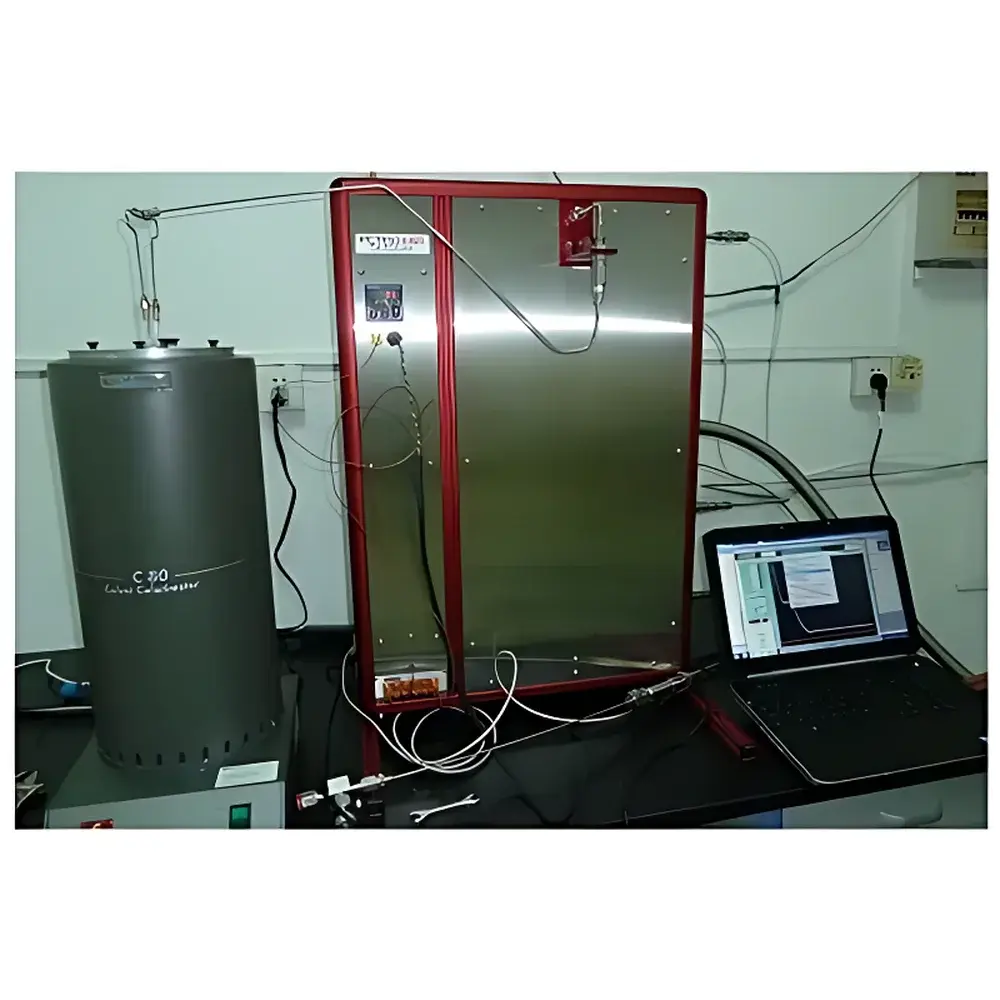
- Modular sample cell design: External-mount configuration allows rapid interchange of cells optimized for specific temperature regimes or geometries—facilitating seamless in situ coupling with calorimeters (e.g., SETARAM C80 or DSCQ2000) for simultaneous adsorption enthalpy (ΔHads) determination
- Fifteen pre-programmed, user-editable control protocols covering static PCT, dynamic kinetics, stepwise cycling, and pressure-ramp experiments
- Integrated safety infrastructure: Real-time combustible gas monitoring, redundant overpressure protection via certified rupture disc, and fail-safe solenoid valve sequencing per IEC 61508 SIL2 guidelines
- Two-stage vacuum system achieving ≤10–7 mbar base pressure prior to dosing—ensuring minimal background contamination during low-coverage measurements
Sample Compatibility & Compliance
The GASPRO accommodates powders, pellets, monoliths, and thin films within standardized stainless-steel or Inconel sample holders. Its inert gas handling architecture supports CO₂, CH₄, N₂, Ar, H₂, He, and other non-oxidizing, non-corrosive species—fully compliant with ASTM D3663 (standard test method for surface area of catalysts), ISO 15901-2 (pore size distribution by gas adsorption), and USP (residual solvent analysis in pharmaceutical excipients). All pressure and temperature logging meets GLP documentation requirements; optional 21 CFR Part 11 compliance includes electronic signatures, audit trails, and role-based access control for regulated QC/QA environments.
Software & Data Management
The GASPRO operates via SETARAM’s ThermoConcept™ software suite—a Windows-based platform delivering real-time visualization, automated baseline correction, and thermodynamic modeling (Langmuir, BET, Toth, Virial expansions). Raw pressure-time-temperature datasets are stored in HDF5 format with embedded metadata (instrument ID, calibration certificate IDs, operator logins). Export options include CSV, Excel, and Origin-compatible formats. Data integrity safeguards include immutable timestamps, checksum validation, and version-controlled method files—supporting full traceability from acquisition through peer-reviewed publication or regulatory submission.
Applications
- Hydrogen storage capacity assessment in complex hydrides (e.g., NaAlH₄, MgH₂) and porous carbons
- CO₂ capture efficiency screening of amine-functionalized silica gels and zeolitic imidazolate frameworks (ZIFs)
- CH₄ working capacity evaluation for ANG (adsorbed natural gas) tank design
- Adsorption thermodynamics of catalytic supports (γ-Al₂O₃, SiO₂) under simulated reforming conditions
- Long-term cyclability of MOF-5 and UiO-66 under repeated adsorption-desorption stress
- In situ enthalpy-of-adsorption mapping via synchronized microcalorimetry
FAQ
What calibration standards are supplied with the GASPRO?
Each system ships with five NIST-traceable, factory-calibrated buffer volumes (5 mL, 25 mL, 100 mL, 500 mL, and 1.2 L), each accompanied by individual uncertainty budgets and temperature-dependent compressibility corrections.
Can the GASPRO perform measurements under ultra-high vacuum (UHV) conditions?
While not a UHV instrument per se, its two-stage vacuum system achieves ≤10–7 mbar—sufficient for eliminating physisorbed water and residual air prior to reactive gas dosing; UHV integration requires optional turbomolecular pumping upgrades.
Is remote operation supported?
Yes—ThermoConcept™ supports secure TCP/IP-based remote monitoring and control via authenticated VPN connections, enabling off-site experiment supervision without compromising data security.
How is temperature uniformity maintained across the sample bed?
All furnaces and cryostats incorporate multi-zone PID control with embedded Pt100 sensors positioned at sample holder flanges and centerlines; axial gradients are maintained within ±0.5 °C over 25 mm sample heights.
What maintenance intervals are recommended for the Microdoser module?
Under standard use (≤500 cycles/year), the Microdoser actuator and seal assembly require inspection every 12 months; full recalibration is advised biannually or after any mechanical intervention.



