
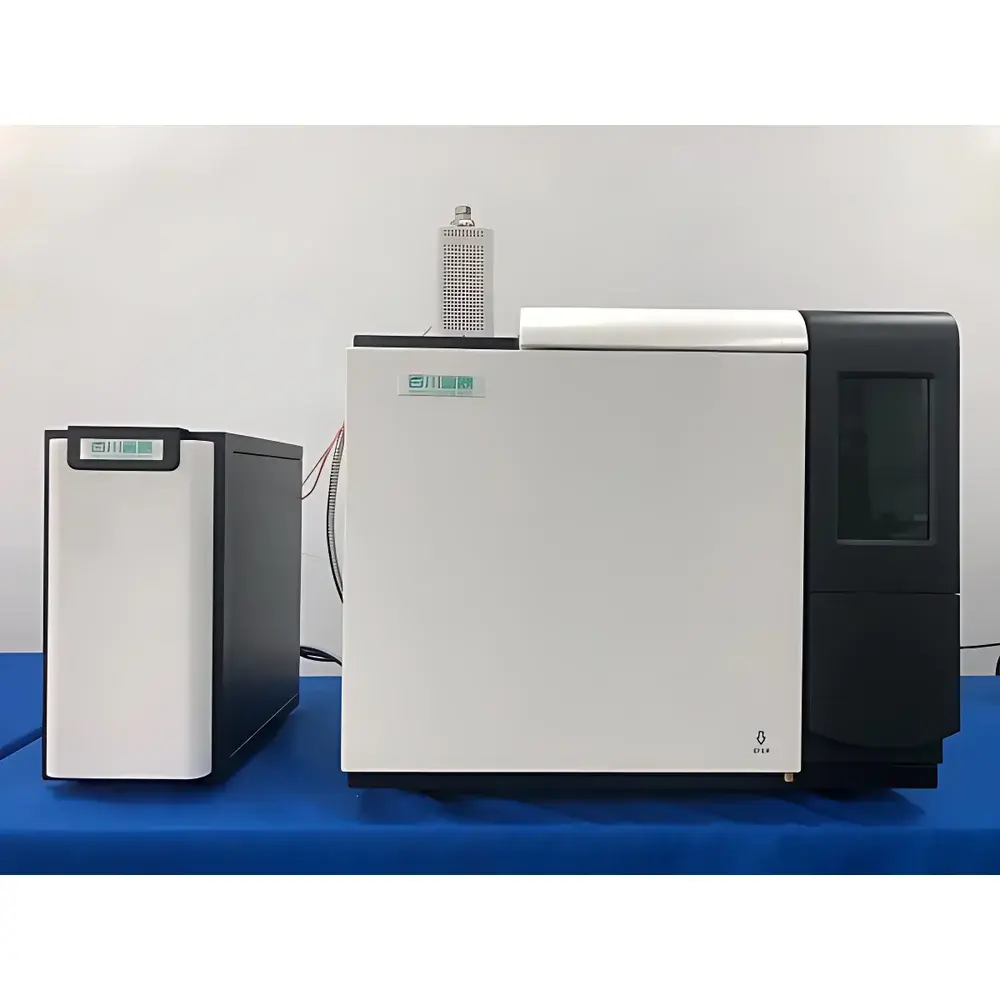
HPG HP2000-GC Micro-Pyrolyzer for Rapid Screening of Four Phthalates under RoHS 2.0
| Brand | HPG (Huaputongyong) |
|---|---|
| Origin | Guangdong, China |
| Manufacturer Type | Authorized Distributor |
| Instrument Type | Resistive-Filament Pyrolyzer |
| Model | HP2000-GC |
| Price Range | USD 42,000 – 70,000 |
| Compliance | IEC 62321-8:2017 |
Overview
The HPG HP2000-GC Micro-Pyrolyzer is a dedicated thermal desorption–gas chromatography (TD-GC) solution engineered for rapid, reliable screening of the four phthalate esters added to the RoHS 2.0 Directive (EU) 2015/863: bis(2-ethylhexyl) phthalate (DEHP), benzyl butyl phthalate (BBP), dibutyl phthalate (DBP), and diisobutyl phthalate (DIBP). Unlike conventional solvent-based extraction methods requiring ultrasonication or reflux, this system employs controlled resistive-filament pyrolysis—thermally cleaving phthalate esters directly from polymeric matrices at precise temperatures (200–650 °C) without chemical reagents. The liberated analytes are swept into a gas chromatograph equipped with a dedicated capillary column and detected via flame ionization detection (FID). This principle enables direct solid/liquid sample introduction, eliminating solubility limitations inherent in IEC 62321-5 compliant extraction protocols, and ensures compatibility with >99% of industrial polymer materials—including PVC cables, synthetic leather, printed circuit board laminates, and elastomeric gaskets—where traditional ultrasonic extraction fails for ~30% of real-world samples.
Key Features
- Direct solid/liquid injection: No derivatization, no solvent extraction, no centrifugation—samples loaded into quartz tubes and inserted into the pyrolysis chamber in <5 steps.
- 20-minute total analysis time per sample: Includes automated pyrolysis, GC separation, and FID detection—enabling throughput of ≥50 samples per 8-hour shift.
- Zero reagent consumption: Eliminates need for acetone, THF, acetonitrile, or other hazardous organic solvents; no waste solvent disposal, no VOC emissions, no regulatory permitting for hazardous waste handling.
- Low operational cost: Annual consumables budget ≤ USD 3,000—primarily quartz tubes (2.5 cm length) and quartz wool; no columns or detectors require frequent replacement under routine use.
- Embedded calibration curves: Pre-loaded IEC 62321-8-compliant quantification curves for DEHP, BBP, DBP, and DIBP allow immediate pass/fail assessment against RoHS threshold limits (0.1 wt% = 1000 ppm).
- Robust architecture: Dual EPC-controlled GC platform with temperature-stable oven, programmable pyrolysis ramping (200–450 °C, 2 min hold), and FID optimized for ester response linearity (R² > 0.998 across 25–1000 ppm).
Sample Compatibility & Compliance
The HP2000-GC is validated for use with heterogeneous electronic components including molded plastic housings, wire insulation, PCB substrates, rubber grommets, and adhesive tapes—regardless of solubility class. It fully complies with IEC 62321-8:2017 (“Determination of certain substances in electrotechnical products — Part 8: Phthalates in polymers using pyrolysis-GC/MS or GC-FID”), which explicitly permits thermal desorption as an alternative to solvent extraction for phthalate quantification in non-soluble polymers. While not a full GC-MS system, its detection limit of 25 ppm (S/N = 3) exceeds the sensitivity requirement for RoHS screening (1000 ppm threshold), and its repeatability (RSD = 5.24% at LOD) meets ISO/IEC 17025 criteria for in-house QC laboratories. The system supports audit-ready documentation for GLP/GMP environments, including electronic logbooks with user ID timestamps and instrument parameter archiving.
Software & Data Management
The integrated chromatography data system (CDS) provides bidirectional control of GC oven temperature, pyrolyzer heating profile, and detector parameters. All acquisition and processing workflows are preconfigured for RoHS phthalate analysis: automatic peak integration, retention time locking (±0.05 min window), and real-time comparison against embedded calibration curves. Raw data files (.cdf) are stored with full metadata (sample ID, operator, date/time, method version), satisfying FDA 21 CFR Part 11 requirements for electronic records when deployed on validated Windows OS platforms. Audit trails record all method modifications, result overrides, and report exports—enabling traceability during supplier audits or regulatory inspections.
Applications
This system serves as a frontline screening tool for manufacturers subject to RoHS compliance obligations—including Tier-1 suppliers to Apple, Huawei, OPPO, Nintendo, and Lenovo—as demonstrated by field deployments at Vuzix (formerly VF Corporation), Midea, Changhong Mold, and Luxshare Precision. Primary use cases include incoming raw material verification, in-process lot release testing, pre-shipment conformity checks, and internal supplier qualification. Beyond RoHS phthalates, the platform supports optional method development for red phosphorus flame retardants, residual monomers (e.g., vinyl chloride), volatile organic compounds (VOCs) in adhesives, and low-molecular-weight additives in thermoplastics—leveraging the same pyrolysis–GC–FID architecture without hardware modification.
FAQ
Does the HP2000-GC meet official RoHS testing standards?
Yes—it implements the methodology specified in IEC 62321-8:2017, the internationally recognized standard for phthalate determination in polymers via pyrolysis-GC.
Can it analyze all four RoHS 2.0 phthalates simultaneously?
Yes—DEHP, BBP, DBP, and DIBP are baseline-resolved within a single 20-minute run using the dedicated capillary column and programmed temperature ramp.
Is sample preparation required?
No—solid samples (≤5 mg) are placed directly into quartz tubes; liquid samples (1 µL) are injected via syringe. No grinding, weighing, or solvent addition is needed.
What maintenance is required?
Annual calibration verification and quarterly quartz tube inspection. No column cleaning or detector tuning is necessary under normal operating conditions.
Can results be exported for external reporting?
Yes—PDF reports with chromatograms, peak tables, and compliance status are generated with one click; raw .cdf files are compatible with third-party review software (e.g., OpenLab CDS, Chromeleon).
Related Products






