
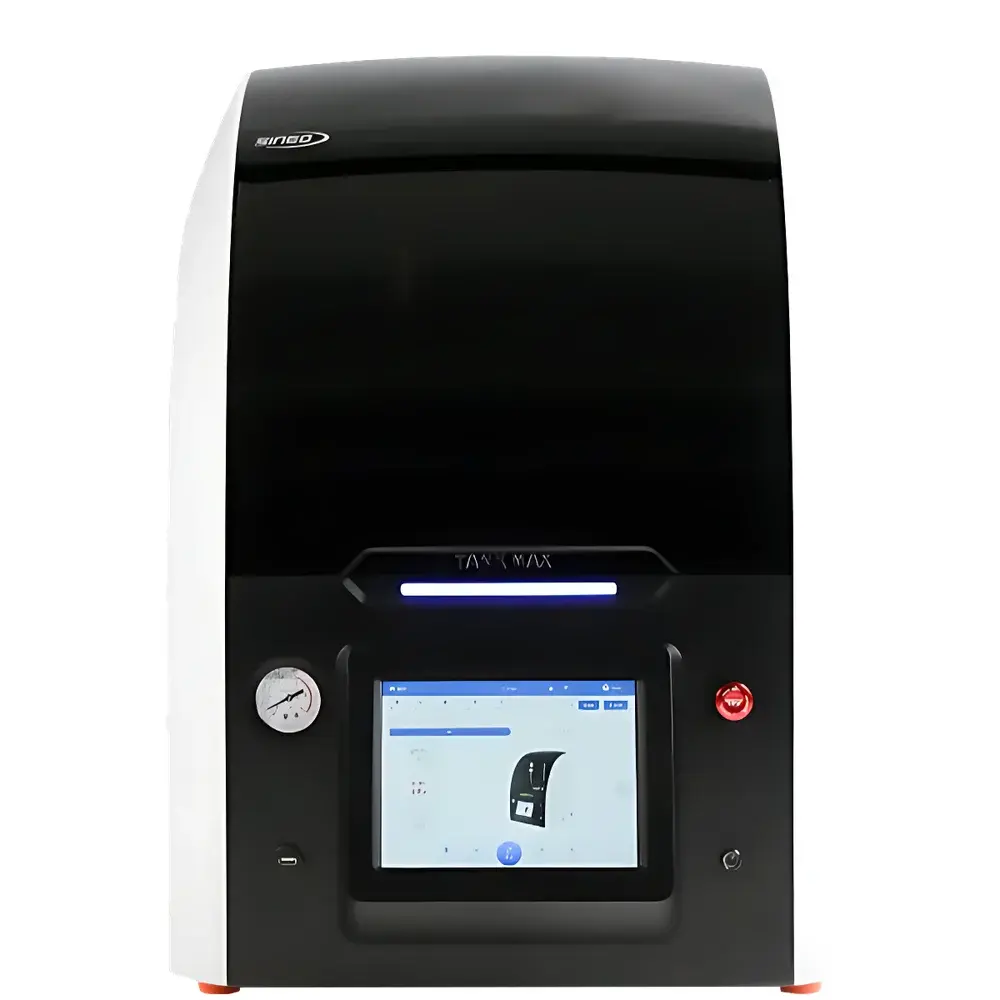
Sineo TANK MAX Super Microwave Chemistry Platform
| Brand | Sineo |
|---|---|
| Origin | Shanghai, China |
| Manufacturer Type | Authorized Distributor |
| Product Origin | Domestic (China) |
| Model | TANK MAX |
| Quotation | Upon Request |
| Cavity Class | Industrial-Grade |
| Microwave Source | 2450 MHz Frequency-Modulated Magnetron with Continuous Non-Pulsed High-Energy Microwave Emission |
| Max Operating Temperature | 300 °C |
| Max Operating Pressure | 20 MPa |
Overview
The Sineo TANK MAX Super Microwave Chemistry Platform is an industrial-grade microwave digestion system engineered for high-temperature, high-pressure closed-vessel sample preparation in analytical laboratories. It operates on the principle of controlled microwave energy absorption by polar molecules—primarily acids and solvents—within sealed reaction vessels, enabling rapid, uniform, and reproducible thermal decomposition of refractory matrices. Unlike conventional pulsed microwave systems, the TANK MAX employs a frequency-modulated magnetron delivering continuous non-pulsed 2450 MHz microwave output via a large-diameter waveguide, ensuring superior field homogeneity and energy transfer efficiency. With a maximum operating temperature of 300 °C and pressure rating up to 20 MPa, it exceeds standard microwave digestion specifications (e.g., ASTM D5511, ISO 11885, EPA Method 3052), making it suitable for complete mineralization of highly resistant samples including polymers, ceramics, rare-earth oxides, silicates, and alloyed metals.
Key Features
- Single-Cavity Pre-Pressurized Architecture: Eliminates vessel-level pressure loading; all reaction vessels experience identical thermal and mechanical conditions, enhancing inter-sample comparability and method reproducibility.
- Ultra-Low Acid Consumption: As little as 2 mL of acid per sample enables full digestion—reducing reagent costs, minimizing hazardous acid vapor generation, and eliminating post-digestion acid removal (‘acid evaporation’), thereby shortening total workflow time by >100%.
- Multi-Material Vessel Compatibility: Supports PTFE-TFM, high-purity quartz, and standard borosilicate glass test tubes—reducing consumable cost by >60% compared to proprietary disposable digestion vessels.
- Easy Load™ Vessel Insertion System: No alignment required between rotor, liner, or cap; intuitive drop-in loading reduces operator error and training time.
- One-Touch Full Automation: Fully autonomous sequence execution—including safety door closure, cavity sealing, pre-pressurization, digestion, water-cooling, pressure release, and vessel ejection—without manual intervention or PC-based software guidance.
- Quadruple Safety Architecture: Integrates predictive pressure modeling, programmable active venting, redundant passive overpressure relief (including micro-lift and terminal rupture disks), and acid mist containment with automatic fume extraction.
Sample Compatibility & Compliance
The TANK MAX accommodates diverse sample types across environmental, pharmaceutical, food safety, geological, and advanced materials testing workflows. Its chemically inert fluid path—featuring self-cleaning, corrosion-resistant high-pressure tubing—is validated for use with aggressive reagents including aqua regia, hydrofluoric acid (HF), perchloric acid, and mixed acid systems. The platform complies with core regulatory expectations for sample preparation integrity: traceable parameter logging supports GLP/GMP documentation requirements; pressure and temperature monitoring aligns with ISO/IEC 17025 method validation criteria; and hardware-level safety interlocks satisfy IEC 61000-6-4 (EMC) and IEC 61010-1 (electrical safety) standards. While not FDA 21 CFR Part 11–certified out-of-the-box, audit trails generated by its embedded Android OS interface can be exported for integration into validated LIMS environments.
Software & Data Management
Controlled via an integrated Android-based graphical user interface, the TANK MAX provides real-time visualization of temperature, pressure, power, and time profiles during digestion. All operational parameters—including method name, operator ID, vessel configuration, and run timestamps—are automatically logged and exportable in CSV format. The system stores ≥1,000 method protocols locally and supports USB-based backup. Although no external PC connection is required for routine operation, optional Ethernet/Wi-Fi modules enable remote monitoring and centralized fleet management in multi-instrument labs. Audit-ready logs include digital signatures for critical events (e.g., pressure exceedance, emergency venting), facilitating compliance with internal QA procedures and external accreditation audits.
Applications
- Determination of heavy metals (As, Cd, Pb, Hg, Cr) in soil, sludge, and sediment per EPA 6010D and ISO 17294-2.
- Trace element analysis in pharmaceutical excipients and APIs following USP <231> and ICH Q2(R2).
- Mineralogical dissolution of ceramic composites and rare-earth permanent magnets prior to ICP-MS quantification.
- Routine digestion of polymeric packaging materials for food contact migration studies (EU Regulation 10/2011).
- High-throughput sample prep for geological exploration assays involving refractory sulfides and silicates.
FAQ
What types of vessels are compatible with the TANK MAX?
PTFE-TFM digestion tubes, high-purity quartz vials, and standard 16 mm or 18 mm OD borosilicate glass test tubes—all configured for use with the 6-, 10-, 18-, 24-, or 28-position rotors.
Can hydrofluoric acid (HF) be used safely in this system?
Yes—the fluid path incorporates HF-resistant elastomers and passivated stainless-steel components; however, appropriate PPE and secondary containment remain mandatory per OSHA 1910.1200.
Is method validation support available?
Sineo provides application notes and certified reference material (CRM) digestion protocols aligned with NIST SRM and ERM standards, along with technical documentation for IQ/OQ/PQ verification.
How does the predictive pressure model function?
An onboard algorithm continuously evaluates real-time dT/dt and dP/dt slopes against empirically derived kinetic models to forecast peak pressure before it occurs—triggering preemptive alerts or automated power reduction.
What cooling mechanism is employed during post-digestion phase?
A recirculating chiller unit maintains coolant temperature between 5–40 °C; heat exchange occurs via direct contact between the rotor base and chilled aluminum plate, enabling sub-5-minute cooldown from 300 °C to <60 °C.



