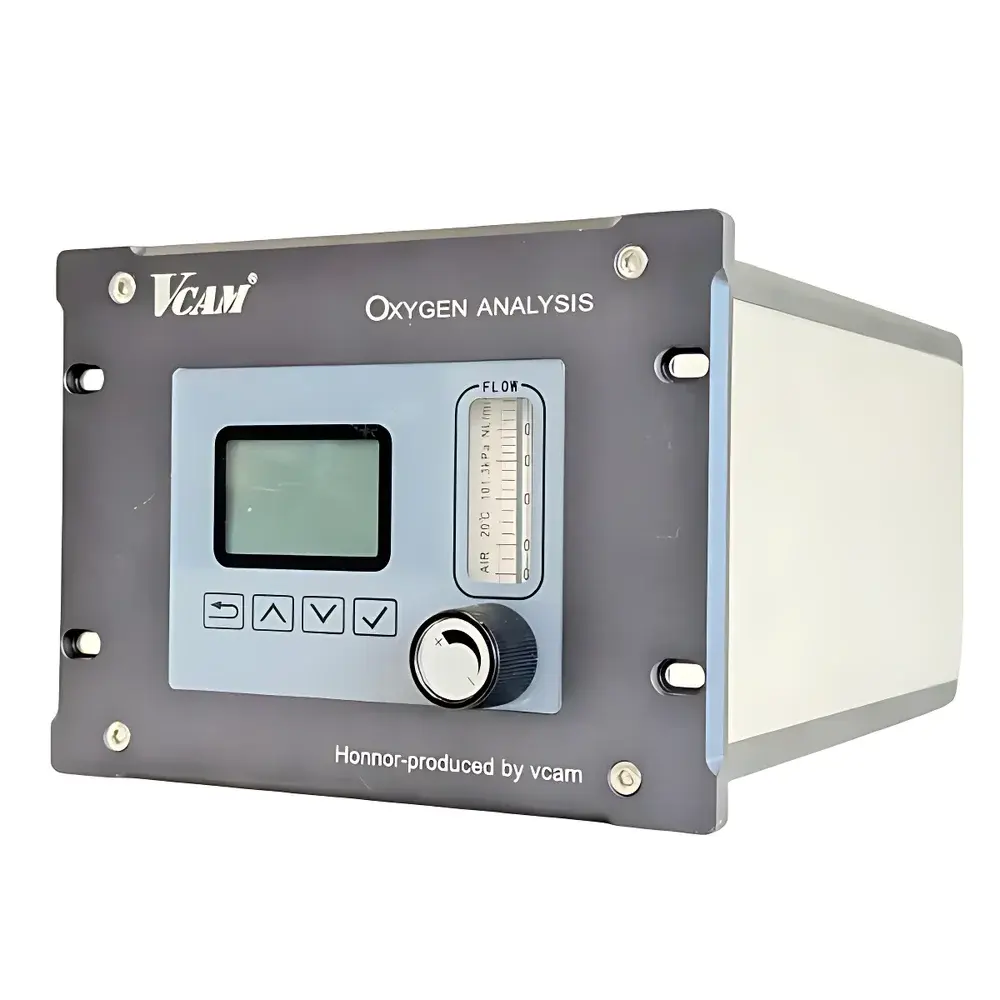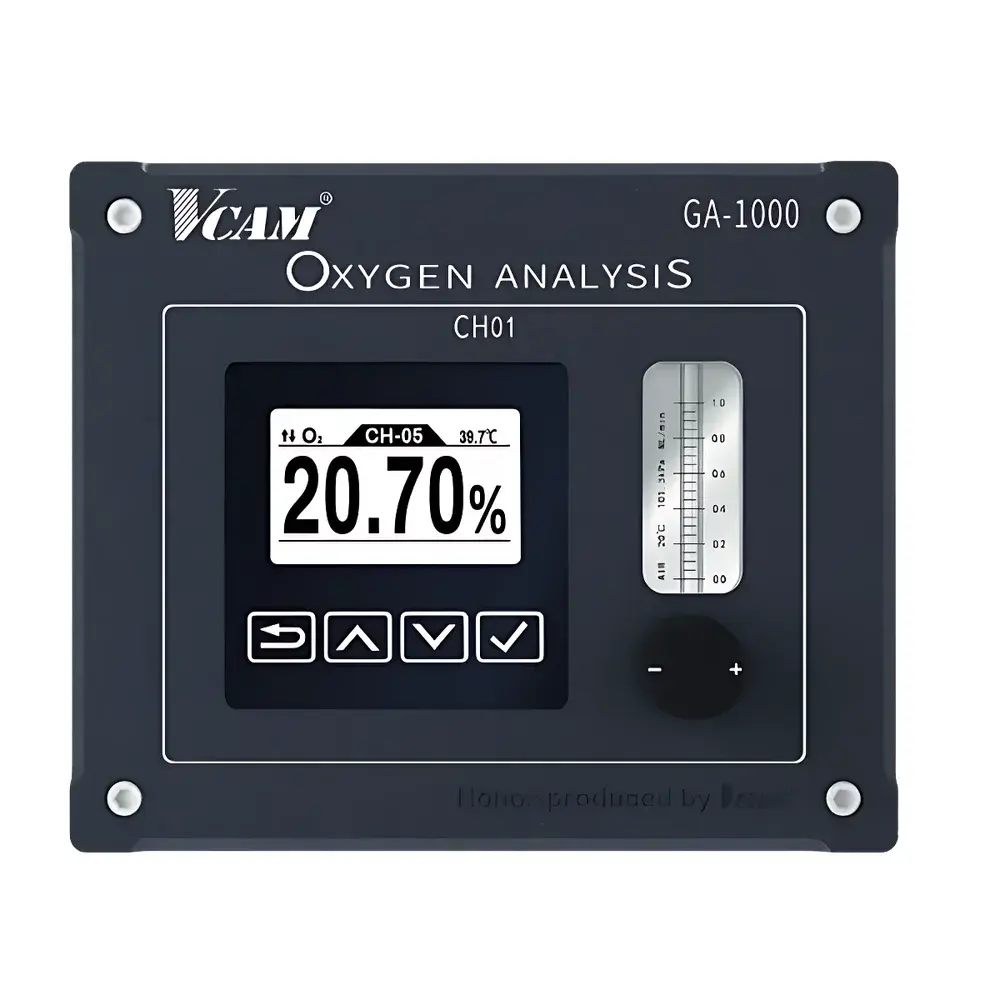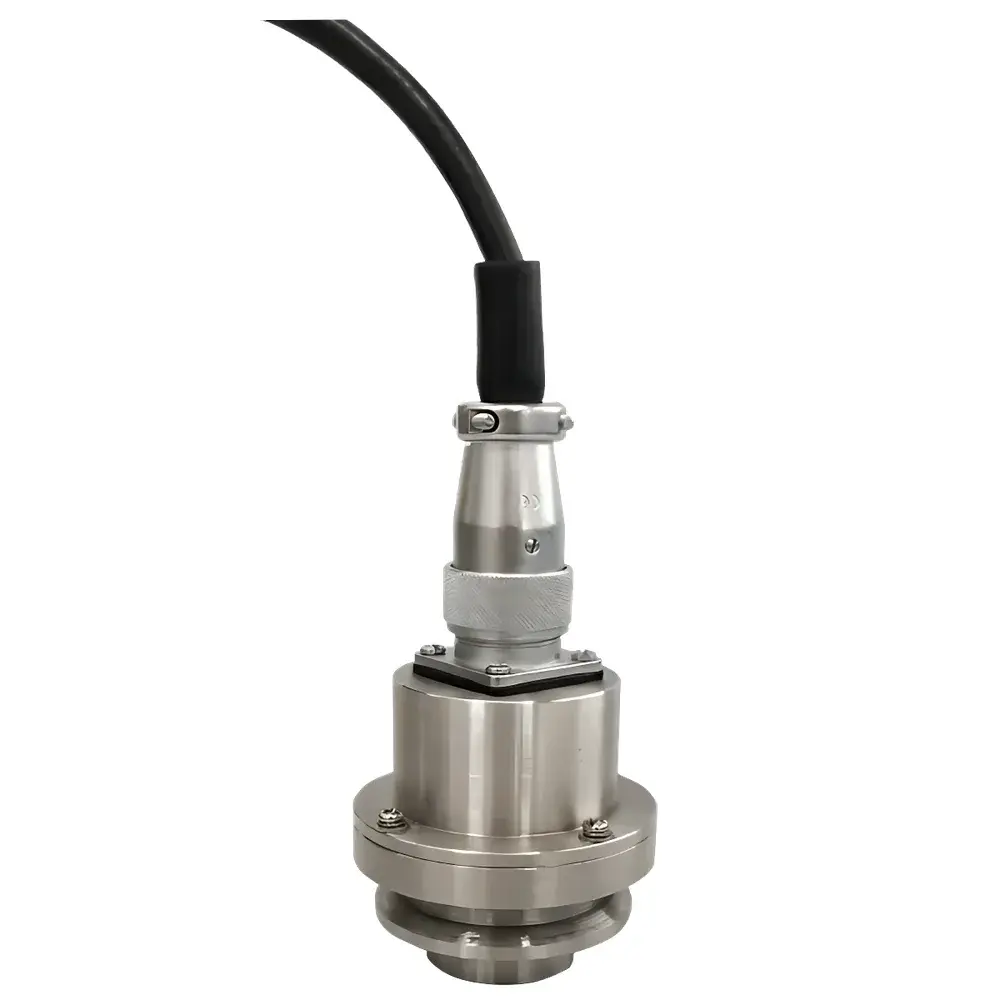
PERIC PG-TR-O2 Inline Trace Oxygen Transmitter
| Brand | PERIC |
|---|---|
| Origin | Hebei, China |
| Manufacturer Type | Manufacturer |
| Country of Origin | Domestic (China) |
| Model | PG-TR-O2 |
| Price | Upon Request |
| Detection Principle | Ion Current |
| Measurement Range | 0–1000 μmol/mol (ppm) |
| Accuracy | ±5% FS |
| Resolution | 1 μmol/mol |
| Repeatability | ≤1.5% at 50% FS |
| Response Time (T90) | <20 s |
| Output Signals | 4–20 mA (2-wire), RS485 (Modbus RTU) |
| Power Supply | DC 24 V |
| Compliance | GB/T 3369.1-2008, GB/T 11606-2007, GB 12358-2006, GB/T 19582.2-2008, GB/T 2828.1, GB/T 700-2006, GB/T 191-2008 |
| Expected Service Life | ≥5 years (full unit, including sensor) |
| Sensor Storage Stability | No lifetime degradation when stored unpowered and exposed to ambient air |
Overview
The PERIC PG-TR-O2 Inline Trace Oxygen Transmitter is an industrial-grade electrochemical analyzer engineered for continuous, real-time monitoring of trace oxygen concentrations in process gas streams. It operates on the ion current detection principle—a stable, low-power, solid-state amperometric method wherein oxygen molecules undergo catalytic reduction at a noble metal electrode under controlled bias voltage, generating a current proportional to O₂ partial pressure. Unlike conventional galvanic or zirconia-based sensors, the ion current architecture eliminates consumable electrolytes and offers inherent immunity to flow rate fluctuations, pressure variations (within rated operating range), and condensable vapors—making it especially suitable for clean, dry, non-corrosive inert gas lines such as nitrogen, argon, hydrogen, and helium used in semiconductor fabrication, pharmaceutical inerting, food packaging, and high-purity chemical synthesis.
Key Features
- Stable ion current sensing technology with no liquid electrolyte, enabling maintenance-free operation over extended periods
- Full-scale measurement range of 0–1000 μmol/mol (ppm) with 1 μmol/mol resolution and ±5% full-scale accuracy
- T90 response time under 20 seconds—optimized for rapid process feedback and closed-loop control integration
- Robust 316 stainless steel wetted parts and IP65-rated housing designed for industrial environments per GB/T 11606-2007 environmental test standards
- Dual-output interface: isolated 4–20 mA analog output compliant with GB/T 3369.1-2008, and RS485 digital communication supporting Modbus RTU protocol per GB/T 19582.2-2008
- DC 24 V power supply with reverse polarity protection and wide-input tolerance (18–30 VDC)
- Five-year design service life for complete transmitter assembly—including sensor module—with no performance decay during unpowered storage in ambient air
Sample Compatibility & Compliance
The PG-TR-O2 is validated for use with non-reactive, non-condensing process gases including N₂, Ar, He, H₂, CO₂ (dry), and synthetic air. It is not recommended for use in oxidizing atmospheres above 1000 ppm O₂, acidic or halogenated gas streams, or applications involving particulate-laden or high-humidity (>90% RH) conditions without upstream conditioning. The transmitter conforms to national standards governing safety, electromagnetic compatibility, and environmental resilience: GB 12358-2006 (general technical requirements for workplace gas detectors), GB/T 11606-2007 (environmental testing for analytical instruments), and GB/T 2828.1 (statistical sampling inspection procedures). Its analog output meets industrial current loop specifications, while its Modbus implementation supports interoperability with DCS, PLC, and SCADA systems in compliance with ISA-88 and ISA-95 automation frameworks.
Software & Data Management
While the PG-TR-O2 operates as a stand-alone transmitter without embedded configuration software, its RS485 interface enables seamless integration into existing plant-level data acquisition infrastructures. Users may configure zero/span calibration points, damping time, alarm thresholds, and device address via standard Modbus function codes (03h/06h/10h). All parameter changes are non-volatile and retained through power cycles. For auditability and quality assurance, system integrators may implement external logging platforms that capture timestamped 4–20 mA and Modbus register values—supporting alignment with GLP/GMP documentation requirements where raw sensor data traceability is mandated. The transmitter does not store historical data internally but supports external trending via programmable logic controllers compliant with IEC 61131-3.
Applications
- Inert gas blanketing verification in API manufacturing suites and lyophilization chambers
- Oxygen leak detection in vacuum furnace purge lines and glovebox atmospheres
<liQuality assurance of nitrogen generator output in electronics assembly cleanrooms
<liMonitoring residual O₂ in modified atmosphere packaging (MAP) gas mixtures prior to sealing
<liProcess validation of catalytic deoxygenation units in fine chemical production
<liReal-time verification of purge efficiency during reactor start-up and shutdown sequences
FAQ
What detection principle does the PG-TR-O2 employ, and how does it differ from zirconia or electrochemical fuel cell sensors?
It uses ion current detection—a solid-state, bias-driven amperometric method with no consumable electrolyte or reference gas requirement. This yields superior long-term baseline stability compared to fuel cells and avoids the high-temperature operation and thermal stress limitations of zirconia sensors.
Can the sensor be calibrated in-field, and what tools are required?
Yes—zero calibration is performed using certified nitrogen (<10 ppb O₂); span calibration requires a certified 500 ppm O₂/N₂ standard. Calibration is executed via Modbus commands or 4–20 mA loop adjustment using a HART communicator or compatible handheld calibrator.
Is the transmitter suitable for installation in hazardous areas?
The standard PG-TR-O2 is rated for general-purpose industrial use (non-explosion-proof). A future ATEX/IECEx-certified variant is under development; consult PERIC engineering for project-specific certification pathways.
Does the sensor require periodic replacement, and what indicates end-of-life?
The sensor is rated for ≥5 years under continuous operation. End-of-life is indicated by inability to achieve stable zero after purging, drift exceeding ±10% FS between calibrations, or failure to respond within specification during step-change testing.
How is sensor longevity preserved during storage or instrument downtime?
Unlike conventional electrochemical sensors, the ion current element exhibits no shelf-life degradation—even when exposed to ambient air without power. No special storage containers or desiccants are required.