
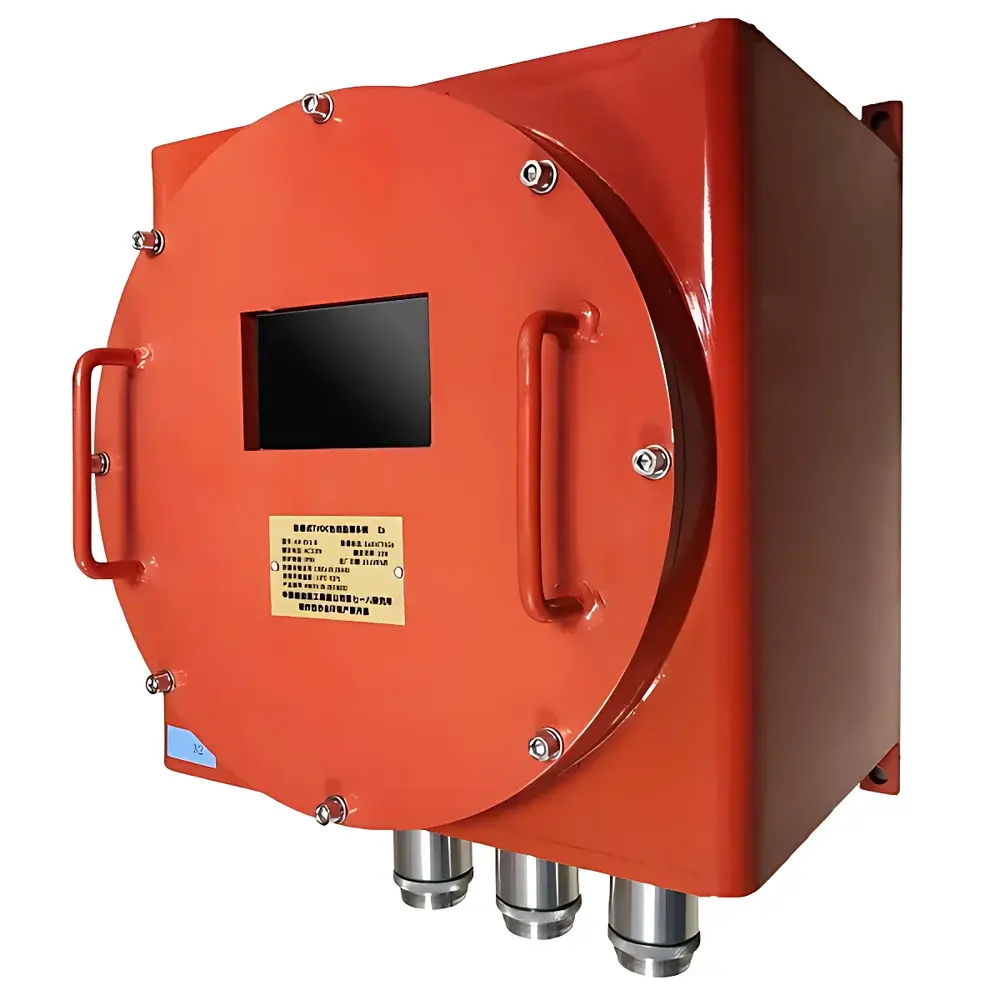
PERIC EO-VD Advanced PID-Based Volatile Organic Compounds (VOC) Detector
| Brand | PERIC |
|---|---|
| Model | EO-VD |
| Detection Principle | Photoionization Detection (PID) |
| Measurement Target | Total Volatile Organic Compounds (TVOC), including benzene, aliphatic hydrocarbons, and alkanes |
| Power Supply | AC 220 V ±10%, 50/60 Hz |
| Protection Rating | IP66 |
| Explosion Protection | Ex d IIC T6 Gb |
| Communication Interface | 4G LTE + Ethernet (RJ45) |
| Alarm Output | Visual (LED strobe) + Audible (≥85 dB at 1 m) |
| Data Protocol | HJ 212–2017 (China EPA Standard) |
| Operating Temperature | −10 °C to +55 °C |
| Relative Humidity | ≤93 % RH (non-condensing at 25 °C) |
| Atmospheric Pressure Range | 86–106 kPa |
| Response Time (T90) | ≤20 s |
| Accuracy | ±10 % of Full Scale (FS) |
| Display | High-resolution color LCD (≥3.5″, 320×240 pixels) |
| Sensor Configuration | Triple-sensor simultaneous monitoring (customizable VOC selectivity) |
| Calibration Gas | Isobutylene (default), traceable to NIST or equivalent national standards |
| Typical Measurement Ranges | 0–20, 0–50, 0–200, 0–2000 μmol/mol or 0–50, 0–125 mg/m³ (selectable) |
| Display Resolution | 0.1 or 1 μmol/mol |
Overview
The PERIC EO-VD Advanced PID-Based Volatile Organic Compounds (VOC) Detector is an intrinsically robust, explosion-proof environmental monitoring instrument engineered for continuous, real-time quantification of total volatile organic compounds (TVOC) in hazardous and non-hazardous ambient air environments. Utilizing high-sensitivity photoionization detection (PID) technology, the EO-VD operates on the principle of ultraviolet (UV) photon-induced ionization of VOC molecules with ionization potentials (IP) below the energy of its 10.6 eV UV lamp. This enables selective, interference-resistant detection of aromatic hydrocarbons (e.g., benzene, toluene, xylene), aliphatic compounds (e.g., hexane, heptane), and oxygenated VOCs (e.g., acetone, ethanol), without requiring consumable reagents or catalytic surfaces. Designed specifically for unorganized emission monitoring—such as fence-line, stack perimeter, or storage tank bund areas—the EO-VD complies with China’s HJ 212–2017 data transmission protocol and supports regulatory reporting workflows under GB 37822–2019 (VOC Emission Control Standard for Industrial Enterprises). Its certified Ex d IIC T6 Gb enclosure ensures safe deployment in Zone 1/21 classified areas where flammable vapors may be present.
Key Features
- Intrinsically safe explosion-proof design certified to Ex d IIC T6 Gb per GB 3836.1–2021 / IEC 60079-0:2017, suitable for Group IIC gas atmospheres including hydrogen and acetylene.
- IP66-rated aluminum alloy housing with corrosion-resistant coating, enabling reliable outdoor operation under rain, dust, and temperature extremes (−10 °C to +55 °C).
- Triple-sensor architecture supporting concurrent measurement of up to three VOC species or ranges—configurable via firmware for cross-sensitivity compensation and multi-gas profiling.
- High-fidelity color LCD interface with intuitive menu navigation, real-time concentration bar graphs, trend logging, and dual-unit display (μmol/mol and mg/m³).
- Dual communication redundancy: embedded 4G LTE module (CAT1/CAT4) + industrial-grade Ethernet port (10/100 Mbps), both supporting TLS 1.2 encrypted HJ 212–2017 packet framing and heartbeat-based connection supervision.
- Programmable dual-threshold alarm system with visual strobe (red/blue LED array), audible siren (≥85 dB @ 1 m), and relay-triggered external shutdown signals compliant with SIL 2 functional safety requirements.
Sample Compatibility & Compliance
The EO-VD is optimized for diffusion-sampling of ambient air without active aspiration, minimizing maintenance and power demand. It demonstrates stable response across a broad spectrum of VOCs with ionization potentials <10.6 eV—including but not limited to benzene (9.24 eV), toluene (8.82 eV), styrene (8.47 eV), isobutylene (9.56 eV), and methyl ethyl ketone (9.50 eV). Compounds with higher IPs (e.g., methane, formaldehyde) are not detectable. Calibration is traceable to isobutylene reference gas (certified per ISO 6141), though field calibration with alternative certified standards (e.g., benzene, toluene) is supported via user-defined correction factors. The device meets electromagnetic compatibility (EMC) requirements per GB/T 18268.1–2010 (IEC 61326-1) and environmental stress testing per GB/T 2423 series. While not FDA 21 CFR Part 11 or ISO/IEC 17025 accredited, its audit-ready data logs—including timestamped calibration events, alarm triggers, and sensor diagnostics—support GLP-aligned operational records.
Software & Data Management
Data acquisition and remote configuration are managed through PERIC’s web-based CloudLink Platform (v3.2+), accessible via HTTPS-secured browser interface or RESTful API. All measurements are time-stamped with GPS-synced NTP accuracy (±50 ms), stored locally on industrial-grade microSD (up to 32 GB) with circular overwrite policy, and transmitted to central SCADA or EMS systems using HJ 212–2017 frame structure—including mandatory fields: device ID, measurement time, concentration value, status flags, and CRC-16 checksum. Firmware updates are delivered over-the-air (OTA) with SHA-256 signature verification. Audit trails record all parameter changes, calibration actions, and user logins with immutable timestamps—facilitating internal QA reviews and third-party inspection readiness.
Applications
- Fence-line monitoring at petrochemical refineries, chemical manufacturing plants, and paint/coating facilities per China’s “Guideline on VOC Monitoring Network Construction” (MEP Notice No. 121, 2020).
- Real-time leak detection in storage tank farms, loading/unloading zones, and wastewater treatment aeration basins.
- Indoor air quality (IAQ) assessment in laboratories, pharmaceutical cleanrooms, and printing facilities where solvent exposure risks exist.
- Mobile deployment on environmental patrol vehicles or fixed-mount installations on flare stacks and vapor recovery units.
- Integration into enterprise-level environmental information systems (EIS) for automated compliance reporting to provincial ecological environment departments.
FAQ
What VOC compounds does the EO-VD detect?
The EO-VD detects VOCs with ionization potentials below 10.6 eV, including aromatics (benzene, toluene), aliphatics (hexane, isobutylene), and oxygenates (acetone, MEK). It does not respond to methane, ethane, CO, CO₂, or formaldehyde.
Is calibration required before each use?
Zero calibration is recommended before startup; span calibration is required every 30 days or after exposure to >10× full-scale concentrations. Isobutylene is the default calibration standard per manufacturer specification.
Can the EO-VD operate without internet connectivity?
Yes. Local data logging continues uninterrupted during network outages. Measurements are queued and transmitted automatically upon connection restoration, preserving chronological integrity.
Does the device support Modbus RTU or TCP protocols?
No. Native communication is limited to HJ 212–2017 over 4G/Ethernet. Modbus integration requires an external protocol gateway.
What is the expected service life of the PID lamp and sensor?
The 10.6 eV UV lamp has a rated lifetime of ≥6,000 hours; electrochemical sensors are rated for 24 months under typical ambient conditions. Both components are field-replaceable with calibrated modules.
Related Products







