
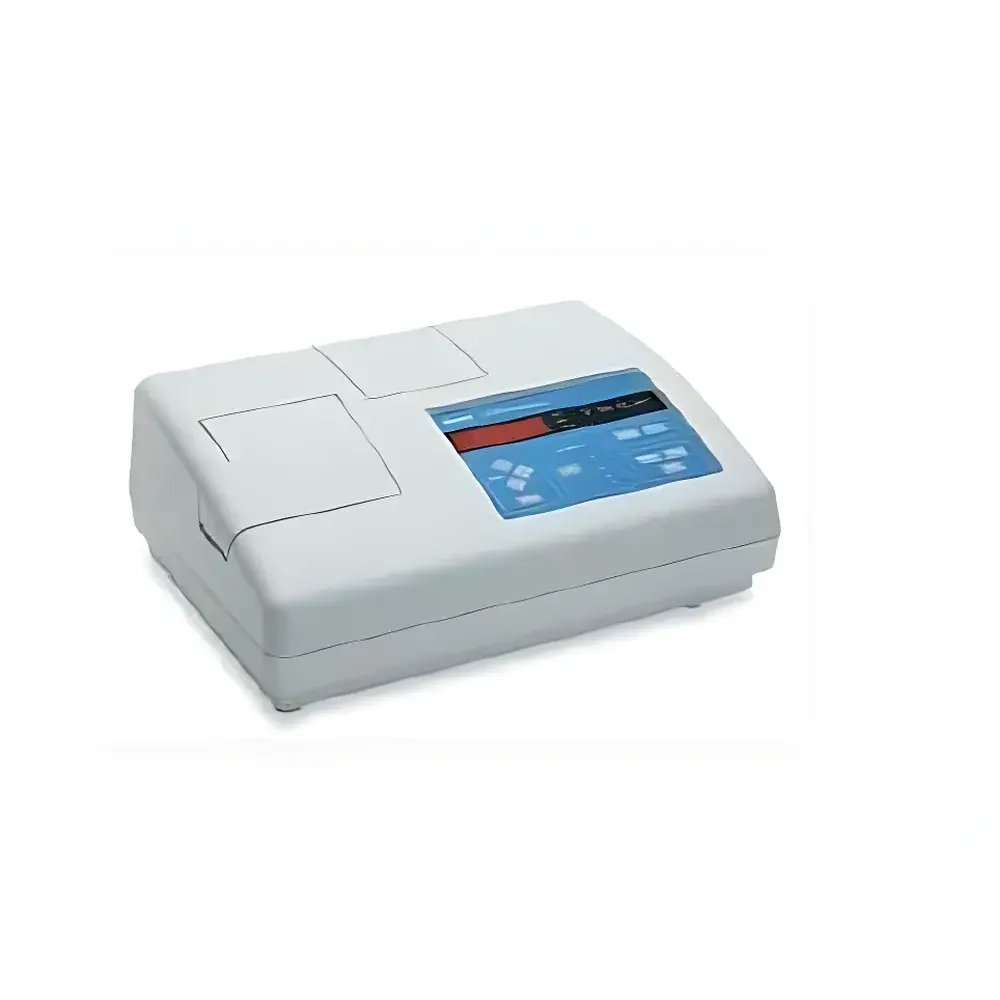
Hach 2100N Benchtop Turbidimeter
| Brand | Hach |
|---|---|
| Origin | USA |
| Model | 2100N |
| Product Type | Benchtop / Laboratory |
| Measurement Range | 0–4000 NTU |
| Resolution | 0.001 NTU |
| Operating Temperature | 10–40 °C |
| Accuracy | ±2% (0–1000 NTU), ±5% (1000–4000 NTU) |
| Power Supply | 230 V, 50/60 Hz |
| Relative Humidity | ≤90% RH (non-condensing at 25 °C) |
| Sample Volume | ≥20 mL |
| Measurement Modes | NTU, NEP, EBC |
| Ratio Measurement | Yes |
| Data Storage | Internal memory with HachLink™ software export capability |
Overview
The Hach 2100N Benchtop Turbidimeter is a precision optical instrument engineered for accurate, repeatable turbidity measurement in laboratory and quality control environments. Based on nephelometric detection principles compliant with ISO 7027 and EPA Method 180.1, the 2100N employs Hach’s proprietary dual-detector ratio measurement technology. This optical architecture simultaneously monitors forward-scattered (90°) and side-scattered (90° ± 30°) light intensities, enabling real-time compensation for color interference, particle settling effects, and minor optical path deviations—critical for reliable analysis of colored or heterogeneous samples such as wastewater effluents, surface water, process streams, and potable water post-filtration.
Key Features
- Dual-detector ratio measurement system eliminates colorimetric bias and enhances measurement robustness across diverse sample matrices.
- Programmable signal averaging (1–100 cycles) improves signal-to-noise ratio and statistical reproducibility—particularly beneficial for low-turbidity drinking water (<1 NTU) and high-solids industrial slurries.
- Integrated air purge port enables dry-air purging of the sample cell chamber, preventing condensation-induced scattering artifacts during cold- or hot-sample analysis (e.g., chilled groundwater or heated boiler feedwater).
- Self-diagnostic firmware continuously monitors LED stability, detector response, and optical alignment; alerts users via on-screen prompts for calibration verification, lamp aging, or cell contamination.
- Optimized optical path design with stable tungsten-halogen light source and temperature-compensated photodiodes ensures long-term drift <0.02 NTU/month under GLP-compliant operation.
Sample Compatibility & Compliance
The 2100N accommodates standard 20–50 mL glass vials (10 mm path length) and supports optional flow-through cells for continuous monitoring applications. Its measurement performance meets ASTM D6508, ISO 7027-1:2016, and US EPA 180.1 requirements for turbidity quantification in environmental and regulatory testing. The instrument’s design supports audit-ready workflows: all measurements are time-stamped, user-ID assignable (via optional password-protected login), and exportable with full metadata—including calibration history, operator ID, and environmental conditions—for compliance with FDA 21 CFR Part 11 and ISO/IEC 17025 documentation standards.
Software & Data Management
Data acquisition and reporting are streamlined through HachLink™ Software (Windows-compatible), which enables direct USB or RS-232 download of stored measurements—including raw analog signals, averaged readings, and diagnostic logs. The software supports customizable report templates, statistical summaries (mean, SD, CV%), trend charting, and export to CSV, Excel, or PDF formats. All data files retain embedded instrument serial number, firmware version, and calibration certificate traceability—essential for laboratory accreditation (e.g., A2LA, UKAS) and internal QA/QC audits.
Applications
- Drinking water treatment: verification of coagulation/flocculation efficiency and final filter performance (target: <0.3 NTU).
- Wastewater discharge monitoring: compliance with NPDES permit limits and tertiary treatment validation.
- Pharmaceutical manufacturing: USP turbidity assessment of parenteral solutions and purified water systems.
- Food & beverage QC: clarity evaluation of juices, beers (EBC mode), and syrups where color interference is prevalent.
- Academic research: sediment transport modeling, colloid stability studies, and nanoparticle dispersion characterization.
- Industrial process control: cooling tower blowdown management, boiler feedwater purity assurance, and chemical dosing feedback loops.
FAQ
What calibration standards are supported by the 2100N?
The instrument is factory-calibrated using StablCal® primary standards traceable to NIST SRM 2100B. Users may perform multi-point calibration with Formazin, AMCO AEPA, or StablCal® suspensions across the full 0–4000 NTU range.
Can the 2100N measure samples below 0.01 NTU with sufficient confidence?
Yes—when operated in high-precision mode with ≥10-cycle averaging and clean quartz cuvettes, the 2100N achieves method detection limits of 0.005 NTU per EPA guidance, validated against ultra-low turbidity reference materials.
Is the 2100N compatible with LIMS integration?
Via HachLink™ ASCII output or optional Hach DataStream™ middleware, the instrument supports HL7 and ASTM E1384-compliant LIMS ingestion, including automatic sample ID mapping and result flagging for out-of-spec events.
How often does the tungsten-halogen lamp require replacement?
Rated for >5,000 hours of continuous operation, lamp replacement is typically required every 18–24 months under standard lab usage; firmware tracks cumulative lamp hours and triggers maintenance alerts.
Does the 2100N support Good Laboratory Practice (GLP) documentation requirements?
Yes—the device logs operator ID, date/time stamps, calibration status, environmental conditions, and measurement parameters for each test, satisfying core GLP record-keeping mandates per OECD Principles and 21 CFR Part 11 electronic signature provisions.




