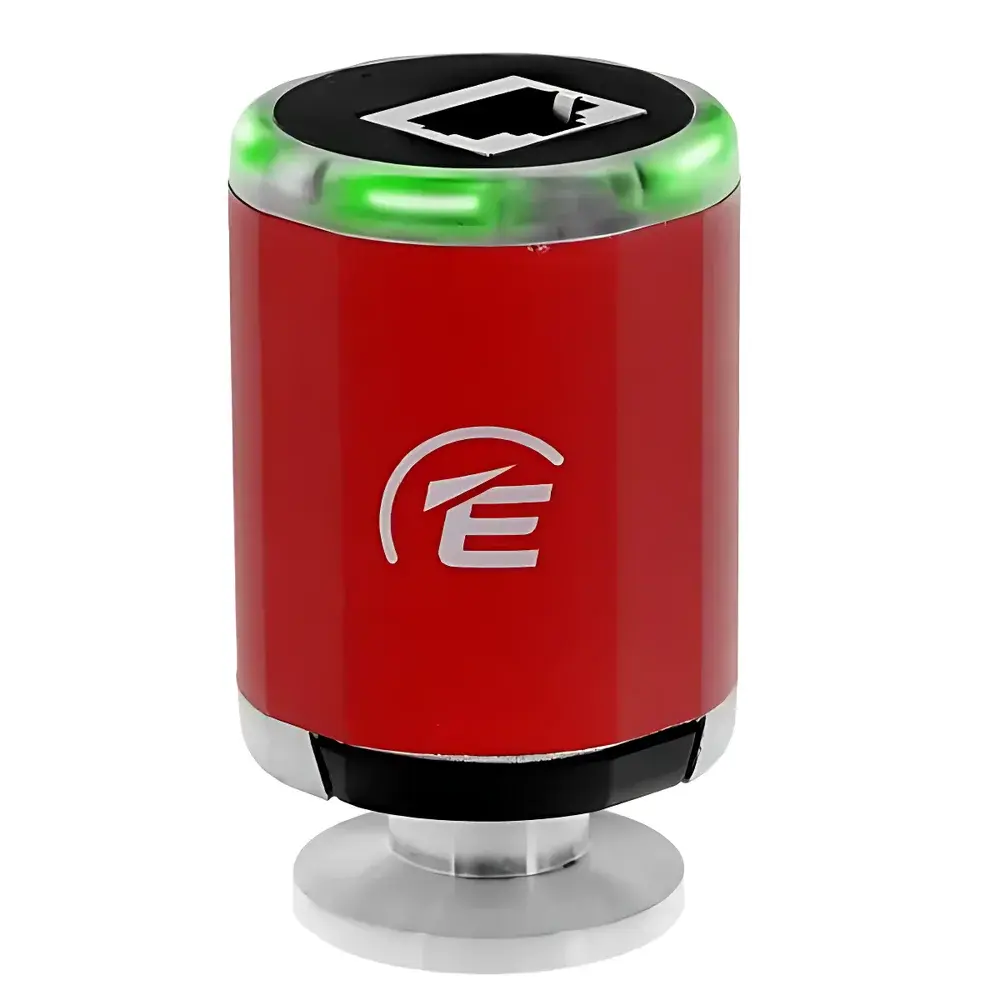
Solar Light PMA2104 Submersible UVB Radiometer
| Brand | Solar Light |
|---|---|
| Origin | USA |
| Model | PMA2104 |
| Spectral Response | Matches erythema action spectrum (CIE/ISO 17166:2019) |
| Angular Response | ≤15% deviation for incidence angles <50° |
| Measurement Range | 0–20 MED/hr (0–1.17 µW/cm²) |
| Resolution | 0.001 MED/hr |
| Operating Temperature | 0–50 °C (32–120 °F), non-condensing |
| Temperature Coefficient | ±1 %/°C (for solar UV irradiance) |
| Cable | 10.6 m (35 ft), waterproof, 7-pin keyed connector |
| Dimensions (w/o cable) | Ø139.7 mm × H88.9 mm |
| Weight (w/o cable) | 1360 g |
| Submersion Rating | IP68, rated to 100 m depth |
| Mounting | Two #10-32 threaded holes on base plate |
Overview
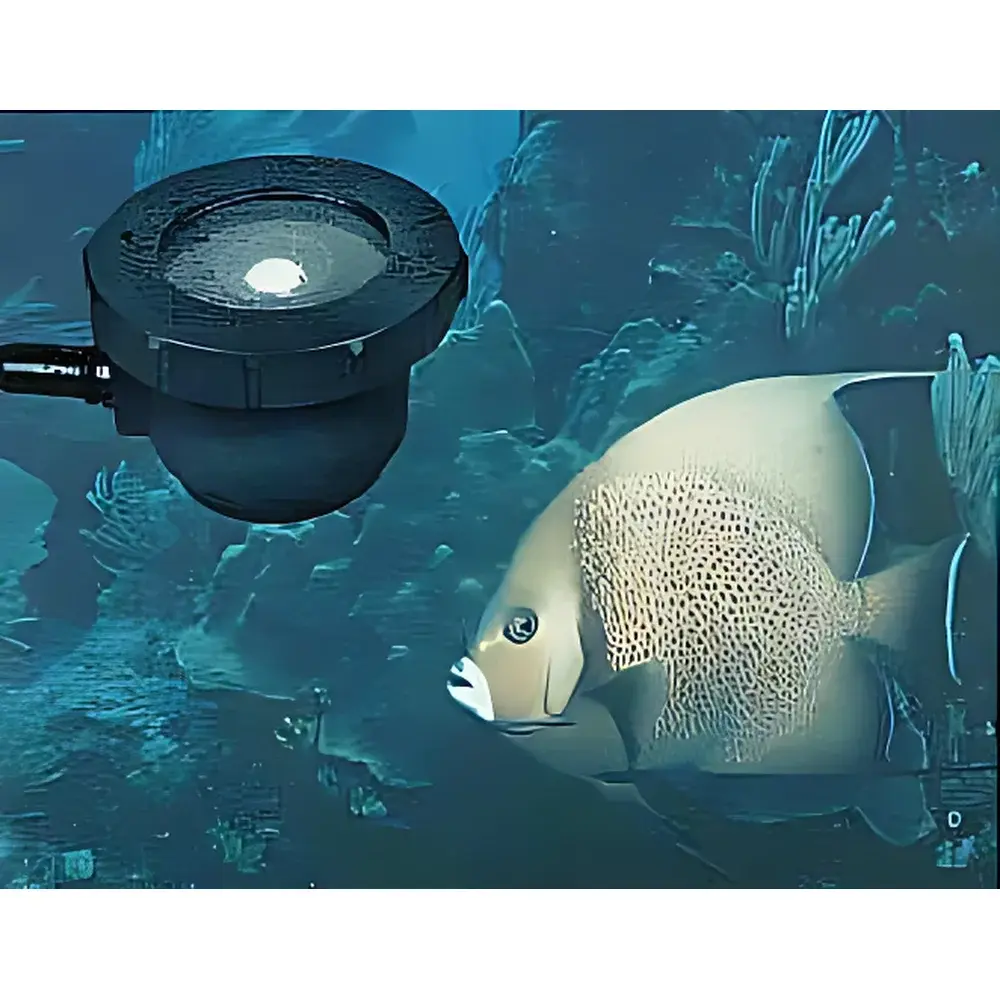
The Solar Light PMA2104 Submersible UVB Radiometer is a calibrated, field-deployable optical sensor engineered for quantitative measurement of biologically weighted ultraviolet-B (UVB, 280–315 nm) irradiance in aquatic environments. It operates on the principle of spectral radiometry, utilizing a photodiode-based detector with an interference filter and diffuser optimized to approximate the CIE erythema action spectrum (ISO 17166:2019 / ACGIH TLV®). This spectral weighting enables direct quantification of sunburn-effective UV radiation—commonly reported as Minimal Erythemal Dose per hour (MED/hr)—in both natural sunlight and controlled artificial UV sources. Unlike broadband UV sensors, the PMA2104 delivers traceable, biologically relevant data essential for ecological UV dosimetry, coral reef photobiology studies, water column UV attenuation profiling, and validation of underwater radiative transfer models.
Key Features
- True submersible architecture certified to 100 meters depth (IP68), enabling long-term deployment in freshwater lakes, coastal seawater, and aquaculture systems without housing compromise.
- Optical design validated against NIST-traceable spectroradiometric reference standards; spectral response conforms to ISO 17166:2019 erythemal weighting function within ±5% RMS deviation across 280–315 nm.
- Low angular dependence: <15% cosine error for incident angles up to 50° from normal, critical for accurate downwelling irradiance measurements under variable solar zenith conditions.
- Ruggedized marine-grade stainless steel and acetal housing with O-ring sealed optics; resistant to biofouling, salinity corrosion, and thermal cycling between 0–50 °C.
- Integrated mounting interface: two precision-machined #10-32 tapped holes on the base allow secure attachment to custom frames, ROV arms, or mooring lines without external brackets.
- Low thermal drift: temperature coefficient of ±1 %/°C (relative to solar-weighted UV output), compensated via onboard thermistor and factory calibration mapping.
Sample Compatibility & Compliance
The PMA2104 is compatible with all standard Solar Light handheld and benchtop UV radiometers (e.g., PMA2100, PMA2102) via its keyed 7-pin interface, supporting analog voltage output (0–2 V) proportional to irradiance. Its spectral response and calibration are traceable to the National Institute of Standards and Technology (NIST) through Solar Light’s A2LA-accredited calibration laboratory (ISO/IEC 17025:2017). The instrument complies with ASTM E1319–22 (Standard Specification for UV Radiometers Used in Environmental Monitoring) and supports GLP-compliant data acquisition when paired with validated logging systems. No user recalibration is required; factory calibration certificates include uncertainty budgets (<±3.5% k=2 at 305 nm) and spectral responsivity curves.
Software & Data Management
The PMA2104 outputs a linear analog signal compatible with third-party data loggers (e.g., Campbell Scientific CR1000X, Onset HOBO U12) and Solar Light’s proprietary UV Data Logger software (v5.2+). When used with Solar Light’s PMA2100 series meters, real-time MED/hr and µW/cm² values are displayed with automatic temperature compensation and unit toggling. All logged data retain embedded metadata—including timestamp, ambient temperature, and instrument serial number—enabling audit-ready traceability per FDA 21 CFR Part 11 requirements when configured with electronic signature and audit trail modules. Raw voltage outputs can be post-processed using the published calibration factor (nA/(µW/cm²)) and erythemal weighting coefficients provided in the certificate of calibration.
Applications
- Quantifying UVB penetration depth profiles in oligotrophic and eutrophic water columns to assess photoinhibition thresholds in phytoplankton communities.
- Monitoring seasonal and diurnal variations in underwater UVB exposure for benthic organisms, including scleractinian corals and seagrass meadows.
- Validating radiative transfer models (e.g., Hydrolight, EcoLight-S) by providing in situ ground-truth irradiance measurements at discrete depths.
- Supporting regulatory compliance for UV disinfection system performance verification in recirculating aquaculture systems (RAS).
- Field calibration of hyperspectral underwater radiometers and satellite-derived UV products (e.g., NASA Ocean Color Level 3 UV products).
FAQ
Can the PMA2104 be used in saltwater without degradation?
Yes. The housing employs passivated 316 stainless steel and chemically resistant acetal polymer, tested per ASTM B117 salt spray standards for >1000 hours. Sealing integrity is verified hydrostatically at 1.5× rated depth prior to shipment.
Is factory recalibration required annually?
Solar Light recommends recalibration every 12 months for applications requiring ISO/IEC 17025 traceability. Stability testing shows <1.2% drift in responsivity over 18 months under typical field use.
Does the cable length affect measurement accuracy?
No. The 10.6 m cable uses shielded twisted-pair construction with low-capacitance coaxial signal lines; voltage drop and noise susceptibility are negligible within the specified operating range.
Can the PMA2104 measure UVB from artificial lamps (e.g., fluorescent UVB tubes)?
Yes—provided the lamp’s emission spectrum falls within 280–315 nm and does not exceed the detector’s maximum irradiance limit (1.17 µW/cm²). For pulsed or high-intensity sources, consult Solar Light Application Note AN-UVB-07 for integration time guidance.
How is underwater cosine correction achieved?
The detector incorporates a precision-ground Teflon™ diffuser with Lambertian scattering characteristics, combined with a secondary cosine-correcting aperture. Angular response is empirically verified per ISO 9060:2018 Annex E protocols using a goniometric setup.