
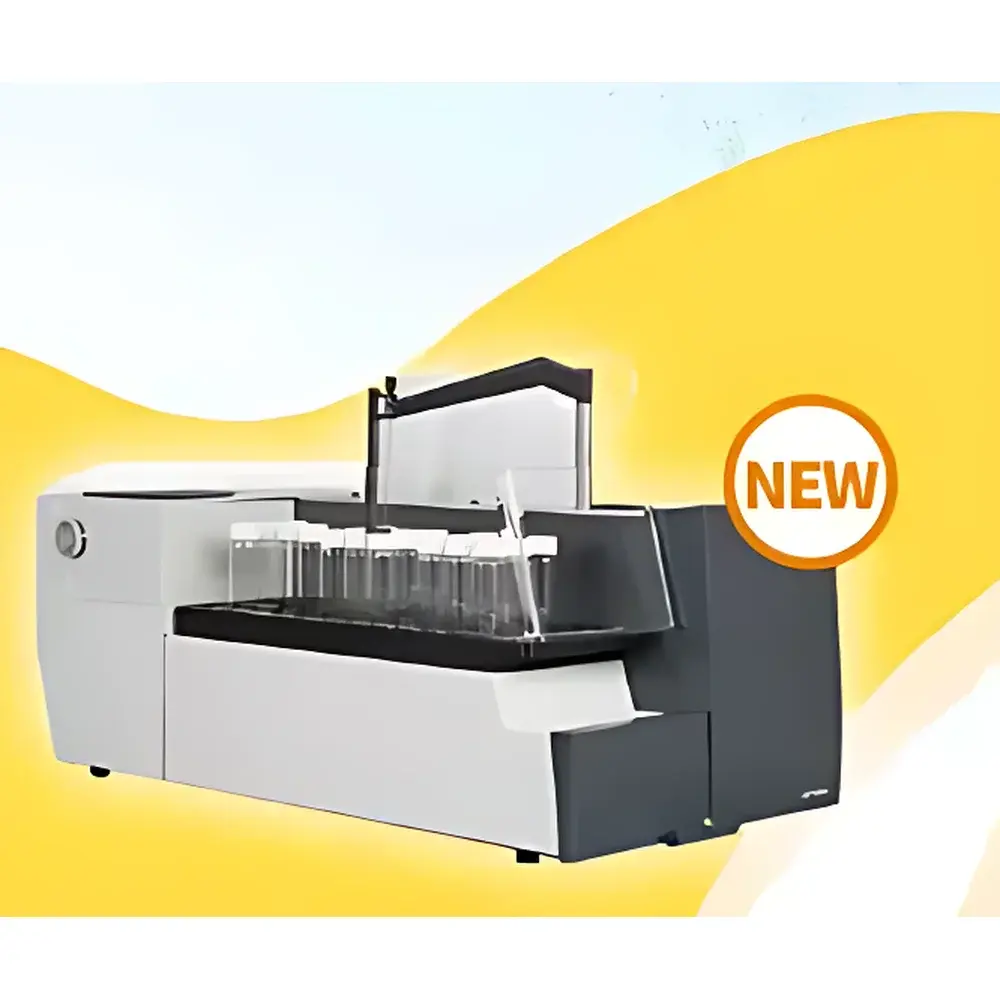
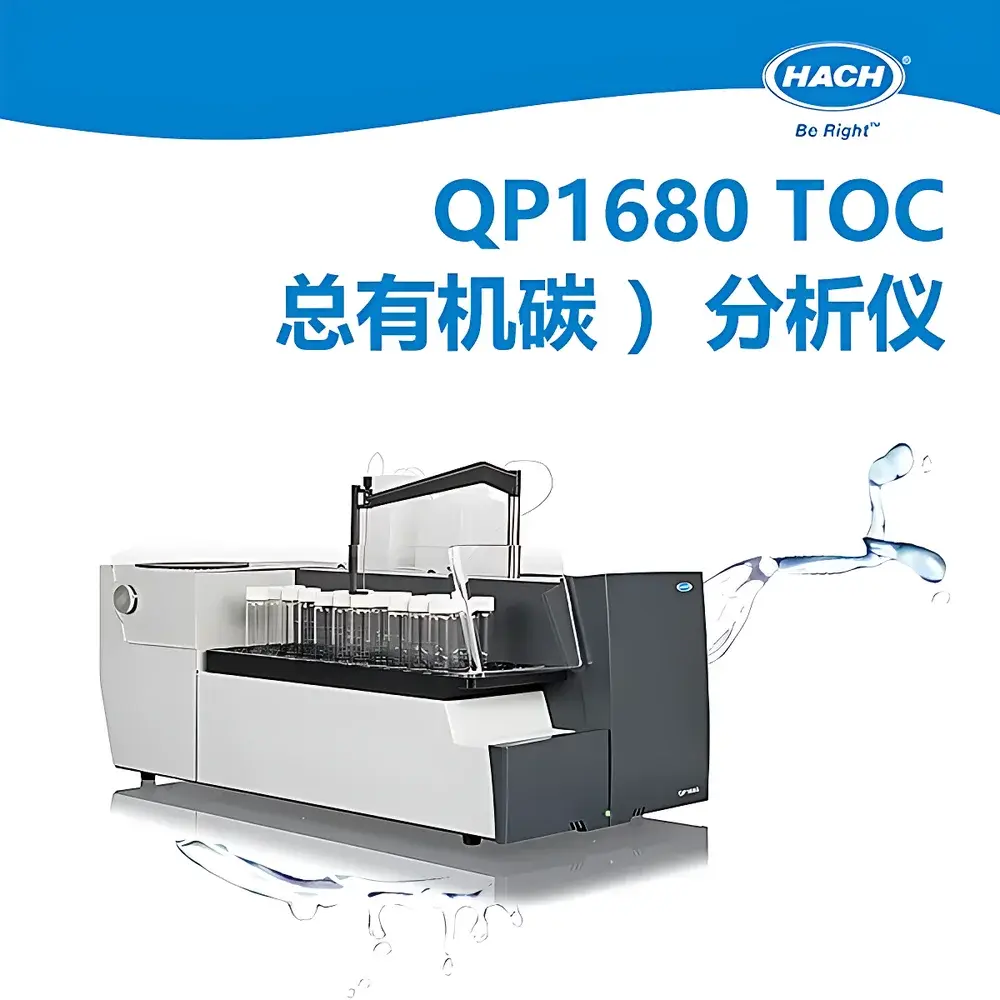
HACH QP1680 Total Organic Carbon (TOC) Analyzer
| Brand | HACH |
|---|---|
| Origin | Imported |
| Manufacturer Type | Original Equipment Manufacturer (OEM) |
| Instrument Type | Laboratory-Based TOC Analyzer |
| Model | QP1680 TOC Analyzer |
| Oxidation Method | High-Temperature Catalytic Combustion (680 °C) |
| Detection Principle | Non-Dispersive Infrared (NDIR) Detection of CO₂ |
| Measurement Range | 0.5–30,000 µg/L (ppb to ppm) as C |
| Detection Limit | ≤0.5 µg/L (ppb) as C |
| Sample Throughput | Up to 60 samples per hour with autosampler |
| Compliance | ASTM D5997, USP <643>, EP 2.2.44, ISO 8245, and compliant with FDA 21 CFR Part 11 requirements for electronic records and signatures |
Overview
The HACH QP1680 Total Organic Carbon (TOC) Analyzer is a high-performance, laboratory-based analytical instrument engineered for precise quantification of non-purgeable organic carbon in aqueous matrices. It employs high-temperature catalytic combustion oxidation at 680 °C—ensuring complete mineralization of refractory and particulate-bound organic compounds—followed by highly selective non-dispersive infrared (NDIR) detection of the generated CO₂. This dual-stage methodology delivers exceptional accuracy, repeatability, and method robustness across diverse sample types including ultrapure water, pharmaceutical process water, wastewater effluents, and environmental surface waters. Designed for routine compliance monitoring and method validation in regulated environments, the QP1680 meets the stringent performance criteria outlined in major international standards including ASTM D5997, United States Pharmacopeia (USP) , European Pharmacopoeia (EP) 2.2.44, and ISO 8245.
Key Features
- 680 °C high-temperature catalytic oxidation furnace with integrated platinum catalyst—enabling complete oxidation of complex organics, humic substances, and low-volatility compounds without acid pretreatment or sparging.
- High-sensitivity NDIR detector with dual-wavelength compensation, delivering sub-ppb-level detection limits (≤0.5 µg/L as C) and linear dynamic range spanning three orders of magnitude (0.5–30,000 µg/L).
- Automated solid-state reagent delivery system eliminating liquid acid/peroxide handling—reducing maintenance frequency and operator exposure risk.
- Modular architecture supporting integration with optional 60-position autosampler, onboard conductivity-based inorganic carbon (IC) removal module, and barcoded sample tracking.
- Rugged stainless-steel fluidic path with electropolished wetted surfaces, certified for USP Class VI biocompatibility and compatible with clean-in-place (CIP) protocols.
- Embedded real-time diagnostics, including catalyst activity monitoring, CO₂ baseline drift compensation, and pressure/flow integrity verification at every analysis cycle.
Sample Compatibility & Compliance
The QP1680 accommodates a broad spectrum of aqueous samples without matrix-specific method adjustments: deionized water, WFI (Water for Injection), purified water, cooling tower water, landfill leachate, and municipal secondary effluent. Its oxidation efficiency has been validated against reference materials traceable to NIST SRM 1643e (Trace Elements in Natural Water) and IAEA-432 (TOC in seawater). The system supports full audit trail functionality—including user action logging, method version control, and electronic signature capture—fully aligned with FDA 21 CFR Part 11, EU Annex 11, and GLP/GMP data integrity requirements. All calibration and verification procedures adhere to ISO/IEC 17025–compliant documentation frameworks.
Software & Data Management
Instrument operation and data review are managed via HACH’s TOC Expert™ software—a Windows-based platform featuring role-based access control (RBAC), configurable reporting templates (PDF/CSV/XLSX), and automated report generation per USP/EP chapter requirements. The software maintains immutable audit trails for all critical events: calibration updates, method modifications, sample re-runs, and instrument error recovery sequences. Data export supports LIMS integration through ASTM E1384-compliant HL7 and ASTM E2500-07 XML schemas. Optional cloud-enabled remote monitoring allows secure, browser-based access to real-time status, historical trends, and predictive maintenance alerts.
Applications
- Pharmaceutical manufacturing: Routine TOC monitoring of WFI, PW, and clean steam condensate per USP and EU GMP Annex 1.
- Power generation: Boiler feedwater and condensate purity assurance in thermal and nuclear facilities.
- Microelectronics: Ultrapure water qualification for semiconductor wafer fabrication lines (SEMI F63).
- Environmental laboratories: EPA Method 415.3 and ISO 8245-compliant analysis of surface, ground, and wastewater samples.
- Academic and regulatory research: Method development and validation studies requiring high inter-laboratory reproducibility and traceable uncertainty budgets.
FAQ
What oxidation method does the QP1680 use, and why is it preferred for regulated applications?
The QP1680 utilizes high-temperature catalytic combustion at 680 °C, which achieves >99% oxidation efficiency for recalcitrant organics—eliminating the need for persulfate or UV/persulfate alternatives that may underreport aromatic or halogenated compounds.
Is the system compliant with FDA 21 CFR Part 11 for electronic records?
Yes—the embedded firmware and TOC Expert™ software provide full Part 11 functionality including electronic signatures, audit trail preservation, and system access controls validated per IQ/OQ protocols.
Can the QP1680 analyze samples with high suspended solids or turbidity?
It supports direct injection of filtered samples (0.45 µm or 0.2 µm membrane); for particulate-rich matrices, optional offline filtration or centrifugation is recommended prior to analysis.
Does the analyzer require daily calibration or standardization?
A single-point calibration using potassium hydrogen phthalate (KHP) standard is typically performed daily; multi-point verification is required after maintenance or when initiating new method protocols.
What service and support options are available globally?
HACH provides factory-certified installation qualification (IQ), operational qualification (OQ), preventive maintenance contracts, and application-specific training delivered by ISO 17025-accredited service engineers.
Related Products







