
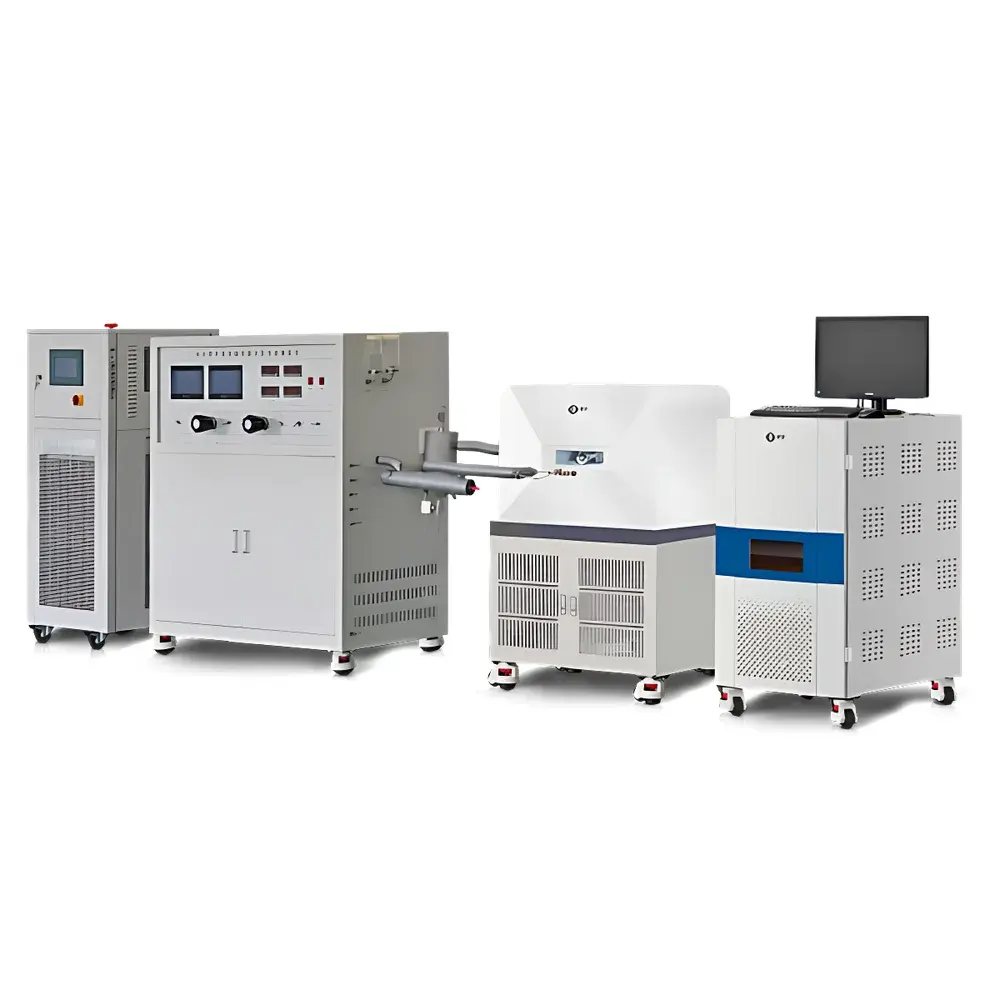
NIUMAG MesoMR+ Low-Field Nuclear Magnetic Resonance Imaging Analyzer for CO₂ Hydrate Formation and Dissociation Studies
| Brand | NIUMAG |
|---|---|
| Origin | Jiangsu, China |
| Manufacturer Type | Authorized Distributor |
| Regional Classification | Domestic |
| Model | MesoMR+ |
| Instrument Type | Low-Field NMR Analyzer |
| Sample Compatibility | Solid-Liquid Dual-Phase |
| Operating Frequency | 50 MHz |
| Data Acquisition Mode | Pulsed Fourier Transform |
Overview
The NIUMAG MesoMR+ is a purpose-built low-field nuclear magnetic resonance (NMR) imaging analyzer engineered for in situ, non-invasive investigation of CO₂ hydrate formation and dissociation dynamics under controlled thermobaric conditions. Operating at a stable Larmor frequency of 50 MHz (corresponding to a static magnetic field strength of approximately 1.17 T — calibrated to 0.3 ± 0.03 T or 0.5 ± 0.03 T depending on configuration), the system leverages pulsed Fourier transform (PFT) NMR methodology to quantify proton signal evolution from water, hydrate-bound H₂O, and dissolved CO₂ phases. Unlike high-field systems optimized for molecular structure elucidation, the MesoMR+ prioritizes robust time-domain relaxation analysis (T₁, T₂, diffusion-weighted sequences) and spatially resolved NMR imaging (MRI) to track phase transitions, pore-scale fluid redistribution, and hydrate saturation kinetics in geologically relevant media — including sediment cores, porous rock samples, and frozen soils. Its design addresses the critical need for quantitative, real-time monitoring in carbon capture, utilization, and storage (CCUS) research, particularly in assessing hydrate stability envelopes, reservoir trapping efficiency, and long-term sequestration integrity.
Key Features
- Modular thermobaric sample environment: Integrated low-temperature–high-pressure (LTHP) and high-temperature–high-pressure (HTHP) control modules enable precise simulation of subsurface conditions (–20 °C to +80 °C; up to 30 MPa confining/gas pressure)
- Dual-axis sample insertion: Configurable horizontal or vertical bore orientation to accommodate core plugs, sediment columns, or custom reactor cells
- Optimized RF coil architecture: Standard diameters of ≤25.4 mm (LTHP mode) and ≤50.8 mm (ambient mode), with axial lengths up to 80 mm and 100 mm respectively, ensuring homogeneous excitation and signal reception
- High-sensitivity detection: Engineered for superior signal-to-noise ratio (SNR) in low-amplitude, slow-relaxing proton signals typical of clathrate hydrates and frozen matrices
- Real-time kinetic acquisition: Supports continuous, time-resolved NMR data collection during dynamic hydrate nucleation, growth, and dissociation cycles
- Robust mechanical and thermal isolation: Active temperature stabilization with ±0.1 °C precision minimizes thermal drift during multi-hour experiments
Sample Compatibility & Compliance
The MesoMR+ accommodates heterogeneous solid–liquid samples representative of natural geological systems: unconsolidated sediments, sandstone and shale core plugs, synthetic hydrate-bearing analogs, and frozen soil specimens. All sample holders comply with ISO 17025-recommended traceability protocols for pressure vessel certification (ASME BPVC Section VIII). The instrument supports experimental workflows aligned with ASTM D7900 (Standard Test Method for Determining Hydrate Formation Conditions in Sediments) and ISO/TC 193/SC 1 guidelines for gas hydrate characterization. Data acquisition and metadata logging conform to GLP-compliant audit trails, with optional 21 CFR Part 11–ready software modules available for regulated CCUS pilot validation studies.
Software & Data Management
Control and analysis are performed via NIUMAG’s proprietary MesoMR Studio v4.x platform — a Windows-based application supporting sequence programming (CPMG, IR, DEPGSE), real-time image reconstruction (2D/3D spin-echo MRI), and multi-parameter relaxation mapping (T₂ distribution deconvolution, diffusion–relaxation correlation). Raw FID data are stored in vendor-neutral HDF5 format with embedded experimental metadata (temperature, pressure, pulse timing, coil tuning status). Batch processing pipelines enable automated quantification of hydrate saturation, water-phase mobility, and pore-size distribution using inverse Laplace transform algorithms validated against mercury intrusion porosimetry (MIP) and cryo-SEM benchmarks. Export options include CSV, MATLAB .mat, and DICOM-compatible NIfTI for cross-platform integration with reservoir simulators (e.g., CMG STARS, TOUGH+HYDRATE).
Applications
- In situ monitoring of CO₂ hydrate nucleation kinetics and dissociation hysteresis in synthetic and natural sediments
- Quantitative mapping of hydrate saturation heterogeneity within centimeter-scale rock cores under reservoir-relevant stress paths
- Assessment of freeze–thaw cycling effects on pore structure, unfrozen water content, and ice lens development in permafrost analogs
- Characterization of capillary-bound vs. bulk water mobility in tight gas sands and shales during depressurization-induced dissociation
- Validation of thermodynamic inhibition models (e.g., Pitzer–Debye–Hückel extensions) using time-resolved T₂ decay spectra
- Support for DOE NETL and IEA GHG R&D programs targeting hydrate-based carbon storage feasibility assessments
FAQ
What magnetic field homogeneity is achievable across the active sample volume?
Typical spatial homogeneity is ≤10 ppm over a 25 mm DSV (diameter spherical volume) under stabilized operating conditions.
Can the system be integrated with external gas delivery and pressure control hardware?
Yes — standardized pneumatic and electrical interfaces support third-party high-pressure gas manifolds (e.g., Parker Autoclave Engineers) and digital pressure controllers (e.g., Bronkhorst EL-PRESS) via RS485 or Ethernet TCP/IP.
Is T₁–T₂ correlation mapping supported out-of-the-box?
Yes — MesoMR Studio includes preconfigured 2D correlation sequences with variable inversion recovery and CPMG echo train parameters, enabling joint relaxation spectrum analysis without custom scripting.
Does the system meet electromagnetic compatibility (EMC) requirements for laboratory deployment?
The MesoMR+ complies with IEC 61326-1:2013 for industrial scientific equipment, including radiated and conducted emissions testing per EN 61000-6-3 and immunity per EN 61000-6-2.
Are calibration standards and reference materials provided?
NIUMAG supplies traceable NMR reference phantoms (doped water, dodecane, polyacrylamide gels) certified to NIST SRM 1910a for T₁/T₂ reproducibility verification and SNR benchmarking.





