ProOpto UV Series Laser Beam Profiler
| Brand | ProOpto |
|---|---|
| Origin | Germany |
| Model | UV |
| Spectral Range | ~1–1100 nm (EUV, UV, VIS, NIR) |
| Sensor Types | >20 interchangeable CCD/CMOS cameras (small/large area, high resolution, high dynamic range) |
| Interface | USB 3.0 or GigE |
| Bit Depth | 12-bit / 14-bit |
| Compliance | ISO 11146, ISO 13694, ISO 11670, ISO 15367 |
| Software | Full remote control & automation support (adaptive optics, motorized attenuators, shutters, power meters) |
Overview
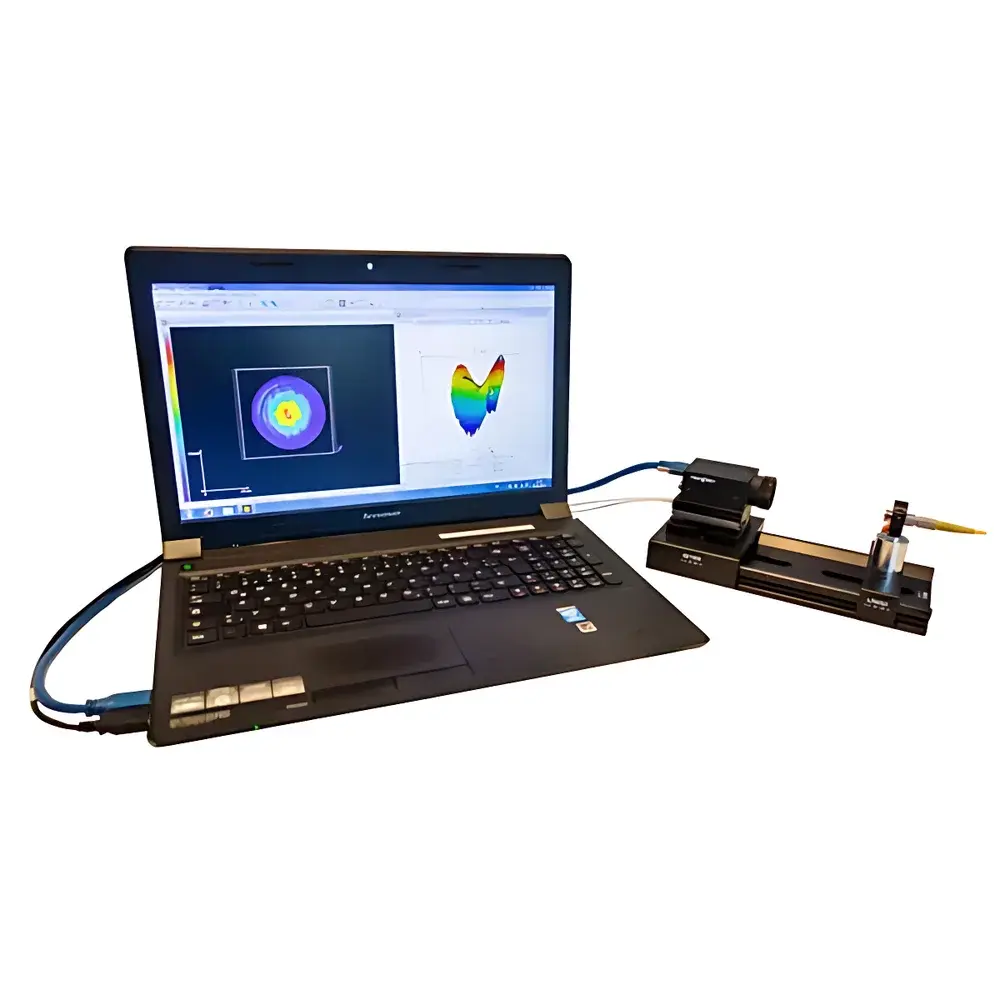
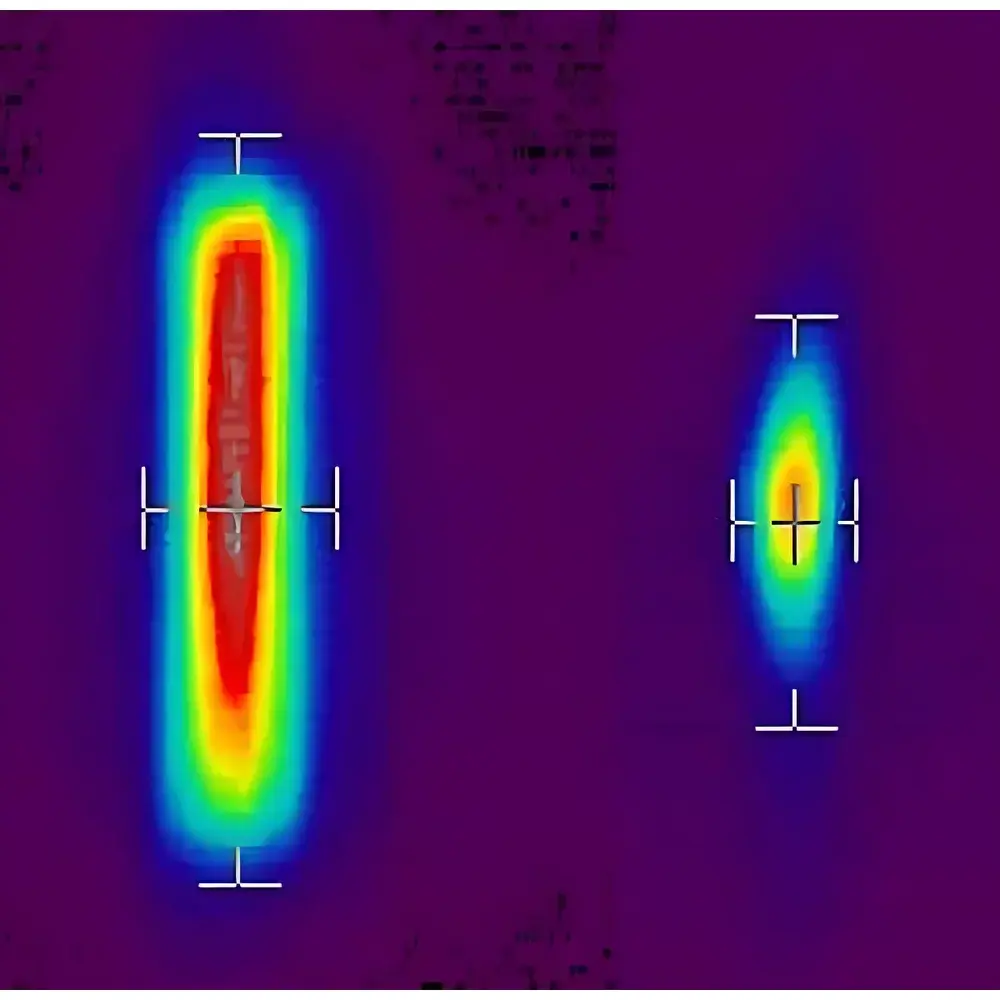
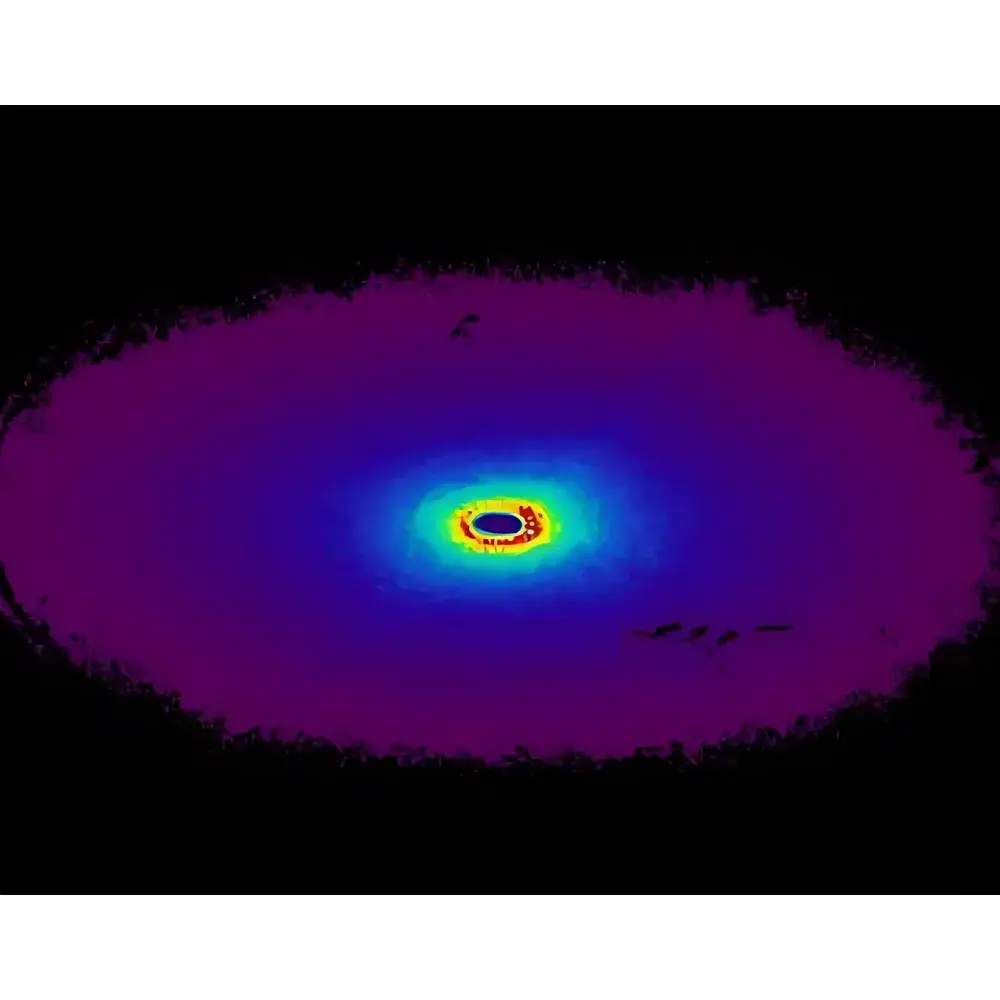
The ProOpto UV Series Laser Beam Profiler is a precision optical metrology instrument engineered for quantitative, real-time spatial characterization of laser beams across an exceptionally broad spectral range—from extreme ultraviolet (EUV, down to ~1 nm) through soft X-ray transition regions, visible, near-infrared, and up to 1100 nm. Based on high-sensitivity, quantum-efficiency-optimized CCD detectors with proprietary EUV/UV conversion coatings, the system delivers accurate intensity distribution mapping for both pulsed and continuous-wave (CW) sources—including excimer lasers (e.g., ArF at 193 nm, KrF at 248 nm), solid-state lasers, fiber lasers, synchrotron beamlines, and even partially coherent or broadband non-laser sources. Its core measurement principle relies on direct pixel-resolved irradiance capture, followed by second-moment (ISO 11146-compliant) and top-hat-based analysis to extract fundamental beam parameters—beam width, divergence, M² factor, pointing stability, and far-field propagation behavior. Designed for integration into cleanroom-compatible laser labs, semiconductor lithography development environments, and ultrafast optics test benches, the UV Series provides traceable, standards-aligned beam diagnostics essential for process validation, laser qualification, and optical alignment optimization.
Key Features
- Ultra-broad spectral coverage: 1–1100 nm, enabled by specialized phosphor-coated and back-illuminated sensors optimized for EUV quantum efficiency
- Modular sensor architecture: Over 20 camera variants available—including high-resolution small-format sensors (20 mm diagonal), low-noise EMCCD options, and vacuum-compatible versions for EUV beamlines
- High-fidelity digitization: 12-bit and 14-bit ADC resolution with >70 dB dynamic range, supporting both single-shot pulse profiling and high-frame-rate CW monitoring
- Dual high-speed interfaces: USB 3.0 for benchtop deployment and Gigabit Ethernet for rack-mounted, network-distributed operation with deterministic latency
- Full hardware synchronization: TTL-triggered acquisition synchronized with laser pulse trains, shutter control, and external motion stages
- Robust mechanical design: Aluminum alloy housing with thermal stabilization, ESD-safe construction, and optional vacuum flange mounts for in-situ EUV chamber integration
Sample Compatibility & Compliance
The ProOpto UV Series supports direct profiling of free-space beams without mandatory beam attenuation—provided incident fluence remains within sensor damage thresholds (specified per model). It accommodates divergent, collimated, focused, and multimode beams, including those with complex spatial coherence profiles. All quantitative outputs comply with international standards governing laser beam metrology: beam diameter and divergence per ISO 11146-1/-2; beam profile classification per ISO 13694; pointing stability evaluation per ISO 11670; and wavefront reconstruction (via optional phase retrieval add-ons) aligned with ISO 15367-1. The system is routinely deployed in GLP-compliant R&D laboratories and qualifies for use in FDA-regulated laser safety validation (21 CFR Part 1040.10/1040.11) and semiconductor equipment certification workflows requiring ISO/IEC 17025 traceability.
Software & Data Management
The bundled BeamStudio software suite provides a unified platform for acquisition, analysis, automation, and reporting. It features native support for third-party hardware via standardized protocols (e.g., RS-232, TCP/IP, LabVIEW VIs, Python SDK), enabling closed-loop control of adaptive optics, motorized filter wheels, variable attenuators, fast shutters, and inline photodiode power monitors. Real-time parameter tracking includes M² evolution over time, centroid drift histograms, pulse-to-pulse RMS intensity variation, and near-field/far-field transformation matrices. All measurements embed full metadata (wavelength, exposure, gain, calibration timestamp) and support export in HDF5, CSV, and TIFF formats. Audit trails, user access levels, electronic signatures, and 21 CFR Part 11-compliant electronic record retention are available via optional GxP module licensing.
Applications
- Excimer laser qualification in microlithography tool development (ArF, KrF, F₂)
- EUV source characterization for next-generation mask inspection and metrology systems
- M² and BPP validation of high-power industrial fiber lasers (1070 nm, 1030 nm)
- Beam alignment and focus optimization in ultrafast Ti:sapphire and OPCPA systems
- Coherence length estimation via spatial mode decomposition in VCSEL and LED testing
- In-line beam monitoring during laser welding, ablation, and additive manufacturing processes
- Academic research in structured light generation, vortex beam analysis, and plasmonic coupling efficiency studies
FAQ
Does the UV Series support vacuum-compatible operation for EUV beamlines?
Yes—select sensor models feature CF-40 or DN63 vacuum flange mounts, hermetic sealing, and radiation-hardened electronics suitable for UHV environments down to 10⁻⁷ mbar.
Can I perform M² measurements automatically across multiple focal planes?
Yes—BeamStudio includes automated z-scan routines with motorized stage integration, generating full ISO 11146-compliant M² reports with uncertainty budgets.
Is NIST-traceable calibration provided with the system?
Each delivered unit ships with a factory calibration certificate referencing NIST-traceable irradiance and spatial standards; annual recalibration services are available through ProOpto’s accredited European service centers.
What file formats does the software support for data exchange with MATLAB or Python?
Native HDF5 export with embedded metadata, plus CSV (tabular parameters) and TIFF (raw image frames); Python API enables direct memory-mapped access to live acquisition buffers.
How is beam divergence calculated—and is it valid for non-Gaussian beams?
Divergence is computed from second-moment beam widths in near- and far-field planes per ISO 11146, ensuring validity for arbitrary intensity distributions—not limited to Gaussian or TEM₀₀ modes.