
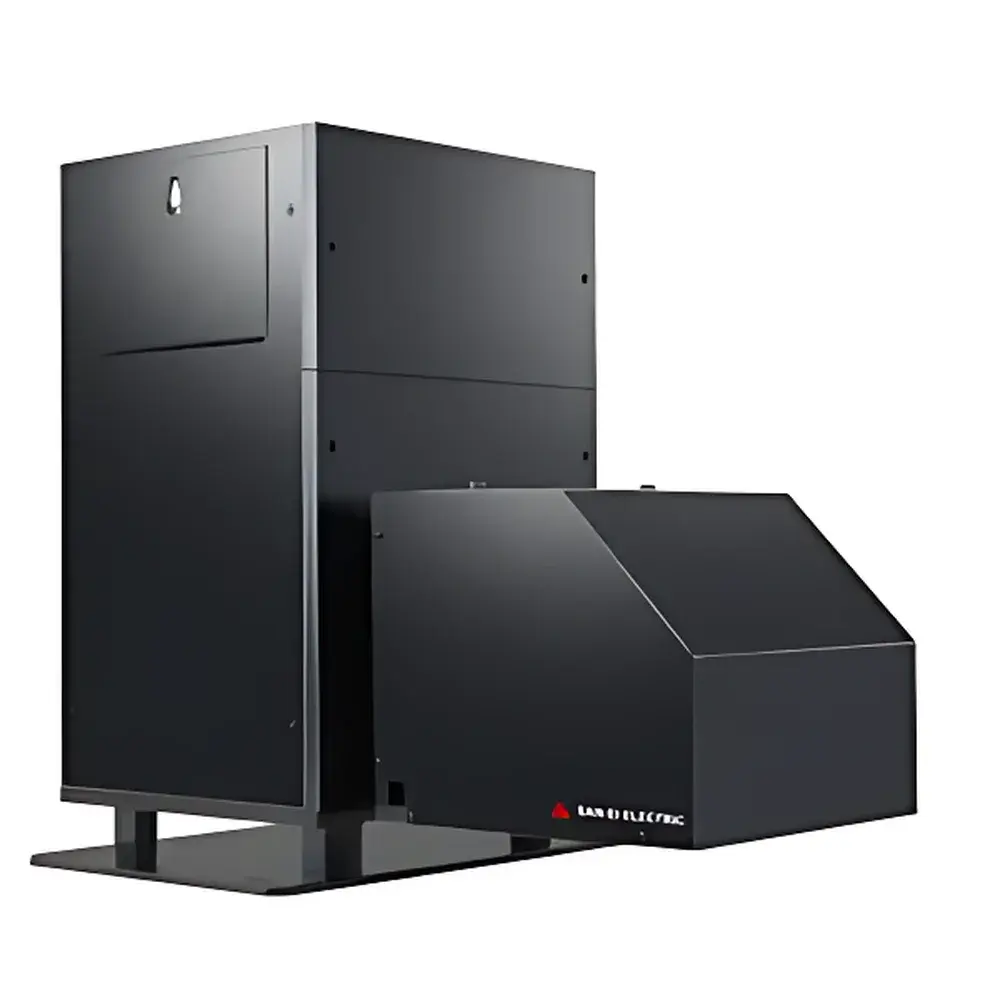
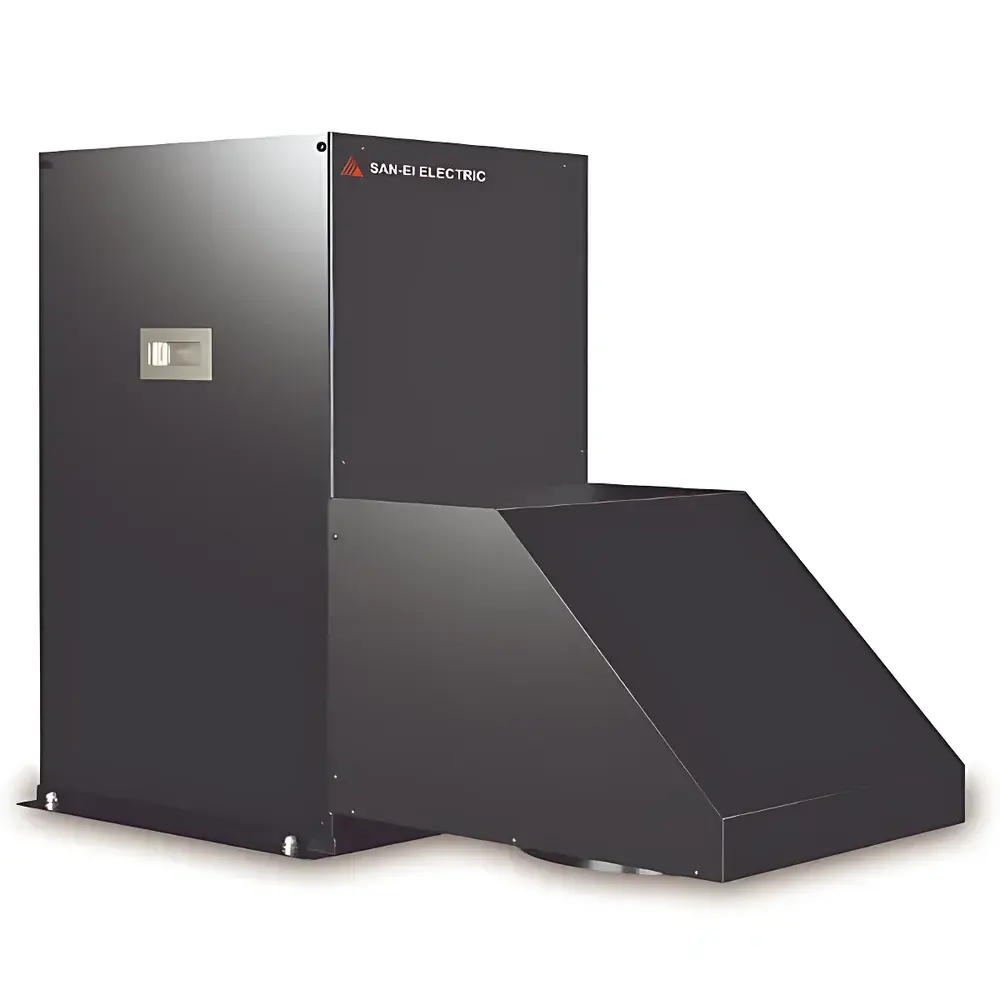
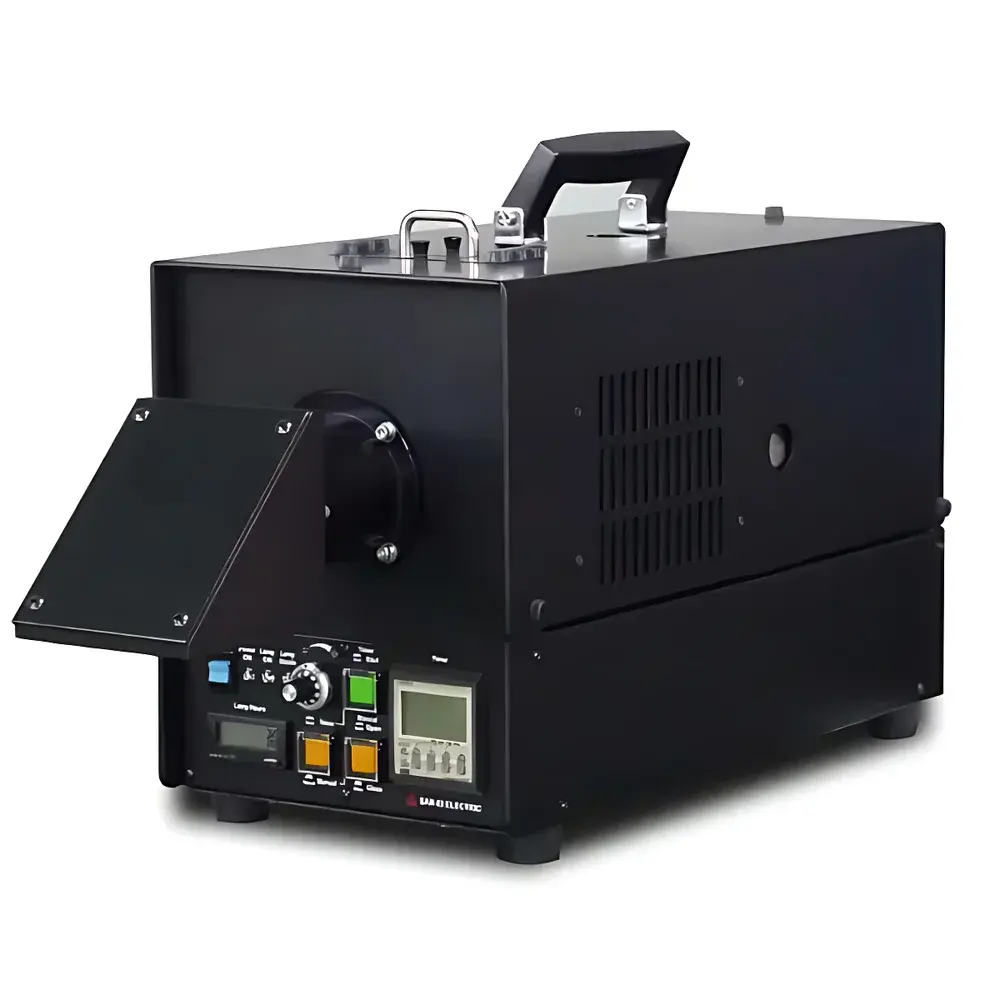
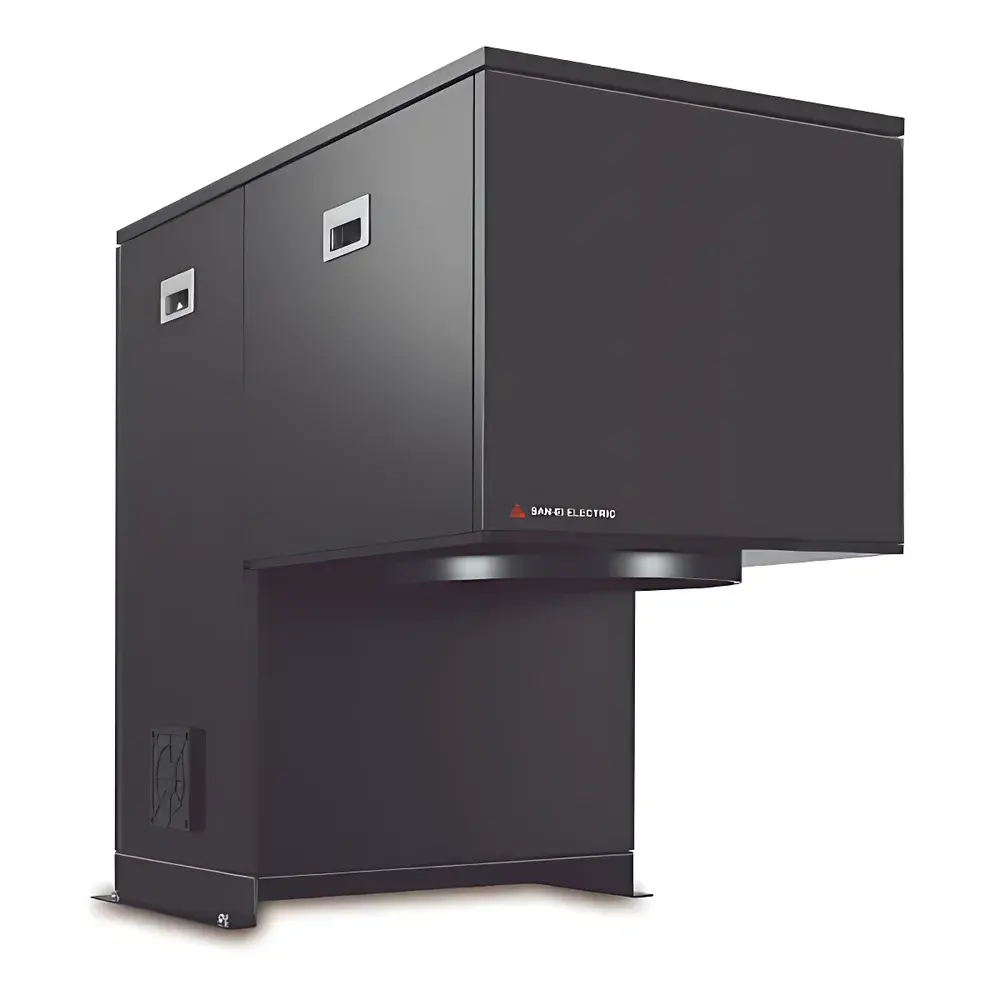
SAN-EI XES A+A+A Class Solar Simulator
| Brand | SAN-EI |
|---|---|
| Origin | Japan |
| Model | XES |
| Light Source | Xenon Arc Lamp (150–3000 W) |
| Illumination Area Options | 40×40 mm to 300×300 mm (customizable) |
| Spectral Match Class | A+A+A per JIS C 8912, IEC 60904-9:2007, and ASTM E927-05 |
| Irradiance Uniformity | <2% (Class A) |
| Temporal Instability | <1% over ≥1 h (Class A+) |
| Spectral Mismatch | ≤±12.5% (AM1.5G or AM0 filter, Class A+) |
| Nominal Irradiance | 1000 W/m² (adjustable ±30%) |
| Lamp Lifetime | 1000–2000 h |
| Shutter Timing Range | 0.1 s – 9990 h |
| Remote Control | Yes |
| Safety Features | Thermal cutoff, interlocked shutter, auto-cooling post-shutdown, lamp hour counter |
Overview
The SAN-EI XES A+A+A Class Solar Simulator is a high-precision, laboratory-grade illumination system engineered for photovoltaic (PV) device characterization, optoelectronic material evaluation, and photobiological research. It operates on the principle of stabilized xenon arc discharge, coupled with precision optical filtering and collimation optics, to replicate the spectral irradiance distribution of natural sunlight under standardized air mass conditions—primarily AM1.5G (terrestrial) and AM0 (space). Its A+A+A classification—verified against JIS C 8912, IEC 60904-9:2007, and ASTM E927-05—confirms simultaneous compliance in spectral match, spatial uniformity, and temporal stability: critical prerequisites for traceable, reproducible quantum efficiency and power conversion efficiency (PCE) measurements. Designed for integration into controlled-environment test benches, the XES delivers metrologically robust illumination across a wide range of active areas—from compact 40×40 mm samples to large-area 300×300 mm modules—enabling both fundamental research and pre-certification validation in academic, national metrology, and industrial R&D settings.
Key Features
- Triple-A certified performance: Spectral mismatch ≤±12.5%, irradiance non-uniformity <2%, and temporal instability <1% over ≥1 hour—meeting the most stringent international standards for solar simulation.
- Modular xenon lamp architecture with selectable power ratings (150 W to 3000 W), supporting scalable irradiance output and compatibility with diverse sample geometries and optical path requirements.
- Thermally managed optical chamber with integrated overheat protection, automatic post-operation fan cooling, and real-time lamp hour logging for predictive maintenance and GLP-compliant usage tracking.
- Programmable electronic shutter with timing resolution from 0.1 seconds to 9990 hours—enabling precise exposure control for aging studies, photoresponse kinetics, and light-soaking protocols.
- Adjustable beam orientation and customizable exit port configuration—facilitating integration with gloveboxes, environmental chambers, and in-situ spectroscopic platforms.
- Full remote operation via Ethernet/RS232 interface, supporting synchronization with source measurement units (SMUs), spectroradiometers, and data acquisition systems under LabVIEW, Python, or custom SCPI command sets.
Sample Compatibility & Compliance
The XES accommodates rigid and flexible substrates—including silicon wafers, perovskite thin films, organic photovoltaic (OPV) stacks, dye-sensitized solar cells (DSSCs), and microbial photobioreactors—across standardized and user-defined illumination apertures. Its optical design minimizes UV-induced degradation and IR heating effects through optimized cold mirror filtration and thermal management. All performance specifications are validated per internationally recognized photovoltaic calibration frameworks: IEC 60904-9 defines spectral match and uniformity criteria for PV testing; JIS C 8912 provides Japan-specific metrological benchmarks; and ASTM E927-05 establishes minimum requirements for spectral irradiance distribution, spatial uniformity, and temporal stability. The system supports traceable calibration using NIST-traceable reference cells (e.g., monocrystalline Si standard cells, 20×20 mm, KG5/KG2/quartz windowed), certified by accredited photovoltaic metrology laboratories.
Software & Data Management
The XES integrates seamlessly with industry-standard IV characterization software suites, supporting full I-V and P-V curve acquisition, dark/light J-V sweeps, bias-stability monitoring, maximum power point tracking (MPPT), and repeatability assessment. Software features include adjustable scan direction (forward/reverse), variable sweep rate (10 ms–10 s/point), real-time I-t transient logging, and automated light-intensity calibration routines. Audit trails, user access controls, and timestamped metadata capture align with FDA 21 CFR Part 11 and ISO/IEC 17025 requirements for regulated environments. Raw irradiance logs, lamp runtime records, and environmental sensor outputs (optional) are exportable in CSV, HDF5, or MATLAB-compatible formats for downstream statistical analysis and uncertainty budgeting per GUM (JCGM 100).
Applications
- Quantitative PCE evaluation of emerging photovoltaics: perovskite, OPV, quantum dot, and tandem solar cells.
- Spectral response mapping and external quantum efficiency (EQE) system excitation source.
- Photochemical reaction kinetics and photocatalytic activity screening under standardized illumination.
- Photobiological dose-response studies: algal growth, bacterial phototaxis, and plant photomorphogenesis assays.
- Accelerated light-soaking and operational stability testing (ISOS-L-1/L-2 protocols).
- Calibration and verification of reference solar cells, pyranometers, and spectroradiometers.
FAQ
What standards does the XES comply with for solar simulation classification?
It meets A+A+A requirements per JIS C 8912, IEC 60904-9:2007, and ASTM E927-05—covering spectral match, spatial uniformity, and temporal stability simultaneously.
Can the XES be used inside a nitrogen-filled glovebox?
Yes—via optional sealed optical feedthroughs and purge-compatible lamp housing, enabling inert-atmosphere device testing without compromising spectral fidelity.
Is spectral recalibration required after lamp replacement?
Yes—xenon lamp spectral output drifts with aging; post-replacement recalibration using a reference spectroradiometer and certified filter set is recommended for Class-A traceability.
Does the system support automated sequential testing of multiple samples?
When paired with an optional motorized XYZ stage and trigger-synchronized SMU, it enables unattended batch testing with programmable position indexing and data tagging.
What safety certifications does the XES carry?
It conforms to IEC 61010-1 (Safety Requirements for Electrical Equipment for Measurement, Control, and Laboratory Use) and includes interlocked enclosure, emergency stop, and thermal runaway protection circuits.






