
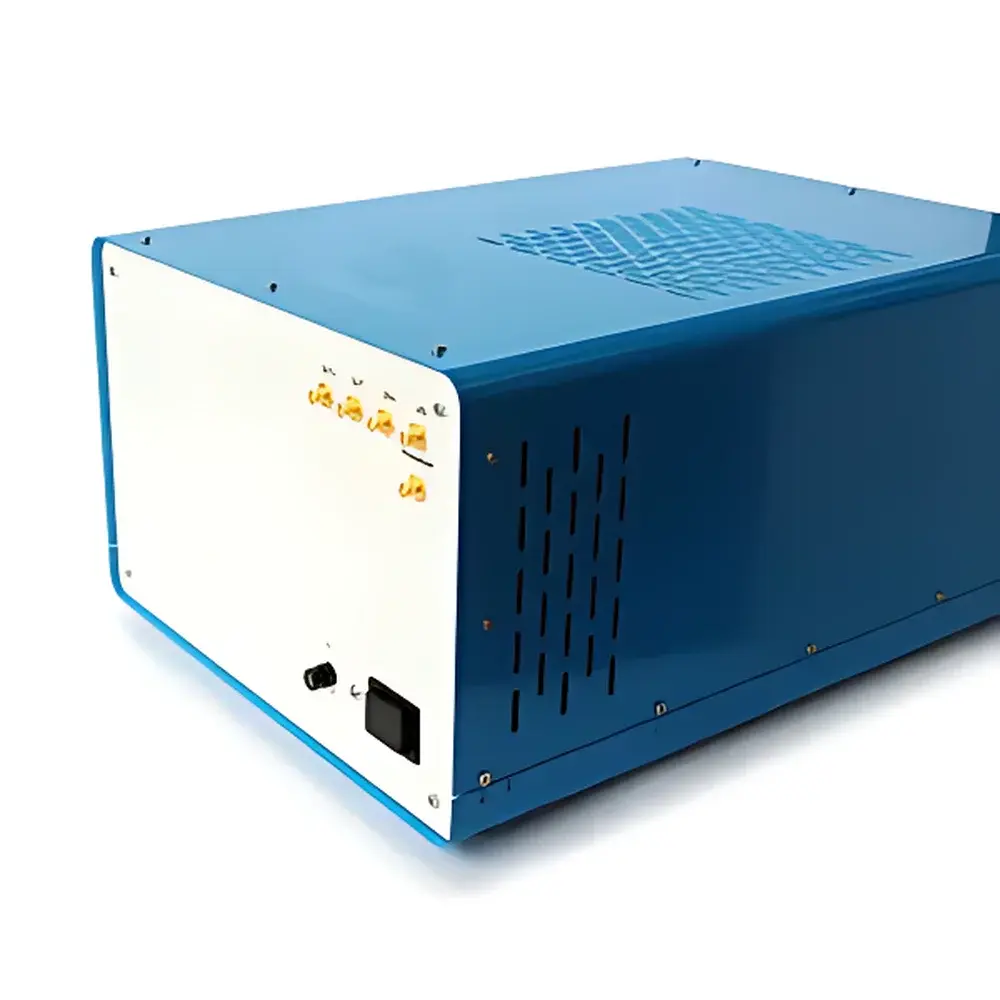
Fluxim TPC/TPV Carrier Mobility Measurement System for Organic Photovoltaics and OLEDs
| Brand | Fluxim |
|---|---|
| Origin | Switzerland |
| Model | TPC/TPV |
| Sampling Rate | 60 MS/s |
| Time Resolution | 18 ns |
| Frequency Range | 10 mHz – 10 MHz |
| Current Resolution | <100 pA |
| LED Rise Time | 100 ns |
| Current Range | ±100 mA |
| Voltage Range | ±12 V (optional ±60 V with SMU module) |
| Spectral Coverage (Multi-LED) | 360–1100 nm |
| Temperature Range (optional cryo/heating stage) | −120 °C to +150 °C |
Overview
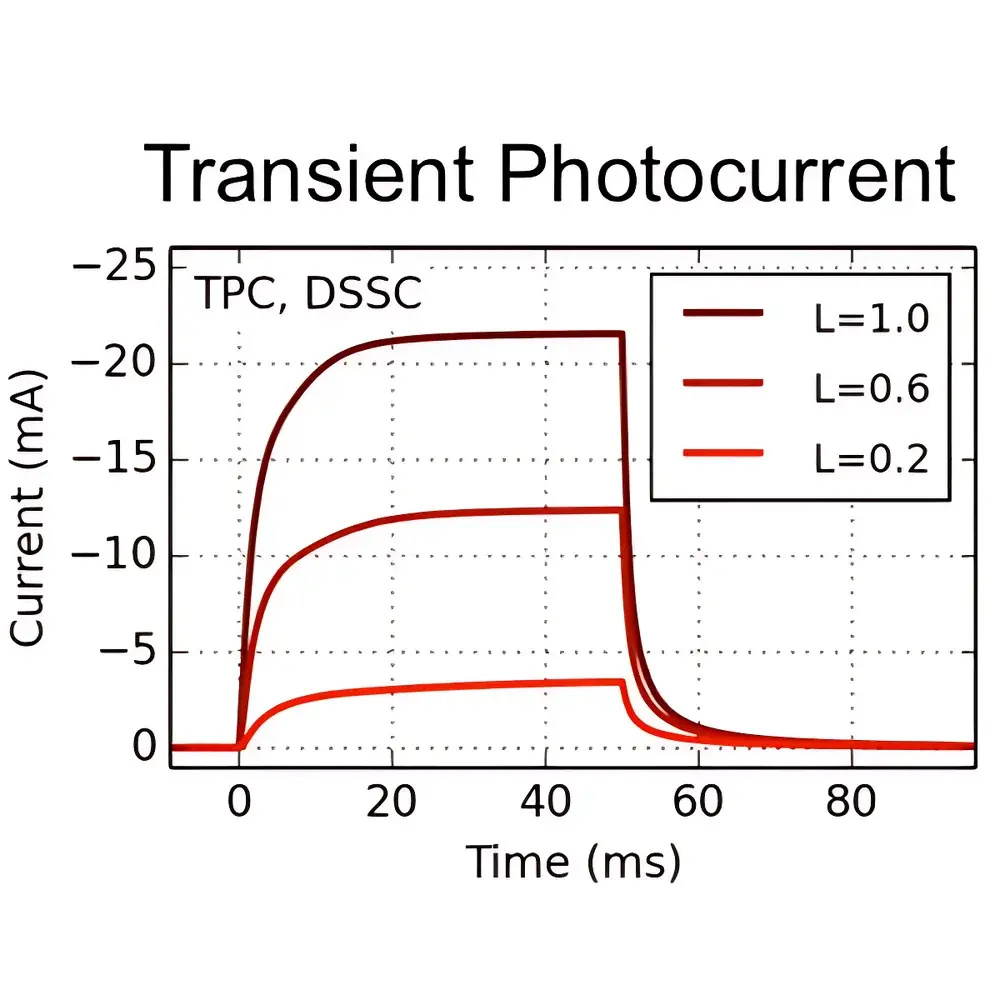
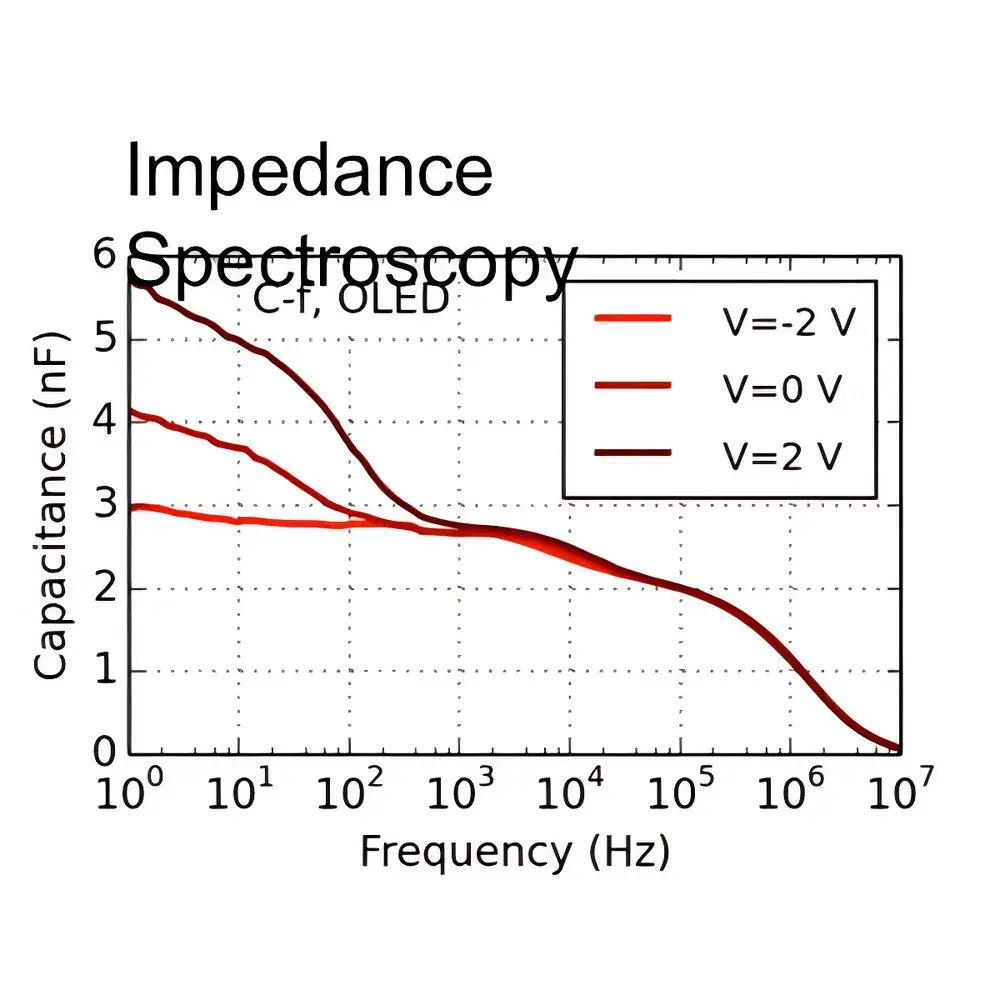
The Fluxim TPC/TPV Carrier Mobility Measurement System is a modular, high-temporal-resolution platform engineered for quantitative characterization of charge transport and recombination dynamics in organic semiconductors. Based on time-resolved optoelectronic techniques—including transient photocurrent (TPC), transient photovoltage (TPV), charge extraction by linearly increasing voltage (CELIV), impedance spectroscopy (IS), and intensity-modulated photocurrent/voltage spectroscopy (IMPS/IMVS)—the system enables rigorous extraction of carrier mobility, lifetime, trap density, doping concentration, built-in potential, and recombination coefficients under controlled illumination, bias, and temperature conditions. Its architecture supports both photovoltaic (OPV, perovskite PV) and light-emitting (OLED, PeLED) device architectures, delivering traceable, reproducible data aligned with ASTM F2848 (Standard Guide for Characterization of Organic Photovoltaic Devices) and ISO 18597 (Photovoltaic devices—Measurement of charge carrier mobility). The system operates on the physical principles of drift-diffusion transport, capacitive charge accumulation, and non-radiative/radiative recombination kinetics—providing direct access to parameters critical for device optimization and structure–property correlation.
Key Features
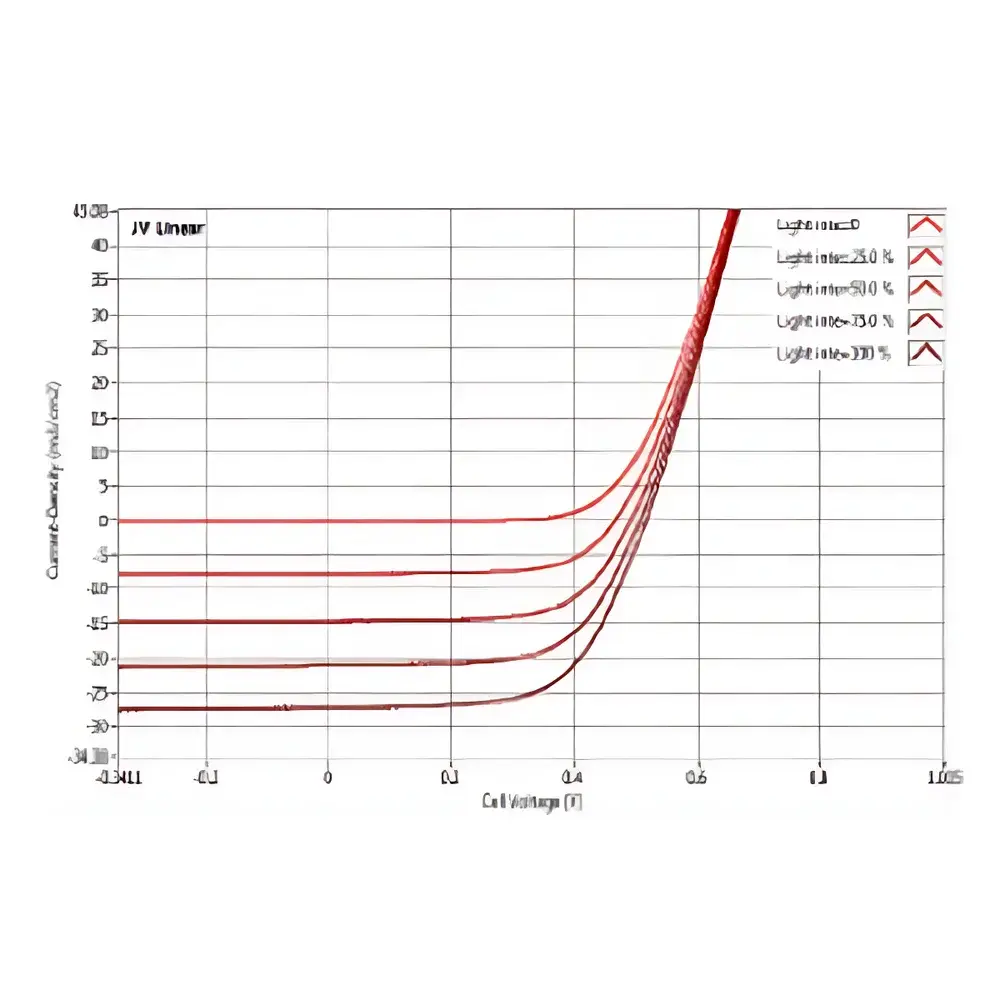
- Multi-mode operation: DC J-V, AC impedance, and transient optoelectronic measurements (TPC, TPV, CELIV variants, IMPS/IMVS, DLTS, TEL) within a single integrated platform
- Ultra-high temporal fidelity: 18 ns time resolution and 60 MS/s sampling rate enable resolution of sub-microsecond carrier dynamics in low-mobility organic films
- Wide dynamic range: Current measurement from <100 pA to ±100 mA; optional SMU extension supports ±60 V / 1 pA resolution for deep-level capacitance and high-resistance layer analysis
- Programmable multi-wavelength excitation: Integrated LED array (360–1100 nm) with <100 ns rise time ensures spectrally resolved, intensity-controlled photoexcitation for EQE-correlated transient studies
- Thermal control compatibility: Optional cryogenic/heating stage (−120 °C to +150 °C) enables Arrhenius-based activation energy analysis of trap emission and mobility temperature dependence
- Modular configuration: Dedicated solar cell or OLED measurement modes; optional spectrometer integration for electroluminescence spectral analysis and lifetime mapping
Sample Compatibility & Compliance
The TPC/TPV system accommodates standard device geometries including ITO/PEDOT:PSS/active-layer/Ca/Al, glass/ITO/ZnO/Perovskite/Spiro-OMeTAD/Au, and OLED stacks (e.g., ITO/HIL/HTL/EML/ETL/Cathode). It supports rigid and flexible substrates up to 50 mm × 50 mm. All measurement protocols are designed to comply with GLP-aligned laboratory practices. Data acquisition and post-processing meet FDA 21 CFR Part 11 requirements for electronic records and signatures when deployed with audit-trail-enabled software configuration. Traceability to NIST-traceable current and voltage standards is maintained via factory calibration certificates. The system supports ISO/IEC 17025-compliant uncertainty budgets for mobility and lifetime values derived from SCLC, Photo-CELIV, and TPV decay fitting routines.
Software & Data Management
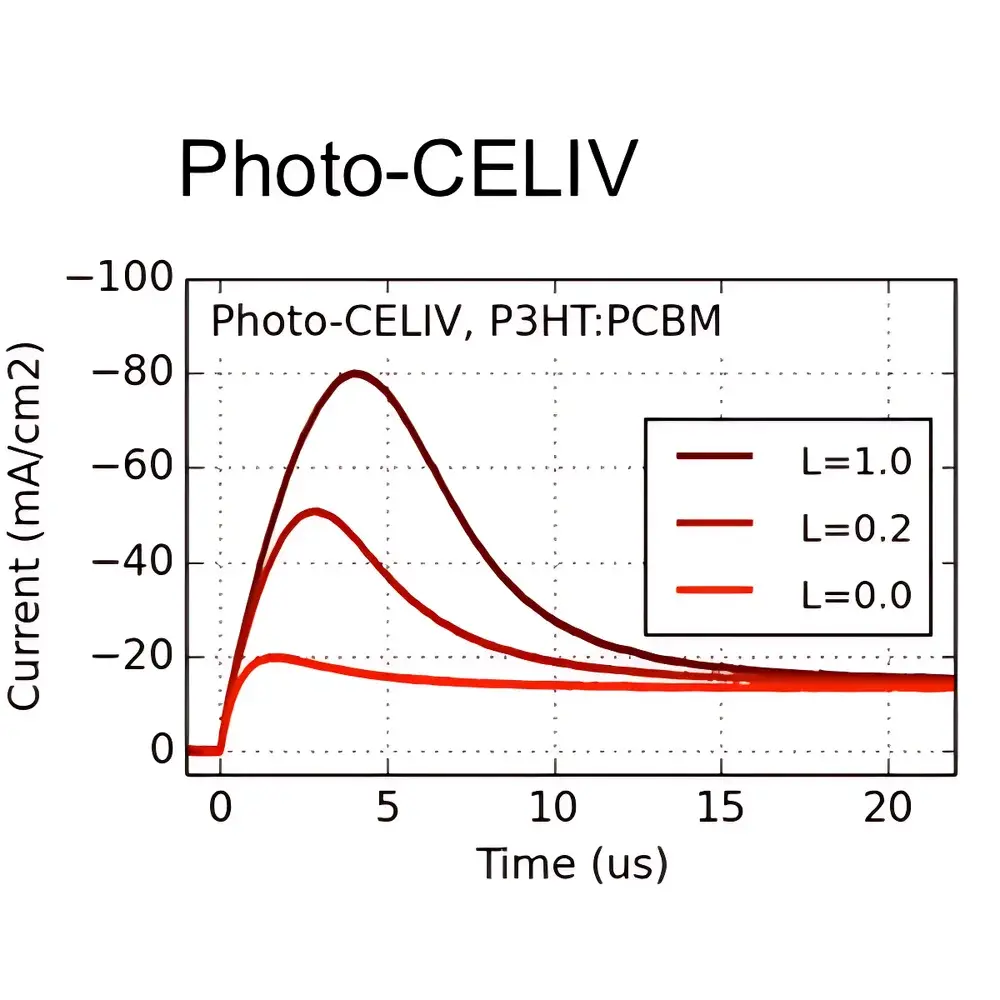
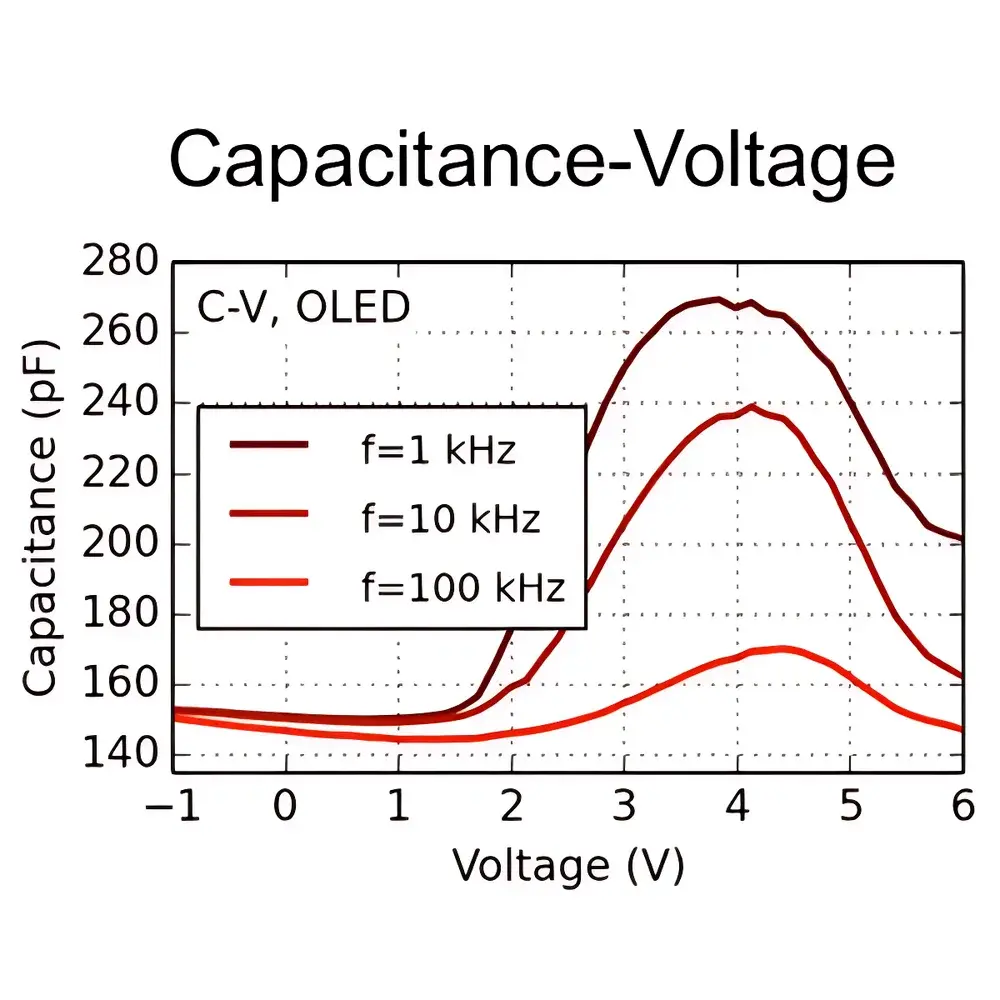
Fluxim’s proprietary Analysis Studio software provides unified control, real-time visualization, and model-based parameter extraction. It includes pre-validated fitting templates for SCLC mobility, TPV biexponential decay (τ₁, τ₂), Photo-CELIV mobility extraction (μ = d²/(2·tₘₐₓ·V), where d = active layer thickness), C–V doping profiling, and IS equivalent circuit modeling (Rs, Rct, Cμ, CPE). Raw transient datasets are stored in HDF5 format with embedded metadata (timestamp, illumination intensity, bias history, temperature). Batch processing workflows support automated parameter mapping across multiple light intensities or temperatures. Export options include CSV, MATLAB .mat, and standardized JSON-LD for LIMS integration. Software updates follow a documented version-control policy compliant with ICH Q9 risk management principles.
Applications
- Quantitative comparison of hole/electron mobility in bulk heterojunction OPVs using SCLC and Photo-CELIV
- Discrimination between monomolecular (trap-assisted) and bimolecular (Langevin-type) recombination via TPV intensity dependence and Delaytime-CELIV
- Determination of trap depth and density distribution in perovskite absorbers using DLTS and temperature-dependent C–f spectroscopy
- Correlation of interfacial dipole formation with built-in voltage shifts measured by C–V under inert atmosphere
- Assessment of charge injection barriers at HTL/active-layer interfaces via dark-injection transients in single-carrier OLED test structures
- Time-resolved electroluminescence (TEL) analysis of triplet exciton lifetimes and emissive zone localization in phosphorescent OLEDs
- Validation of drift-diffusion simulations (e.g., SETFOS, driftfusion) using experimentally extracted μ, τ, and n₀ as input parameters
FAQ
What carrier mobility extraction methods does the TPC/TPV system support?
SCLC (space-charge-limited current), Photo-CELIV, Dark-CELIV, Injection-CELIV, MIS-CELIV, and transient electroluminescence (TEL)-based mobility derivation—all implemented with physics-based fitting models and uncertainty quantification.
Can the system measure both OPV and OLED devices without hardware reconfiguration?
Yes—modular firmware selection and automated sequence switching allow seamless transition between photovoltaic (TPC/TPV/IMPS) and electroluminescent (TEL, I–V–L, EQE) measurement protocols.
Is temperature-dependent mobility analysis supported?
Yes, with the optional cryo-heating stage, users can acquire mobility vs. temperature datasets for Arrhenius or Meyer-Neldel analysis, fully synchronized with electrical and optical stimuli.
How is data integrity ensured during long-duration transient measurements?
Hardware-triggered acquisition, onboard memory buffering, and checksum-verified HDF5 storage prevent data loss; all sessions log environmental metadata (ambient temperature, humidity, power supply stability) for retrospective QA.
Does the software provide compliance-ready reporting for regulatory submissions?
Yes—PDF reports include instrument calibration status, measurement uncertainty estimates, raw data references, and full audit trails meeting GLP, GMP, and ISO 17025 documentation requirements.



