
SAN-EI RLES-500S Large-Area LED Solar Simulator
| Brand | SAN-EI |
|---|---|
| Origin | Japan |
| Model | RLES-500S |
| Illumination Mode | Steady-State |
| Effective Irradiation Area | 500 mm × 500 mm |
| Spectral Range | 300–1200 nm |
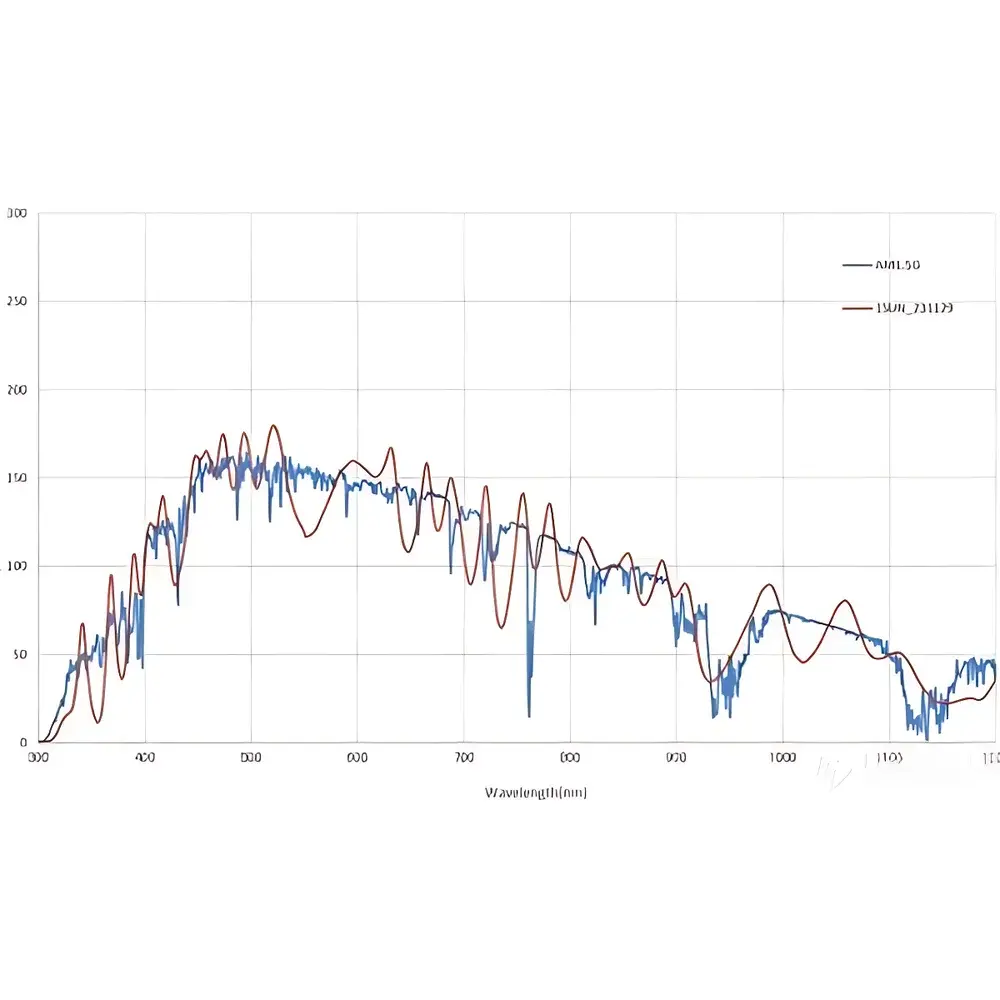
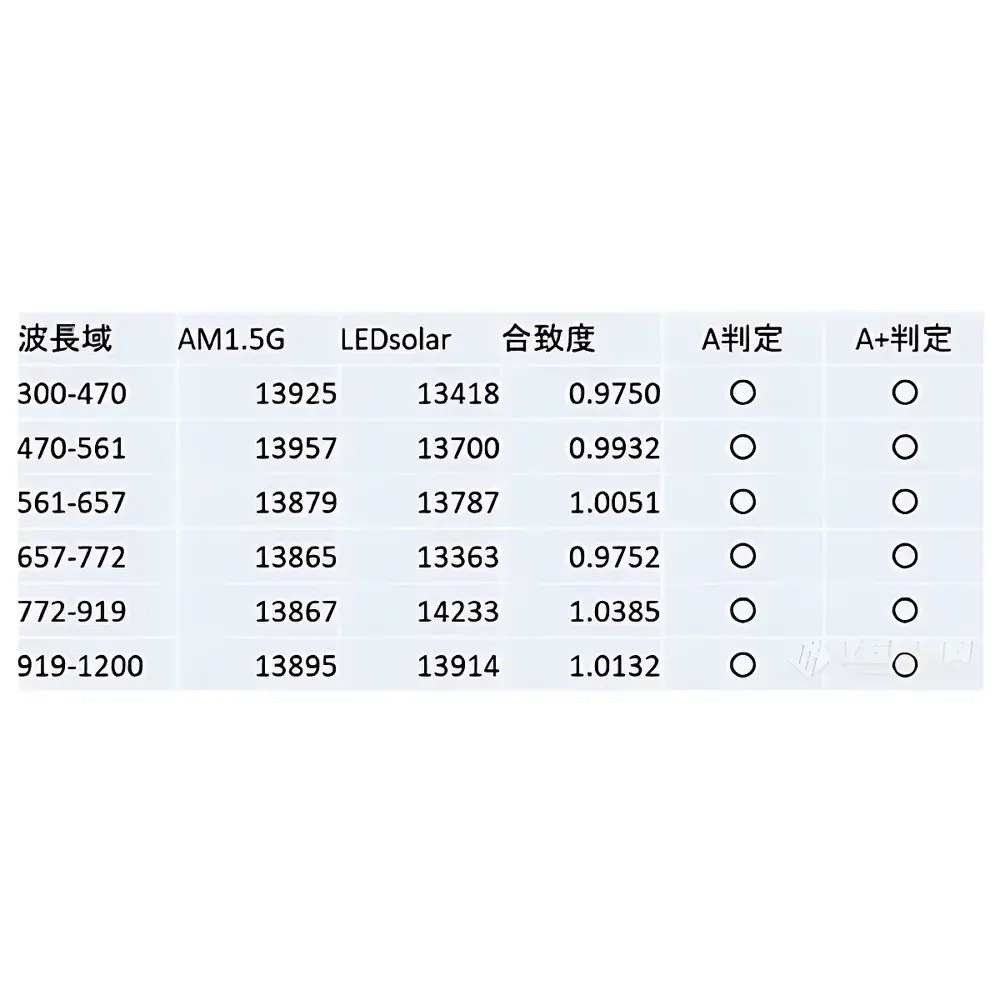
| Spectral Match (AM1.5G) | < ±12.5% (Class A+) |
| Irradiance Uniformity | < 2% (Class A) |
| Temporal Instability (LTI) | < 1% (Class A+) |
| Initial Irradiance | 1.3 sun |
| LED Lifetime | 20,000 h |
| Working Distance | 510 mm (for Class A uniformity) |
| Cooling Method | Air-cooled |
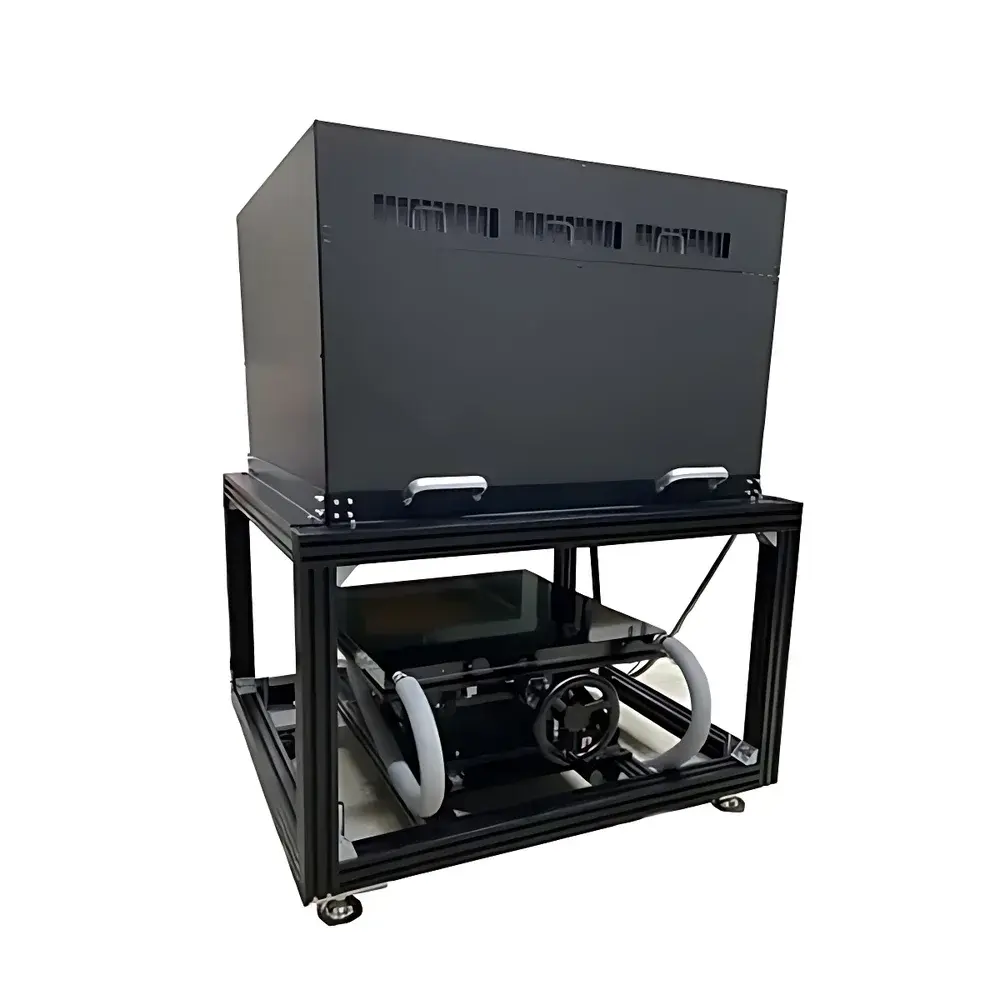
| Light Chamber Dimensions | W 900 × H 780 × D 1177 mm |
| Power Supply Dimensions | W 652 × H 693 × D 786 mm |
| Optional Window Glass | KG2 / KG5 / BK5 |
Overview
The SAN-EI RLES-500S Large-Area LED Solar Simulator is an engineered optical test platform designed for high-fidelity photovoltaic (PV) device characterization under controlled, spectrally accurate illumination. It employs a spatially and temporally stable array of high-power LEDs to replicate the AM1.5G reference solar spectrum (300–1200 nm), enabling quantitative evaluation of solar cell performance in accordance with IEC 60904-9 Ed.3. Unlike xenon-based or metal-halide simulators, the RLES-500S leverages solid-state LED technology to deliver exceptional long-term spectral stability, minimal thermal load on samples, and precise digital control over irradiance intensity (10–100%) and spectral weighting—critical for reliable measurement of emerging PV technologies including perovskite, organic, tandem, and thin-film devices.
Key Features
- Large uniform irradiation field of 500 mm × 500 mm—optimized for full-area testing of commercial-size solar cells and mini-modules.
- A+ spectral match (< ±12.5% mismatch across AM1.5G bands) and Class A irradiance uniformity (< 2% spatial non-uniformity), validated per IEC 60904-9 Ed.3 requirements.
- Steady-state illumination mode with < 1% long-term temporal instability (LTI), ensuring reproducible IV measurements over extended test durations.
- Digital real-time irradiance feedback control loop, integrating a calibrated reference photodiode and closed-loop driver circuitry to maintain setpoint accuracy independent of ambient temperature drift or LED aging.
- Software-controllable spectral tuning capability—enabling user-defined spectral weightings for specialized applications such as spectral response analysis or multi-junction cell biasing.
- Air-cooled thermal management architecture eliminating liquid cooling infrastructure and minimizing convective interference during sensitive low-light or temperature-dependent measurements.
- Integrated PT100 sensor mounted at sample plane for direct, traceable temperature monitoring—essential for temperature-corrected efficiency reporting per IEC 60891.
- Modular optical window options (KG2, KG5, BK5) to accommodate spectral filtering, UV blocking, or IR transmission requirements without compromising beam homogeneity.
Sample Compatibility & Compliance
The RLES-500S supports characterization of all mainstream and next-generation photovoltaic technologies, including crystalline silicon (c-Si), amorphous/microcrystalline silicon (a-Si/nc-Si/mc-Si), CdTe, CIGS, dye-sensitized (DSSC), organic/polymer, perovskite, and monolithic tandem cells. Its large active area accommodates standard 20 mm × 20 mm reference cells (monocrystalline Si, NIST-traceable) and custom fixtures for wafer-level or module-segment testing. The system complies fully with IEC 60904-9 Ed.3 for simulator classification and supports GLP/GMP-aligned workflows through audit-ready calibration documentation issued by accredited metrology institutes. All optical calibrations—including spectral irradiance distribution, spatial uniformity mapping, and temporal stability validation—are performed using NIST-traceable instrumentation and archived with certificate-of-conformance data.
Software & Data Management
The integrated PV characterization software suite provides comprehensive control and analysis functionality aligned with international PV testing standards. It enables automated IV curve acquisition under illumination and dark conditions, including forward/reverse voltage sweeps, multi-cycle repeatability studies, and maximum power point tracking (MPPT) under stabilized bias. Real-time calculation and export of key parameters—Voc, Isc, Jsc, FF, η, Rs, Rsh, Pmax, Vmp, Imp—are performed with uncertainty propagation based on instrument specifications and measurement conditions. Data is exportable in CSV, TXT, RTF, and JPG formats; raw datasets include timestamped metadata (temperature, irradiance, spectral weighting, sweep direction, integration time). The software supports 21 CFR Part 11-compliant user access controls, electronic signatures, and audit trail logging for regulated environments.
Applications
- Primary certification testing of laboratory-scale and pilot-line PV devices prior to outdoor exposure or third-party validation.
- Stability assessment of perovskite and organic solar cells under controlled illumination and thermal bias (e.g., ISOS-L-1 or ISOS-D-1 protocols).
- Quantitative comparison of spectral response between single-junction and multi-junction architectures using tunable LED weighting.
- Development and validation of MPPT algorithms for power electronics integration.
- Temperature-dependent efficiency mapping via synchronized thermal chamber coupling and in situ PT100 feedback.
- Calibration transfer between reference cells and production-line flash testers using matched spectral and spatial profiles.
FAQ
What standards does the RLES-500S comply with for solar simulator classification?
It meets IEC 60904-9 Ed.3 requirements for Class A+ spectral match, Class A uniformity, and Class A+ temporal stability.
Can the system be used for accelerated lifetime testing?
Yes—its steady-state operation, real-time irradiance control, and integrated temperature sensing support ISOS-compliant stability protocols when paired with environmental chambers.
Is spectral recalibration required after installation?
Initial factory calibration is provided with traceable certificates; periodic verification (recommended annually) ensures continued compliance with IEC 60904-9.
Does the software support automated batch testing of multiple samples?
Yes—the sequence editor allows programmable test routines including auto-positioning (with optional motorized stage), parameter logging, and pass/fail threshold evaluation.
What reference cells are compatible with the RLES-500S?
Standard 20 mm × 20 mm monocrystalline silicon reference cells with NIST-traceable calibration certificates are supported; custom cell holders can be supplied upon request.





