
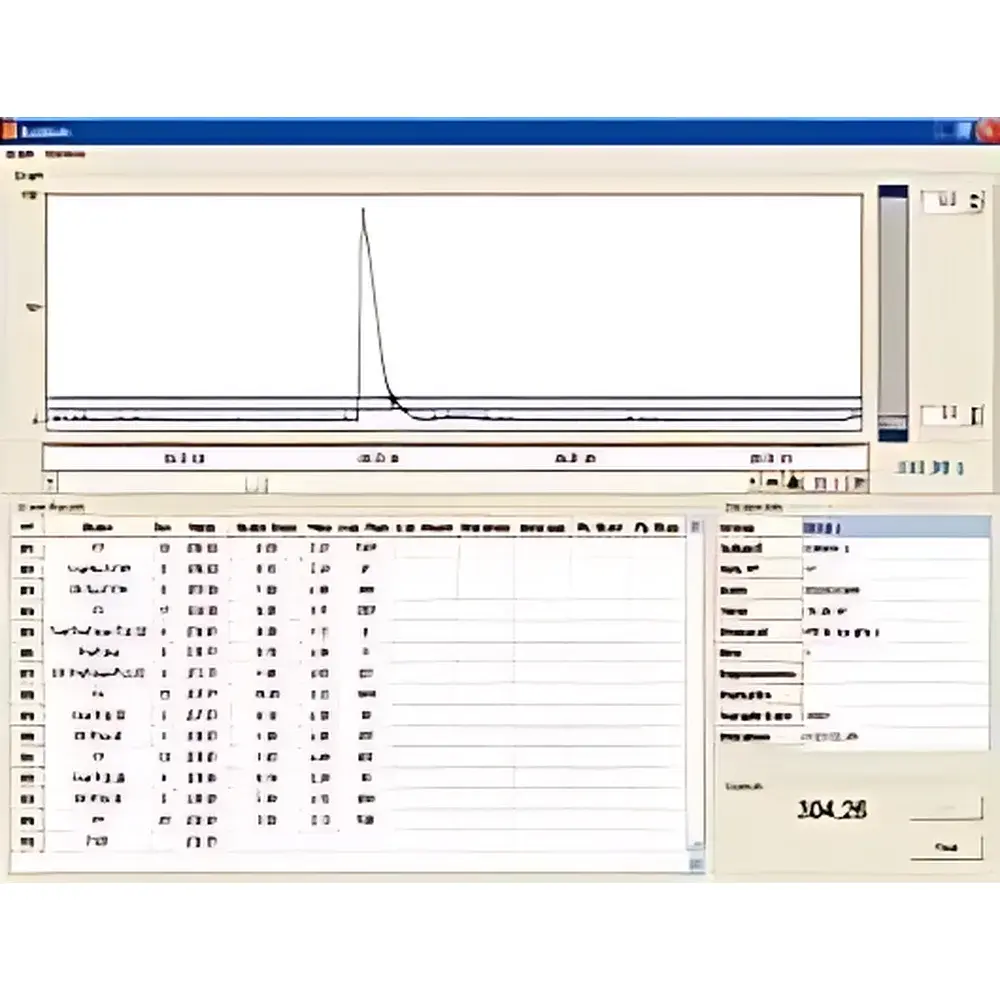
Harvard Apparatus Packwin 2.0 Behavioral Conditioning Software Platform
| Brand | Harvard Apparatus |
|---|---|
| Origin | USA |
| Manufacturer Type | Authorized Distributor |
| Product Origin | Imported |
| Model | Packwin 2.0 |
| Price Range | USD 1,400 – 7,000 |
Overview
Packwin 2.0 is a modular, PC-based behavioral experiment control and data acquisition software platform engineered for precision in preclinical behavioral neuroscience research. Developed by Panlab (now part of Harvard Apparatus) and distributed globally, it implements deterministic real-time event scheduling and state-machine logic to orchestrate stimulus delivery, sensor input acquisition, and operant response monitoring across standardized behavioral test chambers. The software operates on Windows OS and communicates with hardware via TTL, USB, or serial interfaces—enabling synchronized control of visual (LED, houselight), auditory (tone generators, white noise), tactile (grid shock, lever press), and reward delivery (liquid dipper, pellet dispenser) subsystems. Its architecture adheres to GLP-compliant experimental traceability principles, supporting timestamped, audit-ready event logs essential for regulatory submissions and reproducible study design.
Key Features
- State-Editor graphical programming environment: Enables drag-and-drop construction of hierarchical state machines with conditional branching, nested loops, timers, and global state variables—eliminating the need for scripting while preserving full experimental flexibility.
- Modular experiment library: Includes validated protocols for fear conditioning (contextual & cued), active/passive avoidance, operant learning (FR, VR, FI, VI, DRL), 5-choice serial reaction time (5-CSRTT), autoshaping, DMTS (delayed matching-to-sample), and conflict-based paradigms (e.g., Vogel conflict test).
- Cross-manufacturer hardware compatibility: Native support for Panlab chambers (Fear Conditioning Chamber, Shuttle Box, Operant Chambers, 5/9-Hole Box, Drinkometer), plus seamless integration with Coulbourn Instruments and MED Associates hardware via standardized I/O mapping and protocol translation layers.
- Custom module (PACKWIN-CS): Allows definition of non-standard reinforcement schedules, dynamic stimulus contingencies, multi-phase discrimination tasks, and hybrid paradigms combining classical and operant conditioning elements.
- Batch analysis suite: Supports automated parsing of session logs, group-level statistics (ANOVA, t-test, RM-ANOVA), latency distributions, response rate histograms, and export to CSV, Excel, or MATLAB-compatible formats.
- Guided workflow interface: Context-sensitive toolbar prompts guide users through chamber configuration, session parameterization, calibration validation, and post-session data validation—reducing operator-induced protocol deviation.
Sample Compatibility & Compliance
Packwin 2.0 is validated for use with rodents (mice and rats) in standard vivarium environments (ISO 14644-1 Class 7–8 air quality, ambient temperature 20–24°C, 12:12 light-dark cycle). All timing operations are hardware-synchronized to microsecond resolution using internal quartz oscillators, ensuring temporal fidelity compliant with NIH Guide for the Care and Use of Laboratory Animals and AAALAC International standards. Data files include embedded metadata (subject ID, experimenter, date/time, chamber ID, firmware version) and support FDA 21 CFR Part 11–compliant electronic signatures when deployed with validated Windows domain authentication and audit trail logging.
Software & Data Management
The software employs a relational SQLite database backend for structured storage of raw events, session parameters, and subject metadata. All data exports retain native timestamps and event codes per the Panlab Event Code Standard (v3.2), facilitating interoperability with third-party analysis tools such as EthoVision XT, ANY-maze, and custom Python/R pipelines. Built-in statistical calculator supports descriptive metrics (response rate, latency, accuracy, omission/commission errors) and inferential tests including repeated-measures ANOVA with Greenhouse–Geisser correction. Data visualization includes interactive line plots, cumulative response curves, heatmaps for spatial behavior, and configurable pivot tables—all exportable as publication-ready SVG or PNG.
Applications
Packwin 2.0 serves core applications in translational neuropsychopharmacology, behavioral genetics, and cognitive neuroscience. It is routinely deployed in studies evaluating dopaminergic/noradrenergic modulation of attention and impulsivity (e.g., 5-CSRTT under methylphenidate challenge), amygdala-dependent associative learning deficits in transgenic models of Alzheimer’s disease, GABAergic anxiolytic effects in Vogel conflict assays, and cortico-striatal plasticity during reversal learning. Its deterministic timing engine and cross-platform hardware abstraction layer make it suitable for multi-site collaborative studies requiring protocol harmonization across laboratories using heterogeneous chamber vendors.
FAQ
Is Packwin 2.0 compatible with Windows 11 and 64-bit systems?
Yes—Packwin 2.0 v2.0.12 and later support Windows 10/11 (64-bit) with .NET Framework 4.8 and Visual C++ Redistributable 2015–2022.
Can I import legacy Packwin 1.x experiment files?
Yes—backward compatibility is maintained via automatic conversion wizard; all state logic, timing definitions, and I/O mappings are preserved.
Does Packwin 2.0 support networked multi-chamber experiments?
Yes—via optional Packwin Network Server license, enabling centralized control of up to 32 chambers across Ethernet-connected PCs with synchronized clock drift compensation.
Is source code or API access available for custom integrations?
Harvard Apparatus provides documented COM interface and DLL SDK for MATLAB, Python (pywin32), and LabVIEW integration under NDA and commercial licensing agreement.
What validation documentation is supplied for regulated environments?
IQ/OQ documentation packages—including installation checklist, functional verification scripts, timing accuracy reports (NIST-traceable oscilloscope validation), and electronic record integrity assessment—are available upon request for GCP/GLP/GMP compliance.





