
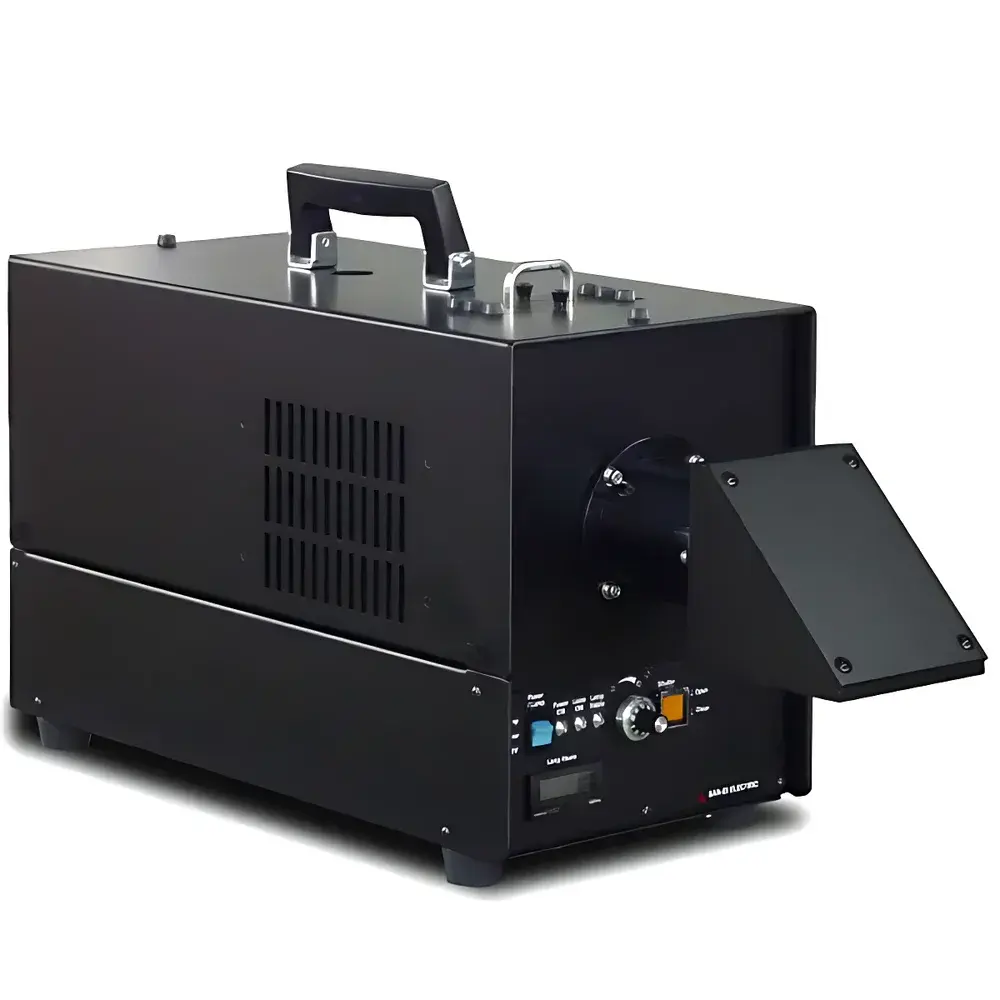
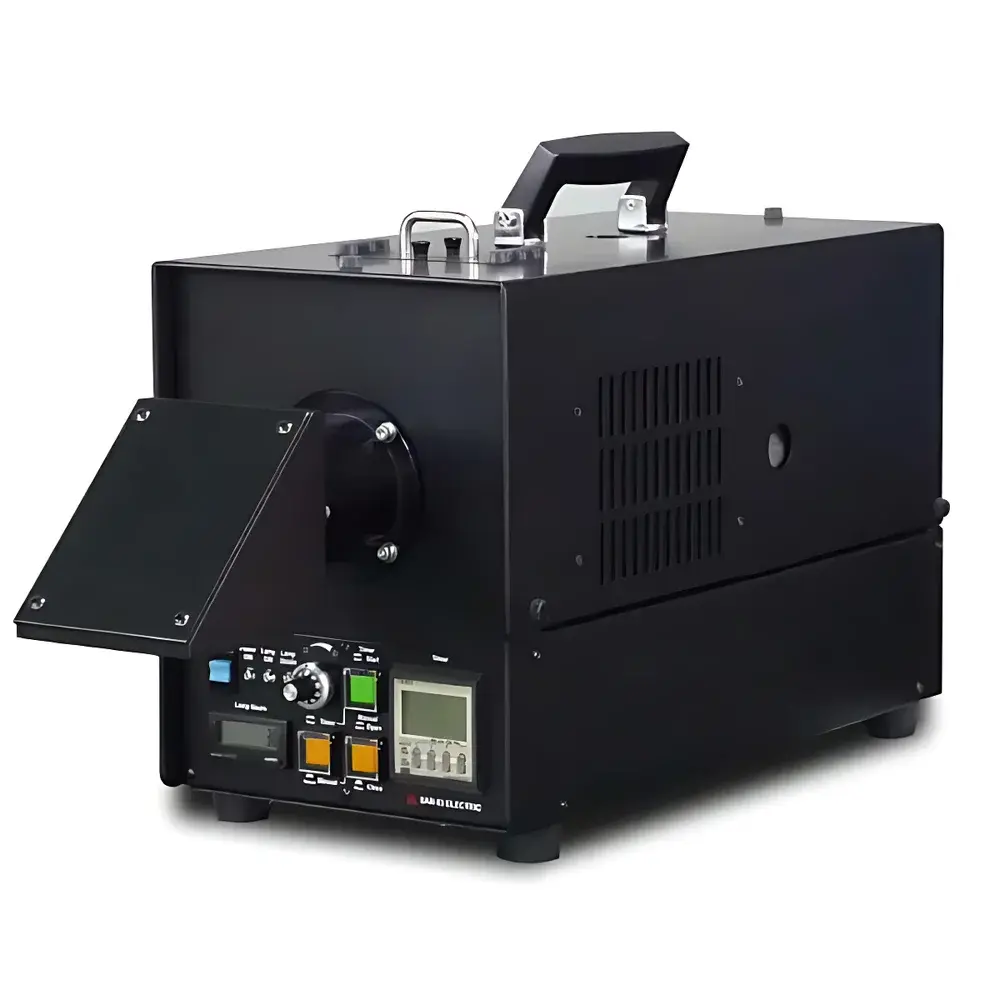
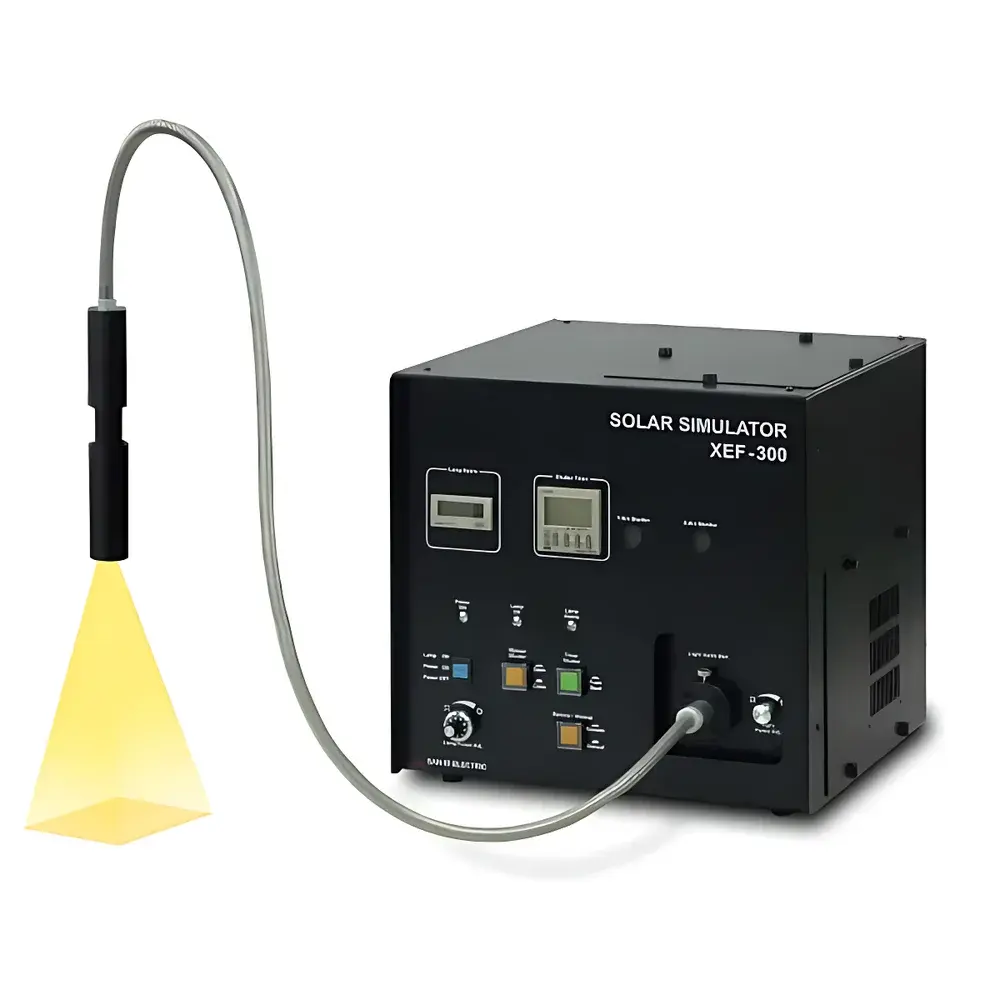
SAN-EI XES-50S2 A+A+A Class Steady-State Solar Simulator
| Brand | SAN-EI |
|---|---|
| Origin | Japan |
| Model | XES-50S2 |
| Illumination Mode | Steady-State |
| Spectral Match (AM1.5G) | ≤±12.5% (A+ Class) |
| Temporal Instability | <1% (A+ Class) |
| Spatial Uniformity | <2% (A Class) |
| Effective Irradiance Area | 50 mm × 50 mm |
| Nominal Irradiance | 1000 W/m² (1-sun) |
| Adjustable Irradiance Range | ±30% |
| Light Source | 150 W Xenon Arc Lamp |
| Lamp Lifetime | 2000 h (average) |
| Beam Direction | Adjustable for Glovebox Integration |
| Compliance | ASTM E927-23, IEC 60904-9 Ed. 3, JIS C 8912 |
Overview
The SAN-EI XES-50S2 is a high-fidelity, steady-state solar simulator engineered for photovoltaic (PV) and optoelectronic research under laboratory conditions. It operates on the principle of broadband xenon arc lamp emission, coupled with precision optical filtering and beam homogenization to replicate the AM1.5G reference solar spectrum (300–1200 nm) with A+A+A classification per IEC 60904-9 Ed. 3, ASTM E927-23, and JIS C 8912. Unlike pulsed or flash-type simulators, the XES-50S2 delivers continuous, stable irradiance—enabling reliable current–voltage (I–V) characterization, quantum efficiency (QE), incident photon-to-current efficiency (IPCE), and long-duration stability testing of organic photovoltaics (OPV), perovskite solar cells (PSCs), dye-sensitized solar cells (DSSCs), and photo-biological samples. Its compact 50 mm × 50 mm uniform irradiation field is optimized for small-area device evaluation while maintaining metrological traceability to primary reference standards.
Key Features
- A+A+A spectral match: Spectral deviation ≤±12.5% across critical wavelength bands (300–400 nm, 400–500 nm, 500–600 nm, 600–700 nm, 700–800 nm, 800–900 nm, 900–1100 nm, 1100–1200 nm) relative to AM1.5G, verified per IEC 60904-9 Annex A.
- High temporal stability: Irradiance fluctuation <1% over 10 minutes (A+ class), monitored in real time via integrated photodiode feedback loop with auto-compensation.
- Exceptional spatial uniformity: <2% non-uniformity across the 50 mm × 50 mm test plane (A class), confirmed by NIST-traceable scanning radiometer mapping.
- Glovebox-compatible mechanical design: Fully adjustable optical axis and lamp housing orientation enable seamless integration into inert-atmosphere gloveboxes without compromising beam alignment or thermal management.
- Integrated lamp lifetime counter: Automatic hour-meter logging ensures scheduled maintenance and calibration intervals aligned with ISO/IEC 17025-compliant quality assurance protocols.
- Modular irradiance control: Digital intensity regulation from 70% to 130% of 1-sun (1000 W/m²), calibrated using a certified reference cell traceable to NREL or AIST.
Sample Compatibility & Compliance
The XES-50S2 supports standardized evaluation of single-junction and multi-junction PV devices, including silicon, CIGS, CdTe, OPV, and halide perovskites. Its 50 mm × 50 mm uniform field accommodates standard 20 mm × 20 mm reference cells (monocrystalline Si, KG5/KG2/quartz window options), as well as custom substrates up to 45 mm × 45 mm. All optical components comply with RoHS directives and are assembled in a cleanroom-class environment. The system meets requirements for GLP-compliant lab documentation, supporting audit-ready records for ISO/IEC 17025 accreditation and FDA 21 CFR Part 11–aligned electronic data integrity when paired with optional source-measure units (e.g., Keithley 2400/2600 series) and validated software.
Software & Data Management
The bundled IV analysis software provides full compliance with IEC 61215 and IEC 61646 test sequences. Core functionalities include forward/reverse I–V sweep, real-time I–t transient monitoring, maximum power point tracking (MPPT), bias-stability assessment (e.g., light-soaking, VOC decay), and automated repeatability testing (≥10 consecutive sweeps). All measurements embed timestamped metadata (irradiance value, ambient temperature, lamp hours, filter status) and support export in CSV, Excel, and HDF5 formats. Software validation reports—including uncertainty budgets per GUM (JCGM 100:2008)—are available upon request. Optional 21 CFR Part 11 modules provide electronic signatures, audit trails, and role-based access control for regulated environments.
Applications
- Quantitative performance benchmarking of emerging PV technologies under standardized illumination.
- Photoelectrochemical cell characterization in controlled atmospheres (N₂, Ar, O₂).
- Spectral response mapping and external quantum efficiency (EQE) calibration.
- Light-induced degradation (LID) and UV-stability studies under constant irradiance.
- Photobiological assays requiring spectrally defined, non-pulsed illumination (e.g., plant photomorphogenesis, microbial phototaxis).
- Calibration of pyranometers, reference cells, and spectroradiometers against primary standards.
FAQ
What standards does the XES-50S2 comply with for solar simulation classification?
It meets A+A+A requirements per IEC 60904-9 Ed. 3 (2020), ASTM E927-23, and JIS C 8912, verified through third-party spectral mismatch, temporal instability, and spatial uniformity testing.
Can the XES-50S2 be used inside an argon-filled glovebox?
Yes—the optical head features 3-axis angular adjustment and a sealed, low-outgassing lamp housing compatible with Class 1000 gloveboxes; cooling airflow is routed externally via flexible ducting.
Is spectral recalibration required after lamp replacement?
Yes—each new xenon lamp must undergo full spectral match verification using a calibrated spectroradiometer; SAN-EI provides factory recalibration services with NIST-traceable certificates.
What reference cells are supported for irradiance calibration?
Certified monocrystalline silicon reference cells (20 mm × 20 mm, KG5/KG2/quartz windows) compliant with IEC 60904-2, supplied with AIST/NREL-traceable calibration certificates.
Does the system support automated long-term stability testing?
Yes—via programmable I–t acquisition at user-defined intervals (1 s to 24 h), with automatic pass/fail flagging based on pre-set Isc/Voc drift thresholds.




