
Ekspla NT200 Tunable Infrared Laser System
| Brand | Ekspla |
|---|---|
| Origin | Lithuania |
| Manufacturer Type | Original Equipment Manufacturer (OEM) |
| Product Category | Imported Instrument |
| Model | NT200 |
| Core Architecture | Diode-Pumped Solid-State (DPSS) Laser + Intracavity Optical Parametric Oscillator (OPO) |
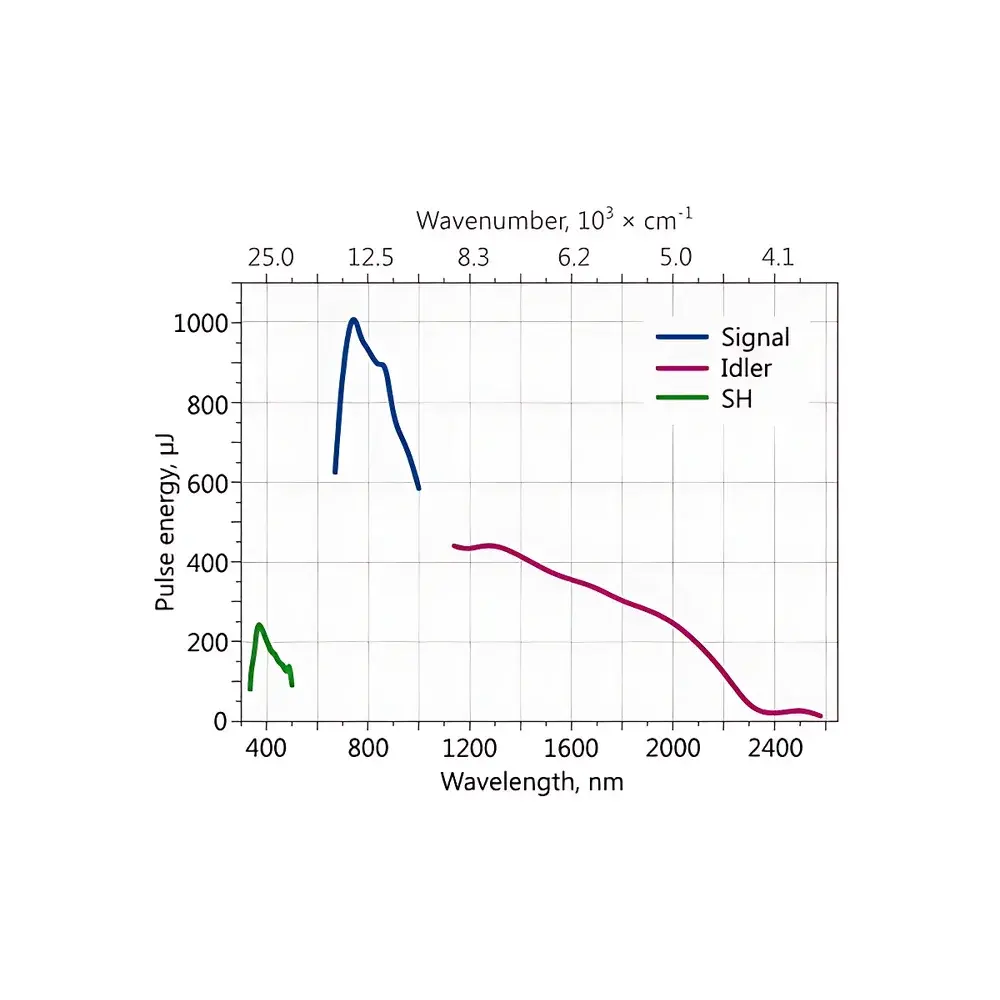
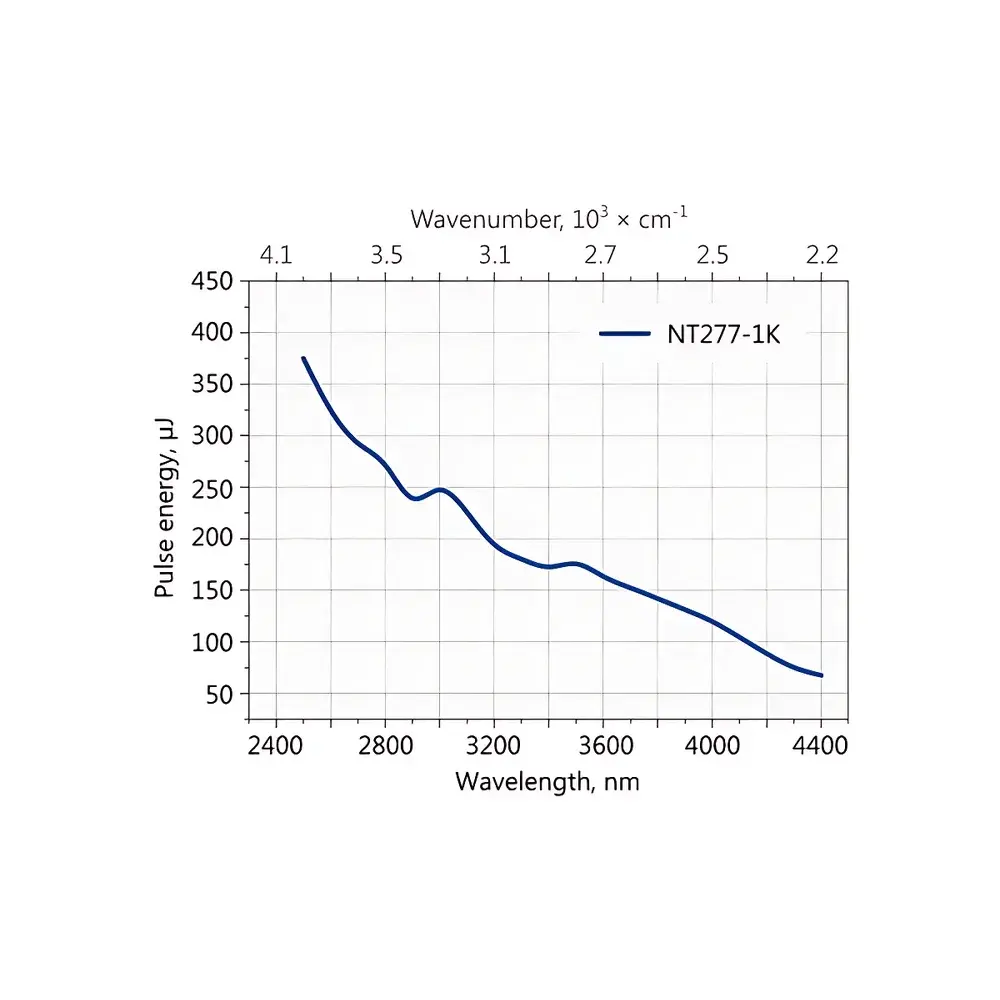
| Tuning Range | 335–12,000 nm |
| Pulse Repetition Rate | Up to 10 kHz |
| Pump Pulse Width | 6–9 ns |
| Linewidth | <5 cm⁻¹ (typical, OPO signal/idler) |
| Control Interface | USB (RS-232 optional) with LabVIEW™ drivers |
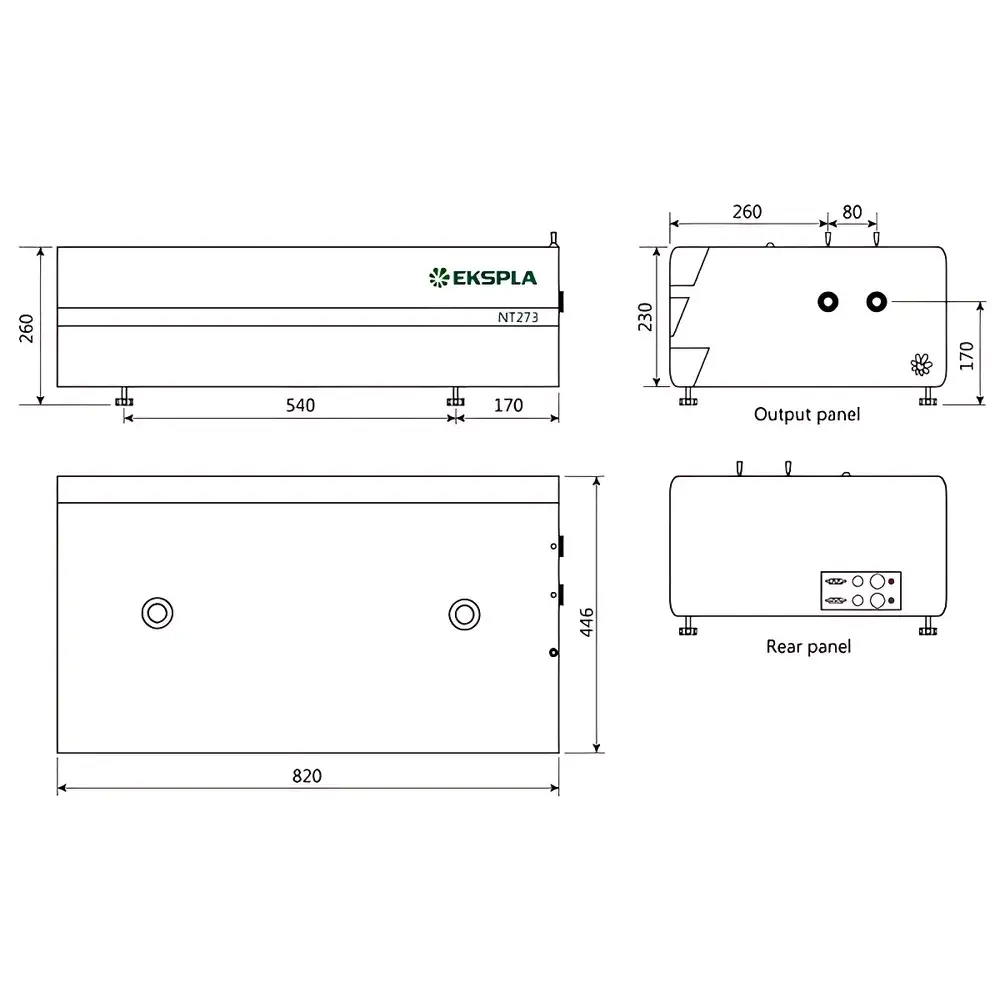
| Output Configuration | Dual independent beam ports (separate pump and tunable OPO outputs) |
| Cooling | Air-cooled |
| Compliance | CE, RoHS, IEC 60825-1:2014 Class 4 Laser Product |
Overview
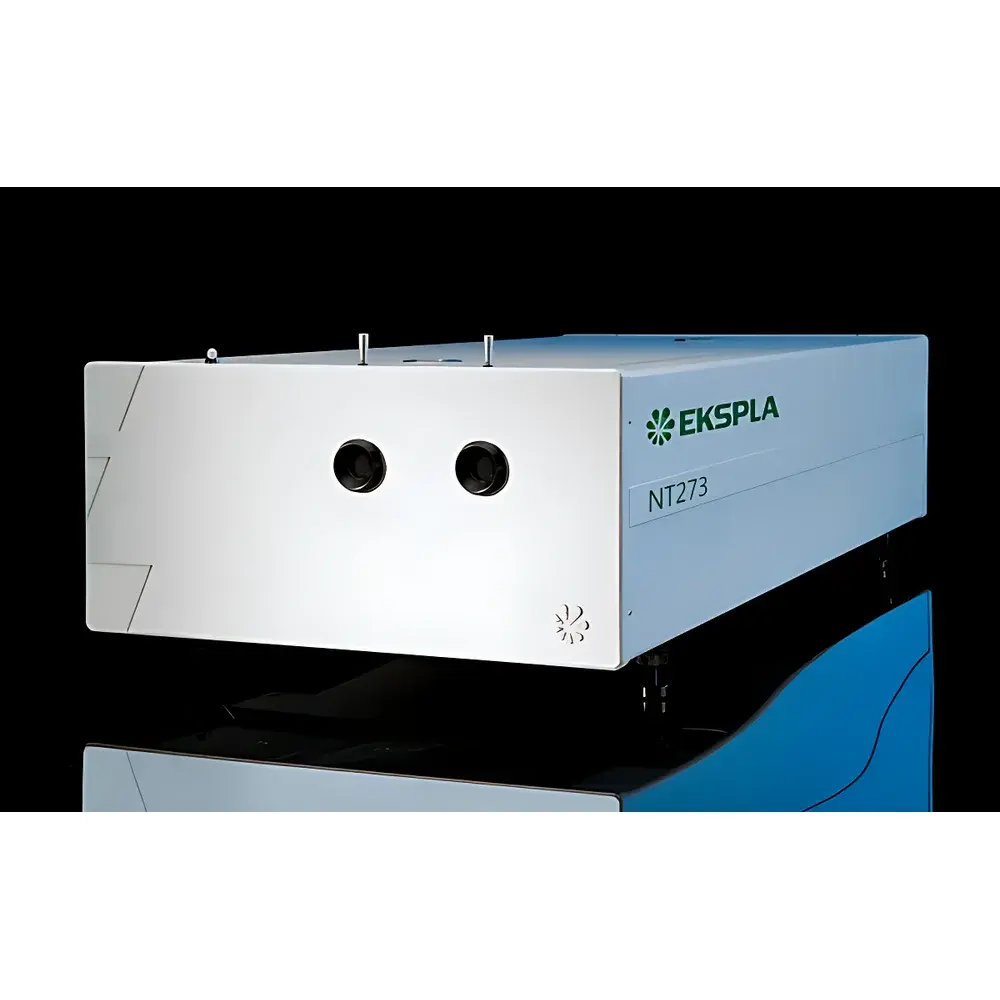
The Ekspla NT200 is a fully integrated, diode-pumped solid-state (DPSS) tunable laser system combining a high-stability Q-switched Nd:YAG pump laser and an intracavity optical parametric oscillator (OPO) within a single, compact, air-cooled chassis. Engineered for precision spectroscopic applications, the NT200 delivers continuous wavelength coverage from the deep ultraviolet (335 nm) through the visible and near-infrared into the mid-infrared (up to 12,000 nm), enabling broad-spectrum access without mechanical realignment or external optics swapping. Its core architecture leverages nonlinear frequency conversion in periodically poled or bulk nonlinear crystals (e.g., BBO, KTP, ZnGeP₂), with automated grating and crystal angle positioning ensuring reproducible, motorized wavelength selection across the full tuning range. The system operates in nanosecond pulse mode (6–9 ns FWHM at 1064 nm pump), supporting time-resolved measurements while maintaining high pulse-to-pulse stability (<1.5% RMS energy fluctuation over 8 hours). As a Class 4 laser product compliant with IEC 60825-1:2014, it incorporates interlocked safety shutters, emission indicators, and hardware-enforced key-switch control—essential for laboratory environments subject to GLP or ISO/IEC 17025 accreditation requirements.
Key Features
- Monolithic integration of DPSS pump laser and OPO in one thermally stabilized enclosure, minimizing alignment drift and environmental sensitivity
- Dual-beam output configuration: spatially separated, collimated pump (1064 nm, 532 nm, 355 nm, or 266 nm) and tunable OPO beams—enabling simultaneous pump-probe or reference-sample illumination
- Motorized, software-controlled wavelength tuning with <0.1 nm step resolution and <15 s settling time across full 335–12,000 nm range
- Narrow spectral linewidth (<5 cm⁻¹ typical in signal/idler bands), optimized for high-resolution absorption and fluorescence line profiling
- Programmable repetition rate from single-shot to 10 kHz, with internal/external triggering and delay generator synchronization capability
- USB 2.0 interface with native LabVIEW™ drivers, Python API, and SCPI-compliant command set for seamless integration into automated test benches
- Handheld remote control unit with tactile encoder and OLED display for rapid on-bench parameter adjustment without PC dependency
Sample Compatibility & Compliance
The NT200 is compatible with standard optical tables, vacuum chambers (with appropriate beam feedthroughs), gas cells (including White-type multipass cells up to 100 m path length), liquid cuvettes (1–10 mm path), and solid-state sample holders for reflectance/transmission studies. Its wide spectral coverage supports analysis of fundamental vibrational modes (e.g., C–H, O–H, N–H stretches above 2800 cm⁻¹), rotational transitions in gases (below 500 cm⁻¹), and electronic transitions in dyes and biomolecules. The system conforms to CE marking requirements under the EU Machinery Directive and Electromagnetic Compatibility (EMC) Directive. Laser safety documentation includes full hazard classification reports, nominal ocular hazard distance (NOHD) calculations per ANSI Z136.1, and traceable calibration certificates for pulse energy and wavelength accuracy. It meets functional prerequisites for FDA 21 CFR Part 11–compliant data acquisition when paired with validated spectrometer control software.
Software & Data Management
Ekspla’s proprietary LaserStudio software provides intuitive GUI-based control of wavelength, repetition rate, pulse energy, and OPO crystal temperature. All instrument parameters are logged with timestamps and exported in CSV or HDF5 format for post-processing in MATLAB, Python (NumPy/Pandas), or Origin. Audit trails record user login, parameter changes, and emergency stop events—supporting GLP/GMP traceability. Remote operation via TCP/IP is supported for integration into centralized lab management systems. The LabVIEW™ driver package includes VIs for closed-loop wavelength locking, energy stabilization feedback, and trigger synchronization with oscilloscopes or time-correlated single-photon counting (TCSPC) modules.
Applications
- Laser-Induced Fluorescence (LIF) spectroscopy of combustion intermediates (e.g., OH*, CH*, NO) and atmospheric radicals
- Infrared photolysis and action spectroscopy of transient species in cryogenic matrices or supersonic jets
- Gas-phase molecular fingerprinting for environmental monitoring (CH₄, CO₂, N₂O, VOCs) and industrial process control
- Time-resolved mid-IR pump-probe studies of protein conformational dynamics and solvation effects
- Calibration source for Fourier-transform infrared (FTIR) spectrometers and quantum cascade laser (QCL) validation
- Standoff detection and differential absorption LIDAR (DIAL) system development
- Nonlinear optical characterization including sum-frequency generation (SFG) and difference-frequency generation (DFG)
FAQ
What is the typical pulse energy stability over an 8-hour measurement session?
Pulse energy stability is ≤1.5% RMS when operated at constant ambient temperature (±1°C) and nominal repetition rate (1–5 kHz), verified using NIST-traceable thermal power sensors.
Can the NT200 be synchronized with external equipment such as streak cameras or TCSPC systems?
Yes—the system provides TTL-compatible sync output (rise time <2 ns) and accepts external trigger input with adjustable delay (0–100 ms, 10 ps resolution) via the onboard digital delay generator.
Is wavelength calibration traceable to national standards?
Wavelength calibration is performed using a high-finesse Fabry–Pérot interferometer referenced to iodine absorption lines at 532 nm and methane lines at 3.39 µm; full calibration report includes uncertainty budget per ISO/IEC 17025 Annex A.
Does the system support custom scripting for automated spectral scans?
Yes—Python bindings and SCPI command set enable full automation of wavelength sweeps, energy ramping, and multi-parameter logging without GUI interaction.
What maintenance is required during routine operation?
No consumables or periodic alignment are required; recommended annual performance verification includes energy calibration, wavelength accuracy check, and safety interlock validation by authorized Ekspla service engineers.




