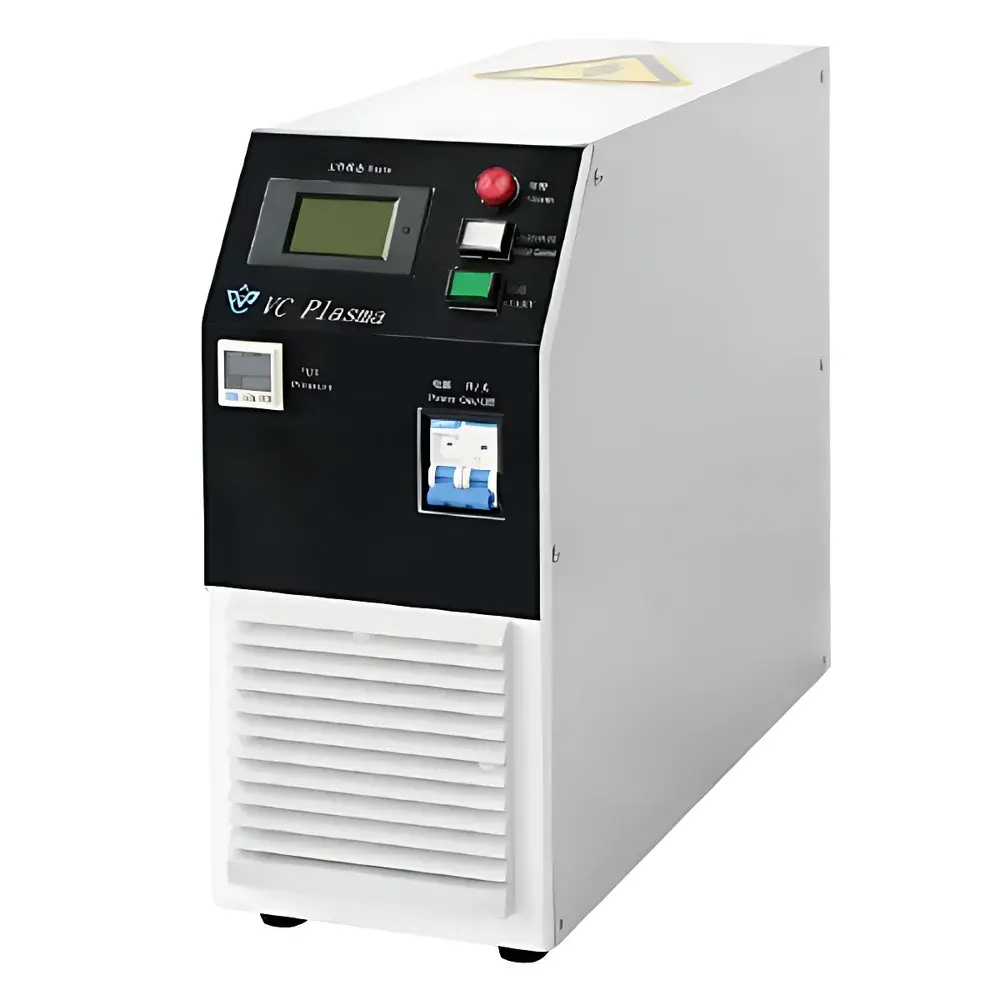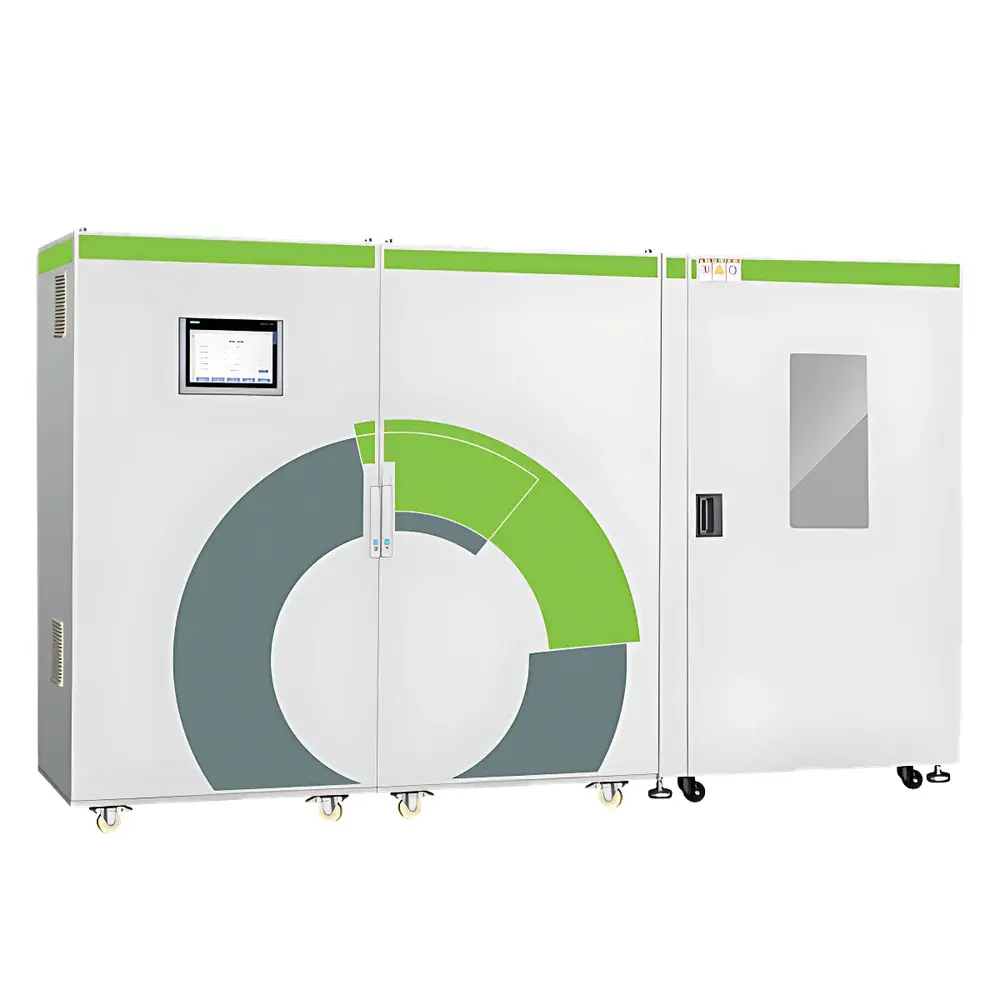
ONUEE LZS-003 Automated Biodegradation Testing System for Plastics under Controlled Composting Conditions
| Brand | ONUEE |
|---|---|
| Origin | Shenzhen, China |
| Model | LZS-003 |
| CO₂ Measurement Resolution | 1 ppm |
| Gas Flow Rate | 6000 mL/min (max system aggregate) |
| Reactor Volume | 2000 mL per unit |
| Maximum Number of Parallel Reactors | 72 |
| Temperature Control Range | 25–120 °C |
| Temp. Stability | ±1 °C |
| CO₂ Detection Principle | NDIR (Non-Dispersive Infrared), Multi-Range Auto-Switching (0–5000 / 0–20000 / 0–60000 ppm) |
| Accuracy | ≤±1% F.S. |
| O₂ Detection Principle | Electrochemical |
| Range | 0–21% vol |
| Accuracy | ±2% F.S. |
| Mass Flow Control | 0–300 mL/min |
| Accuracy | ±1.5% F.S. |
| Mass Flow Monitoring | 0–200 mL/min |
| Accuracy | ±1% F.S. |
| Power Supply | 220 V AC, 50 Hz (optional 380 V AC) |
| Max. Power Consumption | 6.8 kW |
| Dimensions (W×H×D) | 3082 × 1875 × 825 mm |
| Environmental Operating Range | 5–40 °C |
| Compliance | GB/T 20197–2006, GB/T 19277.1–2011, ISO 14855-1, ASTM D5338 |
Overview
The ONUEE LZS-003 Automated Biodegradation Testing System is an engineered platform for quantitative assessment of aerobic biodegradation performance of polymeric materials under standardized controlled composting conditions. It operates on the principle of stoichiometric carbon tracking: organic carbon in test specimens is microbially mineralized to CO₂, H₂O, inorganic salts, and microbial biomass under thermophilic, oxygen-rich environments. The system continuously monitors real-time CO₂ evolution using high-stability non-dispersive infrared (NDIR) sensors and concurrently measures O₂ consumption via electrochemical cells—enabling calculation of biodegradation extent as the ratio of evolved CO₂ to theoretical CO₂ yield (ThCO₂). This methodology aligns with internationally recognized test standards including ISO 14855-1, ASTM D5338, and Chinese national standards GB/T 19277.1–2011 and GB/T 20197–2006. Designed for laboratory- and pilot-scale validation, the LZS-003 supports regulatory submission, material certification (e.g., OK Compost INDUSTRIAL, DIN CERTCO), and R&D of bio-based and compostable polymers.
Key Features
- Modular parallel reactor architecture supporting 12, 18, 24, 36, or up to 72 independent degradation units—each with individual temperature, gas flow, and headspace monitoring
- PID + SSR temperature control with ±1 °C stability across 25–120 °C range; forced convection air circulation ensures uniform thermal distribution
- High-fidelity gas metrology: mass flow controllers (MFCs) and mass flow meters (MFMs) calibrated to ±1.5% and ±1% F.S., respectively
- Multi-range NDIR CO₂ detection (0–5000 / 0–20000 / 0–60000 ppm) with automatic span switching and drift compensation
- Integrated O₂ sensing (0–21% vol, ±2% F.S.) for respiratory quotient (RQ) calculation and process validation
- Full-color industrial touchscreen HMI with real-time graphical display of all channels, alarm status, and setpoint override capability
- Robust reactor vessels fabricated from borosilicate glass with chemically resistant sealing components; compatible with standard 3 L custom bottles (e.g., Shubull brand)
Sample Compatibility & Compliance
The LZS-003 accommodates solid polymeric films, granules, molded parts, and composite materials up to 20 g dry weight per reactor. Substrates are homogenously mixed with standardized inoculum (e.g., mature compost per GB/T 19277.1–2011 Annex A) prior to loading. The system satisfies full technical requirements of GB/T 20197–2006 for labeling and classification of degradable plastics, and implements the “vermiculite method” and “compost method” as referenced therein. It further supports ISO 14855-1 Annex B (laboratory-scale respirometry) and ASTM D5338 Section 7 (controlled composting simulation), making it suitable for GLP-compliant testing environments. All hardware and firmware configurations adhere to electromagnetic compatibility (EMC) directives IEC 61326-1 and safety standard IEC 61010-1.
Software & Data Management
The system runs ONUEE’s proprietary BiodegControl™ software suite, deployed on embedded Linux and accessible via Windows PC client or web browser. Data acquisition occurs at 1-second intervals with timestamped storage in encrypted SQLite databases. Software modules include: multi-channel parameter configuration, dynamic flow channel assignment, historical trend visualization (with zoom/pan/export to CSV/PDF), statistical summary (mean, SD, confidence intervals per batch), and automated report generation compliant with ISO/IEC 17025 documentation templates. Cloud synchronization enables remote access, role-based user permissions, and audit-trail logging meeting FDA 21 CFR Part 11 requirements (electronic signatures, change history, data integrity safeguards). Mobile applications (iOS/Android) provide push notifications for threshold breaches, maintenance alerts, and live dashboard streaming.
Applications
- Quantitative biodegradation rate profiling of PLA, PHA, PBAT, PBS, starch-blends, and cellulose derivatives
- Comparative evaluation of additive effects (pro-oxidants, enzymes, compatibilizers) on decomposition kinetics
- Validation of industrial compostability claims for packaging, agricultural mulch films, and disposable foodware
- Supporting environmental impact assessments (LCA) by generating primary biomineralization data
- Method development and inter-laboratory round-robin studies under ISO/IEC 17043 proficiency testing frameworks
- Quality control of incoming biopolymer batches against supplier specifications or internal release criteria
FAQ
What standards does the LZS-003 directly support?
It is fully configured to execute GB/T 19277.1–2011, GB/T 20197–2006, ISO 14855-1, and ASTM D5338 without hardware modification.
Can the system operate unattended for extended periods?
Yes—designed for continuous 28-day test cycles with <1 manual intervention per month; includes power-fail recovery, data persistence, and auto-resume functionality.
Is reactor cleaning and maintenance automated?
Reactor vessels are manually cleaned per ISO 14855-1 Section 8.2; however, the system logs cleaning events, tracks cumulative runtime per vessel, and triggers preventive maintenance alerts.
How is CO₂ calibration performed?
Zero/span calibration uses certified NIST-traceable gas standards (e.g., 0% and 2000 ppm CO₂ in N₂); automated calibration sequences are scriptable within the software.
Does the system support third-party LIMS integration?
Yes—via RESTful API and OPC UA protocol; raw time-series data, metadata, and final reports can be exported in structured JSON or XML format.