
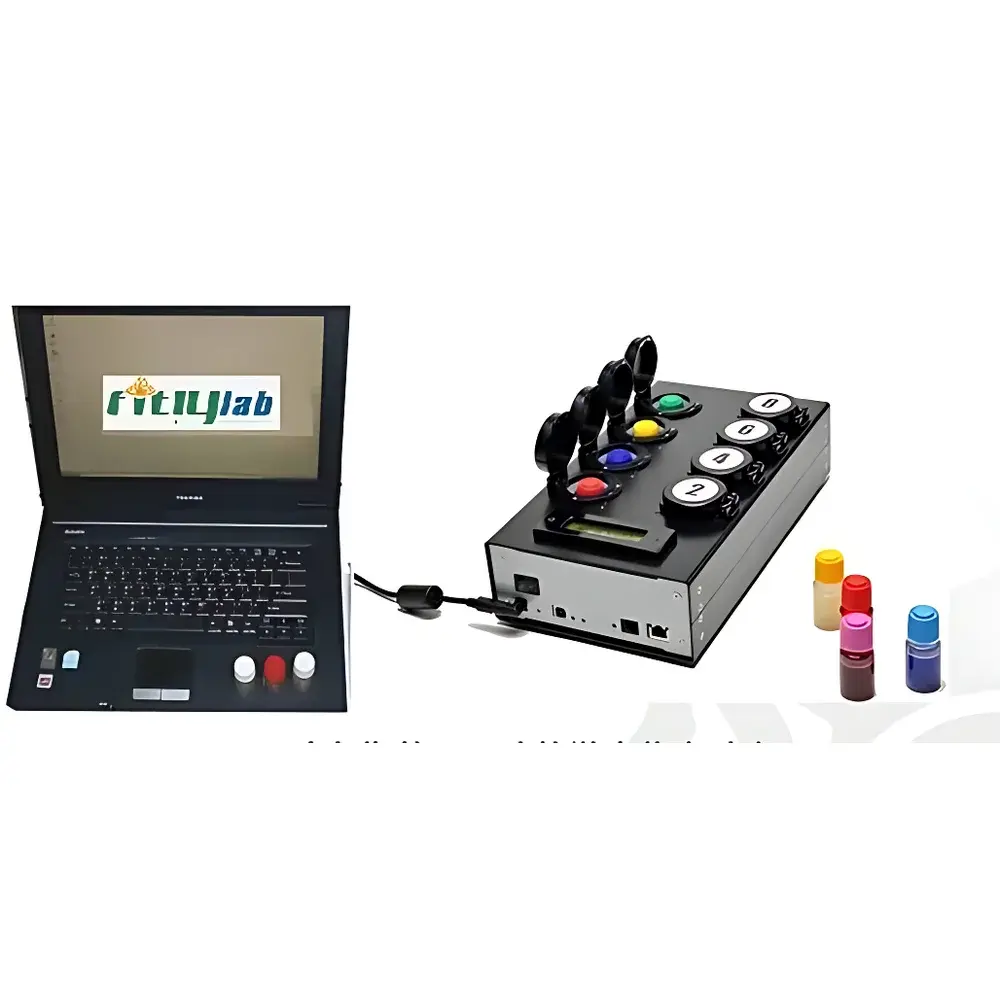
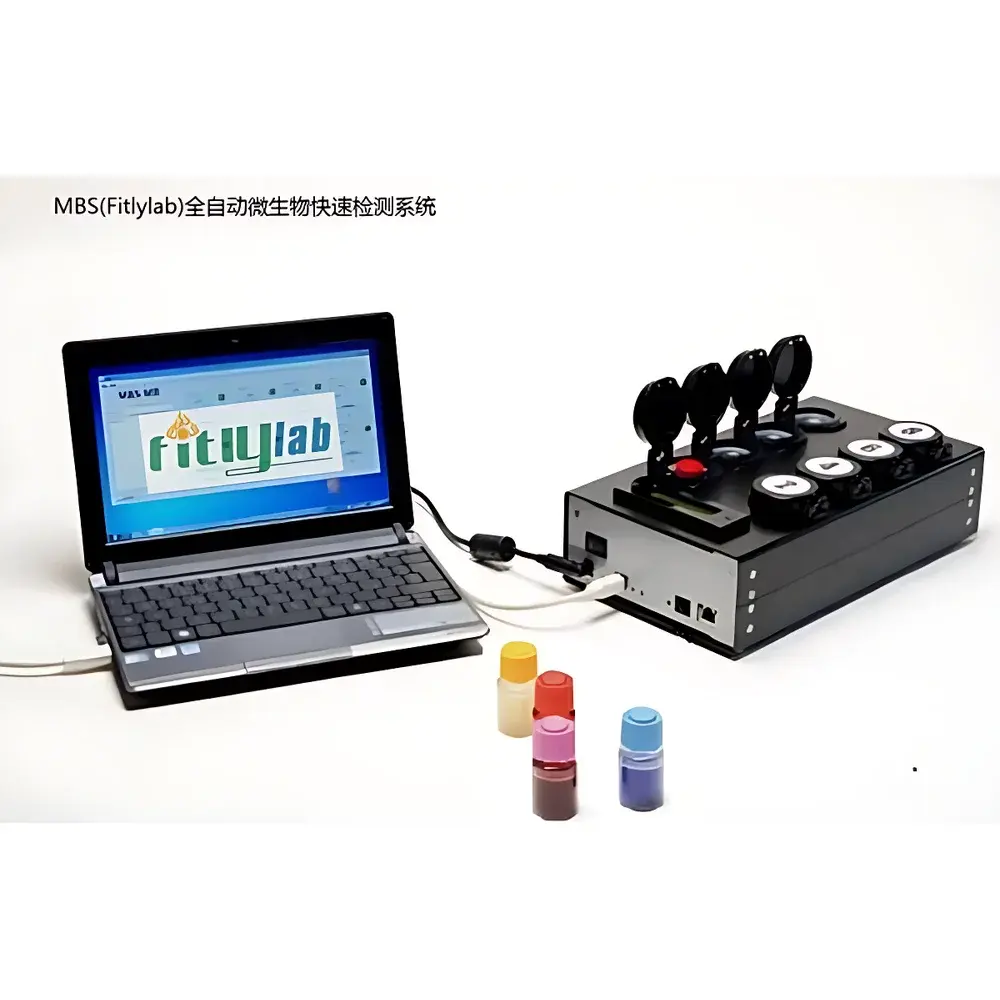
MBS.SRL Fitlylab-L06 Salmonella Rapid Detection System
| Brand | MBS.SRL |
|---|---|
| Origin | Italy |
| Model | Fitlylab-L06 |
| Certification | ISO 16140:2003 (Microbiology of Food and Animal Feeding Stuffs – Validation of Alternative Methods) |
| ISO/IEC 17025 | 2005 (General Requirements for the Competence of Testing and Calibration Laboratories) |
| Detection Principle | Multi-modal optical biosensing based on real-time redox-mediated chromogenic kinetics |
| Sample Throughput | 8 independent, temperature-controlled channels |
| Detection Sensitivity | ≥1 CFU per assay |
| Specificity | ≥99.999% for *Salmonella* spp. |
| Sample Types | Liquid, solid, surface swab, aerosol (via impinger collection), semi-solid (e.g., milk, paste, homogenates) |
| Detection Time | 4–12 h (vs. 48–96 h for conventional culture) |
| Wavelengths | Simultaneous triple-wavelength photometric detection (450 nm, 540 nm, 630 nm) |
| Data Output | Automated PDF report with timestamped kinetic curves, CFU/mL or CFU/g quantification, pass/fail flagging against user-defined thresholds |
| Software | Fitlylab v3.x (Windows-based, multilingual, audit-trail enabled) |
Overview
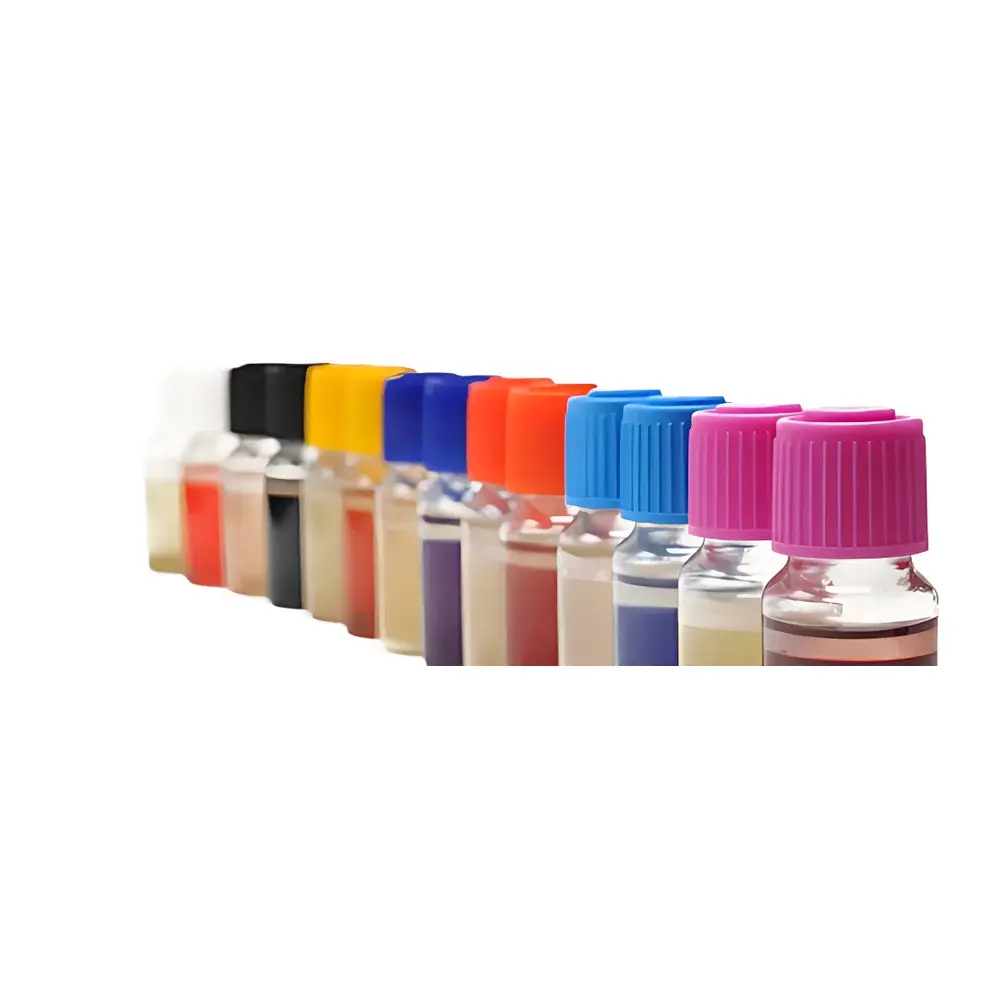
The MBS.SRL Fitlylab-L06 Salmonella Rapid Detection System is a fully integrated, portable microbial quantification platform engineered for field-deployable and laboratory-grade enumeration of viable Salmonella spp. in food, water, environmental surfaces, and raw agricultural commodities. Unlike endpoint immunoassays or PCR-based screening tools, the Fitlylab-L06 employs a proprietary multi-modal detection principle grounded in real-time monitoring of microbial metabolic activity. Each VL detection vial contains a chemically defined, selective growth medium supplemented with a redox-sensitive chromogenic substrate, species-specific inhibitors, and a non-toxic electron shuttle (a modified tetrazolium derivative). When viable Salmonella cells are present, they metabolize the substrate via cytochrome-dependent respiratory chain activity, generating a time-resolved colorimetric signal proportional to colony-forming units. The MBS-MR host instrument captures this dynamic signal across three discrete optical wavelengths—450 nm (blue), 540 nm (green), and 630 nm (red)—enabling robust discrimination against turbidity, particulate interference, and non-specific background. This approach satisfies the fundamental requirement of ISO 16140:2003 for “performance-based validation of alternative methods”: it measures viability, provides quantitative output (CFU), and demonstrates equivalence to reference culture methods across diverse matrices.
Key Features
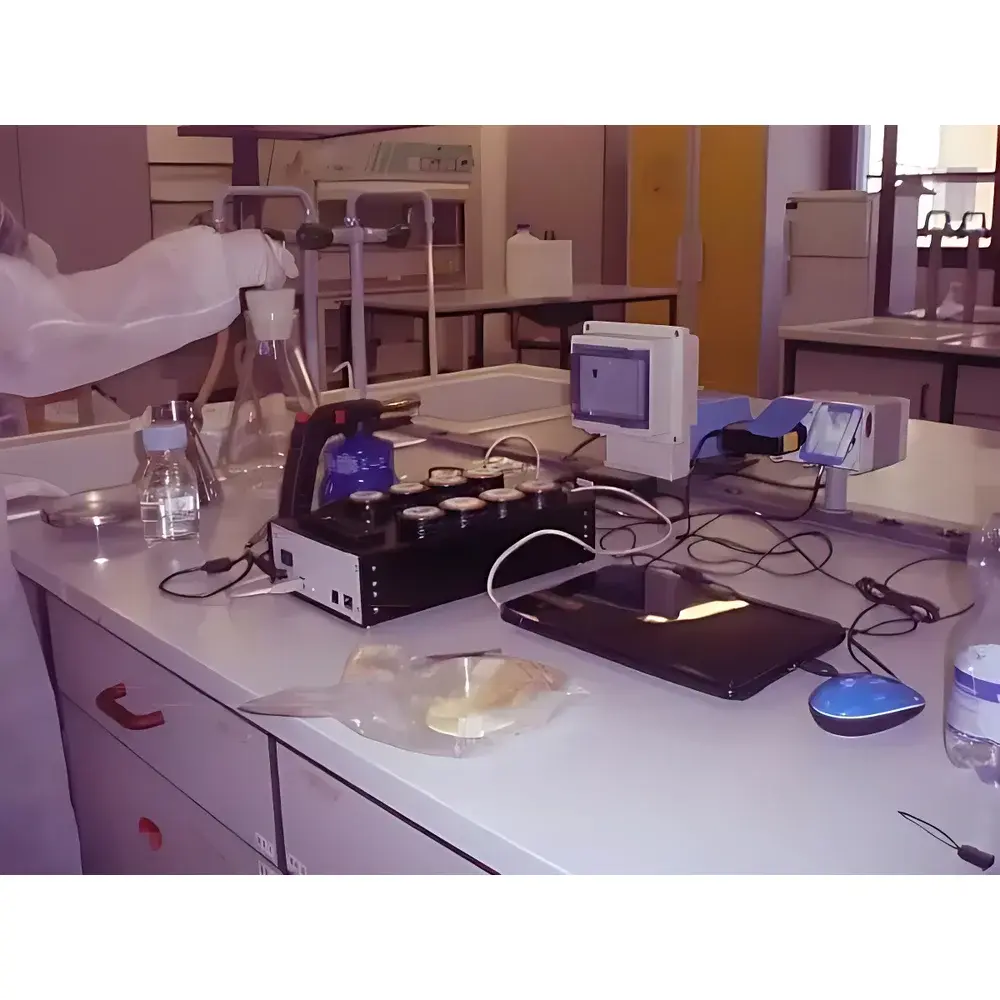
- Eight independent, thermally regulated detection channels enable concurrent analysis of heterogeneous samples—including water, meat homogenates, dairy products, surface swabs, and air-captured aerosols—without cross-contamination or thermal crosstalk.
- Triple-wavelength photometric sensing eliminates reliance on single-point absorbance, significantly improving analytical robustness in turbid or colored matrices where conventional colorimeters fail.
- VL detection vials are self-contained, sterile, single-use consumables with integrated neutralization capacity; post-assay vials undergo internal UV-C irradiation (optional module) prior to disposal as non-hazardous biohazard waste per ISO 15190:2022 guidelines.
- No pre-enrichment, centrifugation, filtration, or DNA extraction is required: direct inoculation of 1 g solid sample, 1 mL liquid, or a moistened swab into the vial initiates detection—fully compliant with AOAC Official Method 2011.06 workflow simplification criteria.
- Automated kinetic analysis identifies the inflection point (d²A/dt² = 0) in each wavelength’s time-absorbance curve, converting reaction lag time to CFU concentration using matrix-specific calibration models embedded in Fitlylab software.
- Temperature control per channel (30–45 °C, ±0.3 °C) ensures optimal growth kinetics for Salmonella while suppressing background flora—critical for high-specificity detection in complex food matrices.
Sample Compatibility & Compliance
The Fitlylab-L06 has been validated for use across regulatory and operational contexts requiring rapid, auditable microbiological data. It supports sampling protocols aligned with ISO 18593:2018 (surface sampling), ISO 7218:2017 (microbiological examination principles), and FDA BAM Chapter 5 (Salmonella). Detection vials meet ISO 16140:2003 Annex B requirements for method equivalence studies, with validation reports issued by the National Light Industry Food Quality Supervision and Inspection Center (Nanjing Station). Internal quality management complies with ISO/IEC 17025:2005, including full electronic audit trails, user-access controls, and instrument calibration logs traceable to NIST-certified photometric standards. The system is routinely deployed under HACCP plans, EU Regulation (EC) No 2073/2005 hygiene criteria, and CDC Environmental Health Laboratory Guidelines for outbreak response.
Software & Data Management
Fitlylab v3.x is a Windows-based application compliant with FDA 21 CFR Part 11 requirements for electronic records and signatures. It features role-based access control (administrator, analyst, reviewer), automated metadata capture (operator ID, sample ID, location, ambient temperature/humidity), and immutable audit logging of all assay parameters, result modifications, and report generation events. Quantitative results are stored in an encrypted SQLite database with optional export to LIMS via CSV or ASTM E1384-compliant XML. PDF reports include kinetic curves, limit-of-detection verification plots, and compliance statements referencing ISO 16140:2003 clause 7.3. Software updates are delivered remotely and installed without downtime; perpetual license includes lifetime version upgrades at no additional cost.
Applications
- Real-time pathogen monitoring in food processing lines (meat, poultry, dairy, produce) to support preventive controls under FSMA Rule 117.
- Rapid verification of sanitation efficacy on food contact surfaces (conveyor belts, cutting boards, packaging equipment) per ISO 14001 and BRCGS Issue 9 Section 4.10.2.
- Field-based water safety assessment in municipal distribution systems, agricultural irrigation sources, and post-disaster environments—validated for 100 mL filtered samples per ISO 9308-1:2014.
- Environmental surveillance in pharmaceutical cleanrooms (ISO 14644-1 Class 5–8) and cosmetic manufacturing facilities per ISO 22000:2018 Clause 8.5.2.
- Consumer protection agency investigations requiring on-site evidence generation with court-admissible digital chain-of-custody documentation.
FAQ
Does the Fitlylab-L06 require laboratory infrastructure or certified personnel to operate?
No. The system is designed for operation in non-laboratory environments—including production floors, cold storage units, and mobile inspection vans—with minimal training. All critical functions (temperature regulation, optical measurement, kinetic modeling, reporting) are fully automated.
How is specificity for Salmonella ensured in mixed microbial populations?
Specificity arises from synergistic selectivity: the VL medium incorporates novobiocin and bile salts to suppress Gram-positive competitors, while the chromogenic substrate (X-Gal analog coupled to a resazurin redox shuttle) is cleaved only by Salmonella-specific β-galactosidase and respiratory enzymes—confirmed by cross-reactivity testing against >42 non-target strains per ISO 16140:2003 Annex D.
Can the system quantify other pathogens beyond Salmonella?
Yes. The platform supports pre-validated assays for Escherichia coli, Listeria monocytogenes, Staphylococcus aureus, Pseudomonas aeruginosa, total aerobic count, and coliforms—each with dedicated VL vial formulations and kinetic calibration models.
What maintenance is required for long-term reliability?
Annual optical alignment verification and photodiode sensitivity calibration using supplied NIST-traceable filters are recommended. No consumable parts (e.g., lamps, flow cells) require replacement—the LED light source has a rated lifetime of >50,000 hours.
Is raw kinetic data exportable for secondary statistical analysis?
Yes. Full-resolution time-series absorbance data (A450, A540, A630 vs. time) is exportable in CSV format, enabling integration with R, Python, or JMP for advanced multivariate modeling or trend forecasting.
Related Products




