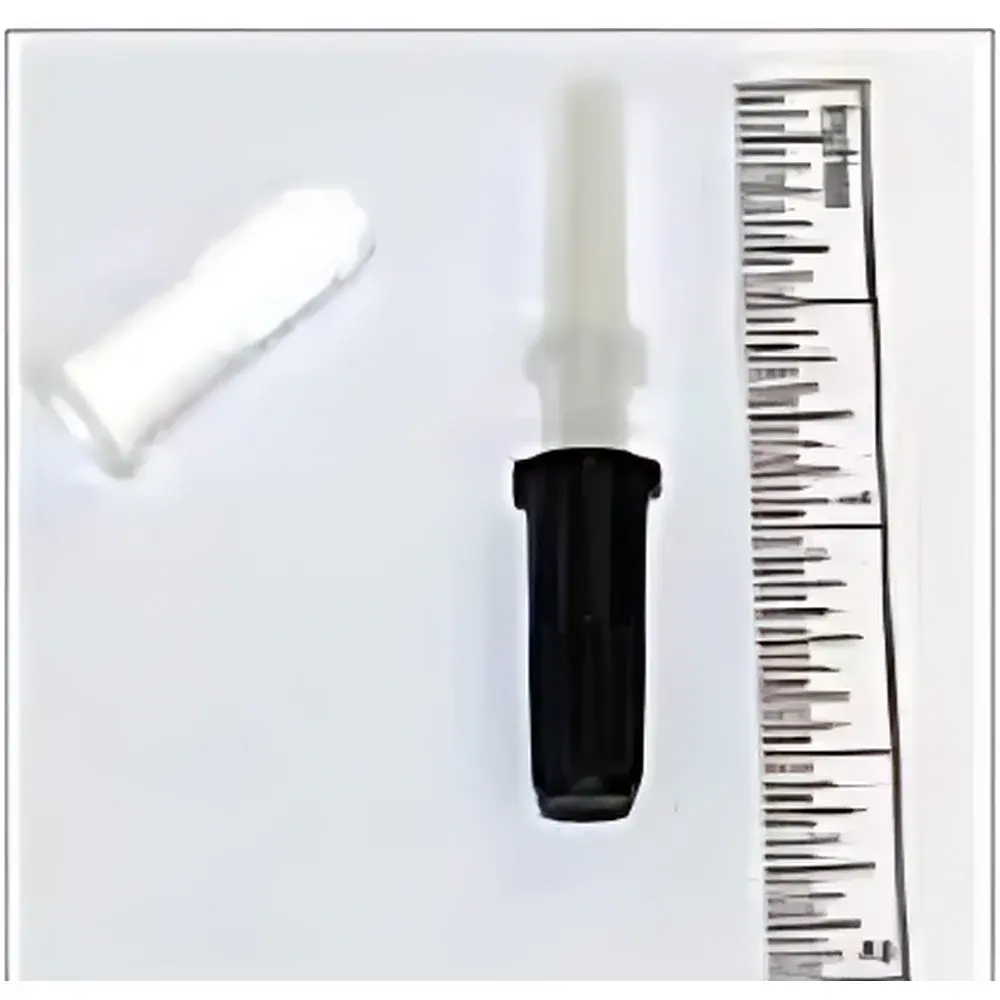
Dispo Equilibrium DIALYZER™
| Origin | USA |
|---|---|
| Manufacturer Type | Distributor |
| Origin Category | Imported |
| Model | Dispo Equilibrium DIALYZER™ |
| Pricing | Upon Request |
Overview
The Dispo Equilibrium DIALYZER™ is a single-use, micro-volume equilibrium dialysis device engineered for precise quantification of unbound (free) ligand fractions in protein–ligand binding studies. It operates on the fundamental principle of passive diffusion across a semi-permeable membrane under thermodynamic equilibrium conditions—enabling separation of low-molecular-weight analytes (e.g., drugs, metabolites, hormones) from high-molecular-weight macromolecules (e.g., serum albumin, α1-acid glycoprotein, recombinant receptors) without perturbing binding equilibria. Designed specifically for small sample volumes (25–75 µL), it eliminates cross-contamination risks associated with reusable dialysis cells and avoids membrane preconditioning or assembly steps common in traditional systems. Its fixed geometry and pre-hydrated, pre-installed regenerated cellulose membrane (molecular weight cutoff: 12–14 kDa) ensure consistent diffusion kinetics and high reproducibility across replicates—critical for determining association constants (Ka), dissociation constants (Kd), and free fraction (fu) values in early-stage drug discovery and pharmacokinetic profiling.
Key Features
- Single-use, sterile, ready-to-load design minimizes handling error and eliminates cleaning validation requirements.
- Precision-molded polycarbonate housing with integrated membrane support ensures uniform membrane tension and optimal surface area-to-volume ratio (≈1.8 cm² active membrane area).
- Pre-hydrated, gamma-irradiated regenerated cellulose membrane (12–14 kDa MWCO) certified for low non-specific binding and batch-to-batch consistency.
- Optimized chamber geometry enables rapid equilibration (typically 4–6 h at 37 °C) while maintaining sample integrity—no evaporation or leakage under standard incubation conditions.
- Compatible with standard 96-well plate handlers and automated liquid handlers for integration into high-throughput screening workflows.
- No external clamps, seals, or gaskets required—sample loading via precision-calibrated pipette tip access ports.
Sample Compatibility & Compliance
The Dispo Equilibrium DIALYZER™ supports aqueous biological matrices including human and animal plasma, serum, cerebrospinal fluid (CSF), and buffered protein solutions (e.g., PBS, HEPES, Tris). It is validated for use with therapeutic proteins, monoclonal antibodies, small-molecule drugs, peptides, and radiolabeled tracers (e.g., 3H, 14C). Device construction materials comply with USP Class VI biocompatibility standards and ISO 10993-5 cytotoxicity testing. Each lot undergoes endotoxin testing (<0.5 EU/mL) and sterility verification per ISO 11737-1. The system meets analytical requirements outlined in FDA Guidance for Industry: “In Vitro Metabolism- and Transport-Mediated Drug–Drug Interaction Studies” and supports GLP-compliant study execution when used within validated laboratory protocols.
Software & Data Management
While the Dispo Equilibrium DIALYZER™ is a hardware-only platform requiring no embedded firmware or proprietary software, its output integrates seamlessly into standard bioanalytical data workflows. Free fraction (fu) is calculated using the ratio of analyte concentration in the free (dialysate) chamber to that in the total (protein-containing) chamber, measured via LC-MS/MS, ELISA, or scintillation counting. Raw concentration data may be imported into compliant platforms such as Watson LIMS, Empower 3, or custom Python/R-based PK/PD analysis pipelines. Audit trails, instrument calibration logs, and sample metadata are maintained externally per 21 CFR Part 11 requirements when paired with validated electronic lab notebooks (ELNs) or chromatography data systems (CDS).
Applications
- Determination of plasma protein binding (PPB) for candidate drug molecules during lead optimization.
- Quantification of free testosterone, cortisol, or thyroid hormone fractions in clinical endocrinology assays.
- Assessment of binding affinity shifts induced by genetic polymorphisms (e.g., albumin variants) or disease states (e.g., renal/hepatic impairment).
- Validation of binding parameters derived from surface plasmon resonance (SPR) or isothermal titration calorimetry (ITC).
- Supporting regulatory submissions under ICH M3(R2), FDA Bioanalytical Method Validation Guidance, and EMA Guideline on Non-Clinical Safety Studies.
FAQ
What is the recommended equilibration time and temperature?
Standard equilibration is performed at 37 °C for 4–6 hours under gentle agitation (60 rpm orbital shaking); extended incubation (up to 24 h) may be used for low-diffusivity compounds.
Can the device be used with viscous or lipemic samples?
Yes—centrifugation (10,000 × g, 5 min) prior to loading is recommended for lipemic plasma; viscosity does not impede diffusion kinetics due to the short diffusion path length (<100 µm).
Is membrane reuse possible?
No—the device is strictly single-use per regulatory and performance specifications; membrane rehydration, fouling, and carryover risk invalidate quantitative reliability.
How is recovery and accuracy verified?
Recovery is assessed using spiked control samples with known free fractions; typical inter-assay CVs are ≤8% across three independent runs when paired with LC-MS/MS detection.
Does the device require calibration before use?
No calibration is needed—the geometry, membrane properties, and volume constraints are factory-validated and traceable to NIST-traceable reference standards.