
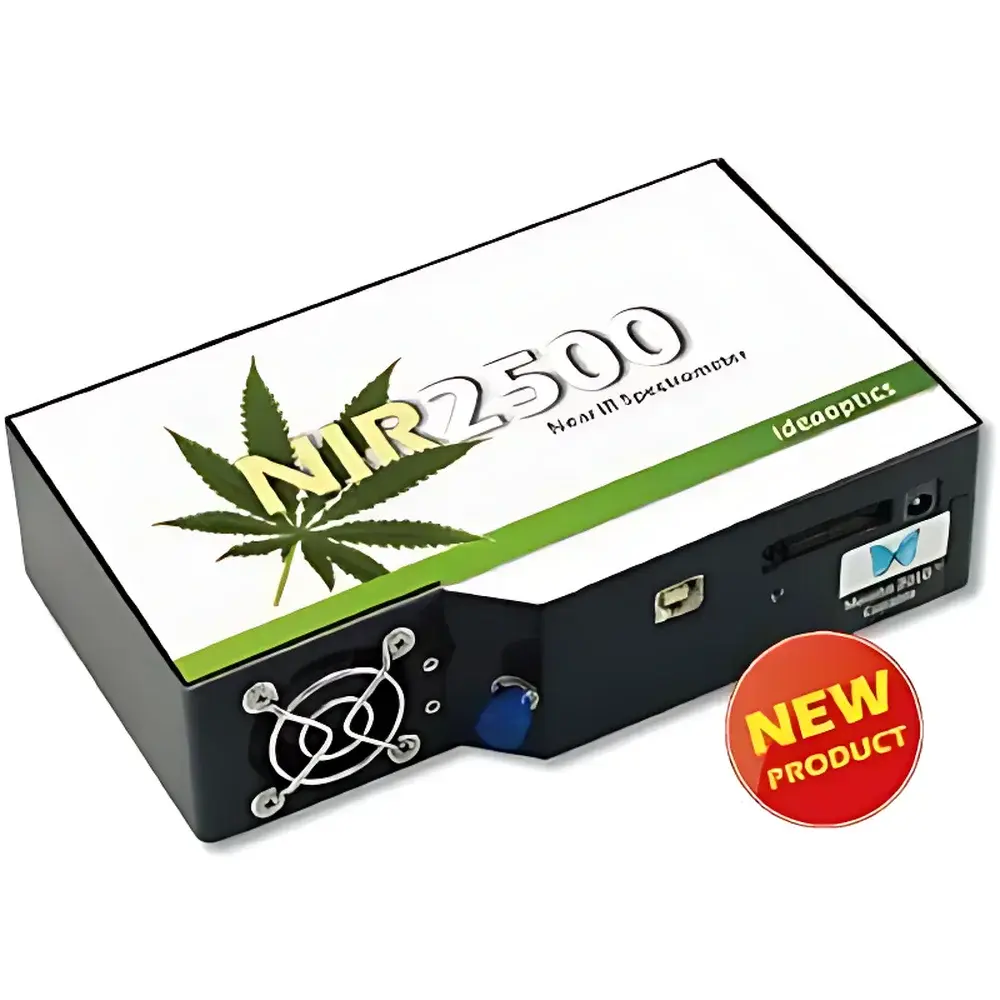
OceanInsight FX/PG/NOVA Series Fiber Optic Spectrometer
| Origin | Shanghai, China |
|---|---|
| Manufacturer Type | Authorized Distributor |
| Origin Category | Domestic (PRC) |
| Model | FX/PG/NOVA |
| Pricing | Upon Request |
Overview
The OceanInsight FX/PG/NOVA Series Fiber Optic Spectrometer is a high-performance, modular benchtop spectrometer engineered for precision optical spectroscopy across UV-VIS-NIR spectral domains. Based on charge-coupled device (CCD) or complementary metal-oxide-semiconductor (CMOS) detector architectures, these instruments operate on the principle of diffraction grating dispersion coupled with fiber-optic light coupling—enabling flexible, remote, and non-invasive spectral acquisition. With standard spectral coverage spanning 200–1100 nm, the series supports configurable slit widths, grating options, and detector cooling configurations to optimize resolution, sensitivity, and signal-to-noise ratio for diverse experimental requirements. Designed for integration into custom optical measurement platforms, each unit serves as the core spectral engine in reflection, transmission, fluorescence, absorbance, and emission characterization workflows.
Key Features
- Modular optical design compatible with SMA 905 fiber input, enabling rapid system reconfiguration for different illumination and collection geometries.
- Configurable spectral resolution down to <0.1 nm (FWHM), dependent on grating groove density, entrance slit width, and pixel binning strategy.
- Thermoelectrically cooled detectors (optional) for extended integration times and reduced dark current—critical for low-light applications such as Raman or weak fluorescence detection.
- High quantum efficiency CCD/CMOS sensors with >80% peak QE in visible range and optimized UV response via enhanced coating technology.
- Rugged aluminum housing with internal EMI shielding and thermal stabilization architecture to ensure measurement repeatability under laboratory and field conditions.
- USB 3.0 and Ethernet interfaces supporting real-time data streaming at up to 1 kHz full-spectrum acquisition rates (model-dependent).
Sample Compatibility & Compliance
The FX/PG/NOVA spectrometers are agnostic to sample physical form—supporting solids, liquids, powders, thin films, and biological tissues when paired with appropriate optical accessories (e.g., integrating spheres, cuvette holders, microscope couplers, or angle-resolved stages). The systems comply with IEC 61326-1 for electromagnetic compatibility and meet CE marking requirements for laboratory instrumentation. When deployed in regulated environments—including pharmaceutical QC labs or academic GLP-compliant facilities—the spectrometers support audit-trail-enabled software operation (via OceanView v3.x or OceanHDx SDK) and can be validated per ASTM E275, ISO/IEC 17025, and USP guidelines for spectrophotometric instrument qualification.
Software & Data Management
OceanView spectroscopy software provides a validated, intuitive interface for instrument control, spectral acquisition, real-time processing (baseline correction, smoothing, peak identification), and export to CSV, HDF5, or vendor-neutral JCAMP-DX formats. The SDK (C/C++, Python, MATLAB, LabVIEW) enables full programmatic control and integration into automated test benches or LIMS environments. All software modules adhere to FDA 21 CFR Part 11 requirements when configured with electronic signatures, user access levels, and immutable audit logs—ensuring traceability in GMP-regulated applications. Raw spectral data retains full metadata (wavelength calibration coefficients, integration time, detector temperature, lamp reference status), facilitating reproducible inter-laboratory comparisons.
Applications
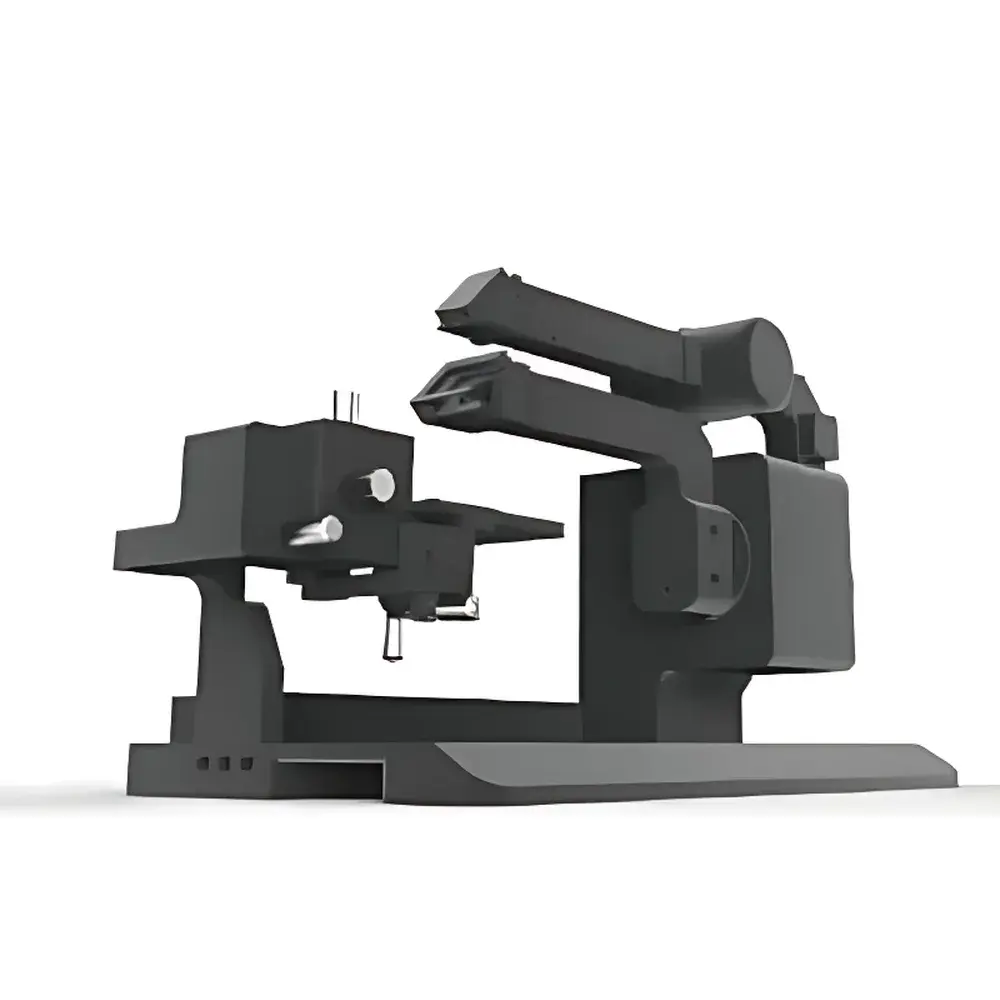
- Photonic crystal bandgap characterization via angular-resolved reflectance mapping using R1-class macro-angle scanning stages.
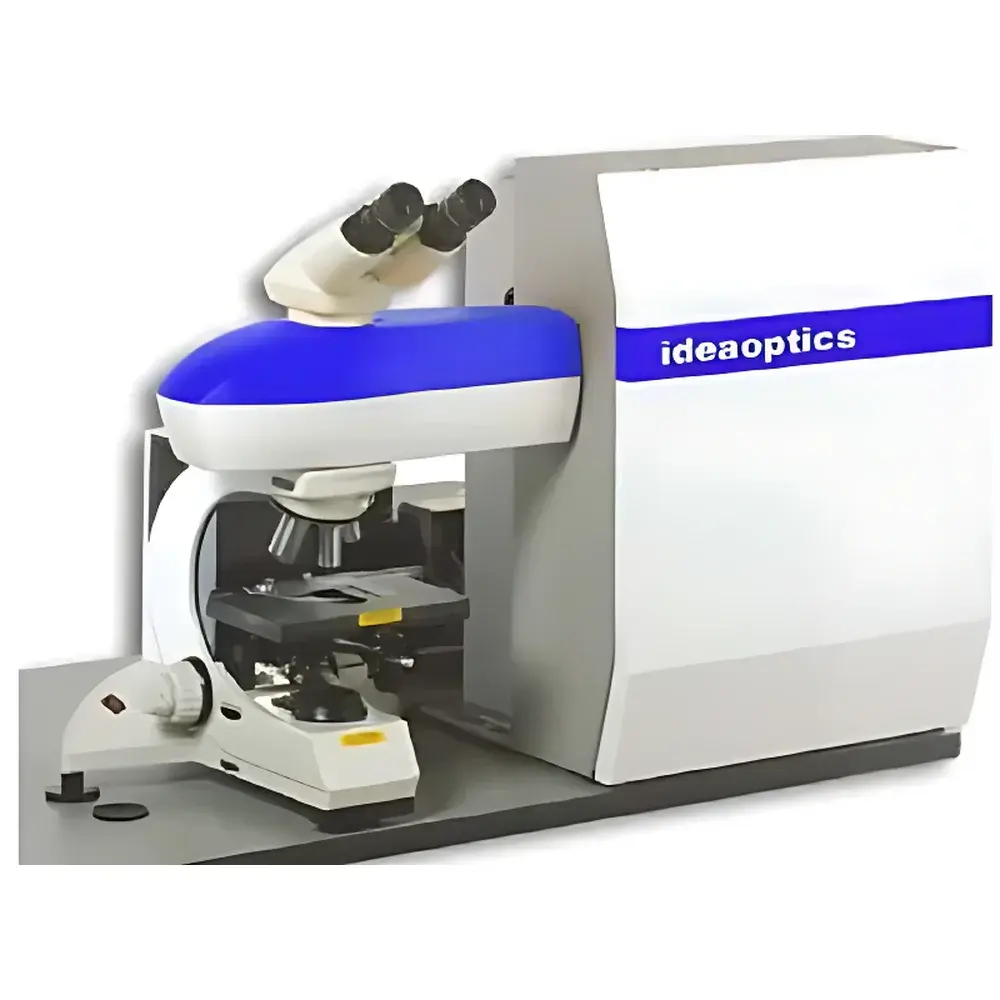
- Microspectroscopy of sub-10 µm features using microscope-coupled fiber probes—enabling spatially resolved fluorescence, absorption, and scattering analysis in semiconductor metrology and life science research.
- Confocal micro-angle-resolved spectroscopy for directional emission profiling of plasmonic nanostructures, metasurfaces, and organic light-emitting devices (OLEDs).
- Structural color quantification in biomimetic coatings and iridescent materials through hyperspectral reflectance imaging.
- Nanomaterial optical property benchmarking—including extinction cross-section derivation, localized surface plasmon resonance (LSPR) tracking, and quantum dot photoluminescence quantum yield estimation.
FAQ
What spectral calibration standards are supported?
NIST-traceable tungsten-halogen and deuterium lamps are recommended for radiometric and wavelength calibration; factory calibration certificates include Hg/Ar emission line verification at 253.65 nm, 435.83 nm, 546.07 nm, and 769.89 nm.
Can the spectrometer be synchronized with external triggers?
Yes—TTL-compatible hardware trigger input/output ports enable precise timing coordination with pulsed lasers, shutters, or motorized stages.
Is firmware upgradable in the field?
Firmware updates are delivered via OceanView software and preserve all user calibration files and configuration settings.
What is the typical warm-up time to achieve thermal stability?
Detector temperature stabilizes within 10 minutes under ambient conditions; thermoelectric-cooled models reach setpoint ±0.1°C within 15 minutes.
Are OEM integration options available?
Yes—custom mechanical housings, embedded controller modules, and API-only deployment packages are offered for original equipment manufacturer integration.





