
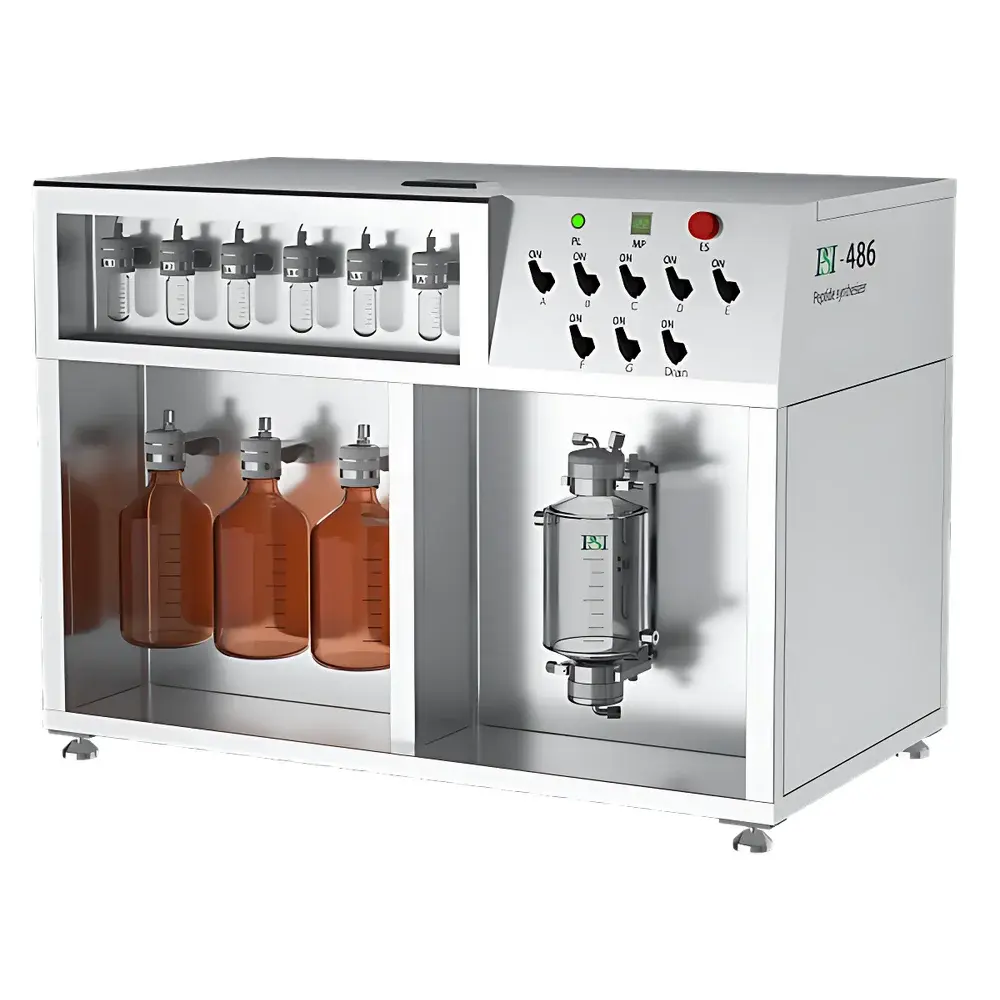
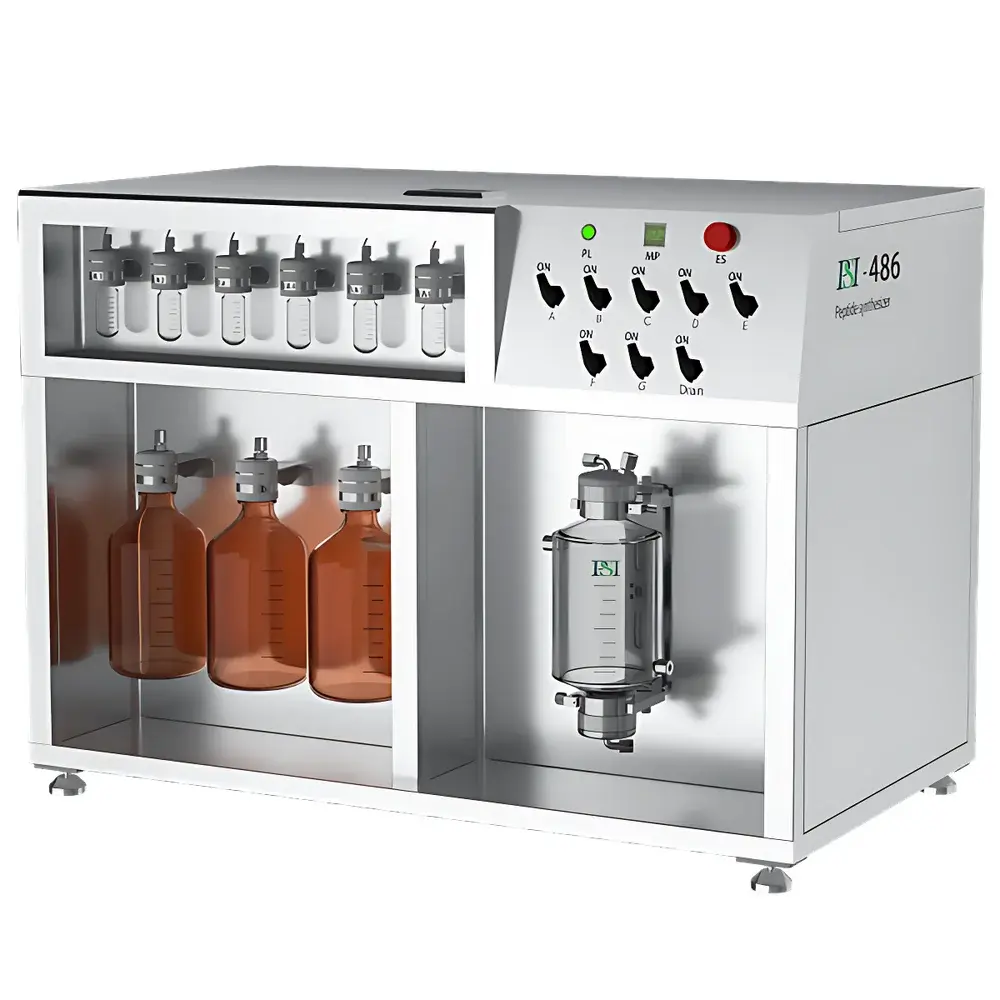
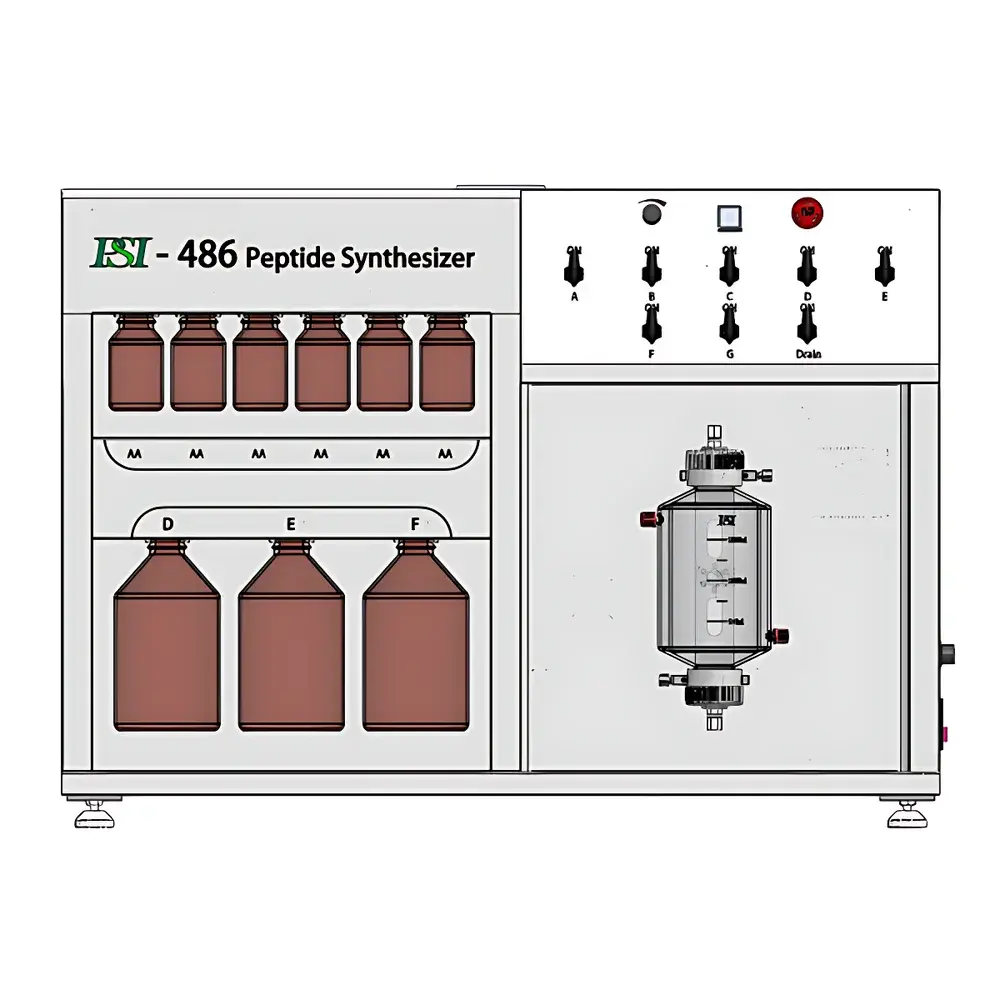
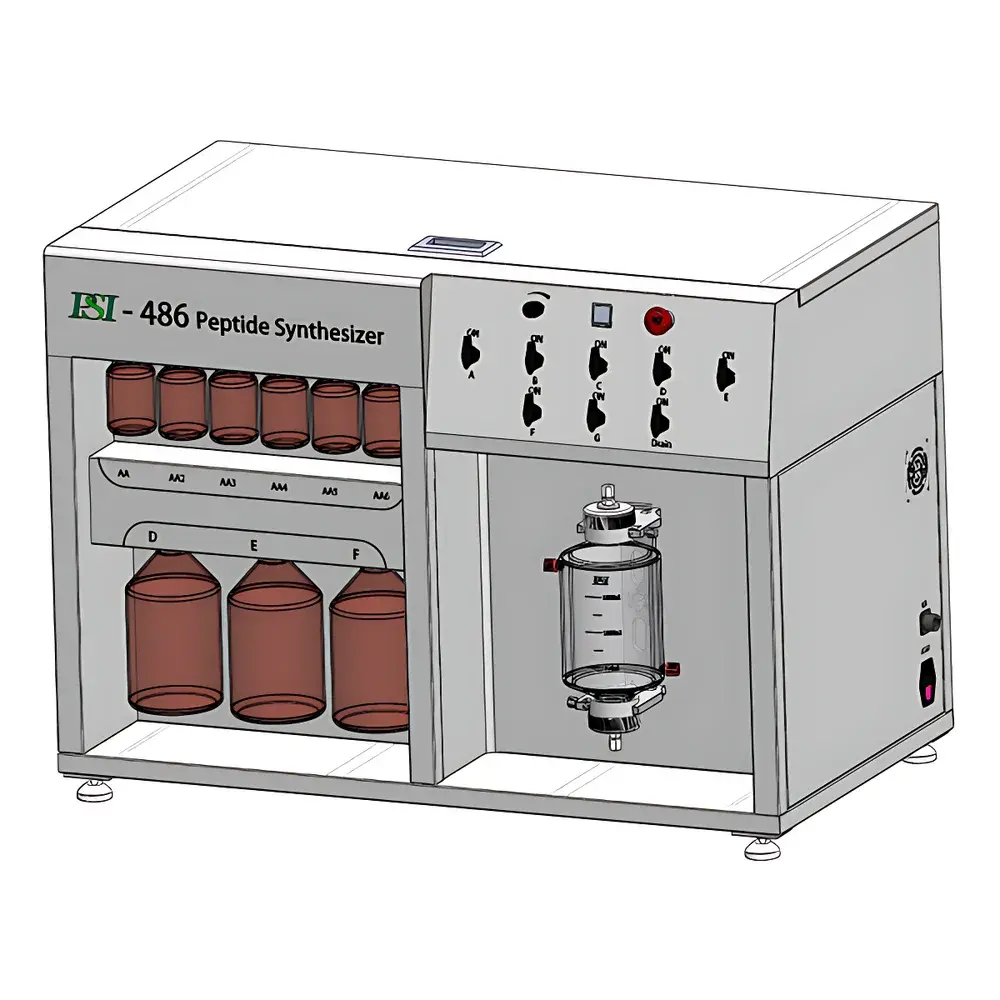
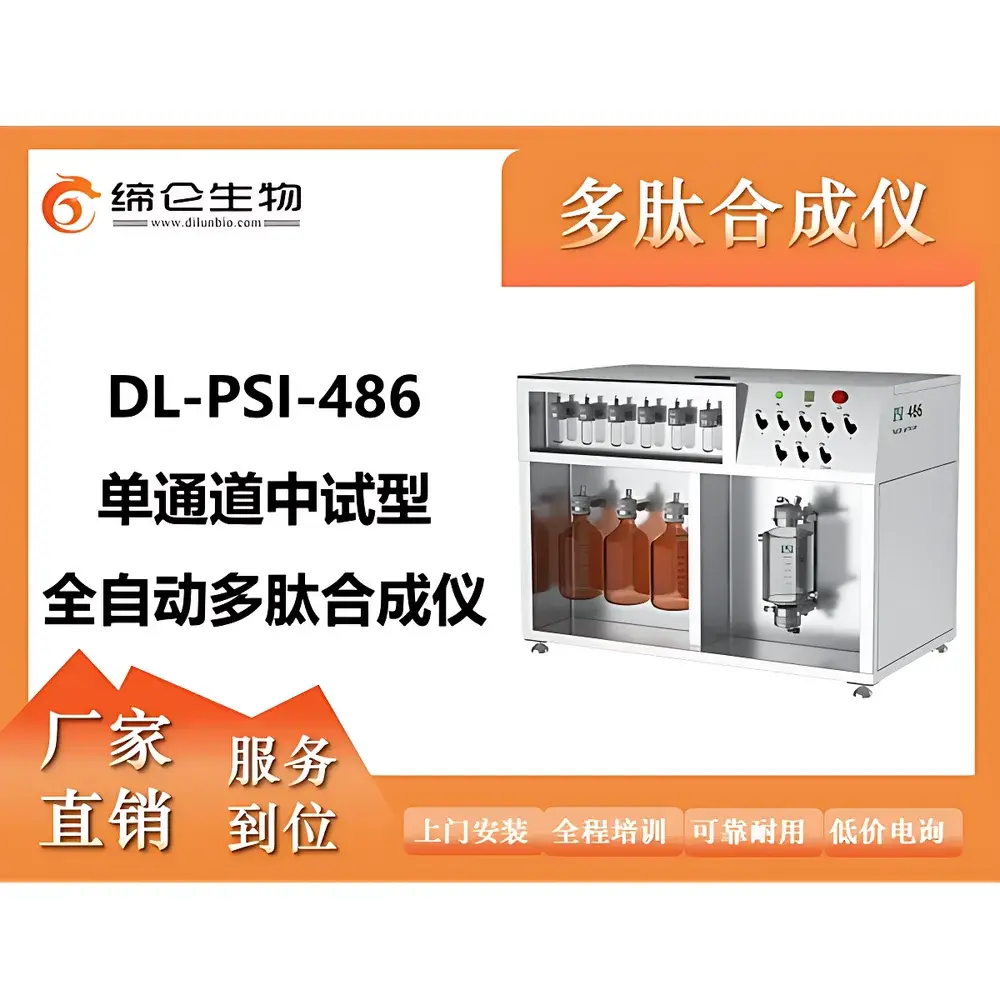
PSI DL-PSI486 Single-Channel Pilot-Scale Automated Peptide Synthesizer
| Brand | PSI |
|---|---|
| Origin | USA |
| Model | DL-PSI486 |
| Amino Acid Delivery | Automated |
| Reagent Delivery | Automated |
| Synthesis Scale | 2.5–20 mmol |
| Reactor Count | 1 |
| Reactor Volumes | 0.5 L, 1 L, 2 L (jacketed) |
| Syringe Pump Accuracy | ±0.1 mL |
| Synthesis Purity | ≥99.5% |
| Solvent Flow Rate | 200 mL/min |
Overview
The PSI DL-PSI486 is a single-channel, pilot-scale automated solid-phase peptide synthesizer engineered for reproducible, scalable transition from laboratory discovery to GMP-compliant manufacturing. It implements a proprietary agitation mechanism—mechanical reactor inversion—eliminating traditional impeller-based mixing and thereby preventing resin fragmentation, channeling, or sieve plate clogging. This design, first validated by Dr. John Ye in 1995, ensures uniform reagent access to resin-bound growing chains across all synthesis scales, achieving coupling efficiencies consistently ≥99.5% even for sequences exceeding 100 amino acid residues. Unlike batch-mixing systems reliant on turbulent shear, the DL-PSI486’s controlled 180° reactor oscillation induces high-frequency, low-shear collisions between solid-phase resin and liquid-phase reagents—enabling complete solvation and diffusion-limited reaction kinetics without mechanical degradation of functionalized polystyrene or ChemMatrix® supports. The instrument operates under continuous inert gas (N₂ or Ar) purging, maintaining an oxygen- and moisture-free environment throughout deprotection, coupling, washing, and capping steps.
Key Features
- Single-channel architecture with fully programmable synthesis protocol execution—including amino acid sequence definition, coupling time, deprotection duration, wash cycles, and real-time parameter logging.
- Jacketed reactor vessels (0.5 L, 1 L, 2 L) compatible with external water bath temperature control (±0.5 °C stability), supporting both room-temperature and elevated-temperature protocols (e.g., for hindered couplings or pseudoproline dipeptide incorporation).
- Six dedicated amino acid reservoirs accommodate custom-loaded Fmoc- or Boc-protected monomers, coupling reagents (e.g., HATU, DIC), and side-chain protecting group solutions—enabling unattended multi-step synthesis without manual intervention.
- Seven solvent reservoirs support sequential delivery of DMF, DCM, piperidine/DMF, methanol, and other process-critical wash and activation solvents, each independently valved and pressure-regulated.
- Electronic servo-driven actuation system provides precise, variable-speed reactor inversion (0–25 rpm, infinitely adjustable), synchronized with fluid delivery timing to optimize mass transfer and minimize resin attrition.
- Stainless steel 304 chassis construction ensures chemical resistance, structural rigidity, and compliance with ISO 14644-1 Class 7 cleanroom-compatible installation requirements.
Sample Compatibility & Compliance
The DL-PSI486 accommodates standard 1% DVB cross-linked polystyrene resins (e.g., Wang, Rink amide MBHA), as well as polyethylene glycol (PEG)-based supports (e.g., ChemMatrix®, NovaSyn® TG). Its inert gas manifold, sealed reactor headspace, and solvent vapor recovery interface meet ASTM E2500-13 guidelines for equipment qualification in pharmaceutical development. All firmware and operational logs adhere to ALCOA+ principles (Attributable, Legible, Contemporaneous, Original, Accurate, Complete, Consistent, Enduring, Available) and support 21 CFR Part 11-compliant electronic signatures when integrated with validated LIMS or ELN platforms. The system is routinely deployed in GLP environments for preclinical peptide API synthesis and satisfies ICH Q5B structural characterization prerequisites prior to clinical batch release.
Software & Data Management
The embedded SynthOS™ v4.2 control software features a role-based user interface with three-tier access (Operator, Supervisor, Administrator), audit-trail-enabled parameter changes, and timestamped event logging for every valve actuation, pump stroke, temperature setpoint, and reactor motion cycle. Raw data—including flow rate profiles, pressure transducer readings, and reactor position feedback—is exported in CSV and HDF5 formats for integration into enterprise quality management systems (QMS). Optional OPC UA server module enables real-time synchronization with MES platforms such as Siemens Opcenter or Rockwell FactoryTalk, facilitating end-to-end traceability from synthesis run ID to final lyophilized product lot number.
Applications
- Pilot-scale production of therapeutic peptides (e.g., GLP-1 analogs, antimicrobial peptides, constrained macrocycles) requiring ≥5 g batch output per run.
- Process development studies including solvent screening, coupling reagent optimization, and kinetic profiling of difficult sequences (e.g., aggregation-prone segments, consecutive sterically hindered residues).
- Supporting regulatory filings: generation of representative batches for impurity profiling (HPLC-MS), residual solvent analysis (GC), and endotoxin testing (LAL assay) per USP .
- Contract manufacturing organizations (CMOs) and CRDMO service providers utilizing the DL-PSI486 as a bridge between research-grade synthesizers (e.g., CEM Liberty Blue) and commercial-scale continuous-flow reactors.
FAQ
What is the maximum recommended peptide length for routine synthesis on the DL-PSI486?
For sequences up to 50 residues, >95% crude purity is typical; for lengths beyond 80 residues, stepwise coupling efficiency remains ≥99.5% under optimized protocols—enabling reliable synthesis of 100+ residue targets with appropriate resin loading and extended coupling times.
Does the system support Boc-based synthesis strategies?
Yes—the inert gas environment, acid-stable fluidic path (PTFE/PFA tubing), and programmable TFA deprotection cycles make it fully compatible with both Fmoc and Boc SPPS methodologies.
Can reactor volume be changed mid-synthesis?
No—reactor selection occurs prior to run initialization; however, the 0.5 L, 1 L, and 2 L jacketed vessels are interchangeable between runs using standardized quick-connect fittings and auto-calibrating position sensors.
Is remote monitoring supported out-of-the-box?
Yes—integrated Ethernet port and TLS-secured web interface allow secure remote access to real-time status, alarm history, and live video feed from optional onboard HD camera (mounted above reactor viewport).
How is cleaning validation performed between synthesis campaigns?
The system executes automated solvent purge sequences (including nitrogen blow-down and sequential DCM/DMF flushes), with conductivity and UV absorbance verification at the waste outlet—protocols documented in the included Cleaning Validation Template compliant with EU Annex 15 and FDA Guidance for Industry.





