
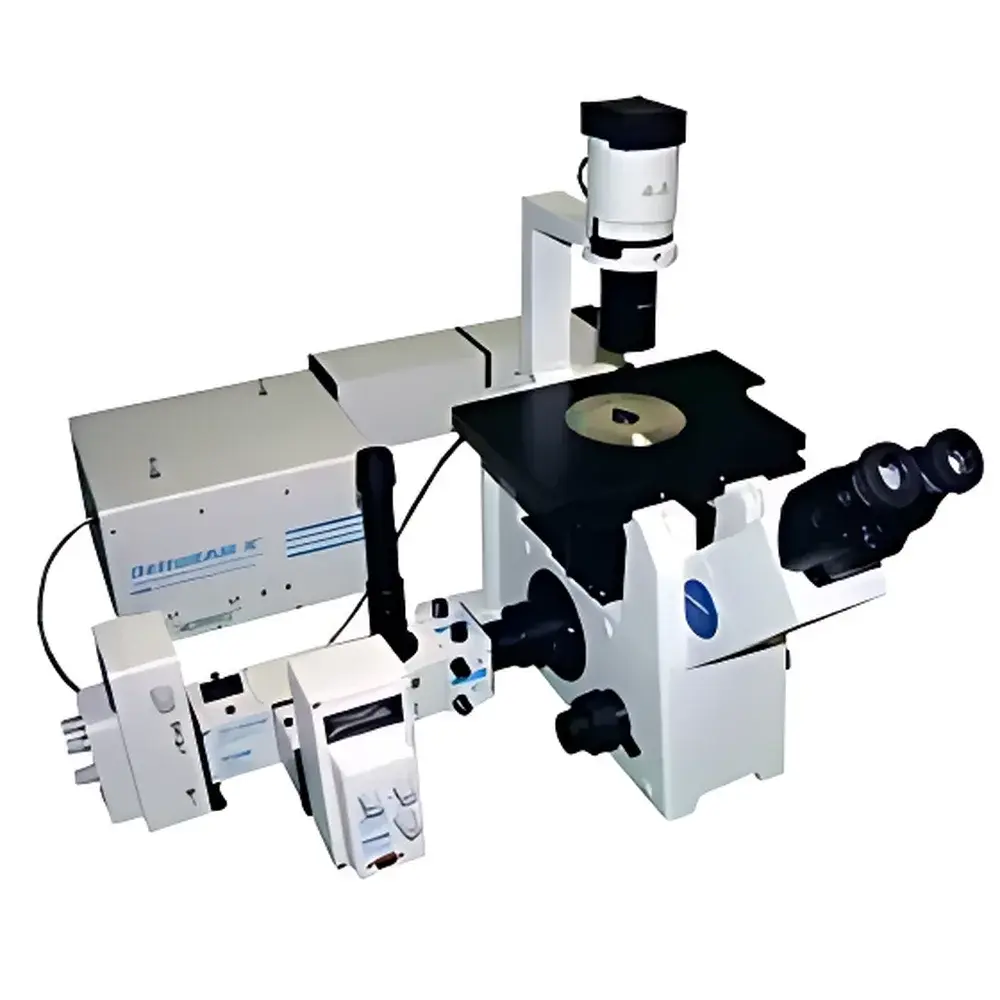
HORIBA Ratio Master Fluorescence Ratiometric Microscopy System
| Brand | HORIBA |
|---|---|
| Origin | USA |
| Manufacturer Type | Authorized Distributor |
| Origin Category | Imported |
| Model | Ratio Master |
| Price Range | USD 65,000 – 130,000 (FOB) |
| Monochromator Type | Grating-Based |
| Spectral Bandpass | Adjustable down to <1 nm (typical operational minimum) |
| Wavelength Accuracy | ±0.2 nm (calibrated with Hg/Ne lamp traceable to NIST standards) |
| Detection Speed | Sub-2 ms wavelength switching |
| Temporal Resolution | ≤5 ms per dual-wavelength ratio frame (with optional high-speed PMT or sCMOS detection) |
Overview
The HORIBA Ratio Master Fluorescence Ratiometric Microscopy System is a dedicated, high-temporal-resolution platform engineered for quantitative intracellular ion dynamics monitoring in live biological specimens. Built upon ratiometric fluorescence principles—where emission intensity at two distinct excitation wavelengths is acquired and mathematically normalized—the system eliminates artifacts from uneven dye loading, photobleaching, cell thickness variation, and optical path fluctuations. Its core architecture integrates the DeltaRAM™ monochromator-based illumination engine with synchronized high-speed detection, enabling true millisecond-scale kinetic acquisition of physiological events such as Ca²⁺ transients, Mg²⁺ fluxes, Na⁺ gradients, and intracellular pH shifts. Designed for integration with inverted research-grade microscopes (e.g., Nikon Ti2, Olympus IX83, Zeiss Axio Observer), the Ratio Master functions as a modular, non-scanning epifluorescence excitation control and acquisition subsystem—not a standalone imaging device—but one that delivers metrologically rigorous, time-resolved ratiometric data compliant with quantitative cell physiology standards.
Key Features
- DeltaRAM™ monochromator with <2 ms wavelength switching between user-defined excitation bands—enabling rapid alternation between isosbestic and ion-sensitive wavelengths (e.g., 340/380 nm for Fura-2, 495/440 nm for BCECF)
- High-stability quartz-tungsten-halogen and xenon arc lamp options with integrated intensity stabilization and shutter synchronization
- Optimized optical path with UV-grade fused silica optics and anti-reflection coatings to maximize throughput in UV–visible range (300–600 nm)
- Real-time hardware-synchronized acquisition: excitation wavelength, emission filter position, and detector readout are locked via TTL triggers to ensure sub-frame temporal fidelity
- Modular design supporting upgrade paths—including simultaneous sarcomere shortening detection via edge-detection algorithms when paired with high-speed CMOS cameras and custom muscle chamber stages
- Thermally stabilized monochromator housing (<±0.1 °C drift over 2 h) to maintain long-term wavelength repeatability and minimize spectral drift during extended recordings
Sample Compatibility & Compliance
The Ratio Master supports standard glass-bottom culture dishes (35 mm, 60 mm), perfusion chambers (e.g., Warner RC-26GLP), and specialized electrophysiology-compatible stages. It is routinely deployed in primary cardiomyocyte, neuronal, endothelial, and epithelial preparations expressing genetically encoded or synthetic ratiometric indicators (e.g., Fura-2 AM, Indo-1, SNARF-1, Mag-Fluo-4). All optical components comply with ISO 10110-7 (surface quality) and IEC 61000-6-3 (EMC emissions). The system architecture adheres to GLP-relevant documentation practices, and raw data files include embedded metadata (timestamp, excitation/emission configuration, lamp hours, environmental sensor logs) required for audit trails under FDA 21 CFR Part 11–compliant workflows when used with validated software modules.
Software & Data Management
Acquisition and analysis are performed using HORIBA’s proprietary RatioMaster Control Suite (v4.2+), a Windows-based application developed in alignment with NIH ImageJ/Fiji interoperability standards. The suite provides real-time ratio calculation (e.g., F340/F380), background subtraction, region-of-interest (ROI) time-series export in HDF5 and CSV formats, and batch processing for multi-experiment normalization. Data provenance is preserved through embedded XML headers containing instrument configuration, calibration history, and user-defined experimental parameters. Exported datasets are compatible with MATLAB, Python (via h5py/pandas), and commercial platforms including Clampfit, Igor Pro, and GraphPad Prism. Optional validation packages support IQ/OQ documentation per ASTM E2500 and ISO/IEC 17025 laboratory accreditation requirements.
Applications
- Cardiac electrophysiology: Simultaneous measurement of cytosolic Ca²⁺ transients and contractile kinetics in isolated adult mouse ventricular myocytes
- Neuronal signaling: High-fidelity tracking of presynaptic Ca²⁺ entry during repetitive stimulation protocols (1–100 Hz)
- Renal transport physiology: Quantifying apical vs. basolateral pH gradients in polarized MDCK monolayers
- Drug safety screening: Assessing compound-induced alterations in mitochondrial Ca²⁺ buffering capacity in hiPSC-derived cardiomyocytes
- Metabolic stress response: Monitoring dynamic Mg²⁺ redistribution during hypoxia/reoxygenation cycles in hepatocyte spheroids
FAQ
What types of fluorescent indicators are supported by the Ratio Master?
The system is optimized for dual-excitation ratiometric dyes (e.g., Fura-2, Indo-1, BCECF, SBFI) and compatible with newer genetically encoded indicators requiring precise excitation control (e.g., Twitch sensors, GCaMP variants with two-photon–optimized excitation pairs).
Can the Ratio Master be integrated with patch-clamp electrophysiology setups?
Yes—its TTL-synchronized architecture enables direct interfacing with amplifier systems (e.g., Axon Multiclamp 700B, HEKA EPC10) for simultaneous voltage-clamp and ratiometric Ca²⁺ recording.
Is wavelength calibration traceable to national standards?
Yes—factory calibration uses NIST-traceable mercury–neon spectral lines; users may perform on-site recalibration using the included Hg/Ne calibration lamp module.
Does the system support automated multi-position time-lapse ratiometric imaging?
When coupled with motorized stage controllers (e.g., Prior ProScan III) and third-party scripting (Python API), multi-field ratiometric time series across ≥96 wells or tissue sections are fully automatable.
What maintenance is required for long-term operational stability?
Annual lamp replacement (Xe or QTH), biannual monochromator grating inspection, and quarterly verification of wavelength accuracy and intensity linearity using certified reference standards are recommended per HORIBA Service Bulletin RM-SV-2023-01.





