
English Product Name
| Origin | Switzerland |
|---|---|
| Manufacturer Type | Authorized Distributor |
| Origin Category | Imported |
| Model | D873 |
| Pricing | Upon Request |
Overview
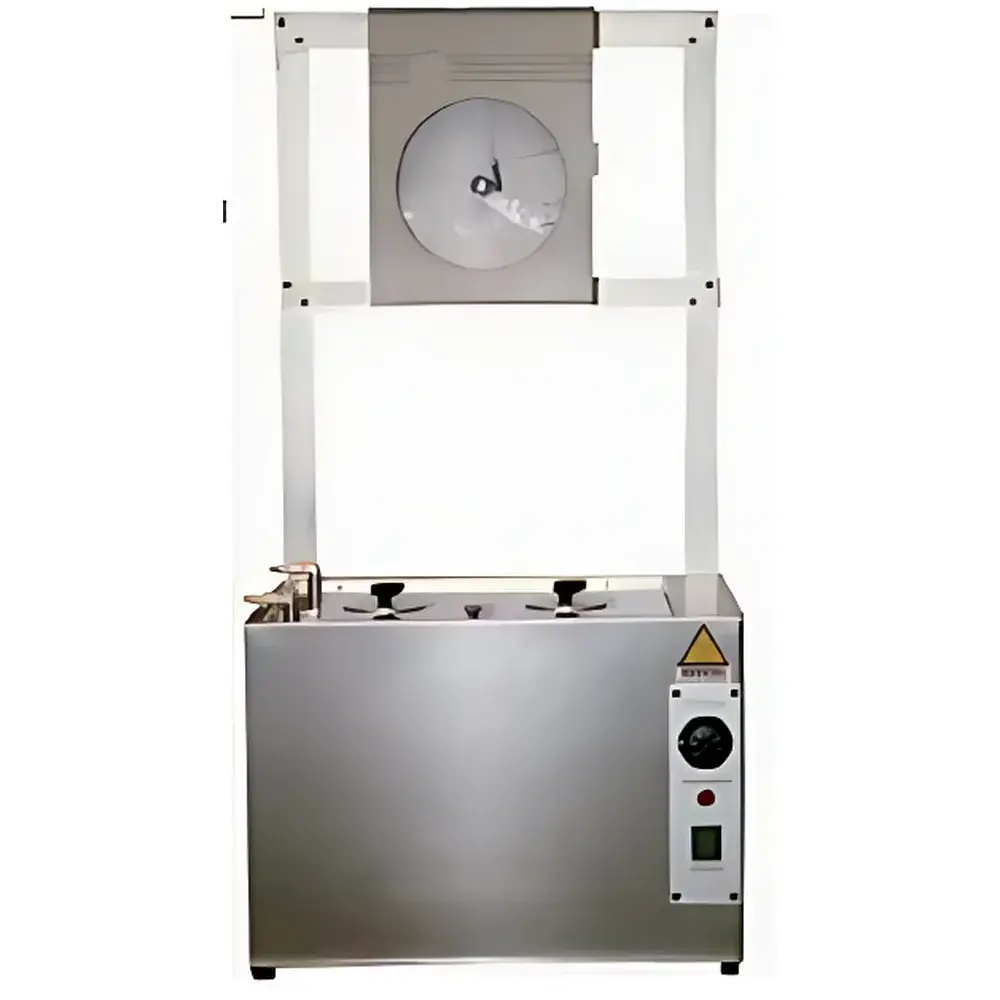
The Anton Paar D873 Aviation Turbine Fuel Oxidation Stability Tester is a precision-engineered benchtop instrument designed to evaluate the oxidative degradation behavior of aviation turbine fuels—specifically jet fuels (e.g., Jet A, Jet A-1, JP-5, JP-8) and related hydrocarbon-based aviation fuels—under accelerated aging conditions. It operates on the principle of the “gum-forming tendency” method as defined in ASTM D873, IP 138, and DIN 51799. In this test, a fuel sample is sealed in a pressurized oxygen bomb (oxygen partial pressure typically 690 kPa at 100 °C), immersed in a precisely controlled water bath, and subjected to thermal-oxidative stress for a defined duration. The formation of insoluble gum or sediment—quantified gravimetrically after filtration and solvent washing—is the primary performance indicator of oxidation stability. This measurement directly correlates with long-term storage integrity, filterability, and engine deposit risk in aircraft fuel systems. The instrument’s architecture integrates thermodynamic control, pressure-safe handling, and traceable metrology to ensure repeatability and compliance with international aviation fuel specifications.
Key Features
- Ceramic-coated stainless steel construction ensures corrosion resistance against aggressive hydrocarbon–oxygen environments and long-term mechanical durability.
- Benchtop design with integrated water bath featuring electronic heating elements, SSR (solid-state relay) temperature control, and Pt100 RTD sensor for ±0.1 °C accuracy across 20–100 °C operating range.
- Microprocessor-based PID controller with digital temperature display (0.1 °C resolution) and programmable ramp/soak profiles for precise thermal conditioning.
- Dual safety architecture: low-water-level alarm + automatic water level regulator prevent dry-heating; overtemperature cut-off protects both system and operator.
- Oxygen delivery system includes calibrated pressure gauge, flexible PTFE-reinforced tubing, and quick-connect fittings compatible with standard 30 bar-rated oxygen bombs.
- Configurable sample capacity: available in 2-position (LT/OS-201000-2/M) and 4-position (LT/OS-201000-4/M) configurations for parallel testing and throughput optimization.
- CE-marked per EN 61010-1:2019 and compliant with IEC 61326-1 for electromagnetic compatibility in laboratory environments.
Sample Compatibility & Compliance
The D873 is validated for use with aviation turbine fuels meeting ASTM D1655, DEF STAN 91-91, and NATO F-34 specifications. It supports standardized test protocols including ASTM D873 (oxidation stability of aviation fuels via gum formation), ASTM D525 (gasoline induction period), IP 40 and IP 138 (UK petroleum industry standards), DIN 51780 and DIN 51799 (German Institute for Standardization), and ISO 7536 (gasoline oxidation stability). All test procedures align with GLP (Good Laboratory Practice) requirements, and data acquisition—when paired with optional timestamped logging—supports audit readiness under FDA 21 CFR Part 11 when integrated into validated QC workflows.
Software & Data Management
While the base D873 operates via front-panel controls, optional USB or RS-232 interfaces enable connection to Anton Paar’s LabX™ Lite software (or third-party LIMS-compatible platforms) for automated test sequencing, real-time temperature/pressure logging, electronic signature capture, and PDF report generation. All raw parameters—including bath temperature history, test duration, oxygen pressure decay (if monitored externally), and final gum mass—are exportable in CSV or XML format. Audit trails, user access levels, and electronic record retention comply with ISO/IEC 17025:2017 clause 7.5.2 for measurement traceability.
Applications
- Quality assurance of batch-certified jet fuel prior to distribution or aircraft refueling.
- Stability screening of alternative aviation fuels (SAF), including Fischer–Tropsch and hydroprocessed esters and fatty acids (HEFA) blends.
- R&D evaluation of antioxidant additive packages (e.g., hindered phenols, amine-based stabilizers) in fuel formulations.
- Storage stability assessment for military and commercial fuel depots under varying ambient conditions.
- Root-cause analysis of field-reported filter plugging or injector fouling incidents linked to oxidative degradation.
FAQ
What standards does the D873 instrument support?
ASTM D873, ASTM D525, IP 138, IP 40, DIN 51799, DIN 51780, and ISO 7536.
Is the instrument supplied with oxygen bombs?
No—oxygen bombs are optional accessories (e.g., LT/OPV-200000, certified to 30 bar); each unit includes full documentation and pressure test certificate.
Can the water bath accommodate custom bath fluids?
The system is engineered exclusively for deionized water; substitution with glycol or oil-based media voids calibration and safety certification.
What consumables are required per test?
Glass sample vials (LAB-102-002), sintered glass filtering crucibles (LAB-102-015), and cooling cans (LAB-102-016) are mandatory per ASTM D873 procedure.
Does the instrument meet regulatory requirements for pharmaceutical or aerospace QA labs?
Yes—when deployed with documented IQ/OQ protocols, electronic records, and configured for 21 CFR Part 11 compliance via LabX™ integration, it satisfies GMP-aligned fuel testing requirements.




