
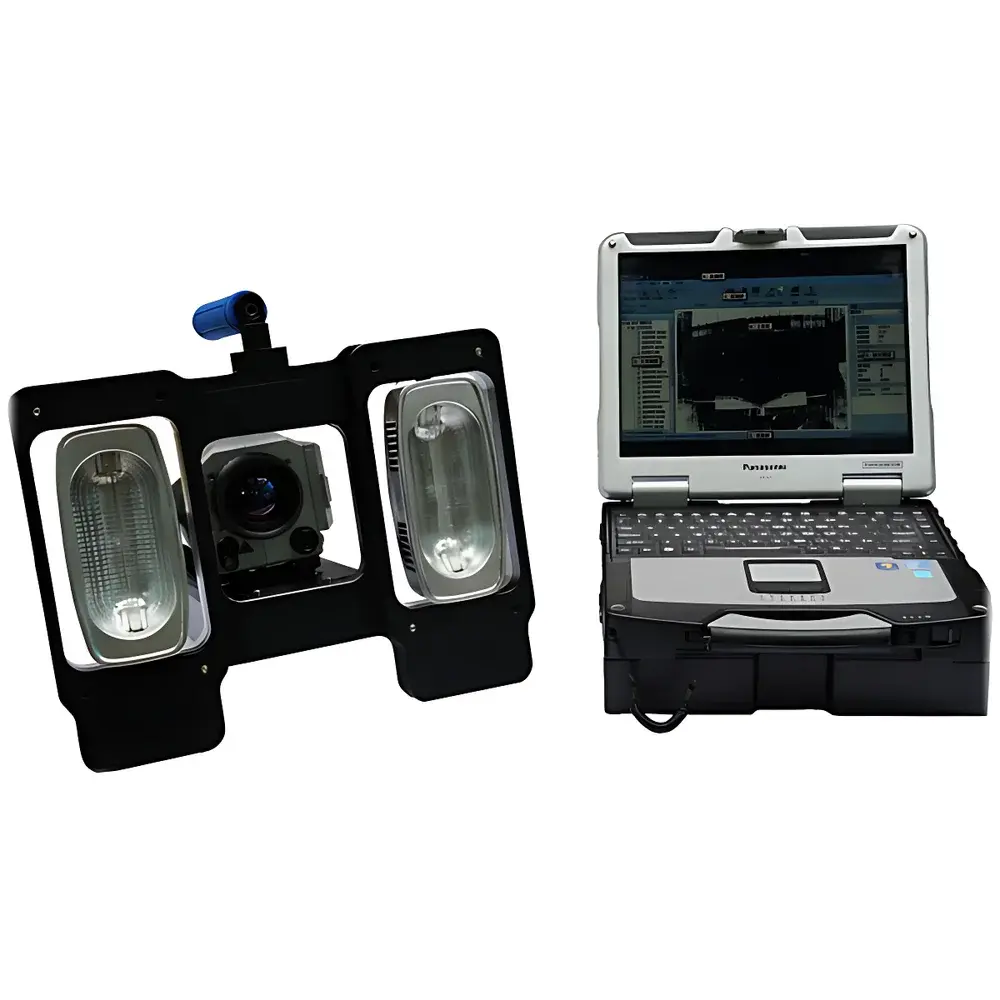
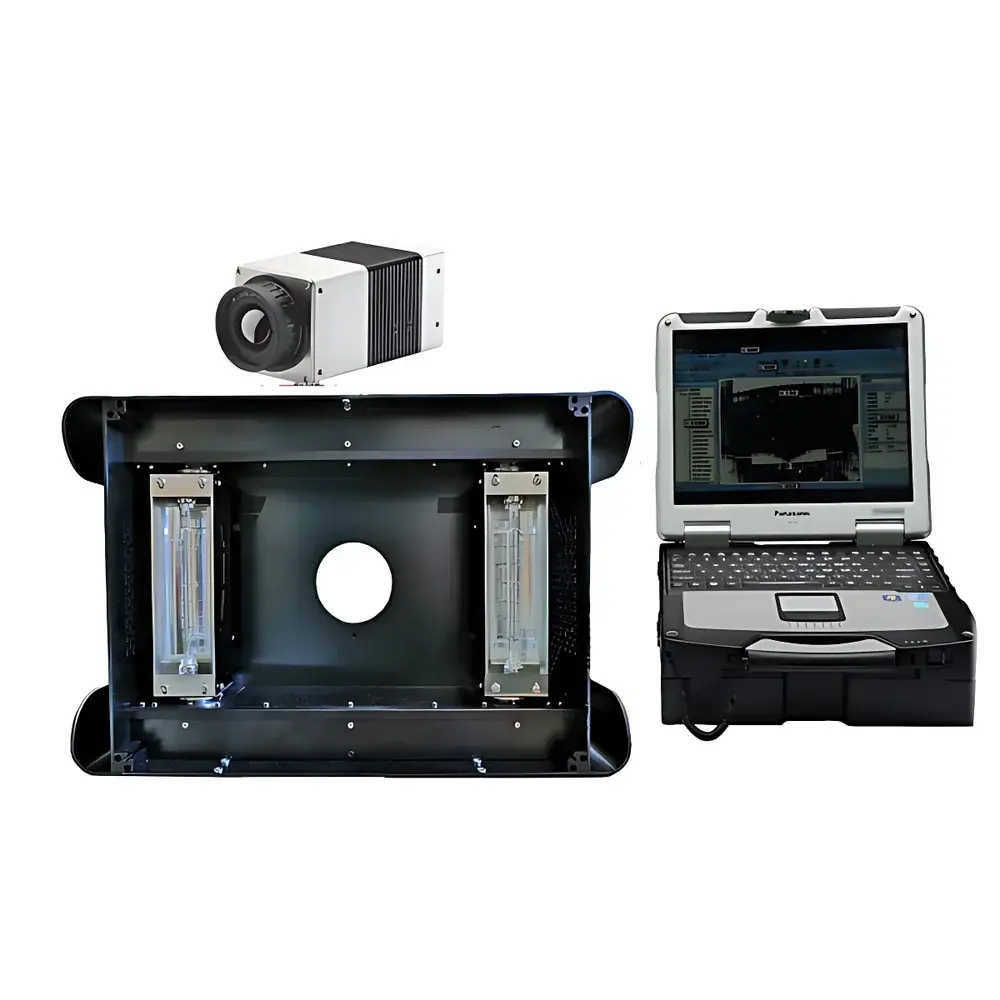
InspectIR Infrared Thermographic Wave Non-Destructive Testing System
| Origin | Beijing, China |
|---|---|
| Manufacturer Type | Authorized Distributor |
| Model | InspectIR |
| Pricing | Available Upon Request |
Overview
The InspectIR Infrared Thermographic Wave Non-Destructive Testing (NDT) System is an advanced active thermography platform engineered for subsurface defect detection in non-metallic and metallic materials. It operates on the principle of pulsed or modulated thermal excitation combined with high-speed infrared imaging to capture transient heat diffusion responses—enabling quantitative evaluation of delaminations, disbonds, voids, impact damage, and near-surface cracks without physical contact or material alteration. Unlike conventional ultrasonic or X-ray methods, this system leverages thermophysical contrast rather than acoustic impedance or density differences, making it especially effective for composites, polymer-matrix laminates, ceramic coatings, and adhesive-bonded joints widely used in aerospace, wind energy, and automotive manufacturing. The system integrates calibrated thermal excitation sources with synchronized mid-wave infrared (MWIR) or long-wave infrared (LWIR) focal plane array (FPA) cameras, delivering spatial resolution down to 0.1 mm and temporal resolution sufficient for Fourier-transform-based thermal wave analysis.
Key Features
- Modular thermal excitation architecture supporting multiple source configurations: high-energy xenon flash lamps (pulsed mode), high-intensity halogen arrays (lock-in mode), broadband LED arrays (frequency-modulated mode), and optional continuous-wave laser diodes (for localized, high-flux heating)
- Compatible with industry-standard infrared cameras (e.g., FLIR Axxx, Teledyne DALSA, Xenics) offering frame rates ≥ 500 Hz and NETD ≤ 30 mK at 30°C
- Real-time synchronization engine ensuring sub-millisecond alignment between excitation trigger and image acquisition across all modalities
- Thermal signal processing firmware compliant with ASTM E1934–21 (Standard Guide for Examining Electrical and Electronic Equipment Using Infrared Thermography) and ISO 18251–1:2022 (Non-destructive testing — Thermographic testing — Part 1: General principles)
- Ruggedized industrial enclosure rated IP54, suitable for factory-floor deployment with optional vibration-damping mounts and ambient temperature compensation algorithms
Sample Compatibility & Compliance
The InspectIR system accommodates flat, curved, and contoured specimens up to 1.2 m × 0.8 m in footprint and 150 mm in thickness. It has been validated for carbon-fiber-reinforced polymer (CFRP) panels (ASTM D790, D3039), aluminum honeycomb sandwich structures (NASM 1312–16), thermal barrier coatings (TBCs) on nickel-based superalloys (AMS 2444), and rubber-to-metal bonded components (SAE J2440). All measurement protocols adhere to GLP-compliant documentation workflows, including full audit trails for calibration records, excitation parameters, and raw thermal sequence metadata. Software-generated reports include traceable uncertainty budgets per ISO/IEC 17025 requirements and support FDA 21 CFR Part 11 electronic signature readiness when deployed in regulated environments.
Software & Data Management
The proprietary InspectIR Studio software suite provides a unified interface for experiment design, real-time monitoring, and post-processing analytics. It supports both time-domain analysis (pulse-phase thermography, PPT) and frequency-domain analysis (lock-in thermography, LIT), with built-in algorithms for phase delay mapping, amplitude ratio computation, and thermal diffusivity inversion. Raw thermal video sequences are stored in vendor-neutral HDF5 format with embedded EXIF-style metadata (excitation duration, camera gain, integration time, ambient conditions). Data export options include CSV, MATLAB .mat, and DICOM-IR extensions for integration into enterprise quality management systems (QMS) such as MasterControl or Veeva Vault QMS. Automated report generation includes customizable templates aligned with ASNT SNT-TC-1A certification requirements.
Applications
- Aerospace: Detection of impact damage in wing skins and fuselage panels; verification of bond integrity in radome assemblies and composite repair patches
- Renewable Energy: Inspection of wind turbine blade root joints, spar cap adhesion, and lightning protection layer continuity
- Automotive: Quality assurance of battery module thermal interface materials (TIMs), EV motor stator winding insulation, and structural adhesive bonds in aluminum-intensive chassis
- Electronics: Subsurface void detection in molded IC packages and solder joint integrity assessment under conformal coatings
- Academic & Standards Development: Used by Capital Normal University and Beijing Institute of Aeronautical Materials to develop China’s first national standard for infrared thermographic NDT of fiber-reinforced composites (GB/T XXXXX–202X, draft stage)
FAQ
Does the InspectIR system support automated inspection line integration?
Yes—it offers EtherCAT and OPC UA interfaces for seamless synchronization with robotic handling systems, PLC-controlled conveyors, and MES-level reporting infrastructure.
Can the system be configured for GMP-regulated medical device manufacturing?
Yes—when paired with validated software modules and documented IQ/OQ protocols, it meets the data integrity and traceability requirements of ISO 13485 and FDA 21 CFR Part 820.
Is hardware customization available for unique application constraints?
Yes—custom configurations include specialized optical path design for confined access, explosion-proof enclosures for hazardous environments, and multi-spectral IR camera integration (MWIR + LWIR fusion).
What level of technical support is provided post-installation?
Customers receive on-site commissioning, operator certification training, annual performance verification, and remote diagnostics via secure TLS-encrypted channel with SLA-backed response times.
Are reference standards and validation artifacts included?
Yes—each system ships with NIST-traceable thermal reference targets, artificial defect test panels (per ASTM E2582), and a full set of calibration certificates issued by CNAS-accredited laboratories.
Related Products



