
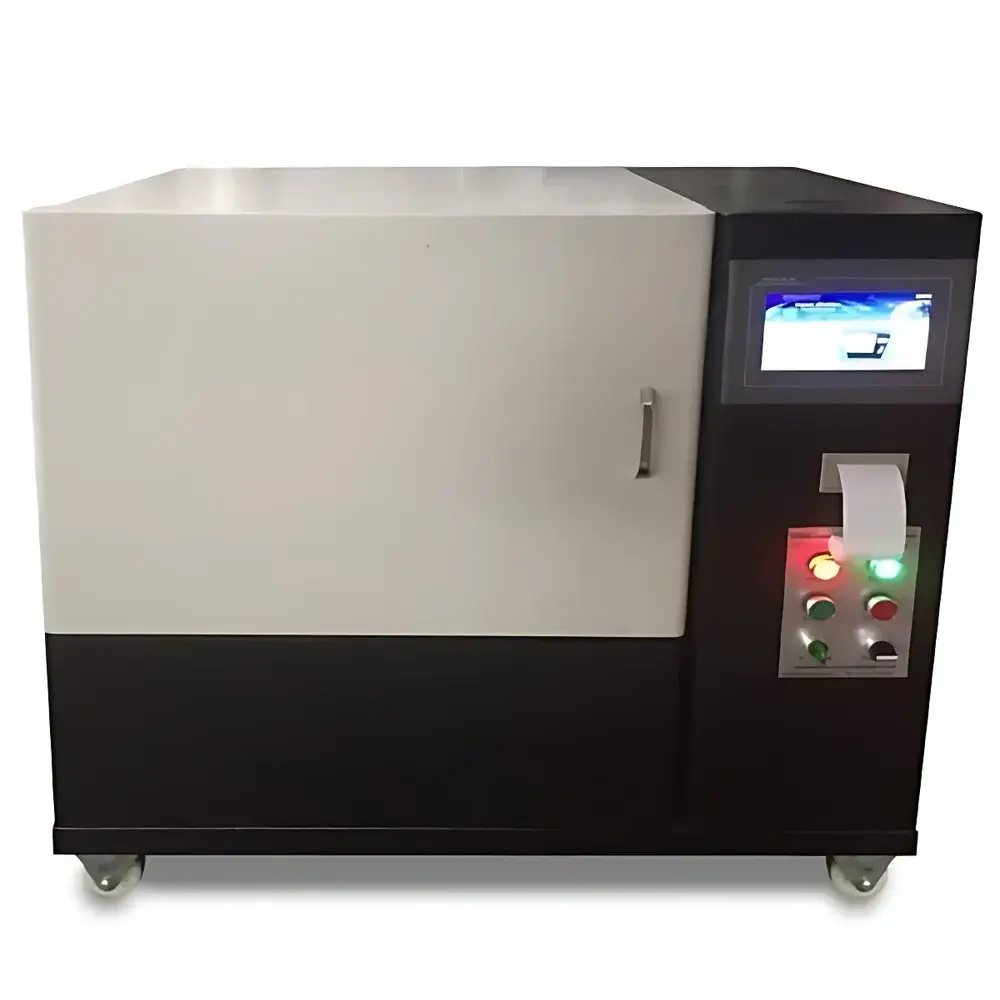
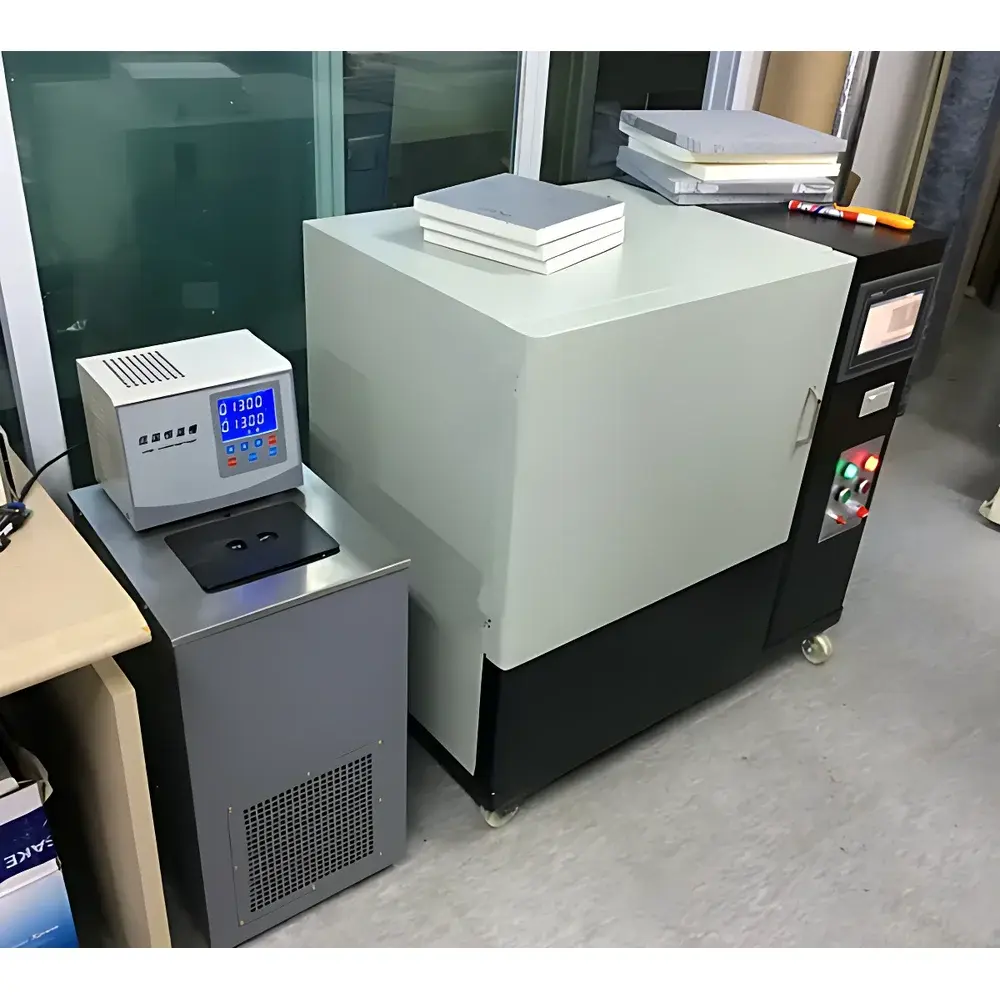
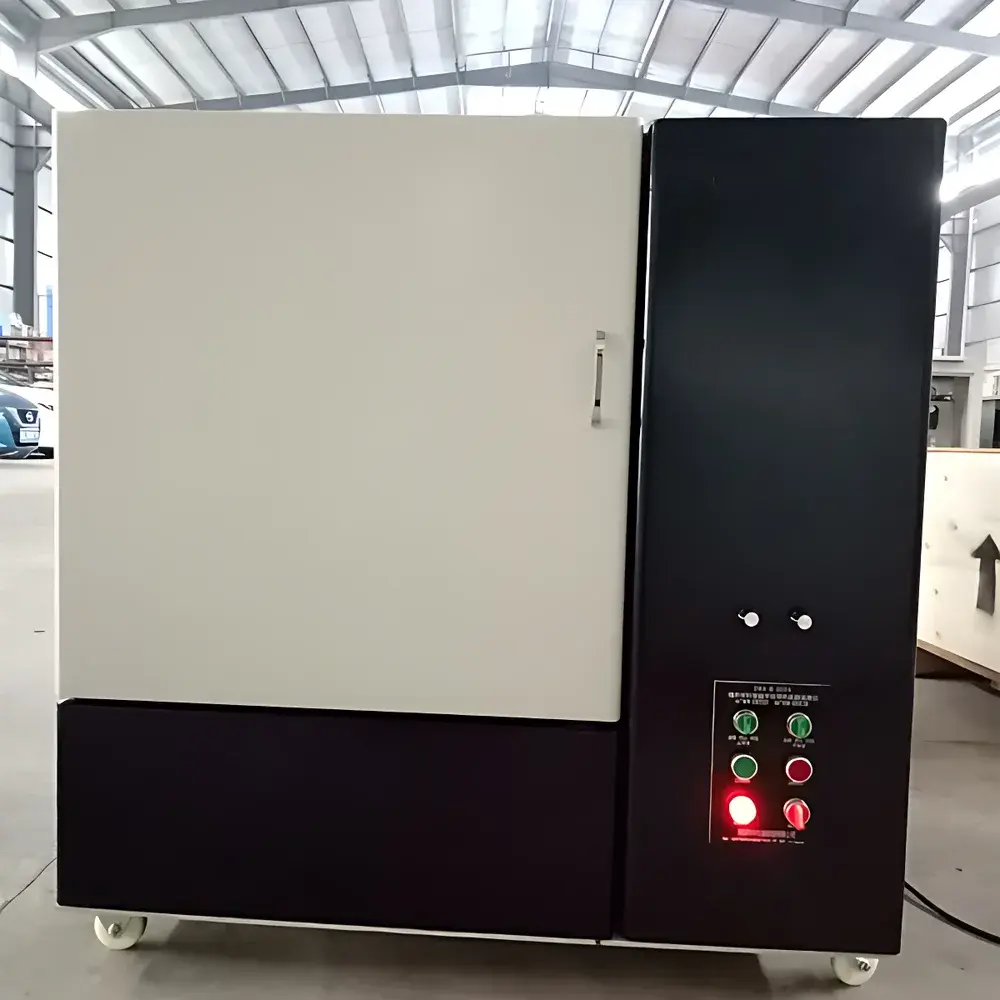
DRH300 Series Guarded Hot Plate Thermal Conductivity Analyzer
| Origin | Hunan, China |
|---|---|
| Manufacturer Type | Authorized Distributor |
| Origin Category | Domestic (China) |
| Model | DRH300 |
| Quotation | USD 7,650 (FOB) |
| Instrument Type | Guarded Hot Plate Method |
| Dimensions (L×W×H) | 1200 × 700 × 1300 mm |
| Accuracy | ±3% |
| Thermal Conductivity Range | 0.005–3.0 W/(m·K) |
| Repeatability | 1% |
| Temperature Control Range (DRH300A/B/C variants) | 0–40 °C / RT–100 °C / −20–70 °C |
| Sample Size Max | 300 × 300 × 100 mm |
| Thermal Resistance Range | 0.1–8.0 m²·K/W |
| Control System | Peltier-based heated/cooled plates with dual embedded heat flux sensors |
| Compliance | ASTM C518, ISO 8301, GB/T 10294, GB/T 10295, JIS A 1412, DIN EN 12939, DIN EN 13163, DIN EN 12667 |
Overview
The DRH300 Series Guarded Hot Plate Thermal Conductivity Analyzer is a fully automated, steady-state thermal transport measurement system engineered for high-precision determination of thermal conductivity (λ) and thermal resistance (R-value) in solid, homogeneous, and isotropic insulating materials. Based on the guarded hot plate method—recognized as the primary reference technique for absolute thermal property measurement under ISO 8301 and ASTM C518—the DRH300 employs a dual-sensor, actively guarded configuration to minimize lateral heat loss and ensure uniform axial temperature gradients across the test specimen. The instrument integrates two independently controlled Peltier-driven heating/cooling plates, enabling precise temperature setpoint control (±0.1 °C stability) and programmable thermal gradient application. Its guarded design meets the geometric and thermal boundary requirements stipulated in ISO 8301 Annex A and ASTM C518 Section 6.2, ensuring traceability to national metrological standards. Unlike transient methods, the DRH300 delivers fundamental, calibration-independent λ-values by directly measuring heat flux (via calibrated thermopile sensors), temperature differential (via PT100-grade platinum resistance thermometers), and specimen geometry—making it suitable for certification-grade testing in quality assurance, R&D, and regulatory submission contexts.
Key Features
- Fully automated guarded hot plate architecture compliant with ISO 8301 and ASTM C518 Class I accuracy requirements
- Dual embedded heat flux sensors with NIST-traceable calibration certificates for direct, low-noise heat flow measurement
- Peltier-based temperature control system supporting three operating variants: DRH300A (0–40 °C), DRH300B (RT–100 °C), and DRH300C (−20–70 °C)
- Motorized upper plate actuation with integrated digital thickness gauge for repeatable sample compression and gap compensation
- Steady-state acquisition protocol with real-time convergence monitoring; typical stabilization time < 15 minutes for low-λ materials (e.g., aerogels, mineral wool)
- Embedded controller with touchscreen interface + optional PC-based software for remote operation, script-driven batch testing, and audit-ready data logging
- Sample chamber accommodates specimens up to 300 mm × 300 mm × 100 mm, supporting both single- and multi-layer configurations per ISO 10456
Sample Compatibility & Compliance
The DRH300 is validated for rigid, semi-rigid, and granular insulating materials exhibiting low-to-moderate thermal conductivity (0.005–3.0 W/(m·K)). Common applications include building insulation products (expanded polystyrene, polyisocyanurate, cork boards), industrial refractories (ceramic fiber modules, calcium silicate), composite panels (sandwich cores, gypsum-based composites), and elastomeric foams (EPDM, neoprene). It supports testing per multiple international standards: ASTM C518 (Standard Test Method for Steady-State Thermal Transmission Properties), ISO 8301 (Thermal Insulation — Determination of Steady-State Thermal Resistance), GB/T 10294 and GB/T 10295 (Chinese national standards aligned with ISO principles), JIS A 1412, and key EN standards including DIN EN 12667 (building products), DIN EN 12939 (vacuum insulation panels), and DIN EN 13163 (factory-made mineral wool products). All measurements satisfy GLP-aligned data integrity requirements, with full traceability of sensor calibrations, environmental conditions, and operator inputs.
Software & Data Management
The DRH300 operates via ThermoControl Suite v3.x—a Windows-based application supporting 21 CFR Part 11-compliant user access control, electronic signatures, and immutable audit trails. Software features include: configurable test templates (predefined for ASTM/ISO protocols), real-time visualization of temperature profiles and heat flux convergence, automatic calculation of λ, R, and U-values with uncertainty propagation per GUM (JCGM 100), export to CSV/PDF/XML formats with embedded metadata (sample ID, operator, calibration expiry, ambient conditions), and integration with LIMS via OPC UA or REST API. Raw sensor outputs (mV, Ω, °C) are archived alongside processed results, enabling retrospective reanalysis without instrument retesting. Calibration data—including sensor sensitivity coefficients and plate emissivity corrections—is stored in encrypted project files and subject to version-controlled updates.
Applications
- Quality control of commercial insulation materials prior to shipment (ASTM C518 routine verification)
- R&D validation of novel aerogel composites, phase-change material (PCM)-integrated boards, and bio-based insulators
- Thermal performance certification for green building rating systems (LEED, BREEAM, China Green Building Label)
- Regulatory submissions requiring ISO 8301-compliant λ-data for CE marking or CCC certification
- Interlaboratory comparison studies under ISO/IEC 17043 proficiency testing schemes
- Thermal modeling input generation for building energy simulation tools (EnergyPlus, TRNSYS)
FAQ
What standards does the DRH300 comply with for thermal conductivity measurement?
The DRH300 conforms to ASTM C518, ISO 8301, GB/T 10294, GB/T 10295, JIS A 1412, DIN EN 12667, DIN EN 12939, and DIN EN 13163.
Can the DRH300 measure anisotropic or heterogeneous materials?
It is optimized for isotropic, homogeneous solids; anisotropic materials require directional testing setups beyond standard configuration.
Is external water cooling required for all models?
Only DRH300B (100 °C max) and DRH300C (−20 °C min) require optional external chiller integration; DRH300A operates passively.
How is sample thickness measured during testing?
Motorized upper plate displacement is tracked via high-resolution linear encoder, and thickness is auto-calculated from mechanical position feedback before thermal equilibrium.
Does the system support automated calibration verification?
Yes—built-in reference standards (certified low-λ ceramic discs) enable periodic in-situ verification per ISO/IEC 17025 Clause 7.7.1.



