
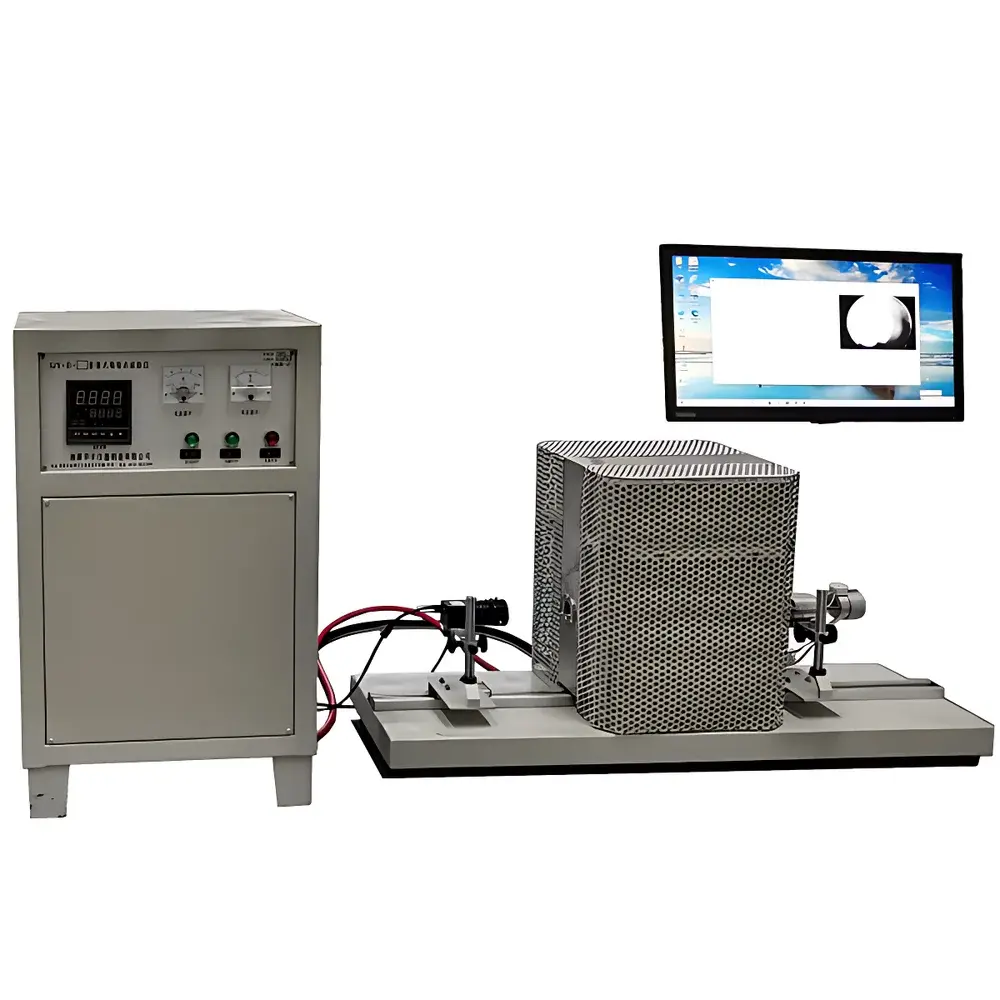
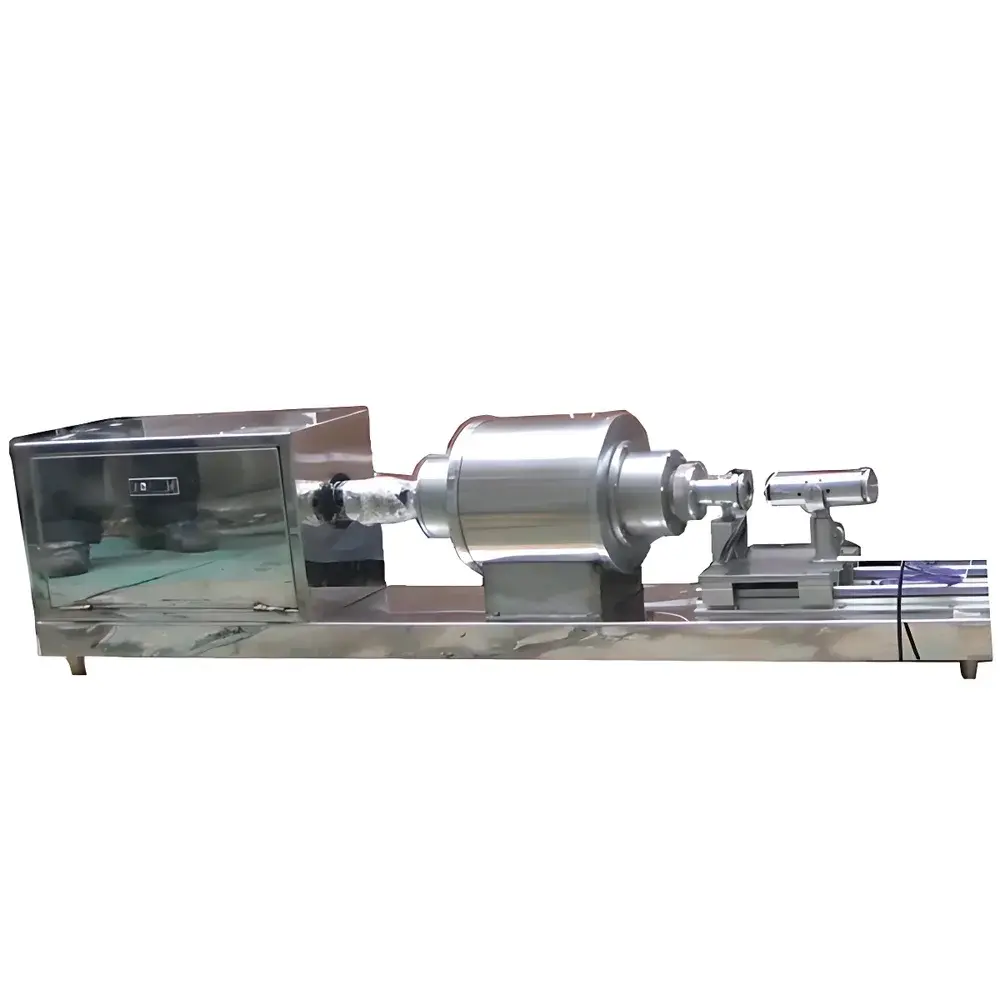
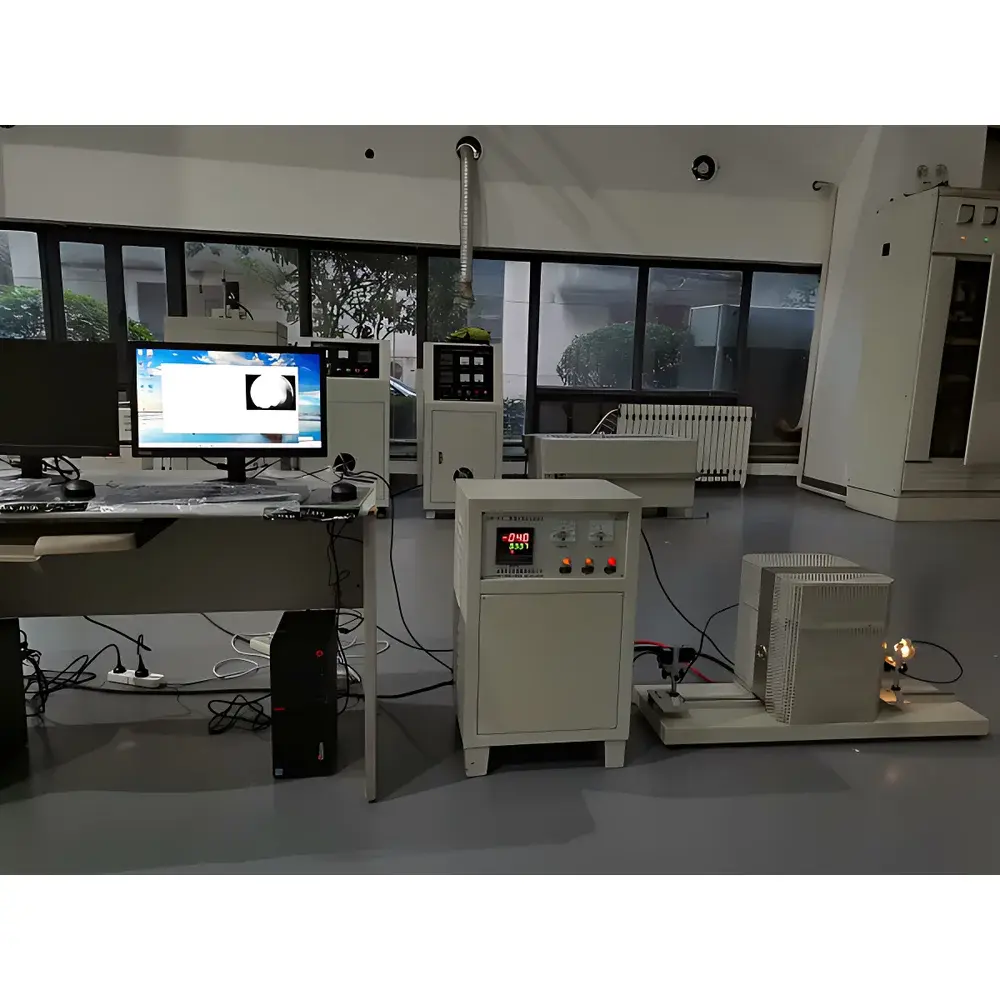
Shanghai Yuhua SJY-II-14/17 Imaging Sintering Point Analyzer
| Origin | Hunan, China |
|---|---|
| Manufacturer Type | Authorized Distributor |
| Origin Category | Domestic (PRC) |
| Model | SJY-II-14/17 |
| Price Range | USD 1,400–7,200 (FOB) |
| Max. Temperature | 1400 °C / 1700 °C |
| Heating Rate | 0–10 °C/min |
| Temp. Accuracy | ±1 °C |
| Sample Dimensions | Ø6 mm × 8 mm (cylindrical) |
| Linear Measurement Range | 5 mm |
| Resolution | 0.1 nm |
| Atmosphere Options | Vacuum (≤1.0×10⁻² Pa), Inert Gas (N₂, Ar), or Ambient Air |
Overview
The Shanghai Yuhua SJY-II-14/17 Imaging Sintering Point Analyzer is a high-temperature optical dilatometric system engineered for real-time, in-situ visualization and quantitative dimensional analysis of solid-state thermal behavior under controlled atmospheres. It operates on the principle of high-resolution optical projection coupled with digital image metrology, enabling direct observation and measurement of sintering onset, shrinkage kinetics, softening deformation, sphere formation (for refractoriness determination), and interfacial contact angle evolution during heating. Unlike conventional dilatometers that rely solely on mechanical displacement transducers, this instrument integrates a calibrated optical path, temperature-synchronized imaging, and pixel-based geometric quantification—providing both qualitative morphological insight and traceable linear data. Designed for ISO 562, ASTM C24, ASTM C373, and GB/T 7322-compliant testing protocols, it serves as a primary tool for evaluating refractory raw materials, ceramic green bodies, foundry molding sands, metallurgical powders, and advanced oxide composites across industrial R&D and quality assurance laboratories.
Key Features
- Two high-temperature furnace variants: 1400 °C and 1700 °C maximum operating temperatures, each with 30 mm internal diameter alumina-tube furnace architecture and dual-zone MoSi₂ heating elements for uniform axial temperature profiles.
- Precision programmable temperature control: 32-segment ramp-hold profiles with intelligent PID regulation; heating rate adjustable from 0 to 10 °C/min; thermal accuracy maintained at ±1 °C over full range.
- Optical imaging subsystem: 8×–9× fixed-magnification telecentric projection lens with collimated illumination; 5-megapixel industrial CCD camera synchronized to temperature acquisition at user-defined intervals (default: 1 °C step).
- Digital metrology engine: Sub-pixel edge detection algorithm applied to stored thermal image sequences; linear displacement resolution of 0.1 nm derived from calibrated pixel-to-micron mapping (validated per ISO 10360-8).
- Atmosphere flexibility: Integrated vacuum pump capable of ≤1.0×10⁻² Pa base pressure; optional inert gas purge manifold (N₂ or Ar) with mass flow controller; standard operation supports air, reducing, or oxidizing environments.
- Robust mechanical design: Water-cooled optical housing; quartz viewport rated to 1200 °C; sample stage with precision centering mechanism ensuring repeatable positioning within ±5 µm radial tolerance.
Sample Compatibility & Compliance
The SJY-II-14/17 accommodates cylindrical specimens measuring Ø6 mm × 8 mm—standardized for compatibility with ISO 562 refractoriness test bars and ASTM C24 sintering coupons. Custom sample holders support alternative geometries (e.g., rectangular prisms or thin discs) upon request. All measurements adhere to documented calibration procedures traceable to NIST-certified thermocouples (Type S) and certified length standards. The system meets functional requirements for GLP-compliant thermal analysis workflows, including audit-trail-enabled data logging, user-access controls, and electronic signature support in software mode. It is routinely deployed in facilities maintaining ISO/IEC 17025 accreditation for ceramic and refractory testing.
Software & Data Management
Control and analysis are performed via dedicated Windows-based software compliant with FDA 21 CFR Part 11 requirements (electronic records/electronic signatures). Core modules include: (1) Real-time temperature-image synchronization dashboard; (2) Automated shrinkage/expansion curve generation with derivative analysis (dL/dT); (3) Contact angle quantification using tangent-fitting algorithms on molten interface contours; (4) Refractoriness endpoint detection based on circularity threshold (ISO 562 Annex A); (5) Export of time-temperature-dimension datasets in CSV, XML, and HDF5 formats; (6) Version-controlled report templates supporting ASTM E29, ISO 14644, and internal QA documentation standards.
Applications
- Determination of sintering onset temperature (SOT) and densification onset in oxide ceramics (Al₂O₃, ZrO₂), carbides (SiC), and nitrides (Si₃N₄).
- Refractoriness evaluation of fireclay, magnesia, chromite, and dolomite-based refractories per ISO 562 and GB/T 7322.
- Thermal stability assessment of investment casting shell materials and core binders.
- Surface tension and wetting behavior analysis of metal-ceramic systems (e.g., Cu–Al₂O₃, Ag–TiC) via dynamic contact angle tracking.
- Teaching laboratory use for illustrating solid-state diffusion, grain boundary migration, and liquid-phase sintering mechanisms.
- Process optimization of tape-casting slurries, powder injection molding feedstocks, and additive manufacturing green parts.
FAQ
What standards does the SJY-II-14/17 support for refractoriness testing?
It fully complies with ISO 562, ASTM C24, and Chinese national standard GB/T 7322 for refractoriness determination by optical observation of sphere formation.
Can the system measure expansion coefficients below sintering onset?
Yes—the optical metrology module resolves thermal expansion down to ~100 °C, enabling calculation of mean linear expansion coefficients (α) between 100–1000 °C when used with reference standards.
Is vacuum level configurable beyond 1.0×10⁻² Pa?
Higher vacuum options (e.g., 1.0×10⁻⁴ Pa) are available with turbomolecular pumping upgrades—specified at time of order.
How is temperature calibration verified?
Each unit ships with a factory calibration certificate referencing ITS-90 traceable Type S thermocouples; users may perform in-house verification using melting point standards (e.g., Au, Pt, Ni).



