
METER ATMOS 41 Integrated Weather Station
| Brand | METER |
|---|---|
| Origin | USA |
| Model | ATMOS 41 |
| Instrument Type | All-in-One Environmental Weather Station |
| Communication Protocol | SDI-12 |
| Power Supply | 3.6–15.0 VDC |
| Operating Temperature | −50 to +60 °C |
| Cable Length | Standard 5 m (custom up to 75 m) |
| Dimensions | Ø10.0 cm × 28 cm |
| Compliance | CE-marked per ISO/IEC 17050:2010 |
Overview
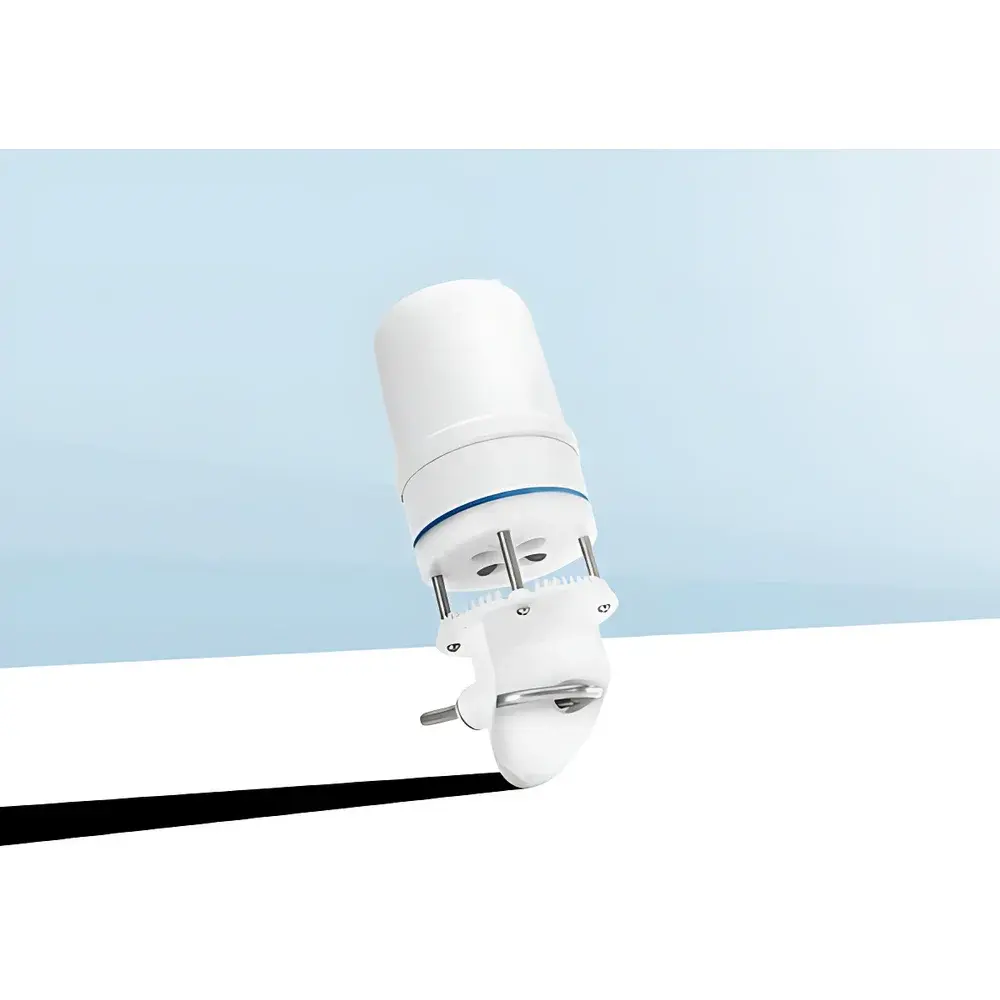
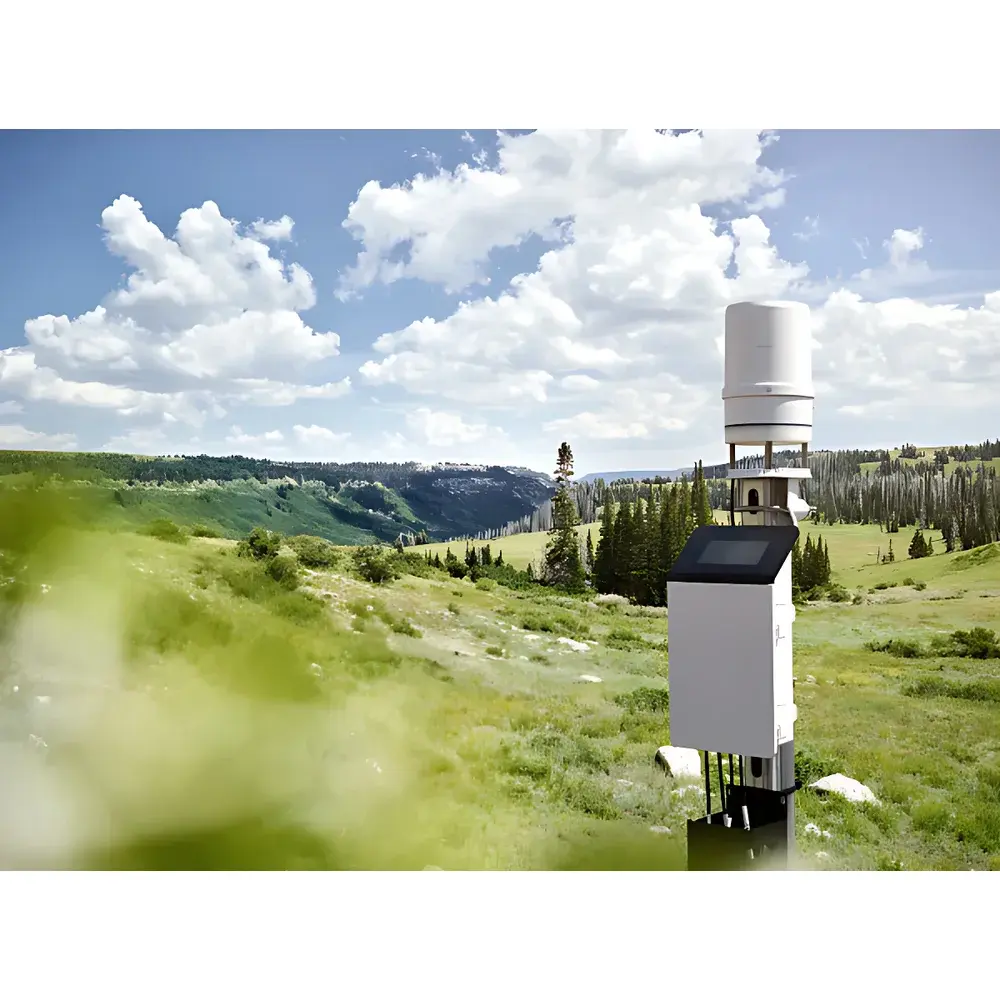
The METER ATMOS 41 Integrated Weather Station is an engineered solution for high-fidelity, low-maintenance environmental monitoring in research-grade field deployments. Unlike conventional modular meteorological systems—where discrete sensors require individual mounting, cabling, power regulation, and firmware configuration—the ATMOS 41 consolidates 11 core atmospheric variables into a single, solid-state enclosure with no moving parts. Its measurement architecture leverages calibrated silicon photodiodes for solar irradiance, ultrasonic time-of-flight transducers for wind speed and direction, capacitive humidity sensing with integrated temperature compensation, piezoelectric precipitation detection, and electromagnetic pulse discrimination for lightning event characterization. Designed for long-term unattended operation in remote or resource-constrained sites—including agricultural trials, ecological observatories, watershed monitoring networks, and climate validation studies—the ATMOS 41 delivers metrologically traceable data while minimizing installation complexity, calibration drift, and service downtime.
Key Features
- Single-cable SDI-12 digital output: All measurements transmitted via one standardized interface, reducing channel consumption on data loggers (e.g., only 1 channel required on ZL6 or EM60 series loggers).
- Simultaneous measurement of global solar irradiance (0–1750 W/m²) and precipitation (0–400 mm/hr), eliminating the trade-off found in many integrated stations.
- No mechanical components: Ultrasonic wind measurement eliminates bearing wear; piezoelectric rain detection avoids tipping-bucket inertia errors and freezing artifacts.
- Integrated lightning detector: Measures strike count and approximate distance (0–40 km, ±3 km resolution) using electromagnetic field amplitude analysis—critical for safety alerts and convective activity correlation.
- Onboard tilt sensing (±90°, ±1° accuracy): Enables automatic correction of wind vector orientation and solar irradiance geometry in non-level installations.
- Low-power design: Typical 8 mA during measurement, <0.4 mA in sleep mode—optimized for solar-powered or battery-limited deployments.
- Ruggedized housing: IP68-rated enclosure with UV-stabilized polymer construction; operational from −50 °C to +60 °C.
Sample Compatibility & Compliance
The ATMOS 41 is designed for continuous outdoor exposure across diverse bioclimatic zones—from arctic tundra to tropical humid forests. Its sensor suite meets functional equivalence to widely cited standards including ASTM E823 (solar radiation instrumentation), WMO Guide to Meteorological Instruments and Methods of Observation (CIMO Guide), and ISO 11784/11785 for environmental data integrity. While not certified to GLP or FDA 21 CFR Part 11 by default, its SDI-12 output format supports audit-trail-capable data acquisition when paired with compliant loggers (e.g., ZL6 with ZENTRA Cloud integration). All factory calibrations are traceable to NIST-traceable reference standards. Long-term stability specifications—such as barometric drift (<0.1 kPa/year) and RH hysteresis (±0.8% RH)—are validated under accelerated aging tests per IEC 60068-2 environmental stress protocols.
Software & Data Management
Data from the ATMOS 41 is natively compatible with METER’s ZENTRA Cloud platform—a secure, ISO 27001-aligned web application enabling real-time visualization, automated QA/QC flagging, threshold-based alerting, and export in CSV, NetCDF, or JSON formats. No local software installation or custom scripting is required. Firmware updates are delivered over-the-air via ZENTRA Cloud. For on-premise integration, the SDI-12 protocol ensures interoperability with Campbell Scientific CR-series, Onset HOBO, and other third-party loggers supporting standard SDI-12 command sets (e.g., “aR!” for ready status, “aM!” for measurement initiation). Raw sensor outputs—including dew point, vapor pressure deficit, and wind vector magnitude—are computed onboard, minimizing post-processing burden.
Applications
- Agricultural water management: Real-time ET₀ calculation using FAO-56 Penman-Monteith inputs (Tₐᵢᵣ, RH, u₂, Rₛ).
- Soil-plant-atmosphere continuum (SPAC) studies: Synchronized with METER soil moisture (TEROS), matric potential (WP4C), and sap flow sensors via shared ZL6/ZENTRA infrastructure.
- Wildfire risk modeling: Integration of wind gust statistics, relative humidity minima, and solar loading metrics into fire behavior prediction engines.
- Urban microclimate assessment: High-temporal-resolution wind shear and thermal advection profiling across building canyons or green infrastructure corridors.
- Climate station densification: Low-footprint deployment for gap-filling in national mesonets or citizen science networks requiring metrological consistency.
FAQ
Does the ATMOS 41 require external power regulation or voltage conversion?
No—it accepts a wide input range (3.6–15.0 VDC) and includes internal voltage conditioning; no external regulator is needed when used with standard solar-charged battery systems.
Can the ATMOS 41 be mounted vertically on a pole without affecting wind measurement accuracy?
Yes—its integrated tilt sensor automatically compensates for pitch and roll angles up to ±90°, ensuring wind vector accuracy regardless of mounting orientation.
Is precipitation measurement affected by snow accumulation or freezing conditions?
The piezoelectric detection mechanism remains functional below 0 °C; however, accumulated snow on the sensor surface may attenuate signal amplitude—recommended mitigation includes periodic inspection or use of passive heating accessories (not included).
How frequently does the ATMOS 41 report data?
Measurement interval is fully configurable via SDI-12 command; default sampling is 1-minute, but users may set intervals from 1 second to 24 hours depending on logger memory and power constraints.
What level of maintenance is required over a 5-year deployment?
Annual visual inspection and cleaning of optical surfaces (pyranometer dome, ultrasonic transducers) is recommended; no recalibration is required within specification limits for the first 2 years under normal exposure conditions.







