
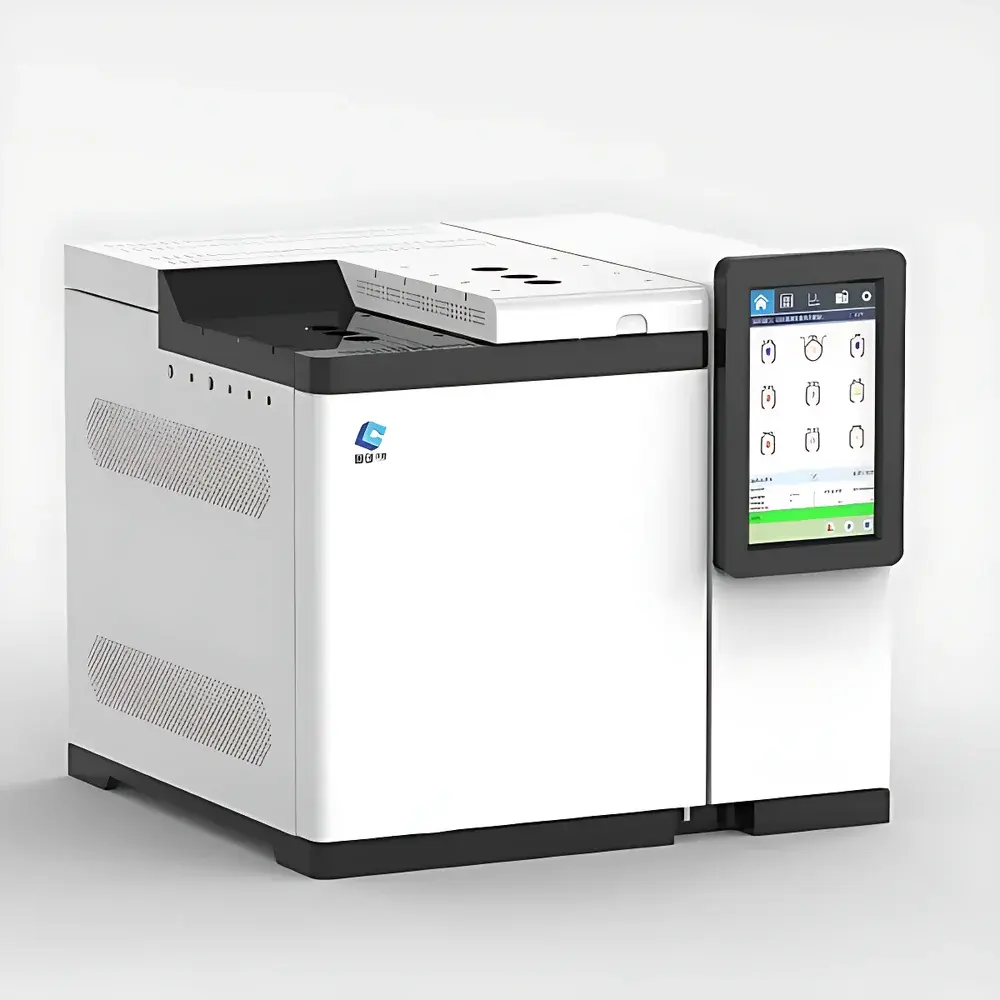
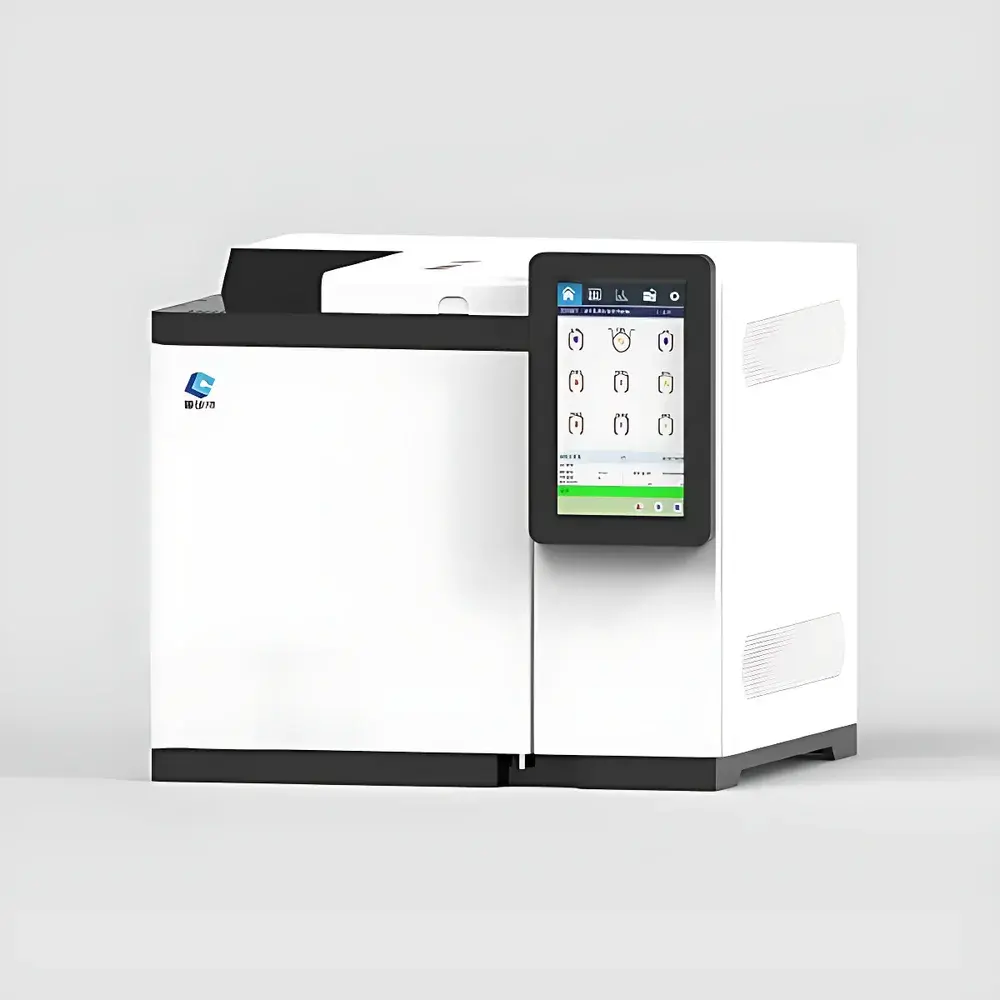
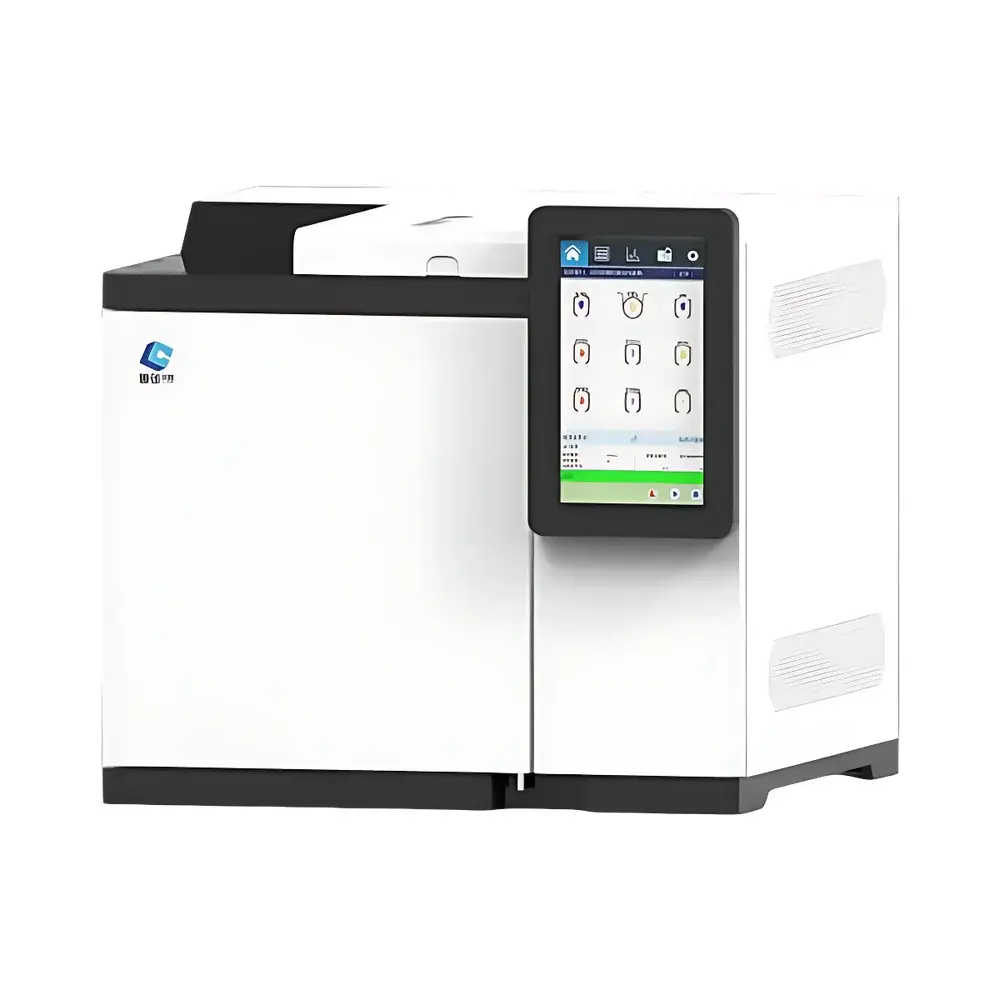
Luchuang GC-8890 Laboratory Gas Chromatograph
| Brand | Luchuang |
|---|---|
| Origin | Shandong, China |
| Manufacturer Type | Direct Manufacturer |
| Instrument Type | Laboratory Gas Chromatograph |
| Application Field | Petrochemical Industry |
| Temperature Control Range | 0–450 °C |
| Maximum Ramp Rate | 65 °C/min |
| Cooling Rate | 300 °C to 100 °C in ≤3.5 min (at 25 °C ambient) |
| Carrier Gas Flow Range | 0–1200 mL/min (7-program segments) |
| Carrier Gas Pressure Range | 0–970 kPa (7-program segments) |
| Injector Maximum Temperature | 450 °C |
| Injector Pressure Setting Range | 0–970 kPa |
| Injector Total Flow Setting Range | 0–1200 mL/min |
Overview
The Luchuang GC-8890 is a high-performance laboratory gas chromatograph engineered for precise, reproducible separation and quantification of volatile and semi-volatile organic compounds in complex petrochemical matrices. Based on the fundamental principle of differential partitioning between a mobile phase (inert carrier gas) and a stationary phase (capillary or packed column), the GC-8890 delivers robust analytical performance across routine QC, method development, and regulatory-compliant applications. Its architecture integrates advanced thermal management, fully electronic pneumatic control (EPC/EFC), and modular detector configuration—enabling operation under stringent environmental and operational constraints typical of refinery labs, quality control centers, and R&D facilities serving the petroleum, polymer, and specialty chemicals sectors.
Key Features
- 10-inch capacitive color touchscreen interface with intuitive graphical workflow navigation—supports direct method setup, real-time parameter monitoring, and touch-driven instrument diagnostics.
- Full EPC/EFC system for carrier gas, split/splitless flow, and makeup gases: pressure control precision ±0.001 psi; flow control resolution ±0.001 mL/min; up to 8-step pressure/flow programming per inlet.
- Advanced thermal management system featuring optimized heat exchange geometry and high-density sensor placement—achieves temperature stability ≤±0.01 °C and supports up to 99-stage programmed temperature ramping with total run time up to 6000 min.
- Triple-inlet capability with six interchangeable inlet options (including split/splitless, PTV, and cool-on-column)—enabling multi-mode injection strategies on a single platform without hardware reconfiguration.
- Modular detector architecture supporting simultaneous installation of up to four detectors: FID, TCD, ECD, FPD, and NPD—with dual-detector configurations (e.g., dual-FID, dual-TCD) fully supported and electrically isolated.
- IoT-enabled remote operation via secure web-based interface: real-time status telemetry, live chromatogram streaming, method push/pull, and audit-trail-enabled data export compliant with GLP/GMP workflows.
Sample Compatibility & Compliance
The GC-8890 accommodates a broad range of sample types—including hydrocarbon fractions, oxygenates, sulfur compounds, halogenated organics, and trace additives—across liquid, gaseous, and headspace formats. Its inlet design and thermal stability ensure compatibility with both standard capillary columns (0.1–0.53 mm ID) and packed columns. The system meets essential performance criteria referenced in ASTM D3606, D5504, D6667, ISO 6974-2, and USP . Detector specifications align with ICH Q2(R2) requirements for sensitivity, linearity, and repeatability. All EPC-controlled parameters are logged with timestamped metadata, supporting FDA 21 CFR Part 11 compliance when paired with validated chromatography data systems (CDS).
Software & Data Management
The GC-8890 operates with a native Windows-based chromatography workstation featuring bidirectional instrument control, automated peak integration, calibration curve generation (linear, quadratic, weighted), and customizable report templates. Raw data files adhere to AIA/ANDI standards (.cdf format). Audit trail functionality records all user actions—including method edits, sequence modifications, and result overrides—with immutable timestamps and operator identification. Data integrity safeguards include role-based access control, electronic signatures, and encrypted local/cloud backup options. Integration with LIMS and ERP platforms is supported via OPC UA and RESTful API interfaces.
Applications
- Petrochemical QA/QC: Benzene/toluene/xylene (BTX) analysis in gasoline; sulfur speciation (mercaptans, sulfides, thiophenes) per ASTM D5504; hydrocarbon type analysis (PIONA) using multidimensional GC.
- Refinery process monitoring: Light ends composition (C1–C5), olefin/paraffin ratios, and catalyst deactivation markers.
- Environmental testing: VOC screening in air samples (EPA TO-17); residual solvent analysis in polymers (ICH Q3C).
- Research applications: Reaction kinetics profiling, pyrolysis-GC coupling, and method transfer validation between legacy and modern GC platforms.
FAQ
What is the maximum number of programmable temperature ramps supported?
The GC-8890 supports up to 99 independent temperature program steps per method.
Can the instrument operate under GLP or GMP-regulated environments?
Yes—when configured with audit-trail-enabled software and electronic signature modules, it satisfies core requirements of 21 CFR Part 11 and EU Annex 11 for regulated laboratories.
Is dual-detector operation limited to specific detector combinations?
No—any two compatible detectors (e.g., FID + TCD, ECD + FPD) may be installed and operated simultaneously with independent signal acquisition and timing synchronization.
What carrier gases are supported by the EPC system?
Helium, hydrogen, nitrogen, and argon—all controlled with identical precision across the full specified pressure and flow ranges.
Does the system support unattended overnight analysis?
Yes—integrated autosampler compatibility (optional), thermal stability at 450 °C, and robust leak detection algorithms enable extended unattended runs with automated shutdown and alert protocols.
Related Products




