
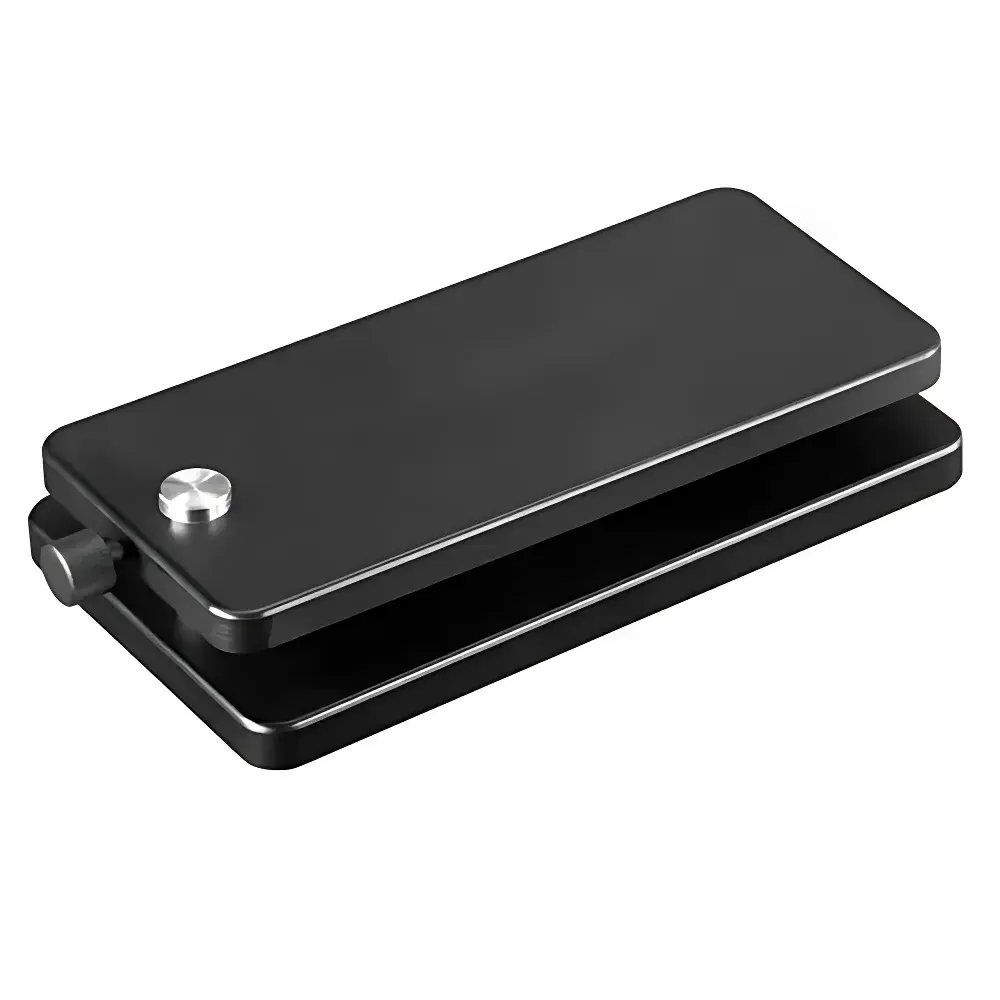
RWD 68607 Animal Surgical Elevating Platform
| Brand | RWD |
|---|---|
| Origin | Shenzhen, China |
| Manufacturer Type | Direct Manufacturer |
| Regional Classification | Domestic (China) |
| Model | 68607 |
| Pricing | Upon Request |
| Lift Plate Dimensions | 198 × 93 × 12 mm |
| Base Plate Dimensions | 198 × 113 × 12 mm |
| Vertical Travel Range | 50 mm |
| Compatibility | Standard Stereotaxic Frames |
Overview
The RWD 68607 Animal Surgical Elevating Platform is a precision-engineered mechanical positioning accessory designed for integration with standard stereotaxic instrumentation in preclinical neuroscience and pharmacology laboratories. It operates on a manually actuated rack-and-pinion elevation mechanism to provide controlled vertical displacement of the animal’s thoracic and abdominal region—thereby optimizing head–body alignment during craniotomy, electrode implantation, or intracerebral injection procedures. By elevating the caudal portion of the subject (typically rodents), the platform ensures unobstructed upper airway patency, reduces respiratory resistance under anesthesia, and minimizes physiological stress associated with unnatural cervical flexion. Its low-profile, rigid aluminum alloy construction delivers high dimensional stability and load-bearing integrity across repeated sterilization cycles and long-term use in GLP-compliant vivarium environments.
Key Features
- Fixed 50 mm vertical travel range engineered for reproducible anatomical positioning—compatible with both anterior–posterior and dorsal–ventral coordinate calibration protocols.
- Lift plate (198 × 93 × 12 mm) and base plate (198 × 113 × 12 mm) fabricated from anodized 6061-T6 aluminum for corrosion resistance, non-magnetic performance, and compatibility with MRI-adjacent workflows.
- Integrated anti-slip surface texture on lift plate to prevent lateral displacement of restrained animals during microsurgical manipulation.
- Modular mounting interface with standardized ¼”-20 threaded holes aligned to industry-typical stereotaxic frame footprints (e.g., David Kopf Instruments, Stoelting Co., and RWD own-series frames).
- No electronic components or power requirements—ensures electromagnetic silence and eliminates risk of interference with electrophysiological recordings or optical imaging systems.
Sample Compatibility & Compliance
The RWD 68607 platform supports adult mice (C57BL/6, BALB/c), rats (Sprague-Dawley, Wistar), and other small mammals weighing up to 500 g when used with appropriate restraint fixtures. Its mechanical design conforms to ISO 14155:2020 guidelines for ancillary equipment in biomedical research involving live subjects. All dimensional tolerances are maintained within ±0.1 mm per ASME Y14.5 standards. The device is not classified as a medical device under FDA 21 CFR Part 860 or EU MDR 2017/745; however, it is routinely validated as part of SOPs aligned with AAALAC International accreditation requirements and NIH OLAW-approved animal protocol submissions.
Software & Data Management
As a purely mechanical positioning aid, the RWD 68607 requires no embedded firmware, driver installation, or software interface. Its operation is fully decoupled from digital data acquisition systems—eliminating synchronization latency, cybersecurity exposure, or version-control dependencies. Users maintain full traceability through manual logbook entries or integration into existing ELN platforms (e.g., LabArchives, Benchling) via custom metadata tagging (e.g., “Elevation Offset: +25 mm”, “Subject ID: R2024-087”). No audit trail functionality is provided, consistent with its classification as non-regulated laboratory hardware under FDA 21 CFR Part 11 and EU Annex 11 frameworks.
Applications
- Stereotaxic delivery of viral vectors, tracers, or pharmacological agents into discrete brain nuclei (e.g., hippocampus, striatum, VTA) with improved targeting accuracy.
- Chronic implantation of cortical arrays or depth electrodes where precise skull curvature matching is required prior to cranioplasty.
- Intraoperative monitoring of cerebral blood flow (LDF), tissue oxygenation (OxyLite), or extracellular neurotransmitter dynamics (fast-scan cyclic voltammetry) under stable physiological posture.
- Combined optogenetic–electrophysiological experiments requiring simultaneous fiber optic access and micromanipulator clearance above the surgical field.
- Training modules for graduate students and veterinary technicians in standardized rodent surgical technique per FELASA recommendations.
FAQ
Is the RWD 68607 compatible with non-RWD stereotaxic frames?
Yes—the platform features universal ¼”-20 mounting patterns that align with standard commercial frames from Kopf, Stoelting, and Harvard Apparatus.
Can the lift height be adjusted incrementally—or is it fixed at 50 mm total travel?
The unit provides continuous manual adjustment across the full 0–50 mm range via calibrated knurled knob; no detents or preset stops are implemented.
Does the platform include animal restraint components?
No—restraint accessories (ear bars, incisor hooks, limb holders) must be sourced separately and mounted onto the lift or base plate using standard adapters.
What cleaning and sterilization methods are recommended?
Autoclaving at 121°C / 15 psi for 20 minutes is validated for both plates; ethanol wipe-down and UV-C exposure between procedures are also acceptable.
Is technical support available outside mainland China?
RWD maintains regional service hubs in Germany (RWD Europe GmbH), USA (RWD Life Sciences Inc.), and Singapore (RWD Asia Pte Ltd), offering documentation, calibration verification, and application engineering consultation.





