
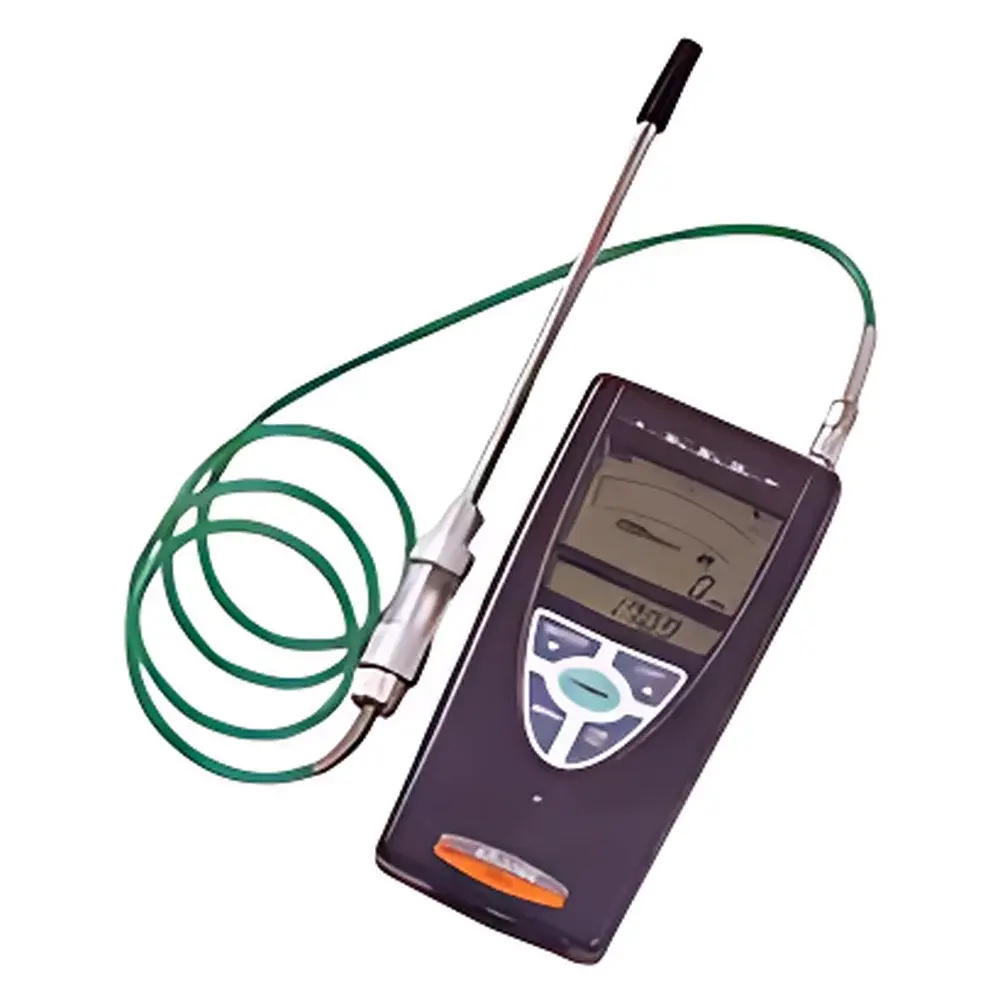
SDT XP-3160 High-Sensitivity Combustible Gas and Organic Vapor Detector
| Origin | Japan |
|---|---|
| Manufacturer Type | Authorized Distributor |
| Origin Category | Imported |
| Model | SDT-XP-3160 |
| Pricing | Upon Request |
| Detection Principle | Catalytic Bead (Pellistor) Combustion |
| Detection Range | 0–5000 ppm or 0–1 vol% |
| Accuracy | ±5% FS (H-range), ±10% FS (L-range) |
| Alarm Setpoints | 250 ppm / 500 ppm |
| Display | Backlit LCD with Digital + Bar Graph |
| Power | 4× AA Alkaline Batteries or Optional Ni-Cd Rechargeable Pack |
| Operating Temperature | −20 °C to +50 °C |
| Explosion Protection | Exibd IIB T3 |
| Dimensions | 82 × 162 × 36 mm |
| Weight | 450 g (battery-free) |
| Flow Self-Check Function | Yes |
| Auto-Ranging | Yes |
| Data Logging | Built-in (optional download via USB) |
Overview
The SDT XP-3160 is a portable, intrinsically safe combustible gas and organic vapor detector engineered for high-reliability leak detection and ambient air monitoring in demanding industrial environments. Utilizing a catalytic bead (pellistor) sensing principle, the instrument detects flammable gases and vapors—including hydrocarbons such as propane, butane, methane, gasoline, diesel, acetone, and ethanol—through controlled surface combustion on a heated platinum coil. This method delivers stable, repeatable response across a wide dynamic range (0–5000 ppm or 0–1 vol%) while maintaining robust performance under variable humidity and temperature conditions (−20 °C to +50 °C). Designed to meet stringent safety requirements for confined-space entry, shipyard maintenance, LNG facilities, and fuel-handling operations, the XP-3160 complies with IEC 60079-0 and IEC 60079-11 standards for explosion protection (Exibd IIB T3), ensuring safe operation in potentially explosive atmospheres classified as Zone 1 and Zone 2.
Key Features
- True dual-range operation with automatic switching between low-range (0–500 ppm or 0–1000 ppm) and high-range (0–5000 ppm or 0–1 vol%) modes for optimal resolution at trace and high-concentration levels.
- Backlit LCD display featuring simultaneous digital readout and intuitive bar-graph visualization—enabling rapid field interpretation without reliance on external lighting.
- Integrated flow self-diagnostic function continuously monitors sampling pump performance and alerts users to blockage, filter saturation, or tubing disconnection—reducing false negatives during critical inspections.
- Extended operational endurance: up to 20 hours on standard AA alkaline batteries (under typical non-alarm conditions); optional Ni-Cd rechargeable pack supports field-deployable battery swaps.
- Compact, ergonomic form factor (82 × 162 × 36 mm; 450 g net weight) optimized for one-handed use during prolonged inspections, ladder work, or tight-access valve checks.
- Modular accessory ecosystem—including replaceable filters, stainless steel probe tips, and certified calibration adapters—ensures long-term measurement integrity and regulatory traceability.
Sample Compatibility & Compliance
The XP-3160 is calibrated and validated for detection of common combustible species including methane (CH₄), propane (C₃H₈), hydrogen (H₂), n-hexane, toluene, xylene, and diesel vapor. Sensor response factors are documented per IEC 61779-1 for cross-gas compensation, enabling accurate LEL-equivalent reporting when calibrated to a reference gas (e.g., pentane or isobutane). The device meets EN 50194-1 (domestic/commercial gas detection), JIS T 8201 (Japanese industrial safety standards), and carries CE marking under the ATEX Directive 2014/34/EU. Its Exibd IIB T3 certification confirms suitability for use with Group IIB gases (e.g., ethylene, acetone) with maximum surface temperature ≤85 °C. All firmware and calibration logs adhere to GLP-aligned data integrity practices, supporting audit readiness in regulated sectors including marine repair, petrochemical QA/QC, and municipal utility infrastructure.
Software & Data Management
The optional data download kit includes Windows-compatible software (CD-ROM) and a USB interface cable, enabling secure extraction of time-stamped measurement logs—including date/time stamps, concentration values, alarm events, and sensor status flags. Raw datasets export to CSV format for integration with LIMS platforms or custom analytics workflows. Audit trail functionality records all configuration changes, zero/span adjustments, and user-initiated calibrations—supporting compliance with ISO/IEC 17025 clause 7.7 and FDA 21 CFR Part 11 requirements when paired with appropriate access controls and electronic signature protocols. Firmware updates are delivered via signed binary packages, preserving cryptographic integrity across device fleets.
Applications
- Marine engineering: Leak verification on fuel lines, bilge compartments, and cargo tank inerting systems prior to hot work permits.
- Gas distribution networks: Pinpointing fugitive emissions from meter sets, regulator stations, and buried service connections.
- Automotive and rail maintenance: Screening for residual solvent vapors in paint booths, brake-fluid handling zones, and diesel refueling bays.
- Pharmaceutical manufacturing: Monitoring volatile organic compound (VOC) excursions during solvent recovery processes and cleanroom HVAC ductwork validation.
- Waste treatment facilities: Assessing biogas composition variability and detecting unburnt hydrocarbons in flare stack bypass streams.
FAQ
What gases can the XP-3160 detect?
It detects combustible gases and vapors with lower explosive limits (LEL) below 15% v/v, including methane, propane, hydrogen, gasoline, diesel, acetone, ethanol, and toluene. Custom calibration for specific target gases is available upon order.
Is the sensor replaceable in the field?
Yes—the catalytic bead sensor module is user-serviceable using factory-certified replacement kits, with full recalibration supported via built-in span adjustment routines.
Does the instrument support bump testing?
Yes—integrated bump test mode verifies sensor responsiveness and alarm activation using certified test gas (e.g., 50% LEL methane), generating timestamped pass/fail records.
Can it be used in wet or dusty environments?
With IP54-rated enclosure and hydrophobic particulate filter (included), the XP-3160 maintains reliable operation in rain-exposed outdoor settings and moderate dust loading typical of shipyard or refinery perimeters.
How often does it require calibration?
Initial calibration is performed at factory; subsequent full calibration is recommended every 6 months or after exposure to sensor poisons (e.g., silicones, lead compounds, sulfides), verified via documented calibration certificate issuance.
Related Products







