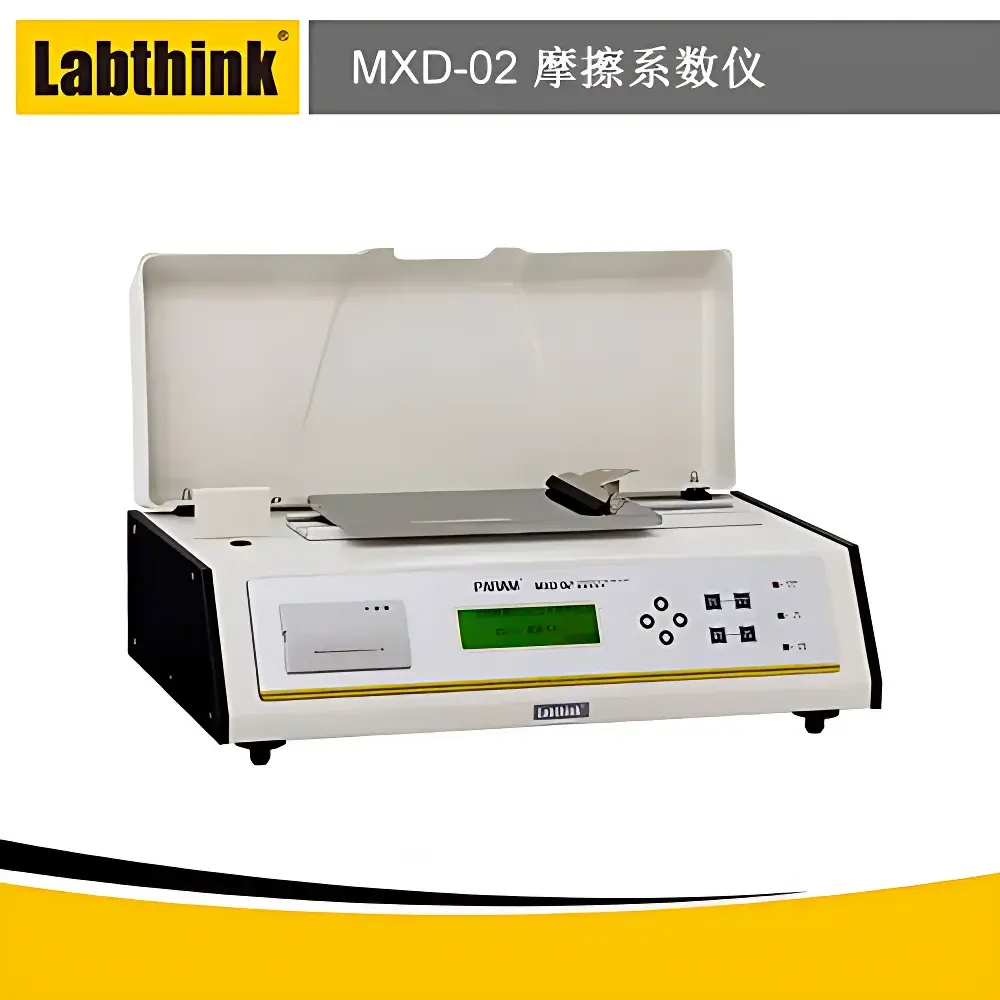
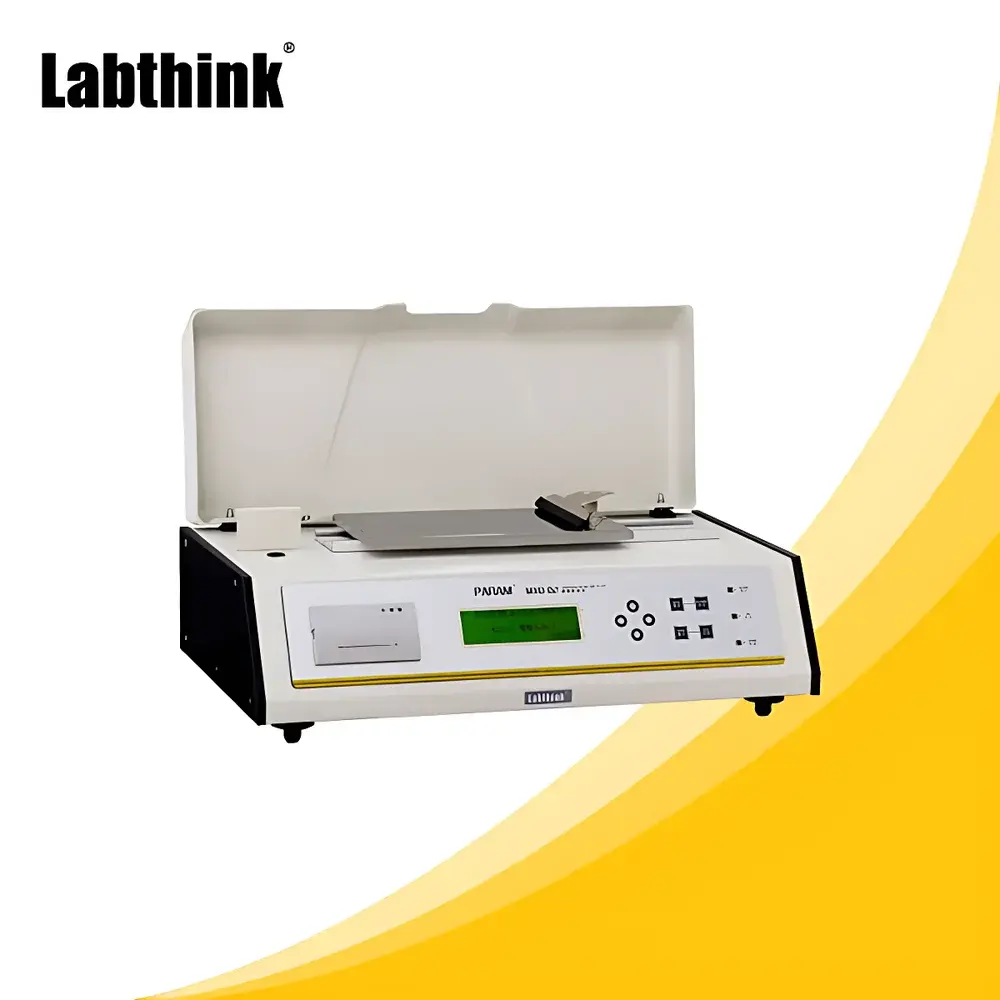
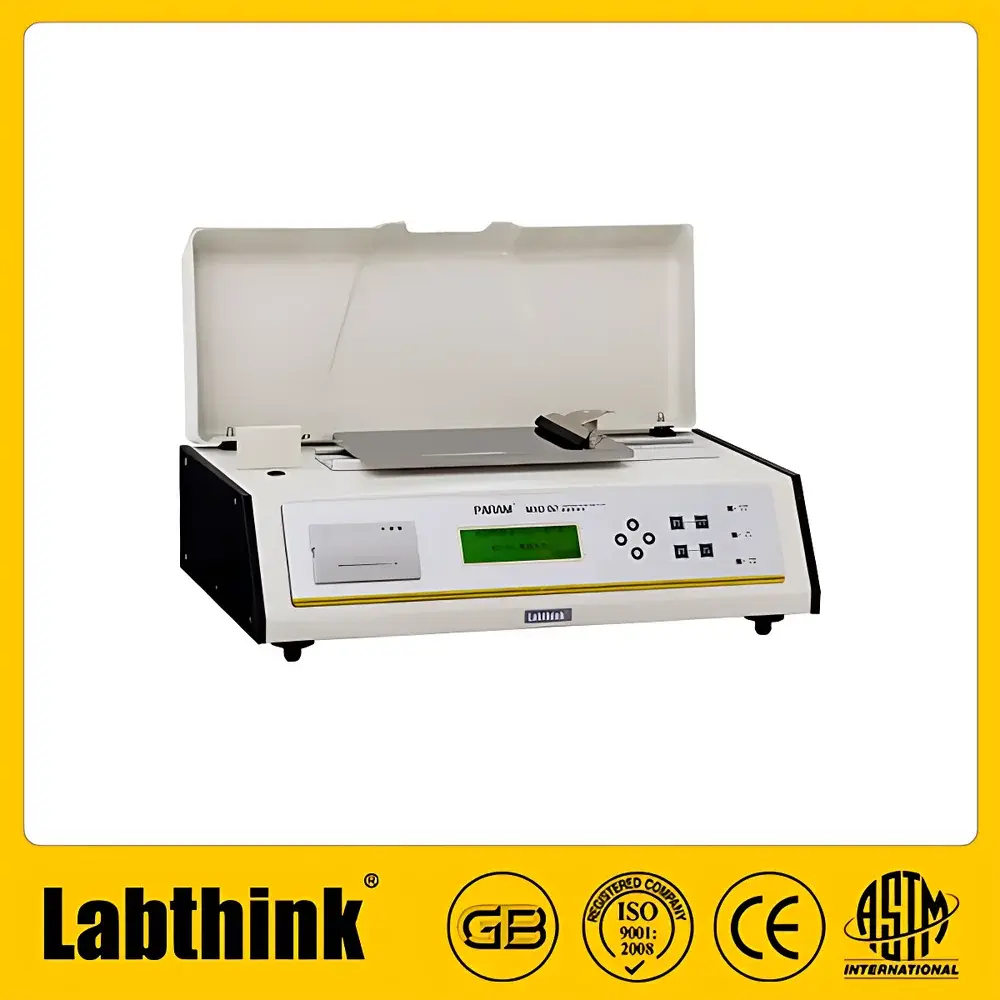
Labthink PARAM-MXD-02 Coefficient of Friction Tester for Industrial Conveyor Belts and Surface Slip Characterization
| Brand | Labthink |
|---|---|
| Origin | Shandong, China |
| Manufacturer Type | Direct Manufacturer |
| Country of Origin | China |
| Model | PARAM-MXD-02 |
| Price Range | USD 1,400 – 8,500 |
| Load Range | 0–5 N |
| Accuracy Class | 0.5 |
| Travel Distance | 70 mm / 150 mm |
| Standard Sled Mass | 200 g (custom sleds available) |
| Test Speeds | 100 mm/min, 150 mm/min (adjustable) |
| Environmental Conditions | 23 ± 2 °C, 20–70 %RH |
| Power Supply | 220 VAC 50 Hz / 120 VAC 60 Hz |
| Dimensions (L×W×H) | 630 × 360 × 230 mm |
| Net Weight | 33 kg |
| Compliance Standards | GB 10006, ISO 8295, ASTM D1894, TAPPI T816 |
Overview
The Labthink PARAM-MXD-02 Coefficient of Friction Tester is an electromechanical instrument engineered for the precise quantification of static (μs) and kinetic (μk) coefficients of friction under controlled sliding conditions. It operates on the fundamental principle of horizontal pull-force measurement: a standardized sled rests on the test surface, and a motor-driven carriage pulls the sled at a defined velocity while a high-accuracy load cell records the peak force (for μs) and average sustained force (for μk). This methodology conforms to established tribological test paradigms used across packaging, automotive, polymer processing, and materials R&D laboratories. The instrument is specifically designed to evaluate surface slip behavior—critical for optimizing conveyor belt throughput, preventing jamming in high-speed packaging lines, validating release coatings on medical device packaging, and ensuring consistent tactile performance in consumer-facing products such as footwear soles or cosmetic applicators.
Key Features
- Simultaneous dual-mode measurement: single-test acquisition of both static and kinetic COF values without manual reconfiguration
- Programmable test velocity: standard settings at 100 mm/min and 150 mm/min; firmware-supported custom speed profiles available via software interface
- Modular sled system: includes ISO/ASTM-compliant 200 g sled; optional calibrated masses (e.g., 500 g) enable evaluation of pressure-dependent frictional response
- Electromagnetically neutralized test platform: all critical contact surfaces undergo certified demagnetization and residual magnetism verification (<0.2 mT), minimizing parasitic interference with force transduction
- Microprocessor-based control architecture: embedded real-time OS with menu-driven PVC membrane keypad and backlit LCD display for local operation and immediate result review
- High-stability sensor suite: load cell calibrated to Class 0.5 per ISO 376; travel encoder resolution ≤0.01 mm; thermal drift compensation integrated into firmware
Sample Compatibility & Compliance
The PARAM-MXD-02 accommodates flat, flexible, and semi-rigid specimens up to 150 mm wide × 300 mm long, including but not limited to: biaxially oriented polypropylene (BOPP) films, metallized polyester laminates, rubber conveyor belt compounds, vulcanized elastomer composites, coated paperboard, woven textile substrates, extruded thermoplastic profiles, and metalized composite foils. Its mechanical design supports testing per globally harmonized standards—including GB 10006 (China), ISO 8295 (International), ASTM D1894 (USA), and TAPPI T816 (North America)—ensuring data interoperability in multinational supply chain validation. All hardware and firmware comply with IEC 61000-4 electromagnetic compatibility requirements. For regulated environments (e.g., pharmaceutical primary packaging qualification), the system supports audit-ready operation when paired with Lystem™ Lab Data Management Software configured for 21 CFR Part 11 compliance (electronic signatures, immutable audit trails, role-based access control).
Software & Data Management
The optional Lystem™ Laboratory Data Management System provides comprehensive post-test analysis capabilities: automated statistical summarization (mean, SD, CV%, min/max) across user-defined test groups; overlay plotting of COF vs. time curves for comparative material screening; export of raw force-displacement datasets in CSV and XML formats; and generation of customizable PDF reports compliant with GLP documentation templates. Data synchronization occurs via RS232 serial interface (standard) or optional USB-to-serial adapter. The software architecture supports centralized deployment across networked instruments, enabling cross-site correlation studies and longitudinal process capability monitoring (e.g., Cp/Cpk trending of film coefficient variability across production batches).
Applications
- Conveyor system engineering: quantifying belt-to-product and belt-to-guide rail friction to prevent slippage, misalignment, or product tipping during high-speed transport
- Pharmaceutical packaging development: verifying low-slip characteristics of blister cavity lidding foils and child-resistant push-through cards
- Automotive interior materials: assessing seat fabric–skin friction, trim panel slide resistance, and pedal pad tactile consistency
- Paper and board manufacturing: validating calendering and coating parameters for consistent runnability on rotary printing presses
- Medical device packaging: confirming peel-initiation forces for heat-sealed Tyvek® pouches and evaluating glove-donning friction on sterile barrier systems
- Consumer product formulation: benchmarking lubricity of ophthalmic solutions, topical creams, and personal cleansing gels using standardized substrate interfaces
FAQ
What standards does the PARAM-MXD-02 natively support?
It executes tests per GB 10006, ISO 8295, ASTM D1894, and TAPPI T816 without hardware modification. Method selection is configurable via instrument menu or Lystem™ software.
Can the instrument measure friction under elevated temperature or humidity?
No. It is specified for ambient-condition operation (23 ± 2 °C, 20–70 %RH). Environmental chamber integration requires external climate control and is not supported out-of-the-box.
Is calibration traceable to national metrology institutes?
Yes. Load cell calibration certificates are provided with NIST-traceable reference standards (or CNAS-accredited equivalents for domestic shipments). Annual recalibration services are available through Labthink’s global service network.
Does the system meet FDA 21 CFR Part 11 requirements?
When operated with validated Lystem™ software (v3.2+), full electronic record and signature functionality—including audit trail, user authentication, and data integrity safeguards—is enabled per Part 11 Annex A guidelines.
What maintenance is required for long-term accuracy?
Biannual verification of sled mass tolerance (±0.5 g), annual load cell recalibration, and routine cleaning of linear guide rails with isopropyl alcohol. No consumable parts require scheduled replacement.