
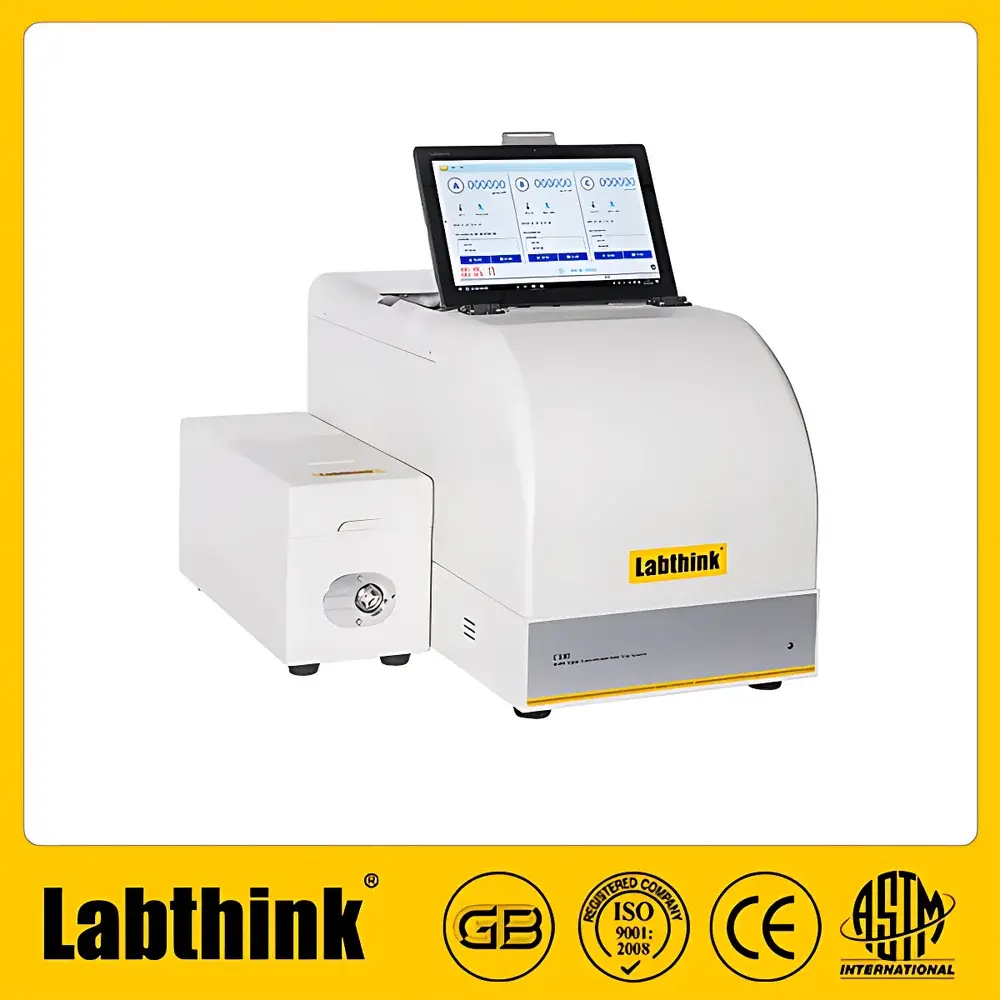
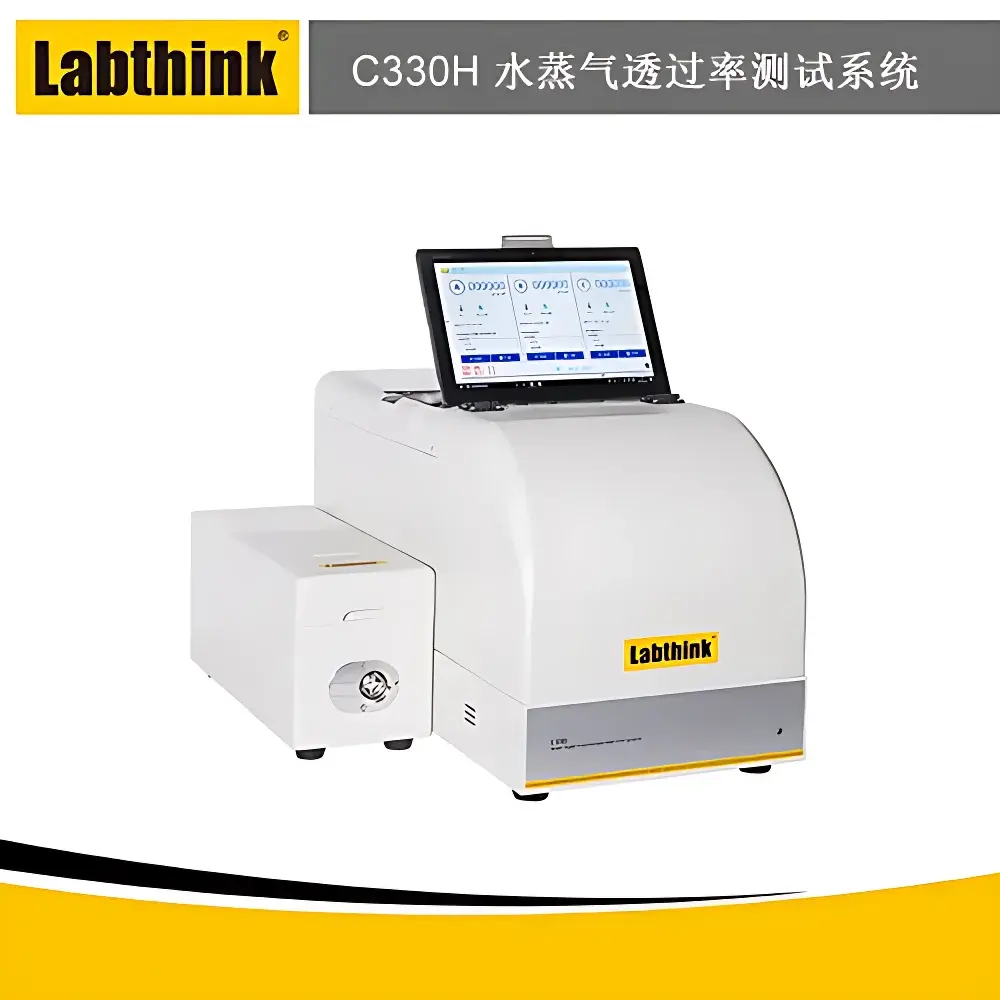
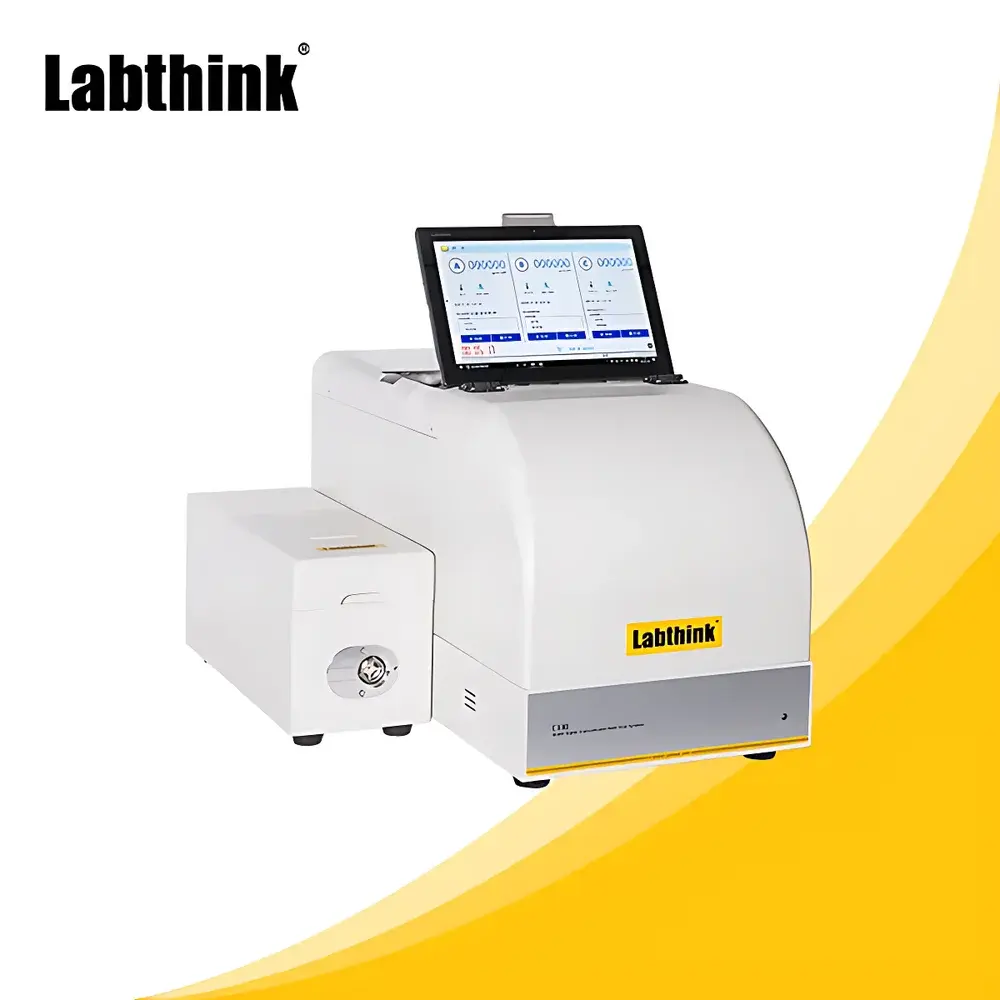
Labthink C330H Electrolytic Water Vapor Transmission Rate (WVTR) Tester
| Brand | Labthink |
|---|---|
| Model | C330H |
| Origin | Shandong, China |
| Manufacturer Type | Manufacturer |
| Origin Category | Domestic |
| Price Range | USD 28,000 – 70,000 |
| Test Principle | Electrolytic (Coulometric) Sensor per ISO 15106-3 |
| Test Range | 0.005–50 g/(m²·day) |
| Resolution | 0.001 g/(m²·day) |
| Repeatability | ±0.005 g/(m²·day) or ±2%, whichever is greater |
| Temperature Control | 10–55 °C ±0.2 °C |
| Humidity Control | 5–90 %RH ±1 %RH (100 %RH optional) |
| Test Chambers | 3 independent |
| Sample Area | 50 cm² (standard) |
| Max. Sample Size | 108 mm × 108 mm |
| Max. Thickness | ≤3 mm |
| Package Testing Capacity | up to 3 L |
| Carrier Gas | ≥99.999% N₂, min. pressure 0.28 MPa (40.6 psi) |
| Gas Interface | 1/8″ stainless steel tubing |
| Optional Compliance Modules | DataShield™ Data Integrity System, 21 CFR Part 11 compliance package, GMP-compliant computer system validation support |
Overview
The Labthink C330H Electrolytic Water Vapor Transmission Rate (WVTR) Tester is a precision-engineered instrument designed for quantitative determination of water vapor permeation through packaging materials and finished packages under controlled temperature and humidity conditions. It operates on the electrolytic (coulometric) detection principle defined in ISO 15106-3, where water vapor diffusing across a test specimen is carried by dry nitrogen carrier gas to a proprietary solid-polymer electrolyte sensor. This sensor quantifies moisture content via Faraday’s law of electrolysis—generating a current proportional to the molar quantity of water dissociated at the electrode surface. The resulting signal enables direct, linear, and traceable calculation of WVTR with high intrinsic sensitivity and long-term stability. The system is calibrated and validated for use across regulatory environments requiring analytical rigor—including food contact materials, pharmaceutical primary packaging, medical device barrier systems, and photovoltaic encapsulants—where water ingress directly impacts shelf life, sterility maintenance, and functional integrity.
Key Features
- Proprietary electrolytic moisture sensor developed in-house by Labthink, delivering sub-microgram-level detection sensitivity, 5-year operational lifetime under routine use.
- Patented triple-chamber integrated test block engineered using computational fluid dynamics (CFD) and thermodynamic modeling to ensure uniform laminar flow, minimal boundary-layer interference, and cross-chamber thermal isolation.
- Independent real-time monitoring of temperature and relative humidity in each test chamber via embedded Pt100 RTD and capacitive RH sensors, enabling dynamic feedback control and statistical validation of environmental equivalence per ASTM F3299 Annex A2.
- Automated dual-zone climate control: humidified nitrogen (5–90% RH ±1% RH) on the upstream side; ultra-dry nitrogen (<1 ppm H₂O) on the downstream side—both regulated via mass flow controllers and saturated salt/temperature-controlled humidity generators.
- 12-inch industrial-grade Windows 10 touchscreen interface with Intel Core i5 processor, supporting both guided auto-test workflows and advanced manual parameter scripting for method development and failure mode analysis.
- DataShield™ architecture provides end-to-end data integrity: audit-trail logging (user actions, calibration events, environmental deviations), role-based access control, cryptographic hash verification of raw sensor outputs, and export compatibility with CSV, XML, PDF/A-2, and LIMS-compatible formats.
Sample Compatibility & Compliance
The C330H accommodates flat sheet materials—including polymer films, aluminum-laminates, coated papers, foils, and biodegradable substrates—as well as rigid and semi-rigid packages (e.g., blister cavities, pouches, vials, syringes) up to 3 L volume. Standard test area is 50 cm²; custom fixtures are available for non-standard geometries. All testing adheres to internationally recognized standards: ISO 15106-3 (electrolytic sensor method), ASTM F3299 (standard guide for WVTR testing of plastic film), GB/T 21529 (Chinese national standard), and YBB 00092003-2015 (Chinese pharmaceutical packaging standard). Optional 21 CFR Part 11 compliance packages include electronic signature enforcement, immutable audit trails, and system validation documentation aligned with FDA expectations for computerized systems used in GxP environments.
Software & Data Management
The embedded Labthink TestSuite v4.2 software supports three operational modes: QuickTest (fully automated sequence with preset SOPs), AdvancedTest (granular control over ramp rates, dwell times, gas switching logic, and multi-step humidity profiling), and ValidationMode (IQ/OQ protocol execution with built-in calibration certificate generation). All data—including raw sensor voltages, chamber environmental logs, and calculated WVTR values—are timestamped, digitally signed, and stored in an encrypted local SQLite database. Remote access is enabled via TLS 1.2-secured HTTP API, allowing integration with enterprise LIMS, MES, or QMS platforms. DataShield™ ensures ALCOA+ principles (Attributable, Legible, Contemporaneous, Original, Accurate, Complete, Consistent, Enduring, Available) are enforced throughout the data lifecycle.
Applications
The C330H serves critical quality assurance and R&D functions across multiple regulated sectors. In pharmaceutical packaging, it verifies moisture barrier performance of cold-form blisters, sachets, and desiccant-containing containers to meet USP and ICH Q5C stability requirements. In food packaging, it validates shelf-life models for retort pouches, vacuum-sealed trays, and modified-atmosphere packaging. For photovoltaic module manufacturers, it characterizes ethylene-vinyl acetate (EVA) encapsulant permeability to prevent potential-induced degradation (PID). Additionally, it supports academic research into novel barrier coatings, nanocomposite films, and bio-based polymers—providing reproducible, reference-grade WVTR data suitable for publication and patent submission.
FAQ
What is the minimum detectable WVTR value for the C330H?
The instrument achieves a lower limit of quantification (LLOQ) of 0.005 g/(m²·day) under standard conditions (38 °C / 90% RH), verified per ISO/IEC 17025:2017 clause 7.6.
Can the C330H test packages containing liquid or powder fill?
Yes—dry nitrogen flows internally through the package cavity while external humidity is maintained; internal headspace composition must be inert and non-reactive with the sensor.
Is third-party certification available for the electrolytic sensor?
Each sensor is factory-calibrated against NIST-traceable gravimetric standards and supplied with a Certificate of Calibration valid for 12 months.
How does the system handle condensation during high-RH testing?
The humidification subsystem uses temperature-controlled saturated salt solutions and Peltier-cooled condensate traps to prevent liquid water ingress into the test chambers or sensor line.
What validation documentation is included with the 21 CFR Part 11 option?
A complete validation package comprising URS, FRS, DQ/IQ/OQ protocols, summary reports, and electronic signature configuration records—all compliant with Annex 11 and PIC/S PI 011-3 guidance.




