
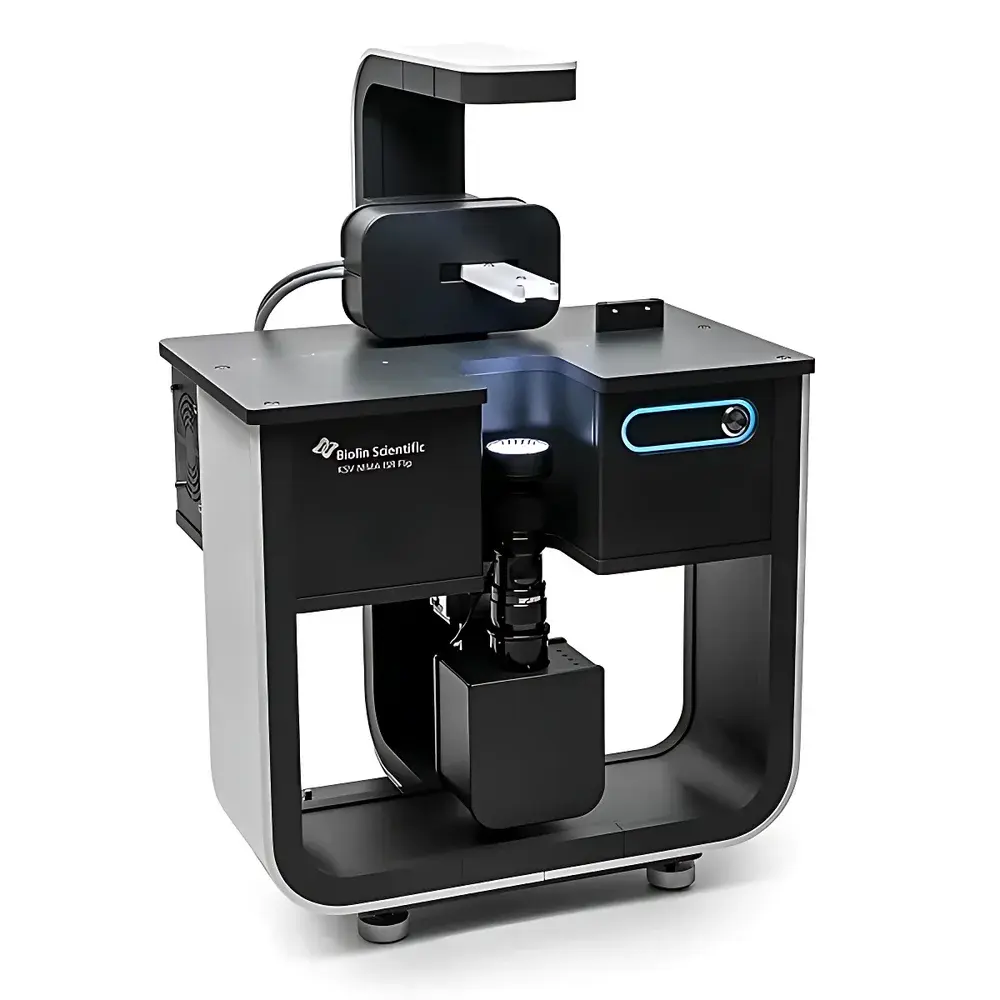
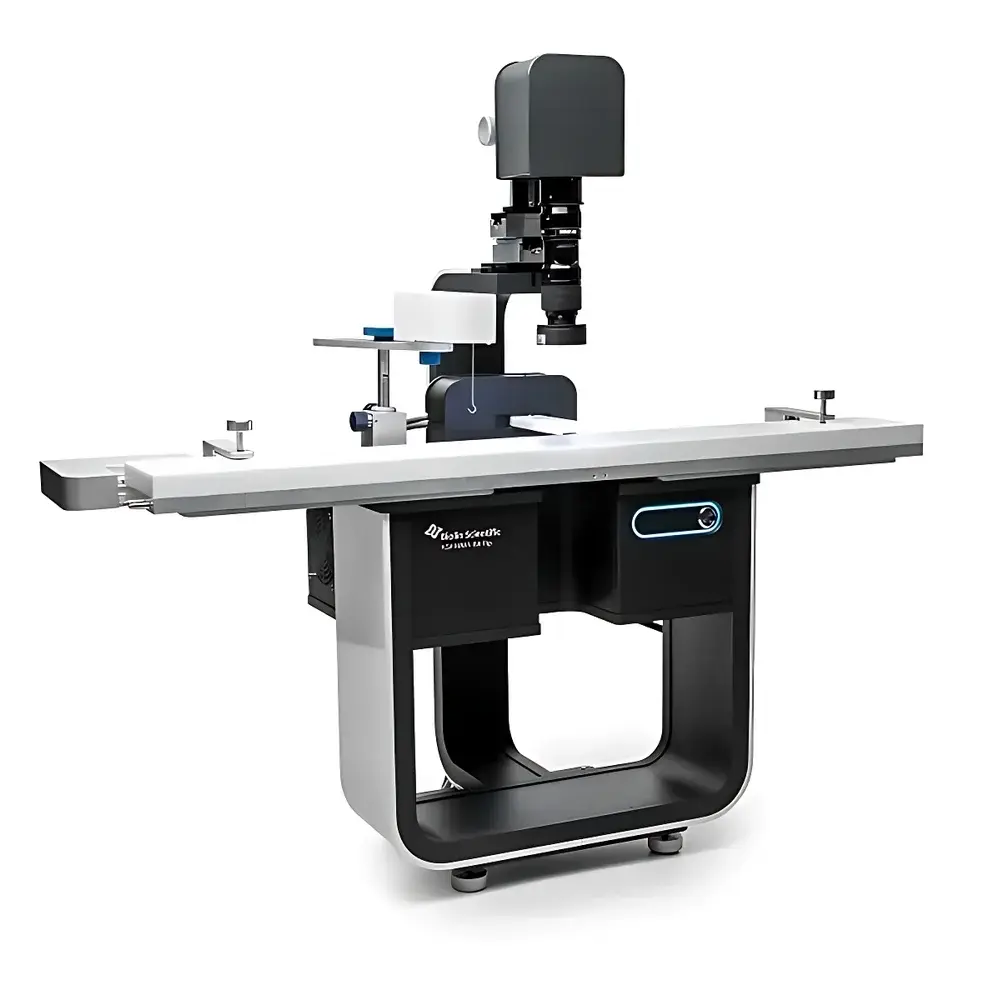
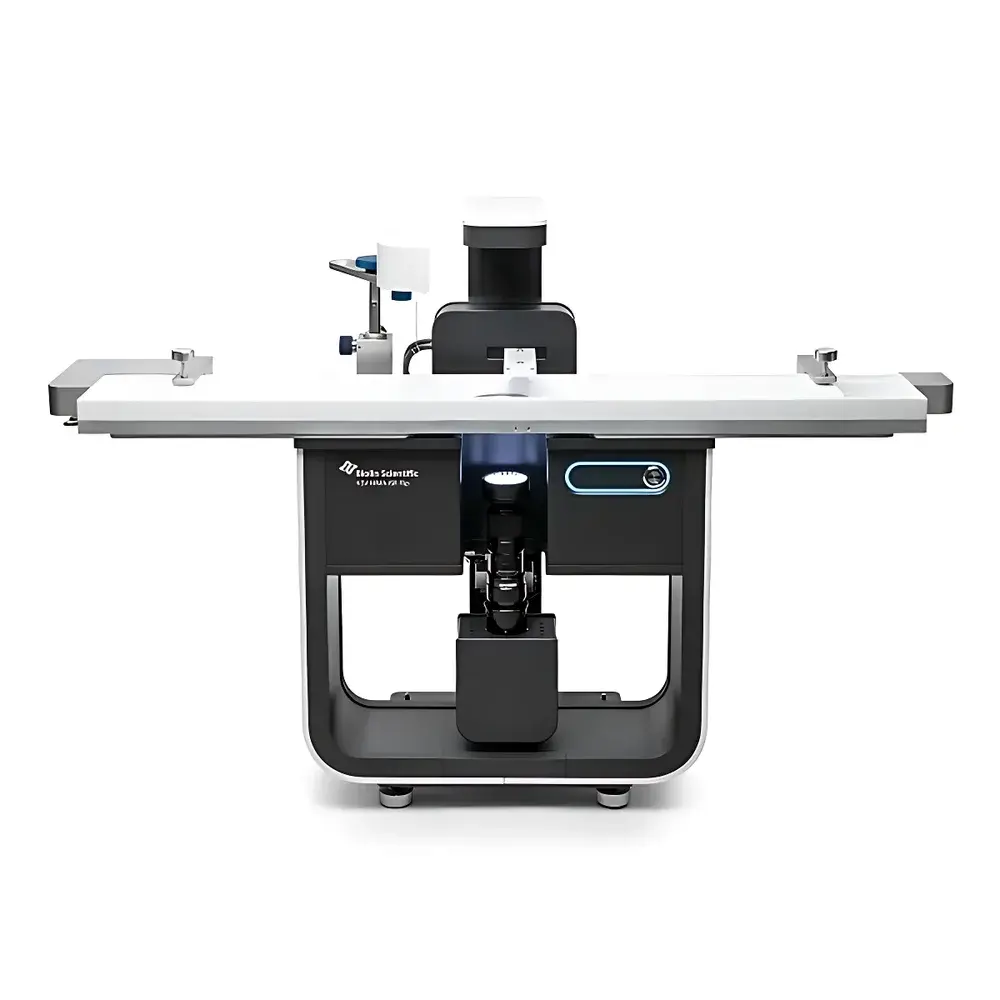
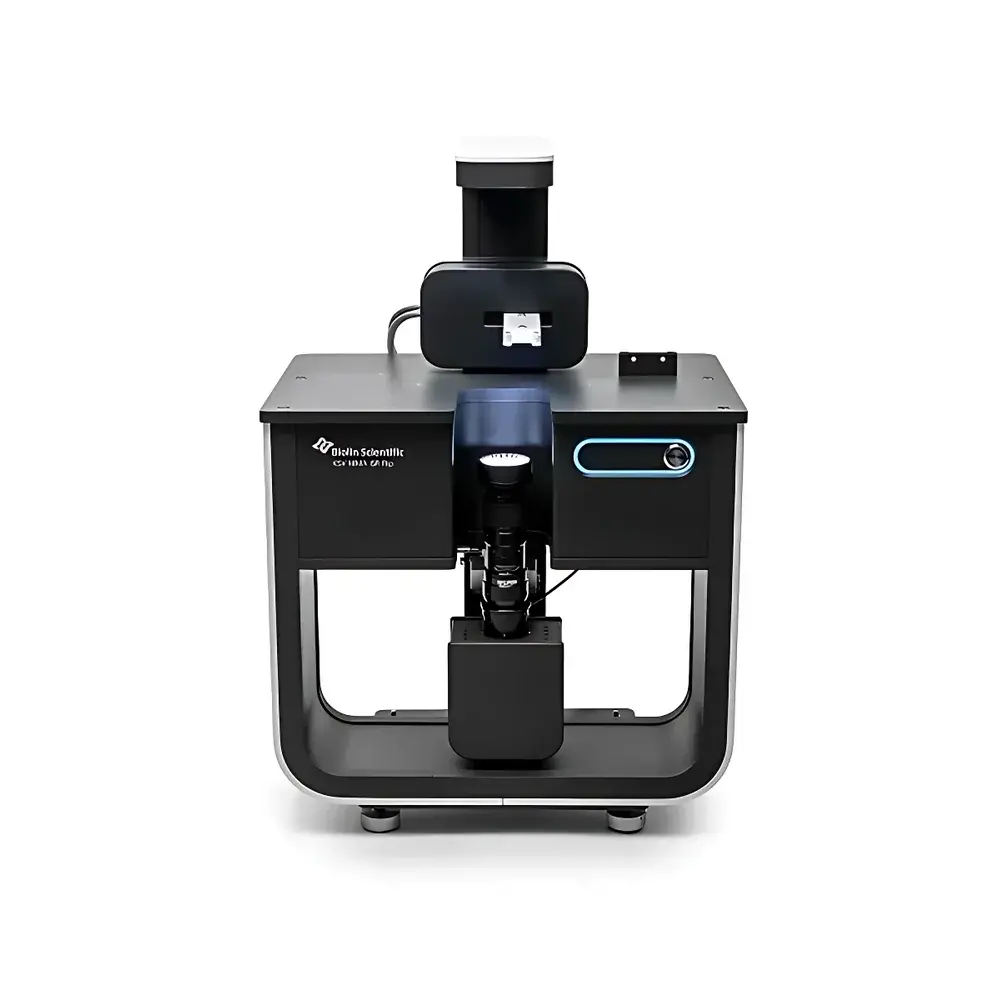
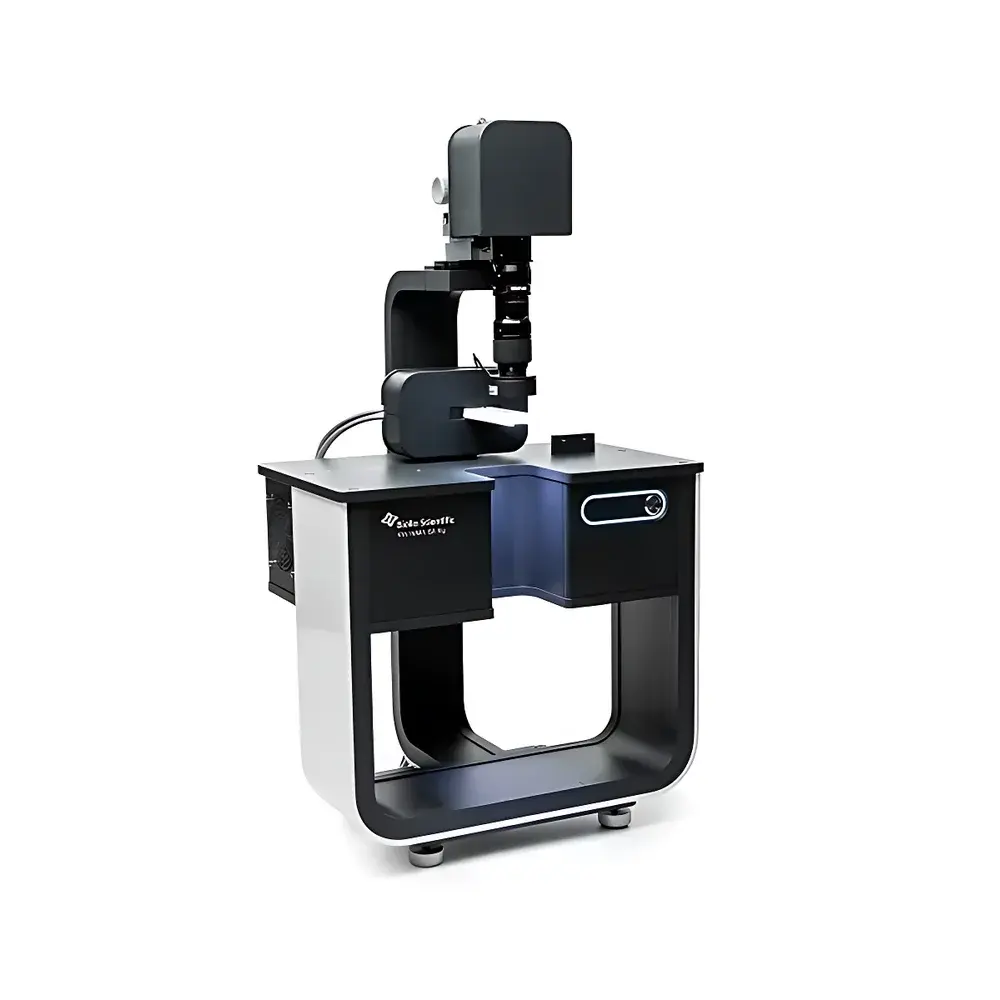
KSV NIMA ISR Flip Interfacial Shear Rheometer
| Brand | KSV NIMA |
|---|---|
| Origin | Finland |
| Manufacturer Type | Original Equipment Manufacturer (OEM) |
| Product Category | Imported Instrument |
| Model | KSV NIMA ISR Flip |
| Instrument Type | Interfacial Rheometer |
| Sample Viscosity Range | Low-viscosity liquids |
| Sample State | Liquid |
| Bearing Type | Mechanical bearing |
| Frequency Range | 0.01–10 Hz |
| Torque Resolution | 0.001 mN·m |
Overview
The KSV NIMA ISR Flip Interfacial Shear Rheometer is an advanced, high-sensitivity instrument engineered for quantitative characterization of interfacial viscoelasticity at fluid–fluid interfaces—specifically air–water and oil–water (or other immiscible liquid–liquid) boundaries. Unlike bulk rheometers, the ISR Flip operates on the principle of controlled magnetic actuation: a lightweight glass capillary probe is suspended at the interface and driven into oscillatory shear motion by a precisely adjustable magnetic trap. High-resolution video microscopy captures real-time probe displacement, enabling calculation of complex shear modulus (G* = G′ + iG″), loss tangent (tan δ), and interfacial relaxation spectra. This methodology is grounded in interfacial rheology theory—where interfacial stress response to imposed strain reflects molecular packing, lateral cohesion, and dynamic rearrangement kinetics—and is widely applied in fundamental Langmuir monolayer studies, colloidal stabilization mechanisms, and functional biomembrane modeling.
Key Features
- Magnetic Trap Actuation System: A fully programmable electromagnetic assembly enables precise spatial control of the magnetic field gradient, allowing dynamic adjustment of trap strength without mechanical contact—eliminating parasitic torque and ensuring minimal perturbation of the interfacial film.
- Dual-Interface Compatibility: Modular trough design supports both air–liquid and liquid–liquid interface measurements using interchangeable upper/lower trough sections; no hardware reconfiguration required between configurations.
- Flip-Mounted Dual-Camera Architecture: Motorized vertical translation of the high-speed CMOS camera permits rapid switching between top-down (air–liquid) and bottom-up (liquid–liquid) imaging geometries—enabling unambiguous probe tracking across heterogeneous subphases.
- Integrated Wilhelmy Plate Tensiometry: Each trough variant (High-Compression or Low-Volume) incorporates a calibrated Wilhelmy balance for concurrent surface pressure (π) measurement, enabling direct correlation between interfacial stress and viscoelastic moduli during compression or chemical perturbation.
- Subphase Exchange Capability: The Low-Volume Trough features dual side ports for controlled injection and gradual replacement of aqueous or organic subphases—critical for kinetic studies of protein adsorption, enzymatic cleavage, or pH-triggered phase transitions.
Sample Compatibility & Compliance
The ISR Flip is optimized for low-viscosity, Newtonian or weakly structured subphases (e.g., ultrapure water, buffered saline, dilute polymer solutions, or hydrocarbon oils). It accommodates Langmuir monolayers formed from amphiphiles including phospholipids, surfactants, peptides, and synthetic polymers. The system meets essential requirements for GLP-compliant laboratories: full audit trail logging (user actions, parameter changes, timestamps), electronic signature support, and data integrity per FDA 21 CFR Part 11 when deployed with validated software configuration. All mechanical components comply with ISO 14644-1 Class 5 cleanroom handling standards, and optional dust- and draft-proof enclosures ensure operational stability in non-ideal lab environments.
Software & Data Management
The KSV NIMA ISR Flip Control Software is a Windows-based, integrated platform supporting frequency sweeps (0.01–10 Hz), amplitude sweeps (0.04–20% strain), and single-frequency time-series acquisition. Its closed-loop feedback algorithm maintains constant oscillatory amplitude regardless of film stiffness drift—ensuring reproducibility across long-duration experiments (e.g., hours-long crosslinking assays). Real-time video overlay displays probe trajectory, phase lag, and instantaneous G′/G″ values. All raw image sequences, force/torque transients, and calculated rheological parameters are stored in HDF5 format with embedded metadata (instrument settings, calibration coefficients, environmental logs). Export options include CSV, MATLAB .mat, and standardized ASTM D972-compatible reports. Seamless interoperability with KSV NIMA LB software enables synchronized π–A isotherms and G*(A) mapping for structure–function analysis.
Applications
- Pulmonary Surfactant Research: Quantification of dynamic viscoelastic recovery during cyclic compression–expansion mimicking respiratory cycles—directly informing models of alveolar stability and surfactant dysfunction in ARDS.
- Emulsion & Foam Stability Prediction: Correlation of interfacial G′ with droplet coalescence onset and foam drainage rates in food-grade and pharmaceutical emulsions (e.g., milk proteins, lecithin-stabilized systems).
- Langmuir Monolayer Phase Transitions: Detection of solid–liquid–expanded phase boundaries via abrupt shifts in tan δ and frequency-dependent G″ peaks—complementing traditional π–A isotherms.
- Interfacial Crosslinking Kinetics: Real-time monitoring of G′ growth during UV-initiated or enzyme-mediated interfacial polymerization—revealing nucleation-limited vs. diffusion-limited regimes.
- Oil Recovery & Environmental Interfaces: Assessment of biosurfactant efficacy at oil–water interfaces under reservoir-relevant salinity and temperature conditions.
FAQ
What interfaces can the ISR Flip measure?
It measures shear rheology at both air–liquid and liquid–liquid interfaces using modular trough configurations—no hardware modification required.
Is the system compatible with existing Langmuir troughs?
No—the ISR Flip integrates its own purpose-built troughs (High-Compression or Low-Volume) with embedded Wilhelmy balance and magnetic actuation geometry; retrofitting to third-party troughs is not supported.
How is probe calibration performed?
Calibration uses a certified reference fluid (e.g., silicone oil of known interfacial viscosity) and geometric probe dimensions; software applies Stokes’ law corrections for meniscus drag and inertial effects.
Can the system operate under controlled humidity or gas atmosphere?
Yes—when used inside the optional KSV NIMA Dust & Draft Enclosure, the system supports integration with glovebox adapters or humidified gas lines for inert or regulated environmental control.
What minimum sample volume is required for the Low-Volume Trough?
The lower compartment holds as little as 4.7 mL of subphase—ideal for precious biological samples such as purified membrane proteins or clinical surfactant extracts.



