
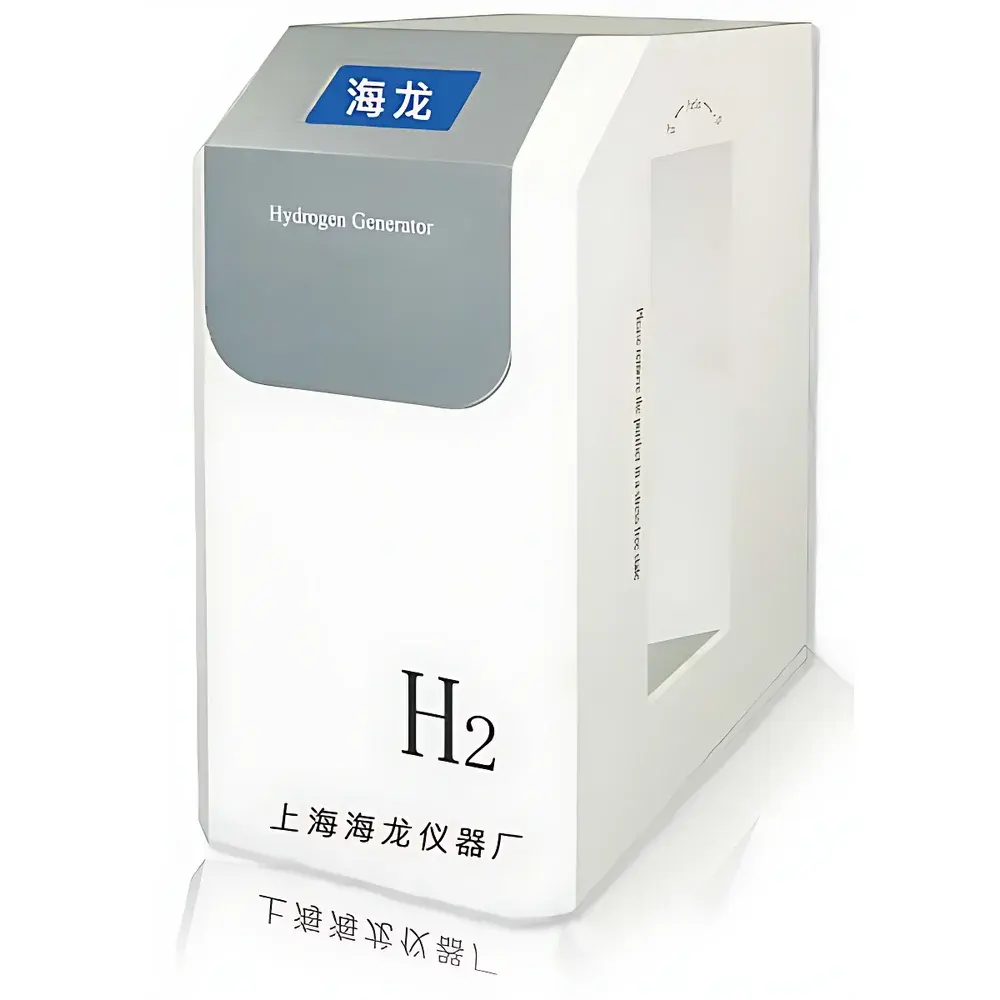
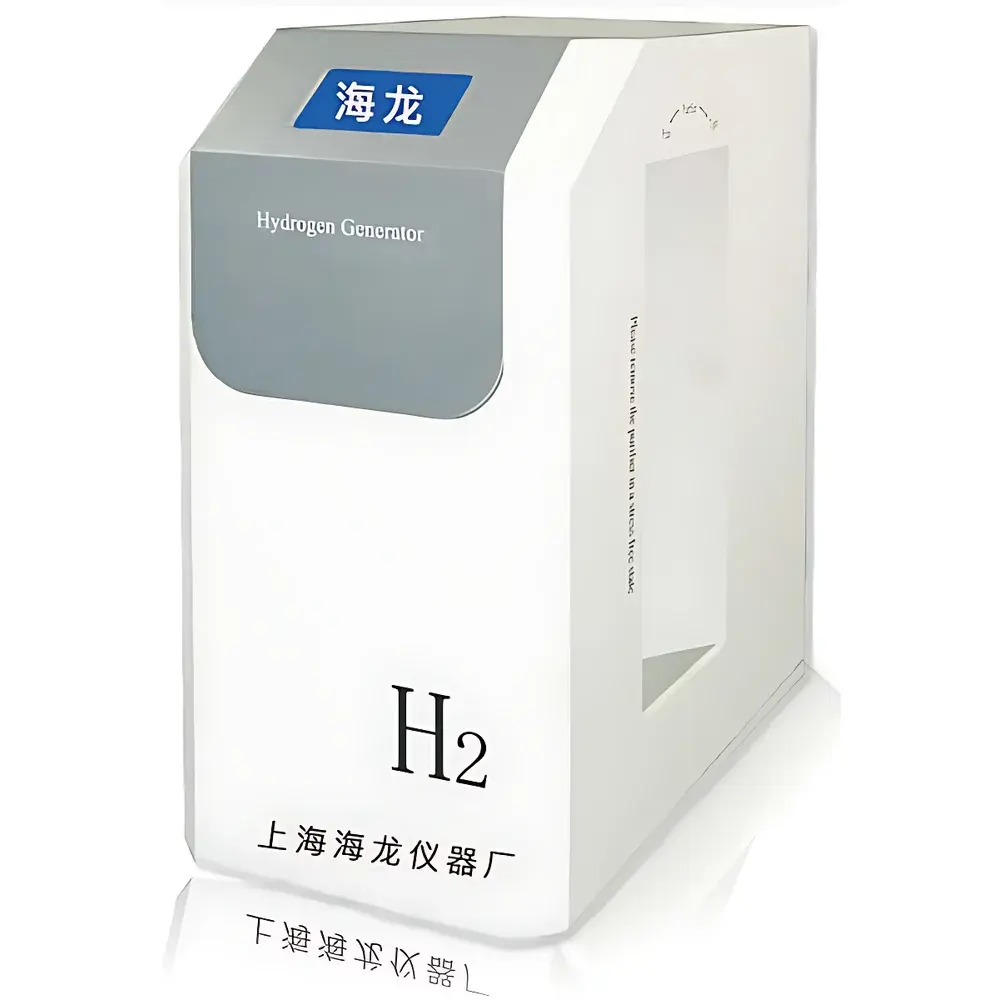
HL Intelligent Hydrogen Generator (Models HL-3H & HL-5H)
| Brand | Hailong |
|---|---|
| Origin | Shanghai, China |
| Model | HL-3H, HL-5H |
| Hydrogen Generation Principle | Automatic water replenishment + electrolysis on power-on |
| Output Flow Rate | 0–300 mL/min (HL-3H) / 0–500 mL/min (HL-5H) |
| Output Pressure | 0–0.5 MPa |
| Hydrogen Purity | ≥99.999% |
| Power Consumption | 210–315 W |
| Dimensions (W×D×H) | 410 × 240 × 380 mm |
| Weight | 12 kg |
| Operating Ambient | 0–40 °C, ≤85% RH |
Overview
The HL Intelligent Hydrogen Generator (Models HL-3H and HL-5H) is a compact, laboratory-grade electrolytic hydrogen source engineered for continuous, on-demand supply of ultra-high-purity hydrogen gas (≥99.999%) in analytical and research environments. Utilizing membrane-separated alkaline electrolysis with a cylindrical, thermally stabilized electrolytic cell, the system converts deionized water into hydrogen and oxygen via catalytic decomposition at noble-metal-coated electrodes. Unlike chemical hydride or cylinder-based alternatives, this generator eliminates storage hazards, reduces logistical overhead, and ensures consistent gas quality independent of external supply chains. Designed for integration with GC-FID, hydrogenation reactors, fuel cell test stations, and inert atmosphere gloveboxes, it delivers stable flow and pressure regulation across its full operational range—without purity degradation over time.
Key Features
- Intelligent microprocessor control with integrated high-density modular architecture, enabling real-time monitoring of system status—including electrolyte level, cell temperature, output pressure, and gas purity—via a backlit LCD interface.
- Automatic deionized water replenishment system with level-sensing feedback loop; no manual refilling required during normal operation.
- Triple-redundant safety architecture: (a) Electrolyte level alarm with visual/audible alert, (b) Hydrogen leak detection using semiconductor-based sensors calibrated to <100 ppm threshold, and (c) Pressure-limiting safety valve with electronic overpressure cutoff at 0.5 MPa.
- Fully stainless-steel gas path (electropolished and ultrasonically cleaned), dual-stage purification columns, and four-stage gas conditioning—comprising particulate filtration, moisture adsorption, trace oxygen removal, and final sub-micron particulate polishing.
- Patented anti-backflow design prevents electrolyte migration into downstream instrumentation, eliminating risk of contamination or damage to sensitive detectors or catalysts.
- Cylindrical electrolytic cell featuring imported precious-metal catalysts (e.g., Pt-Ru alloys) and active thermal management to maintain optimal cell temperature (60–70 °C), ensuring high current efficiency (>75%), low energy consumption per liter of H₂, and extended service life (>5,000 operating hours).
- Dynamic flow tracking algorithm maintains setpoint accuracy within ±2% across the full 0–300 mL/min (HL-3H) or 0–500 mL/min (HL-5H) range, with pressure stability maintained at ±0.01 MPa under variable load conditions.
Sample Compatibility & Compliance
The HL series is compatible with standard laboratory-grade deionized water (resistivity ≥15 MΩ·cm, TOC < 5 ppb) and requires no consumables beyond periodic replacement of purification media every 6–12 months depending on usage intensity. All electrical components comply with IEC 61010-1:2010 for laboratory equipment safety. Gas output meets ISO 8573-1:2010 Class 1 compressed air purity equivalency for gaseous hydrogen—specifically, ≤0.1 µm particles, dew point ≤−70 °C, and total hydrocarbon content <0.1 ppm. While not certified to FDA 21 CFR Part 11 out-of-the-box, audit-ready operation logs (including runtime, alarms, and maintenance events) can be exported via USB for GLP/GMP-aligned documentation workflows.
Software & Data Management
The embedded controller supports non-volatile event logging with timestamped records of all critical parameters: power cycles, alarm triggers, pressure deviations, and water-level fluctuations. Logs are exportable in CSV format via USB port for integration into LIMS or QC databases. Optional RS-232 or Modbus RTU interfaces enable remote supervision and integration with building management systems (BMS) or centralized lab automation platforms. No proprietary software installation is required—data retrieval is file-system-based and compatible with Windows, macOS, and Linux hosts.
Applications
- Carrier and fuel gas supply for gas chromatography with flame ionization detection (GC-FID), where stable H₂ flow directly impacts baseline noise and peak resolution.
- Hydrogen feedstock for catalytic hydrogenation studies in organic synthesis and pharmaceutical process development.
- Reducing atmosphere generation in materials science labs for sintering, annealing, or thin-film deposition processes.
- Calibration gas source for hydrogen sensors and electrochemical analyzers requiring traceable, repeatable output.
- On-site hydrogen supply for PEM fuel cell characterization rigs, eliminating dependence on high-pressure cylinders and associated regulatory constraints.
FAQ
What type of water must be used?
Deionized water with resistivity ≥15 MΩ·cm and total organic carbon (TOC) <5 ppb is mandatory. Tap or distilled water will cause rapid electrode fouling and premature failure.
Can the generator operate unattended overnight?
Yes—provided ambient temperature remains within 0–40 °C and relative humidity ≤85%, and the water reservoir is adequately filled prior to initiation. The system enters standby mode automatically after 24 h of zero-flow demand.
How often does the purification media require replacement?
Under typical lab use (≤8 h/day, 5 days/week), dual purification cartridges should be replaced every 9–12 months. High-throughput applications may necessitate replacement every 6 months.
Is hydrogen purity verified in real time?
No continuous inline purity analyzer is included; however, the multi-stage purification architecture and stable electrolytic performance ensure sustained ≥99.999% purity as validated by third-party GC-TCD analysis per ISO 8573-1 Annex B protocols.
Does the unit support integration with a laboratory’s central monitoring system?
Yes—via optional RS-232 or Modbus RTU communication modules, enabling status polling, alarm forwarding, and remote start/stop commands within SCADA or LabVantage environments.



