
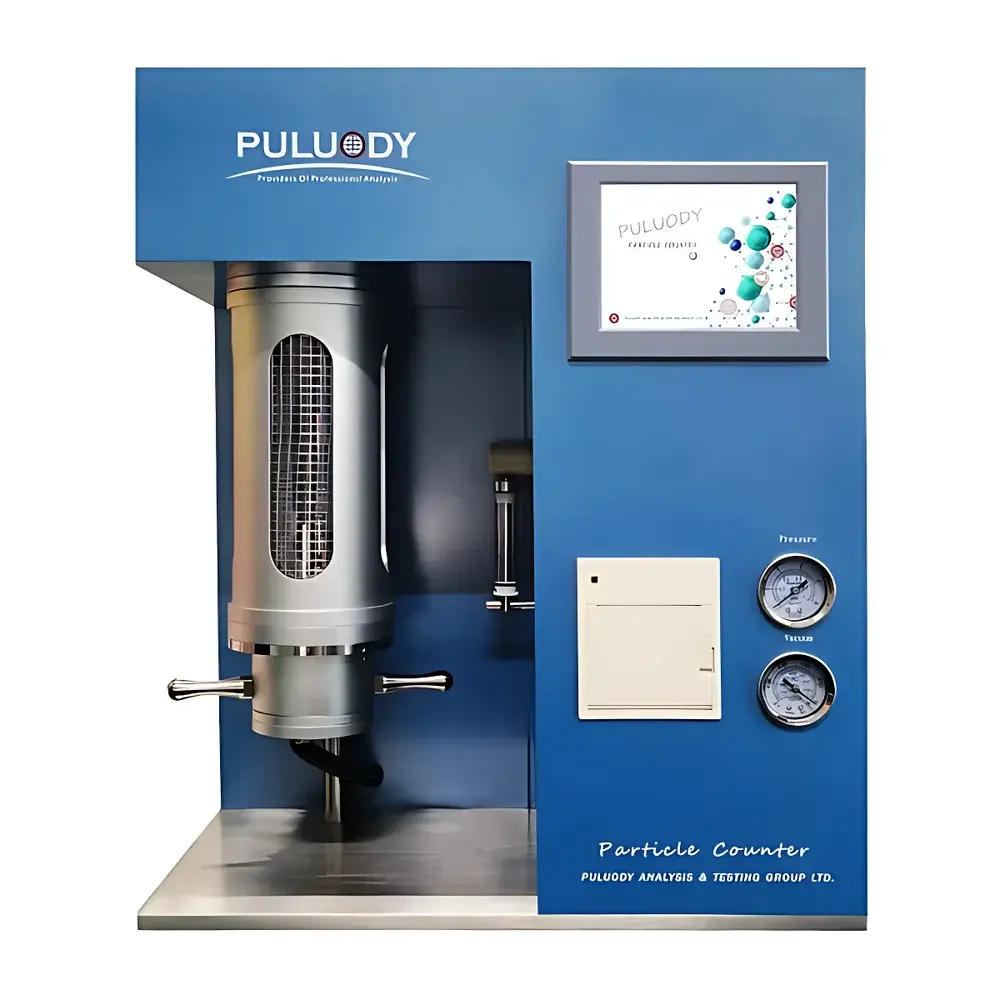
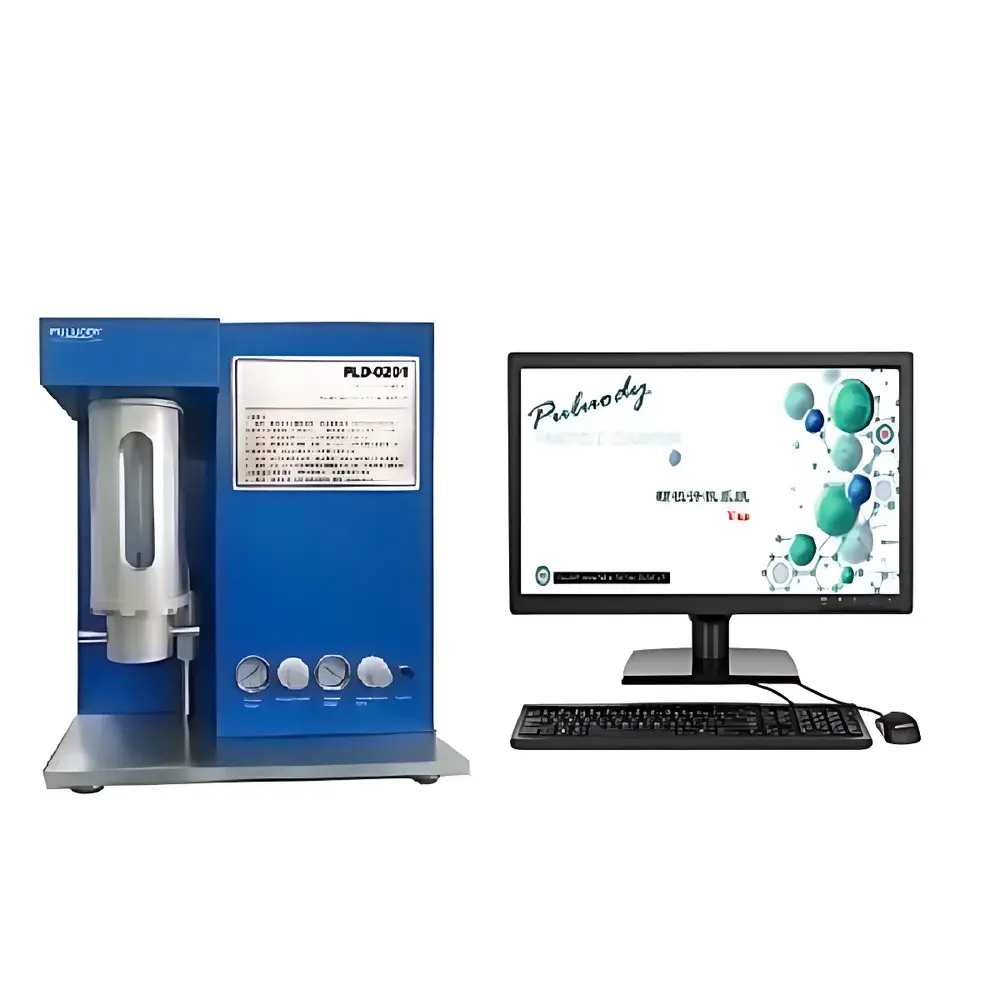
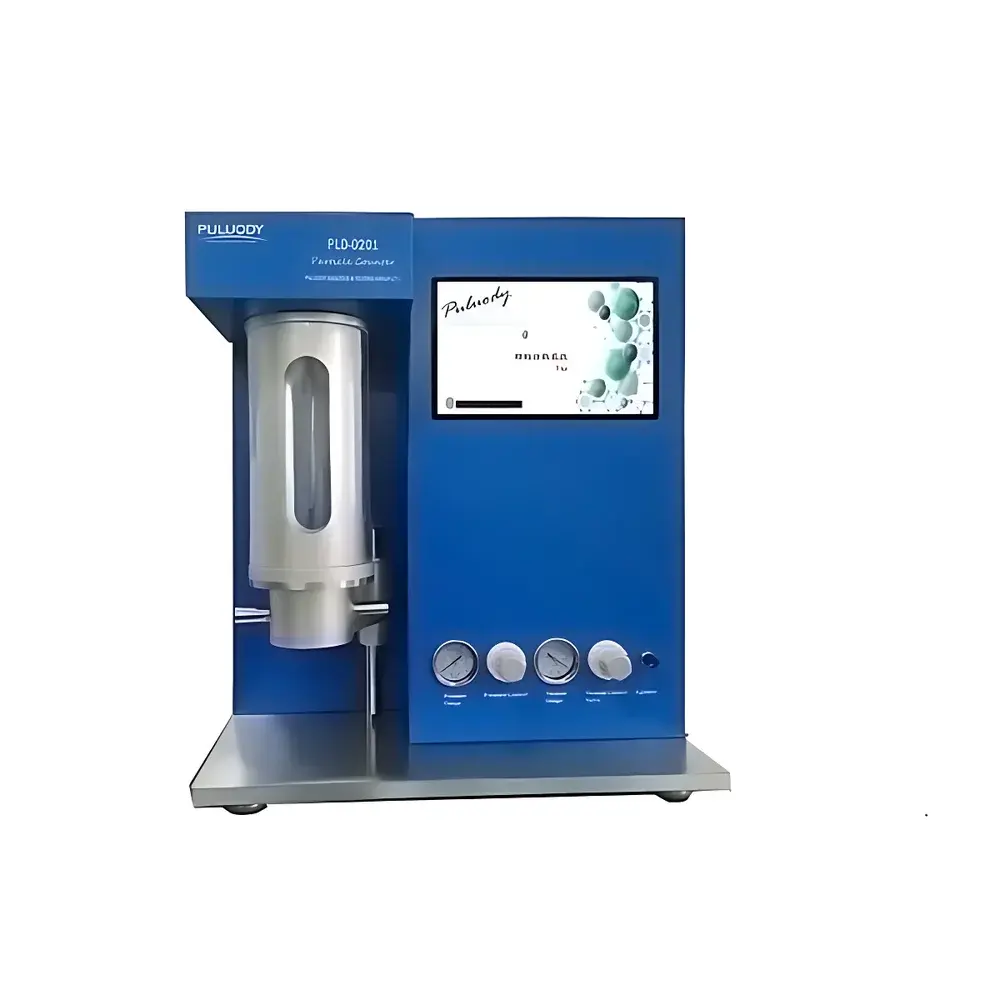
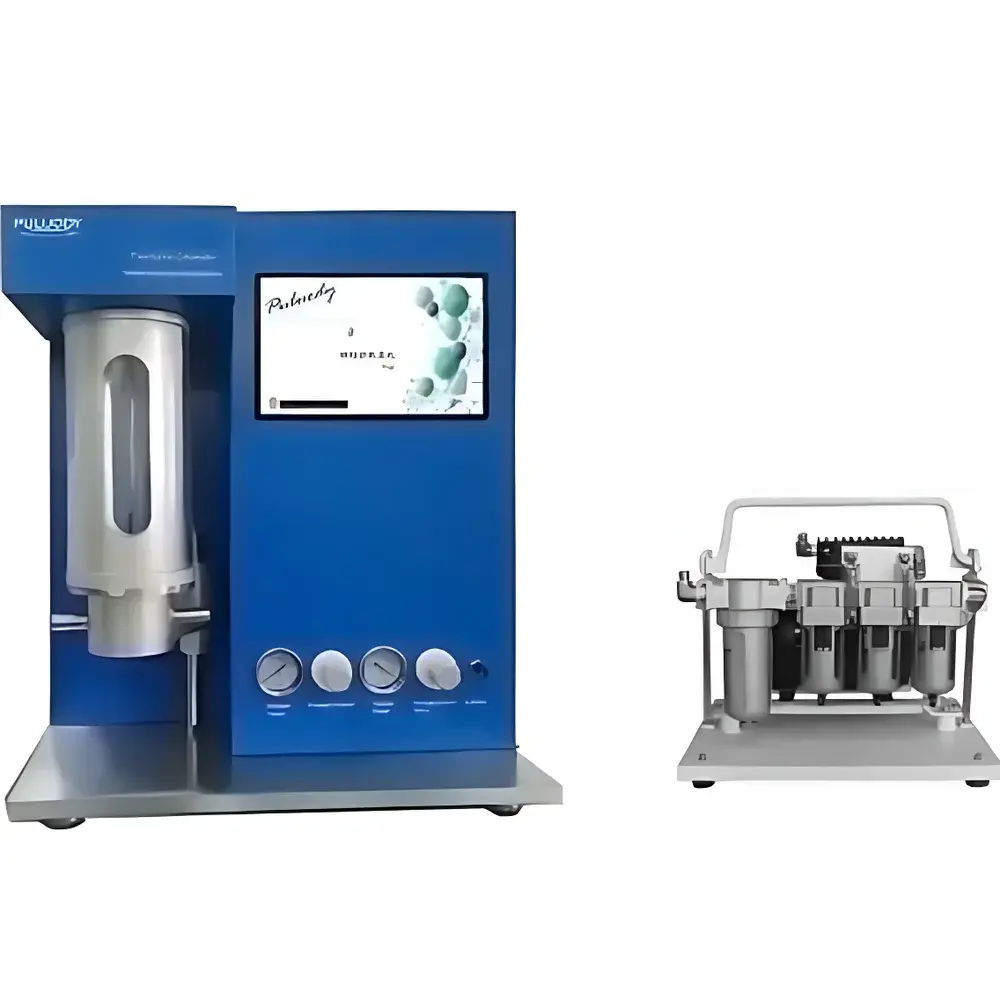
PULUODY PLD-0201 Laser Particle Counter for Oil Contamination Analysis
| Brand | PULUODY |
|---|---|
| Origin | Shaanxi, China |
| Manufacturer Type | Authorized Distributor |
| Product Category | Domestic |
| Model | PLD-0201 |
| Instrument Type | Optical Laser-Based Particle Counter |
| Detection Principle | Light Scattering (Dual-Laser Narrow-Beam Sensor, 8th Generation) |
| Calibration Standards | ISO 11171, ISO 4402, GB/T 18854, JJG 1061 |
| Compliance Standards | ISO 4406:1999/1987, NAS 1638, MOOG, DL/T 1096, ISO 11218, GJB 380, DL/T 432, ISO 11500 |
| Sensitivity | 1 µm (per ISO 4402) or 4 µm(c) (per ISO 11171 & GB/T 18854) |
| Detection Range | 0.03–3000 µm (sensor-dependent) |
| Channel Configuration | Up to 1000 user-configurable size channels |
| Coincidence Limit | ≤5% error at 10,000 particles/mL |
| Data Storage | 3000 tests on embedded industrial PC |
| Interface | RS232 |
| Output | Real-time particle count/mL, size distribution histogram, contamination grade per ISO/NAS, built-in thermal printer |
| Software | P6.4 Integrated Analysis Suite (PC & embedded versions) |
| Control | Industrial PC or integrated touch-enabled HMI with color LCD |
Overview
The PULUODY PLD-0201 Laser Particle Counter is an ISO-compliant, laboratory-grade optical instrument engineered for quantitative assessment of solid particulate contamination in liquid media—primarily lubricants, hydraulic fluids, insulating oils, turbine oils, and other industrial process liquids. It operates on the principle of light scattering detection using an eighth-generation dual-laser narrow-beam sensor architecture, delivering high reproducibility and minimal signal drift across extended operational cycles. Unlike generic optical counters, the PLD-0201 integrates traceable calibration protocols aligned with international reference standards—including ISO 11171 for calibration particle sizing and ISO 4402 for verification—and supports multi-standard reporting required for regulatory and quality assurance workflows in aerospace, power generation, and heavy machinery sectors.
Key Features
- Eighth-generation dual-laser optical sensing system optimized for low-noise, high-stability detection across sub-micron to millimeter-scale particles
- Configurable detection range from 0.03 µm to 3000 µm, adaptable via interchangeable sensor modules for application-specific resolution requirements
- 1000 programmable particle size channels, with optional research-grade configurations offering 16-, 32-, or 64-channel binning for granular statistical analysis
- Real-time coincidence correction algorithm validated to ≤5% error at concentrations up to 10,000 particles/mL
- Integrated industrial PC with 7-inch color touchscreen HMI, supporting standalone operation without external computing hardware
- Built-in thermal printer for immediate hardcopy output of particle concentration (particles/mL), size distribution histograms, and ISO 4406 or NAS 1638 contamination grades
- RS232 serial interface for bidirectional data exchange with LIMS or enterprise QA databases
Sample Compatibility & Compliance
The PLD-0201 is validated for use with a broad spectrum of non-aqueous and aqueous-based liquids, including but not limited to aviation turbine fuel (Jet A-1), hydraulic oil (ISO L-HM), transformer oil (IEC 60296), gear oil (API GL-5), refrigeration lubricants, polymer solutions, and pharmaceutical-grade solvents. It complies with ASTM D6786 (for automatic particle counters in aviation fuels), ISO 4406:2021 (fluid cleanliness coding), NAS 1638 Class Code reporting, and Chinese national standards DL/T 1096 (power plant oil testing) and GJB 380 (military hydraulic fluid specifications). Calibration traceability follows GB/T 18854–2002 (equivalent to ISO 11171) and JJG 1061–2010, ensuring metrological integrity for GLP and internal audit purposes.
Software & Data Management
The instrument ships with P6.4 Analysis Software—a dual-platform suite supporting both embedded industrial PC and Windows-based desktop deployment. The software enables full method configuration (including custom thresholding for 1–100 µm sub-ranges and arbitrary 0.1 µm increment analysis), automated grade assignment per ISO 4406 or NAS 1638, statistical trending (e.g., Δcount over time, batch-to-batch deviation), and export of CSV, PDF, and XML reports compliant with 21 CFR Part 11 audit-trail requirements when deployed in validated environments. Raw scatter pulse data is retained for reprocessing, and all test parameters—including sensor temperature, flow rate, and background noise baseline—are logged with timestamp and operator ID.
Applications
This instrument serves as a core analytical tool in predictive maintenance programs, OEM fluid certification labs, and third-party testing facilities. Typical use cases include: monitoring wear debris accumulation in gearbox oil to schedule component replacement; verifying cleanliness of hydraulic fluid prior to commissioning aircraft landing gear systems; certifying transformer oil purity before energizing high-voltage substations; validating filtration efficiency of offline kidney-loop systems; and conducting stability studies of nanoparticle dispersions in semiconductor slurry formulations. Its adaptability to organic solvents and viscous polymer melts extends utility into R&D settings where traditional Coulter counters face solubility or clogging limitations.
FAQ
Does the PLD-0201 support FDA 21 CFR Part 11 compliance?
Yes—when operated with P6.4 software in networked Windows environments featuring electronic signatures, audit trails, and role-based access control, it meets foundational Part 11 requirements for electronic records and signatures.
Can the instrument be calibrated in-house?
Yes—calibration is performed using NIST-traceable ISO MTD (Medium Test Dust) or equivalent certified reference materials per GB/T 18854–2002 and ISO 11171 procedures; full calibration kits and SOP documentation are supplied.
Is sample preparation required prior to analysis?
Minimal preparation is needed: samples must be homogenized (via gentle agitation or ultrasonication) and degassed if volatile components are present; no dilution or filtration is required for standard viscosity ranges (up to ISO VG 220).
What maintenance intervals are recommended?
Laser alignment verification every 6 months; flow cell cleaning after every 500 tests or when baseline noise increases >15%; annual sensor recalibration recommended for GMP-aligned operations.
How does the dual-laser design improve measurement fidelity?
The orthogonal dual-beam configuration suppresses Mie scattering artifacts and enables simultaneous intensity and transit-time discrimination, reducing false counts from air bubbles or refractive index mismatches common in multi-phase lubricant systems.



