


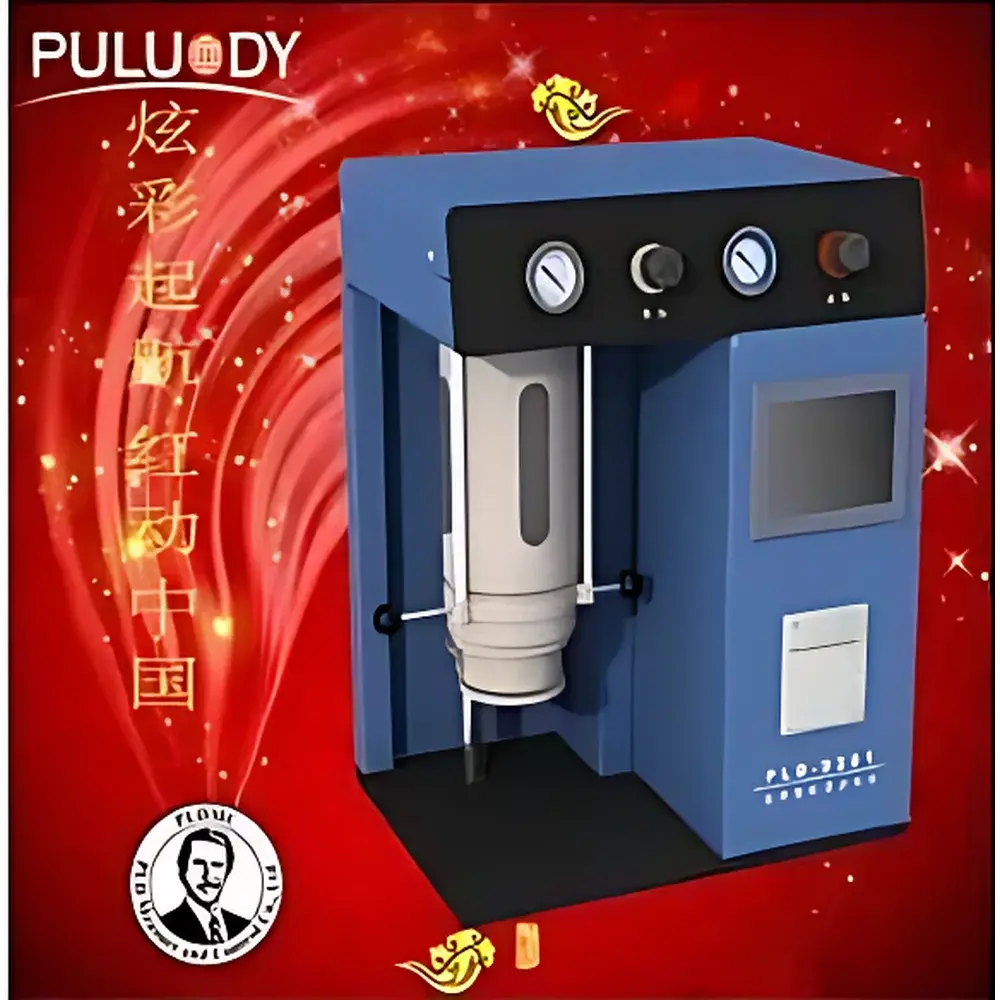
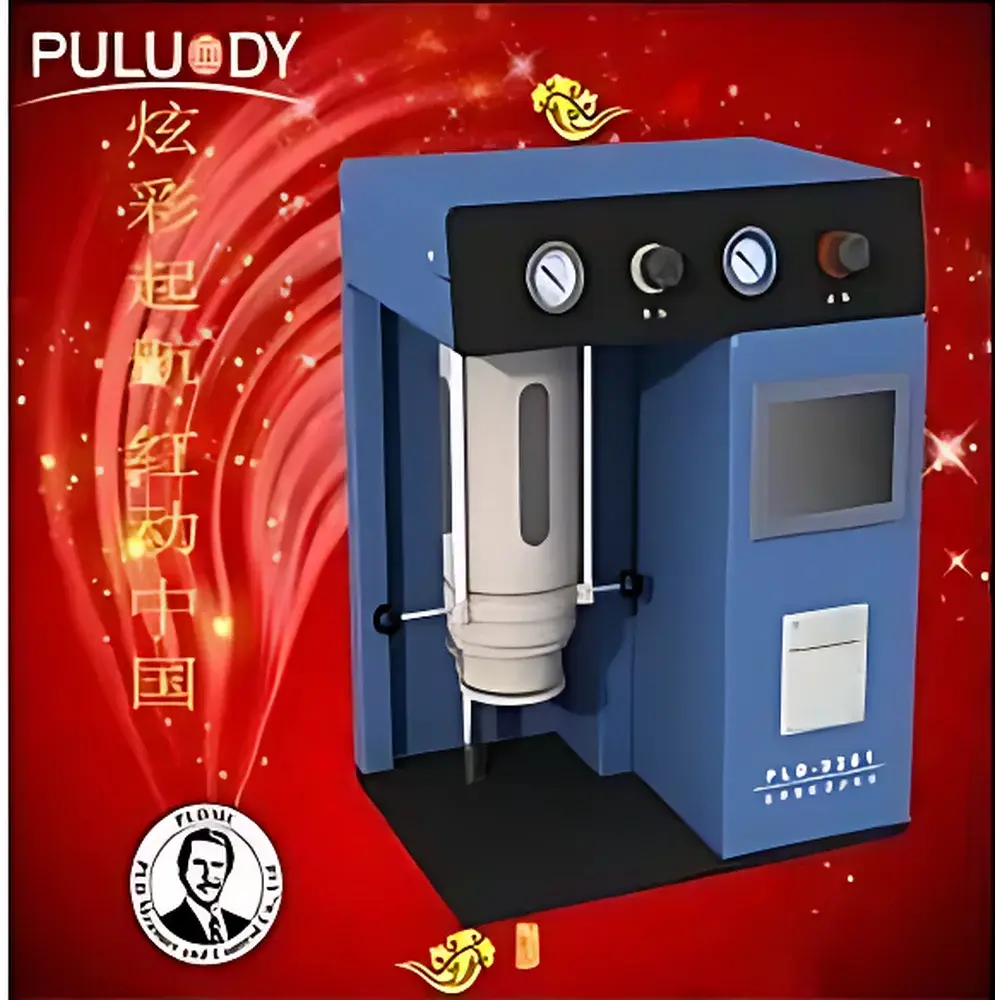
PULUODY PLD-0201NEW Optical Particle Counter System
| Brand | PULUODY |
|---|---|
| Origin | Shaanxi, China |
| Manufacturer Type | Manufacturer |
| Regional Classification | Domestic |
| Model | PLD-0201NEW |
| Instrument Type | Optical Particle Counter |
| Measurement Principle | Light Obscuration (LO) |
| Laser Sensor | 6th-generation narrow-beam laser detector |
| Sensitivity | 1 µm (per ISO 4402) / 4 µm(c) (per ISO 11171 & GB/T 18854) |
| Measurement Range | 1–450 µm |
| Number of Adjustable Channels | 8 |
| Sample Volume Accuracy | ±1% |
| Flow Rate Control | 5–60 mL/min (electromagnetically regulated piston pump) |
| Sampling Volume | 1 mL to unlimited (user-definable) |
| Coincidence Limit | ≤5% at 10,000 particles/mL |
| Pressure Range | –0.6 to +0.7 MPa (integrated positive/negative pressure pretreatment) |
| Max. Fluid Viscosity | ≤350 mm²/s |
| Operating Temperature | Ambient to 65°C |
| Ambient Temperature Range | 0–50°C |
| Power Supply | 220 VAC, 50 Hz, <80 W |
| Compliance Standards | ISO 4406, NAS 1638, GJB 380, GJB 420, GB/T 14039–2002, GB/T 18854–2002 (equivalent to ISO 11171:1999), JJG 066–95 |
| Calibration Traceability | Certified by AVIC Particle Metrology Test Station (No. 116, National Defense Science & Technology Industry First-Class Particle Metrology Station) |
| Data Output | Real-time particle count per channel, contamination grade assignment, histogram generation, built-in thermal printer |
| Interface | RS232 serial port for external PC connection and data archiving |
| Software | P6.4 Particle Analysis Suite (integrated embedded OS + optional PC version) |
| Auto-Cleaning Function | Yes |
| Sample Pretreatment | None required |
Overview
The PULUODY PLD-0201NEW Optical Particle Counter System is a precision-engineered instrument designed for quantitative analysis of insoluble particulate contamination in liquid media—primarily hydraulic oils, lubricants, transformer oils, turbine oils, aviation fuels, and polymer solutions. It operates on the light obscuration (LO) principle, where particles suspended in a flowing liquid stream pass through a focused laser beam; each particle generates a transient reduction in transmitted light intensity proportional to its cross-sectional area. This analog pulse signal is digitized, classified into user-defined size channels, and converted into statistically robust particle concentration data (particles per milliliter). The system meets the metrological rigor required for routine condition monitoring in aerospace, power generation, marine propulsion, and industrial hydraulics—where fluid cleanliness directly correlates with component reliability and service life.
Key Features
- 6th-generation narrow-beam laser sensor optimized for high-resolution detection down to 1 µm (ISO 4402) or 4 µm(c) (ISO 11171-compliant calibration), ensuring repeatability across viscosity ranges up to 350 mm²/s.
- Electromagnetically controlled piston pump delivering precise, programmable flow rates (5–60 mL/min) and volumetric accuracy better than ±1%, critical for regulatory-grade reporting under ISO 4406 and NAS 1638.
- Integrated dual-pressure pretreatment module supporting both vacuum-assisted degassing and pressurized delivery—enabling stable measurement of viscous or volatile samples without manual filtration or dilution.
- Eight fully configurable detection channels (user-definable threshold sizes between 1–450 µm), with built-in threshold–size calibration curves aligned to ISO 11171 reference standards.
- Embedded real-time operating system with 7-inch capacitive touchscreen interface, dual-input support (touch + physical keypad), and onboard thermal printer for immediate hardcopy output of contamination grades and histograms.
- Automatic post-test fluidic rinse cycle using system-integrated cleaning solvent pathways—minimizing carryover risk and operator intervention between samples.
Sample Compatibility & Compliance
The PLD-0201NEW is validated for direct analysis of undiluted, unfiltered samples including mineral- and synthetic-based hydraulic fluids, turbine oils, insulating oils, jet fuels (JP-5, JP-8), gear oils, and aqueous or organic polymer solutions. It complies with international contamination grading frameworks: ISO 4406:2017 (code-based reporting), NAS 1638 Class, GJB 420B (Chinese military standard), and GB/T 14039–2002. Calibration traceability is maintained via annual verification against NIST-traceable reference materials at the AVIC Particle Metrology Test Station (Defense Science & Technology Industry First-Class Metrology Station No. 116), satisfying GLP audit requirements for defense and aviation maintenance organizations. Instrument validation follows GB/T 18854–2002 (identical to ISO 11171:1999), with documented linearity, limit of detection, and coincidence error characterization.
Software & Data Management
The embedded P6.4 Particle Analysis Suite provides full control over test parameters, real-time visualization of pulse height distributions, and automated assignment of ISO/NAS contamination codes. Data export supports CSV and XML formats via RS232 interface for integration into LIMS or CMMS platforms. Audit trails—including operator ID, timestamp, calibration status, and raw pulse logs—are retained internally and comply with FDA 21 CFR Part 11 requirements when deployed with optional electronic signature modules. Histograms, cumulative distribution plots, and trend reports can be generated on-device or exported for statistical process control (SPC) analysis in accordance with ISO 21501-4.
Applications
This system serves as a primary tool for predictive maintenance programs in OEM manufacturing facilities, third-party oil analysis laboratories, and in-house condition monitoring centers. Typical use cases include: verifying cleanliness of new oil batches prior to equipment fill; trending particle counts during turbine lube oil regeneration cycles; certifying hydraulic fluid compliance before aircraft acceptance testing (per SAE AS4059); validating filter efficiency in power plant feedwater systems; and quantifying catalyst fines in petrochemical process streams. Its ability to operate without sample dilution or centrifugation reduces analytical bias and accelerates turnaround time in high-throughput QA/QC environments.
FAQ
What calibration standards does the PLD-0201NEW support?
It is factory-calibrated per GB/T 18854–2002 (ISO 11171:1999) using NIST-traceable ACFTD and ISO MTD reference particles, with optional certification from the AVIC Particle Metrology Test Station.
Can the instrument measure particles below 1 µm?
No—the optical design and signal-to-noise architecture are optimized for the 1–450 µm range per ISO 4402 and ISO 11171 specifications; sub-micron analysis requires alternative techniques such as nanoparticle tracking analysis (NTA) or dynamic light scattering (DLS).
Is method validation documentation available for regulatory submissions?
Yes—full IQ/OQ/PQ protocols, uncertainty budgets, and metrological traceability statements are provided upon request for ISO/IEC 17025-accredited labs and FDA-regulated users.
How is sample carryover mitigated between tests?
An automated solvent flush sequence activates post-analysis, circulating cleaning fluid through the sensor cell and flow path for ≥30 seconds, verified by baseline stability checks before next run initiation.
Does the system support multi-language UI or custom report templates?
The embedded OS currently supports English and Simplified Chinese; custom report layouts (e.g., corporate branding, additional metadata fields) can be implemented via firmware update under PULUODY’s engineering services agreement.



