
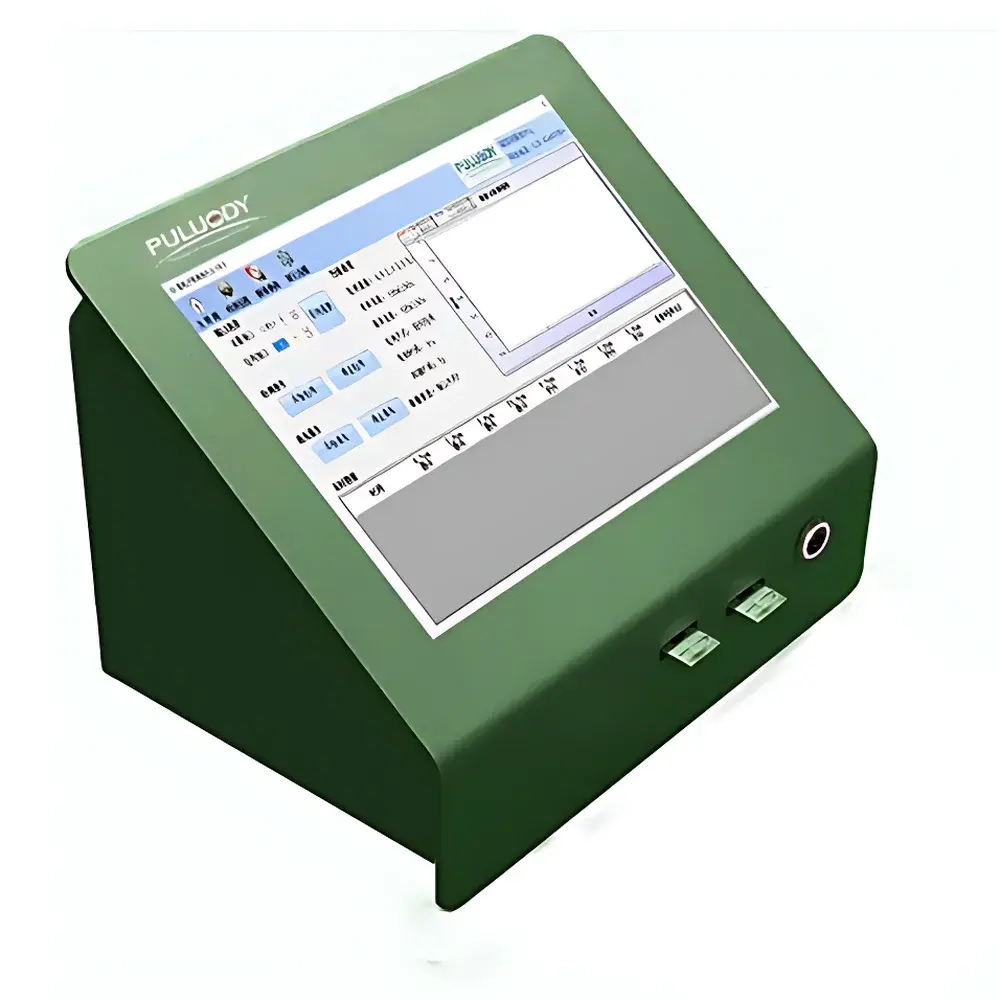
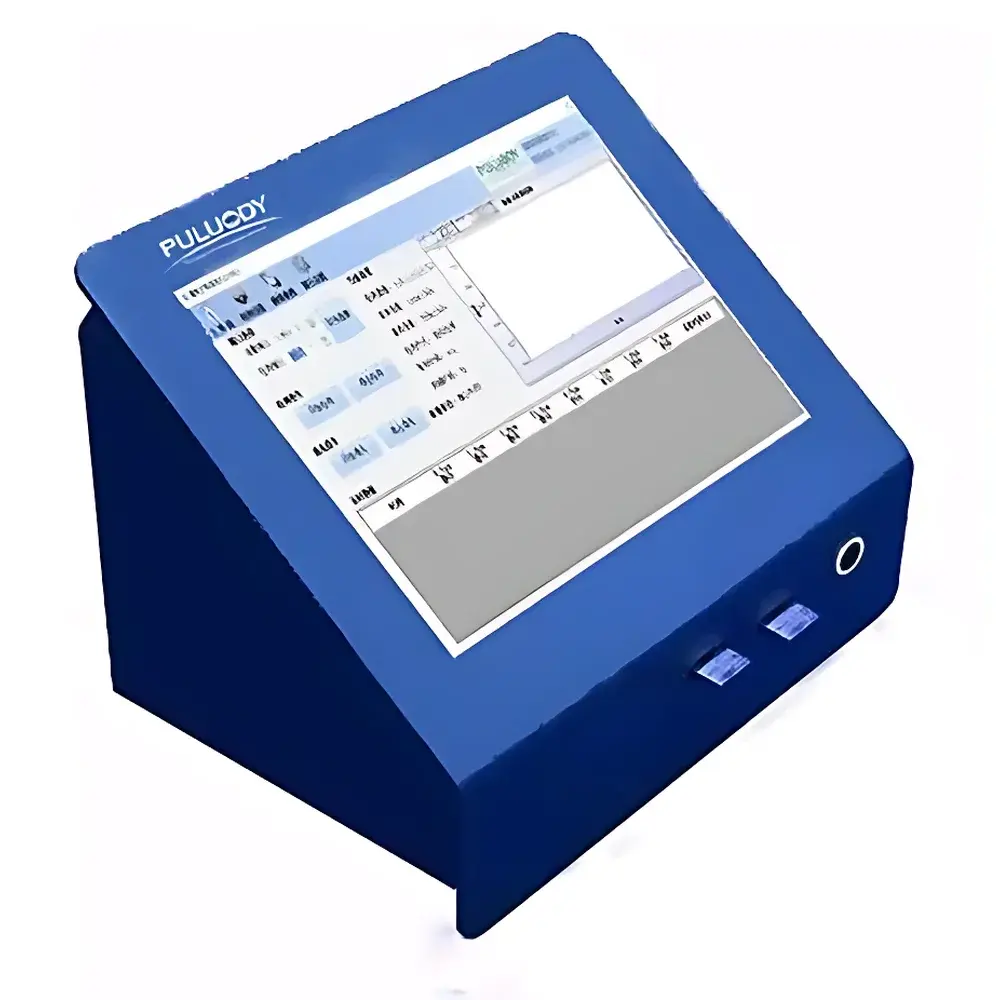
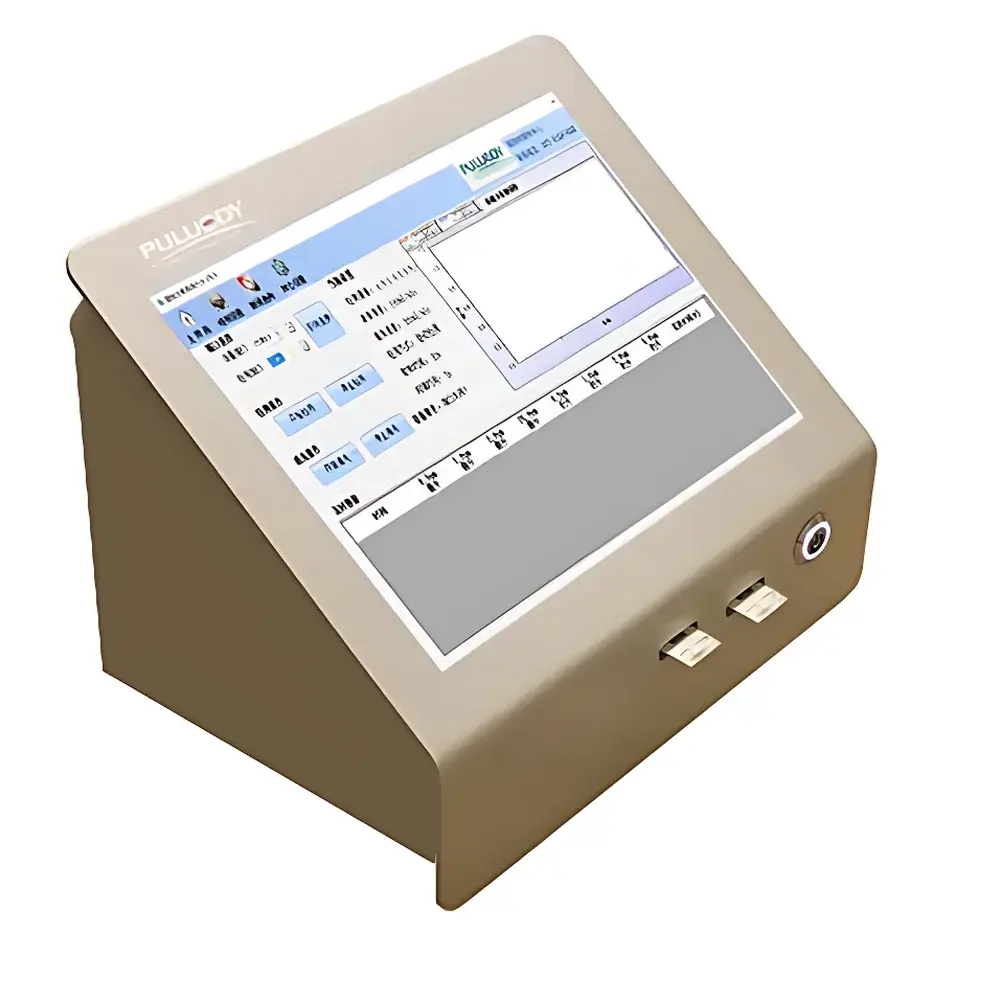
PULUODY PLD-0203-16 Mobile Light Obscuration Particle Counter
| Brand | PULUODY |
|---|---|
| Origin | Shaanxi, China |
| Manufacturer Type | Authorized Distributor |
| Product Category | Domestic |
| Model | PLD-0203-16 |
| Instrument Type | Optical Particle Counter |
| Detection Principle | Light Obscuration (LO) with Dual-Laser Narrow-Beam Sensor (7th Generation) |
| Calibration Standards | ISO 11171, ISO 4402, ASTM F658-87 (PSL), GB/T 18854, JJG 1061 |
| Compliance Standards | ISO 4406:1999/2017, NAS 1638, SAE AS4059F, GJB 420B, DL/T 432, GJB 380, ISO 11500 |
| Measurement Range | 0.03 µm – 3000 µm (configurable sensor modules) |
| Channel Count | Up to 1000 user-selectable size channels |
| Sensitivity | 1 µm (per ISO 4402), 4 µm(c) (per ISO 11171 & GB/T 18854) |
| Accuracy | < ±3% |
| Coincidence Limit | ≤5% error at 10,000 particles/mL |
| Resolution | ≥90% @ 60 mL/min |
| Sample Volume Precision | ±1% |
| Flow Rate | Sampling 5–60 mL/min |
| Viscosity Range | Offline ≤99 mm²/s |
| Operating Pressure | 0–0.6 MPa (standard) |
| Sample Temperature | Ambient to 65 °C |
| Ambient Temperature | 0–50 °C |
| Power Supply | 220 VAC, 50 Hz, <80 W |
| Data Output | RS232, RS485, USB, MODBUS, 4–20 mA / 0–5 V analog |
| Data Storage | Up to 6000 test records (200 tests × 30 results/test) |
| Software | P6.4 Integrated Analysis Suite (PC & embedded versions) |
| Regulatory Support | FDA 21 CFR Part 11 compliant audit trail (optional configuration), GLP/GMP-ready reporting structure |
| Cleaning Protocol | Automated post-test rinse cycle |
| Certification | Calibrated per national military standard by CALIBRATION AUTHORITY OF THE COMMISSION OF SCIENCE, TECHNOLOGY AND INDUSTRY FOR NATIONAL DEFENSE (CSTIND) — Grade I Particle Metrology Station (Military Grade), or NORTHWEST NATIONAL METROLOGY & TESTING CENTER (Civil Grade) |
Overview
The PULUODY PLD-0203-16 Mobile Light Obscuration Particle Counter is an industrial-grade, field-deployable optical particle analyzer engineered for high-fidelity contamination monitoring in critical fluid systems. It operates on the light obscuration (LO) principle—where particles suspended in a flowing liquid stream pass through a focused laser beam, generating transient reductions in detected light intensity proportional to particle cross-sectional area. This method delivers direct, real-time quantification of particle concentration and size distribution without reliance on scattering assumptions or refractive index corrections. Designed specifically for demanding applications in aerospace, defense, power generation, and hydraulic system maintenance, the PLD-0203-16 integrates dual-laser narrow-beam sensing technology (7th-generation architecture) to ensure stable signal-to-noise performance across ultra-low to high-concentration regimes. Its modular sensor architecture supports configurable detection ranges from 0.03 µm to 3000 µm, enabling precise characterization of sub-micron wear debris, insoluble contaminants in aviation fuels, and coarse particulates in hydraulic reservoirs—all within a single portable platform.
Key Features
- Modular multi-sensor design: Selectable sensor modules (A–N) covering discrete size ranges—including ultrafine (5 µm) bands—with up to 1000 programmable channels and 16 user-defined binning configurations.
- High-resolution light obscuration detection: Seventh-generation dual-laser optical system optimized for low-coincidence measurement at flow rates up to 60 mL/min; resolution ≥90% per ISO 21501-4 requirements.
- Full compliance with international standards: Preloaded algorithms and calibration protocols aligned with ISO 4406:1999/2017, NAS 1638, SAE AS4059F, GJB 420B, ISO 11500, and DL/T 432—enabling direct assignment of contamination codes without manual interpolation.
- Integrated P6.4 analysis software suite: Embedded touchscreen interface (color LCD) with PC-compatible desktop version supporting statistical trend analysis, histogram generation, cumulative distribution plots, and automated report export (PDF, CSV, XML).
- Automated operational workflow: One-touch sample aspiration, programmable volume (1–200 mL), self-cleaning cycle using internal solvent flush path, and real-time viscosity compensation for offline and online sampling modes.
- Ruggedized mobile form factor: IP54-rated enclosure, battery-backed operation (optional), shock-mounted optics, and pressure-rated inlet manifold (0–31.5 MPa with integrated regulator) for direct connection to pressurized hydraulic circuits.
Sample Compatibility & Compliance
The PLD-0203-16 accommodates a broad spectrum of non-aqueous and aqueous fluids without pre-filtration or dilution. Validated matrices include aviation turbine fuel (Jet A-1, JP-5, JP-8), phosphate ester hydraulic fluids (e.g., Skydrol®), synthetic lubricants, transformer oil, diesel fuel, glycol-based coolants, and ultrapure water (UPW). It meets the physical and metrological requirements of military and civil certification bodies: calibration traceability is maintained via CSTIND Grade I Particle Metrology Station (for defense applications) or Northwest National Metrology & Testing Center (civil sector), both operating under CNAS accreditation. Instrument validation follows JJG 1061 and GB/T 18854-2002 protocols, with optional IQ/OQ documentation packages available for GLP and GMP environments. All firmware and software modules support audit-trail logging per FDA 21 CFR Part 11 when configured with electronic signature and role-based access control.
Software & Data Management
The P6.4 software platform provides full lifecycle data governance—from acquisition to archival. Each test record includes raw pulse-height histograms, time-stamped metadata (operator ID, location, ambient conditions), and configurable pass/fail thresholds based on user-defined limits or standardized contamination classes. Data export supports interoperability with LIMS platforms via MODBUS TCP/IP, RS485 serial, or USB mass storage. Analog outputs (4–20 mA, 0–5 V) enable integration into SCADA or PLC-based condition monitoring networks. Internal memory retains up to 6000 test summaries (200 tests × 30 result sets), while optional cloud synchronization with PULUODY Oil Monitoring Cloud System enables remote fleet-level analytics, predictive maintenance modeling, and cross-site benchmarking. All reports comply with ISO/IEC 17025 documentation integrity requirements.
Applications
- Aerospace fluid health monitoring: Real-time assessment of jet fuel cleanliness per ASTM D2276 and hydraulic fluid degradation in flight control systems.
- Military equipment readiness: In-field verification of lubricant particulate load in armored vehicle transmissions, naval propulsion systems, and missile guidance hydraulics per GJB 420B and MIL-STD-1246C.
- Power generation asset management: Turbine oil cleanliness trending in nuclear, hydro, and thermal plants per ISO 4406 and DL/T 432.
- Pharmaceutical process water qualification: Quantitative verification of sub-0.2 µm particles in purified water (PW) and water for injection (WFI) per USP and EP 2.9.19.
- Research & development: Wear particle morphology studies in tribology labs; filter efficiency testing per ISO 16889; and formulation stability screening for nanofluids and colloidal suspensions.
FAQ
What calibration standards are supported for sensor verification?
The instrument supports primary calibration using NIST-traceable PSL spheres (ASTM F658-87), ISO MTD/ISO 11171 reference emulsions, and ACFTD/ISO 4402 dust standards. Field recalibration is performed per GB/T 18854-2002 procedures.
Can the PLD-0203-16 be used for online continuous monitoring?
Yes—when equipped with the high-pressure inlet module (0–31.5 MPa) and compatible with ISO 11500-compliant bypass sampling manifolds, it supports unattended 24/7 operation with alarm-triggered data logging and MODBUS-driven shutdown signaling.
Is software validation documentation available for regulated industries?
Yes—IQ/OQ/PQ documentation packages, including software requirements specification (SRS), risk assessment (FMEA), and electronic record integrity testing reports, are provided upon request for FDA, EMA, and NMPA submissions.
How does the system handle high-viscosity fluids?
The integrated heated flow path and variable-speed peristaltic pump maintain laminar flow for fluids up to 500 mm²/s (online) and 99 mm²/s (offline), with automatic viscosity compensation applied during pulse-height-to-size conversion.
Does the device meet electromagnetic compatibility (EMC) requirements for military deployment?
It complies with MIL-STD-461G CS114 and RS103 for conducted/radiated emissions and susceptibility, verified by third-party testing at Xi’an Institute of Metrology and Testing.



